I was instantly sold when Yacht Club Games announced their newest title in 2022. They make quality games; despite having no nostalgia for the NES, I thought Shovel Knight and its expansions were excellent. A perfect blend of retro elements and modern design sensibilities. So for them to reveal on Kickstarter a top-down action-adventure game in the style of the Game Boy Color, a console I grew up with, I had to back it on the spot.
It’s been an agonizing four years since then, with the game initially being scheduled for Halloween last year, only to get delayed to May of 2026. So after such a long wait, does playing this game live up to the high expectations set up for it? Yes. Yes it does. Let’s get into it.
Pixel Art Perfection
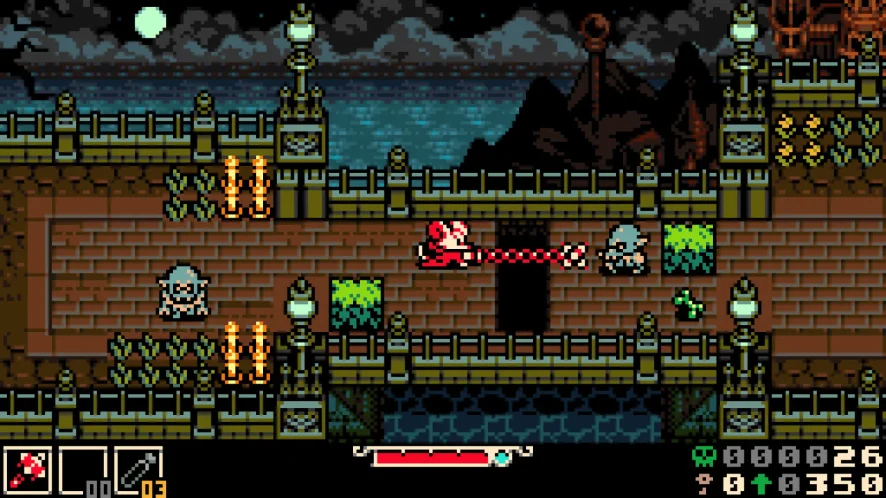
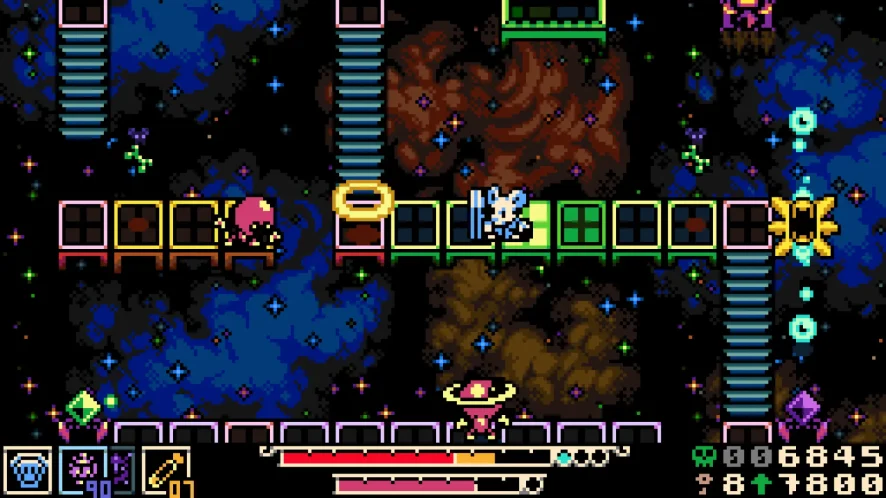
We’ll start with presentation. The people at Yacht Club Games have already proven to be incredibly competent at their retro craft, and Mina is no exception. Every sprite and screen is chunky, pixel art perfection, and it somehow pulls off being a great Game Boy homage while still having a really distinct art style of its own. The developers pulled it off by setting intentional limitations for themselves with specific pixel counts and color palettes, and I highly recommend this post where they discuss this choice at length, often making comparisons to the Legend of Zelda Oracle games.
Mina will be available on almost all platforms, but I recommend playing on a handheld, such Steam Deck, Switch, or Switch 2. Seeing the game blown up on a big 65′ screen when it was so carefully crafted to emulate the signature style of Game Boy doesn’t do the game’s art justice. I ended up playing it on Switch Lite, and that felt just about perfect, with its crisp smaller screen, and a D-pad for more precise platforming.
A Horror-fueled Adventure
YCG really committed to telling a Gothic horror tale. There are spooky crypts, haunted trains, a stalking slasher villain, and bones that function as your currency/experience. The stories and sidequests here all generally end in a very horror kind of way, and they even managed to slip a few light jumpscares in there (there’s also an NPC with an enormous nose, which I suppose you could argue is body horror). The game is still often cute and (I think) appropriate for almost all ages, but I really commend the team for being tonally consistent throughout. This may just be my new spooky October game tradition.
Now, like any good action-adventure, Mina has a simple structure: reactivate the six spark generators on Tenebrous Isle. You can reach most of the main objectives in any order, but the game will naturally guide you to take on certain generators before others. For my first go around, I couldn’t quite figure out how to reach certain areas, and just went where the game took me. But as I progressed, my knowledge of the game’s mechanics and overall geography of the world improved, and my arsenal of sidearms and trinkets increased, allowing me to eventually pick just about any direction and head that way.
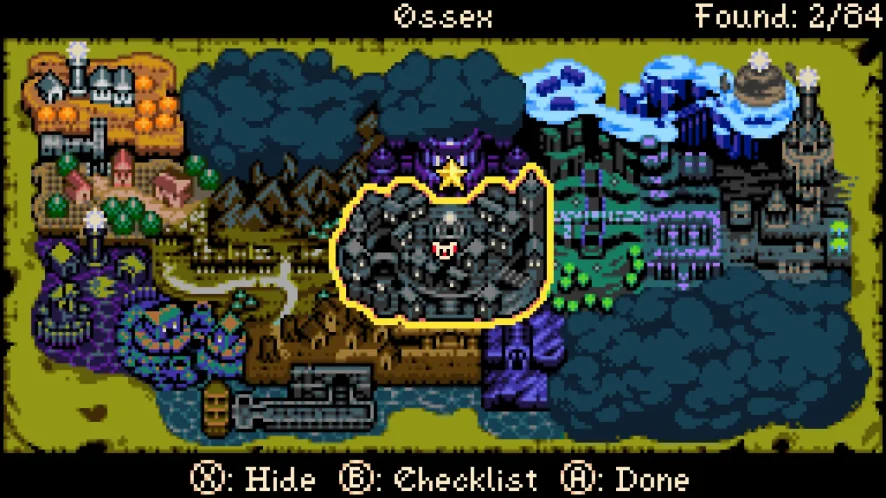
The exploration is one of the game’s biggest highlights. The overworld is positively sprawling and packed to the brim with secrets. Despite each screen being really compact with chunky grid-based tiles, there is quite a lot to explore and get sucked into. I spent a huge amount of time just in the central hub city of Ossex, trying to unearth each little secret and side quest. Considering the game is so action-focused, it was a pleasant surprise to see so many well-hidden extra treasures to find — it feels very rewarding to intentionally or accidentally stumble into one. This game constantly teases you by showing collectibles that you can’t reach yet, the same way a Metroidvania would. I love that design choice, as it fills me with a constant need to uncover every corner of the map till I find a secret entrance.
Hollowing Knight
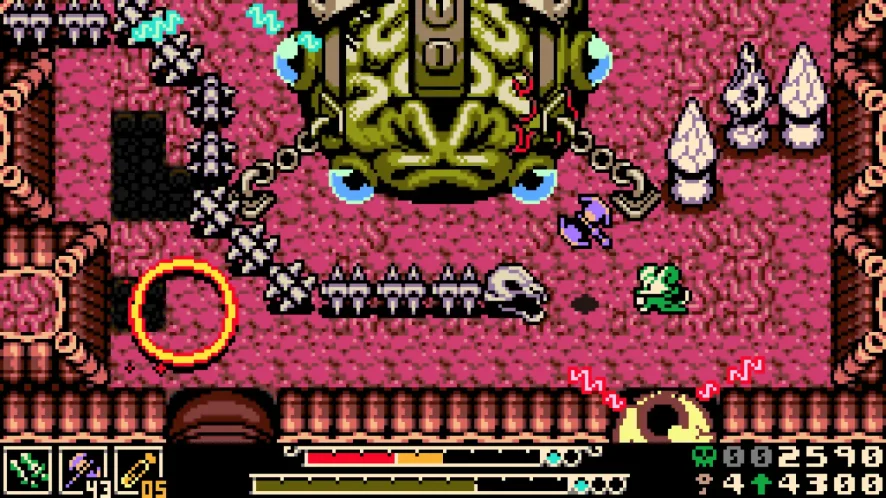
Let’s talk about combat, because while this game may look like a classic Legend of Zelda game, where I’d argue combat is secondary to puzzle design, here it’s the main focus. And considering the limitations of being a Game Boy-style top-down game, the implementation of combat is just about as perfect as it can get. They nailed the movement — it’s very satisfying to have a dedicated button for jumping and burrowing underground, which you use to dodge and weave and reposition yourself around enemies. And each of the five main weapons are fun and really distinct from each other, especially when you unlock upgrades for them. Sprites flash when you deal or take damage providing satisfying feedback, and even though animations are simple, enemy attacks are very readable.
Everything feels intentionally designed to have a push and pull, risk and reward. The whip has good range but had a small pause before it goes off, meaning you have to anticipate enemy movements and be smart where you aim it. Healing vials require being aggressive with enemies, building up a temporary yellow plasma meter with each hit that can be transformed into health — if you’re able to uncork your vial without getting interrupted. These design choices led to exhilarating, edge-of-your-seat encounters. Some enemies and bosses will definitely give you trouble, while others you positively steamroll, but in both cases you’ll be having a blast taking them on.
Challenge & Progression
It’s not Dark Souls or Hollow Knight levels of difficulty, but Mina is a demanding game. It’s one of those games where even the weakest enemies can kill you pretty easily, especially if they push you into a pit when you’re not paying attention. I died quite a lot in my playthrough. But notably, I never felt like I hit any walls, at least in the main campaign. Each death left me invigorated to try again, and even if I had felt stuck, there is a myriad of great accessibility settings available. You can adjust game speed and damage, but you can also make little tweaks that keep the challenge intact. For example, you can have the game create more checkpoints, which is a perfect compromise of lessening frustration without negating the intended combat experience.
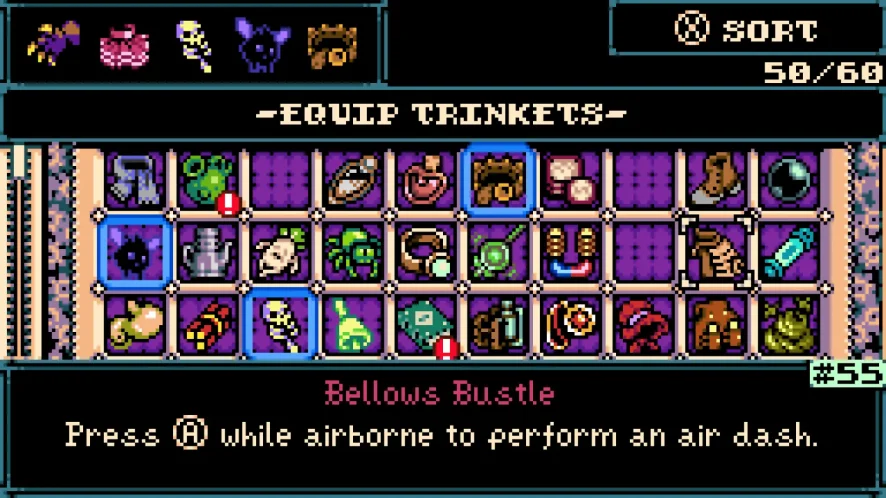
Another thing that helps with the game’s difficulty is the progression. Once you’ve leveled up a few times and unlock more trinkets, you have more options at your disposal to approach each scenario. Trinkets in particular are by far the most fun collectible in the game. Several of them feel broken in the best way: One lets you burrow into walls, and another gives you an airdash which are both complete game changers. Others give you fun new offensive abilities, such as leaving an acid trail behind you when you dig. While I admittedly mostly stuck to simpler, quality-of-life choices such as a magnet to collect bones and one that lets you heal faster, it was always super exciting to find a new one and try it out. Plus, with the game supporting a randomizer, I’m looking forward to being forced to use specific ones on future runs.
At this point I think it’s safe to say Mina the Hollower is a sublime experience, but just like any game, I did have a couple minor gripes. While the accessibility settings are impressive and I really appreciated, the demanding default difficulty may be a little too high to recommend the game to anyone not experienced in similar fare. It’s also the tiniest thing, but I wish the options for rebinding controls included buttons for navigating menus— I kept accidentally drinking vials when trying to talk to NPCs. I got used to it though, and honestly I don’t have any complaints beyond that. Yacht Club has delivered their best game yet, and it’s incredibly solid, through and through.
Mina the Masterpiece
Mina the Hollower is much more than a throwback to the Game Boy. It’s even much more an action-adventure game. It’s a big, ambitious, spooktacular retro experience, with challenging combat, tons of secrets, lots of collectibles, great accessibility options, and an absurd amount of replay value, with lots of modifiers and changing new game+ conditions. I loved my initial playthrough, and despite being someone who doesn’t replay many games, I know I’m going to love this one for many years to come. It won’t click for anyone not up for its challenge, but for everyone else? This a 5-star premium game, absolutely worth the $20 steal of a price tag.
SCORE: 10/10
Jared Richardson
Jared Richardson is a professional sound designer, an avid game collector, and a brand new dad! He's also the host of the podcast Level With Us, where he and his co-host Marcus review indie games and challenge each other to nerdy trivia contests about them.


 by Jared Richardson on May 28, 2026