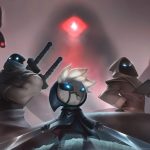
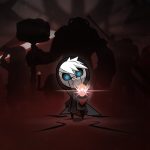
Picture this blend: Zelda-style game mechanics and ninjas. Does that sound like the most amazing mixture ever? Apparently, the folks at Robi Studios thought so. And they turned it into a real thing with the 2021 indie game Blue Fire.
Blue Fireis an action-adventure set in the fantasy world of Penumbra. You must brave its dangerous and enemy-filled locales to prevent an evil power from releasing itself from its imprisonment and bringing an end to the world.
A Story Of Light And Shadow
Blue Fire tells the story of a mysterious being named Umbra. Umbra, an experimental lifeform, must fulfill his destiny and prevent the return of an evil essence known only as the shadow. To do this, he must traverse the land of Penumbra and find a way to undo the damage the shadow has done to it.
While the story is not the most captivating or original out there, it does an excellent job of complementing the gameplay. Blue Fire is a fantasy game, but it’s also a blend of action, puzzle-solving, and some truly admirable 3D platforming. The game’s broader story allows these elements to take center stage.
That’s not to say the story is completely forgettable though. Many of the backstory details are a mystery at the start of the game, prompting you to keep playing to discover what you don’t know. And the non-playable characters that appear breathe life into each environment. Some of them also task you with sidequests, which further enhance your appreciation of Blue Fire’s story and world.
Abilities, Upgrades, And Controls
As I mentioned at the start, this game has a lot of Zelda influences. For the Zelda fans out there, that should make you pretty excited for the game’s mechanics, puzzles, and environments.
All That Umbra Can Do
First are all of Umbra’s abilities and upgrades. Since he’s a ninja(-ish) character, it’s a given that he has a lot of them, and they are all useful. I won’t spoil too much about the abilities you can use, as you learn the majority of them throughout the game. The important thing to know is that they feed into Umbra’s nature as an agile and speedy ninja-like character.
One of the earliest abilities you learn, which isn’t much of a surprise, is how to wall run. Mastering the technique can be a bit tricky at first, but once you do, it becomes a blast to use and an essential part of navigating the game’s world. The same goes for every other technique.
All Of The Game-Changing Upgrades
The abilities aren’t the only things you’ll obtain and upgrade as you play. There are plenty of other assets to find. Some of these only offer cosmetic changes for personal flair, but others do make progressing through the game more entertaining and easier.
Sword upgrades: You start the game with your basic set of dual swords, but as you explore, you’ll find treasure chests that contain newer blades. Each subsequent sword pair you find has a different design, and they also deal more damage.
Health upgrades: Umbra has a heart meter much like the one featured in most Zelda games. Naturally, you can find upgrades that allow you to incrementally increase your total health amount.
Spirits: Spirits are essences of supernatural beings. Once you find them, you can actually equip them to gain new abilities.
Emotes: Emotes are special dances you can find and learn throughout Penumbra. These dances are optional to collect and mostly for fun, but they do help you find treasures chests with useful items.
Tunics: At a certain point, you’ll earn the option to change the color or design of Umbra’s tunic. These colors don’t affect gameplay in any way, but the ability to customize the character is a nice touch.
The Emotes add a welcomed dose of levity to the game.
Controlling The Hero
For the most part, Umbra handles like a dream. A dreary dream, given his theme, but a dream nonetheless. He’s responsive and agile, moving across the land and through the air how and when you want him to.
And his swordplay doesn’t leave you wanting, either. The slashes come out fast, and Umbra aims those blades of his where you actually want them to go. One of my greatest concerns while playing any combat-heavy game is that the attacks will behave haphazardly. There is a lot of frenzy in Umbra’s strikes, but there is also a lot of accuracy.
The Wide World Of Penumbra
Without delving too much into spoilers, there are several larger environments in Blue Fire. You explore each of them thoroughly to defeat enemies, obtain upgrades, clear the Voids (I’ll explain those later), and find the dungeons.
Each location feeds into the desires for exploration, platforming, and battling enemies. Secrets abound, such as treasure chests, Void locations, and NPCs with sidequests. The terrain is varied and hazardous, giving you no choice but to be accurate with your jumps. And every enemy has lots of aggression paired with at least some durability. Everything comes together to keep the dull moments to a minimum.
Exploring The Dungeons And Conquer The Voids
Blue Fire doesn’t follow the standard beat of “explore an area, then clear a dungeon” to quite the same degree as most Zelda games do, but that doesn’t mean the game won’t meet your dungeon-clearing needs.
The Dungeons
I keep calling them “dungeons,” but that’s not the most accurate word for them. What I’m referring to are the more challenging parts of the game. The Zelda dungeons are simply the best comparison for them.
These interior sub-areas (see why “dungeons” is much better?) are home to the majority of Blue Fire’s puzzle elements. They are also home to many of the game’s bosses, though that is something any fan of adventure games should expect.
The time and effort it takes to clear one of these areas is on par with some of the simpler dungeons from the earlier Zelda games. They won’t take as long to figure out as a full dungeon from Twilight Princessor Skyward Sword, but they don’t feel as basic as a mini-dungeon from those same games.
And, naturally, the dungeons mark major progress in the story. That’s why each one is home to a new ability or upgrade that will help you in each new area.
The Voids
The Voids are perhaps the strongest aspects of Blue Fire. And this is with them technically being optional parts of the game. Voids are special platforming-focused levels. When you find specific shrines hidden throughout Penumbra and interact with them, they will transport you to a magical realm. This realm will have floating blocks, platforms, hazards, and all other traditional platformer perils. Beneath each of these levels is an infinite void, so you have plenty of motivation to avoid missing a step.
If you’ve completed Super Mario Sunshine’s secret levels or A Hat in Time’s Rift worlds, then you have a pretty good idea of what the Voids are like. These challenges test your skills and knowledge, and they gradually become more difficult as the game progresses. Clearing each one is worth it though, as doing so earns you extra health.
Music and Sound
The audio is perhaps the most underwhelming aspect of Blue Fire. The game has a somber tone to reflect the dire situation the land is in and to match the aesthetics. This means that the soundtrack is more background noise than anything. Now, it does a good job of that, but the lack of truly compelling music may disappoint any players who prefer songs that add to their gaming experience rather than support it.
The case is the same for the sound effects, such as the environmental and enemy noises. Everything serves its purpose well, but I can only assume the developers made a conscious effort to ensure the audio did not clash with the rest of the game’s mood. That was the right call between those two options, but it would have been a pleasant surprise if they could have found a sweet spot in the middle of both.
Where The Blue Fire Fades
There’s a lot to love about Blue Fire, but there are also some unignorable shortcomings.
Game Length: Blue Fire takes about eight hours to complete, so it isn’t exactly a short game. But when playing an adventure game, it’s hard to ignore when a game feels like it’s racing toward the finale. When I reached the end, I was surprised when I realized that it actually was the end. I had fun the whole time, but I definitely wish there had been more.
Repetitive bosses/enemies: The bosses and enemies have an in-game reason for why their designs repeat, but that doesn’t magically make the fact that their designs repeat any less disappointing. If you spend a long time in any one area, taking out the same enemy again and again starts to sap the fun factor.
Camera accuracy: When you’re trying to navigate tight spaces and do a lot of wall running and jumping, the camera is your friend, but it’s a temperamental one. My point is that the camera doesn’t always do a great job of tracking the fast action and movements. While you’re bouncing around, trying to take care of multiple enemies at once, the camera ends up stuck at one spot and a bit too close, making it hard to see where you want to make Umbra go.
Clear Direction: Maybe this was a case of me being me, but I got lost a few times while playing. I couldn’t figure out what my next objective was, or if I did know what it was, I didn’t know where to go for it. The game gives clues and direction, but sometimes they were too subtle. This was especially true when I got sidetracked by exploration and treasure hunting. Blue Fire would have definitely benefitted from having a map.
When the camera doesn’t want to help, navigating areas like this can be aggravating.
Conclusion
Blue Fireisn’t a perfect game, but it fills a role in everyone’s gaming library that they didn’t know was empty. This game mixes adventure and puzzle-solving with combat and platforming in almost a seamless manner.
For a simple comparison that might excite Zelda fans, I thought of The Wind Waker, my favorite game, and Toon Link, my favorite version of Link. What would happen if you gave Toon Link a katana and ninja abilities? You’d get something that looks a lot like Blue Fire. This game is worth playing on its own, and if you love Zelda, it’s worth playing for one of the coolest “what-ifs” you can experience.
SCORE: 7.5/10
Zac Pricener
Zac Pricener has been an avid Zelda fan for twenty years. The series has been a source of creative inspiration for him and fueled his desire to become a writer. That desire to write in turn led him to now serve as the Features Manager, Assistant Columns Manager, and Assistant News Manger for Zelda Universe.


 by Zac Pricener on March 18, 2022