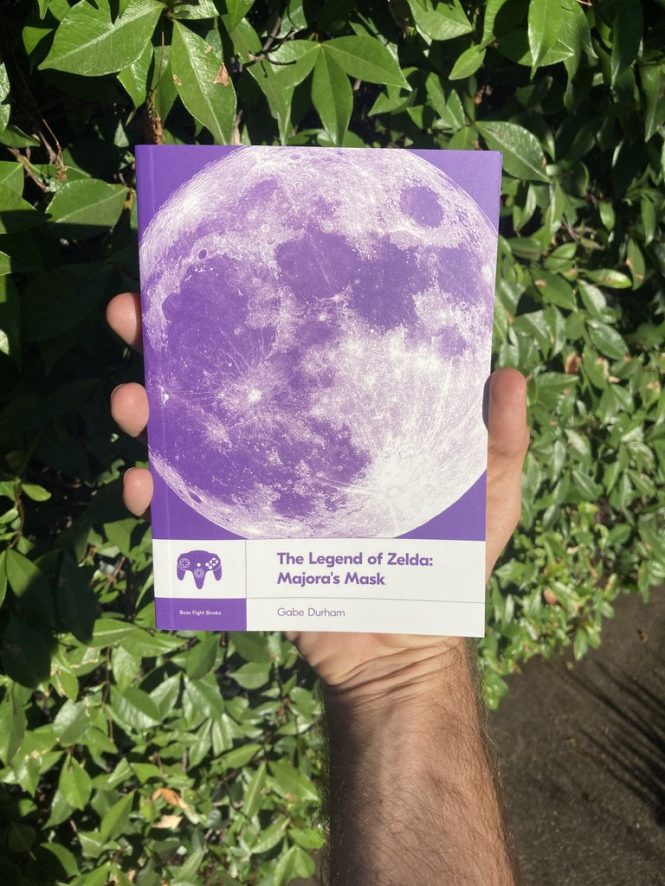
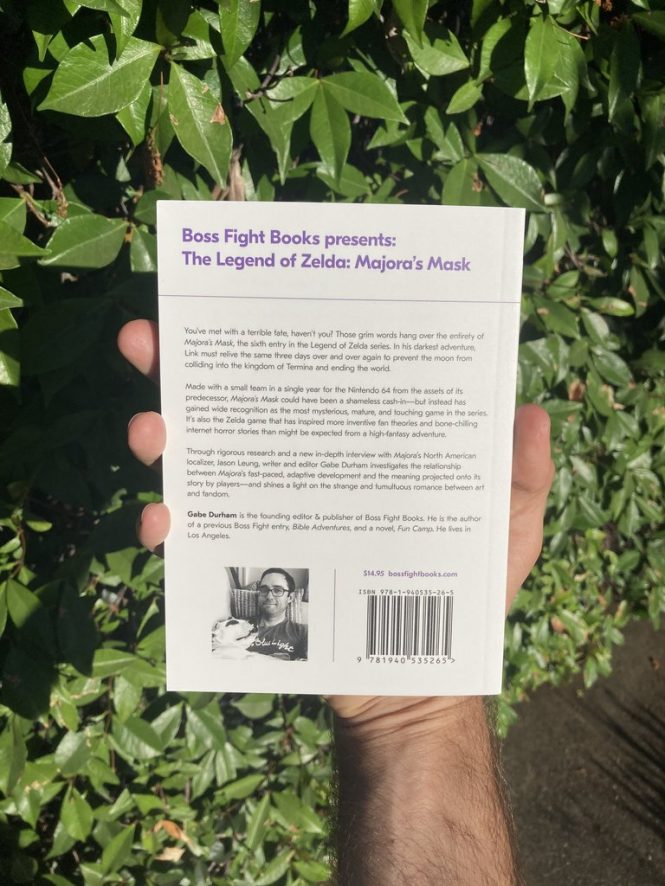
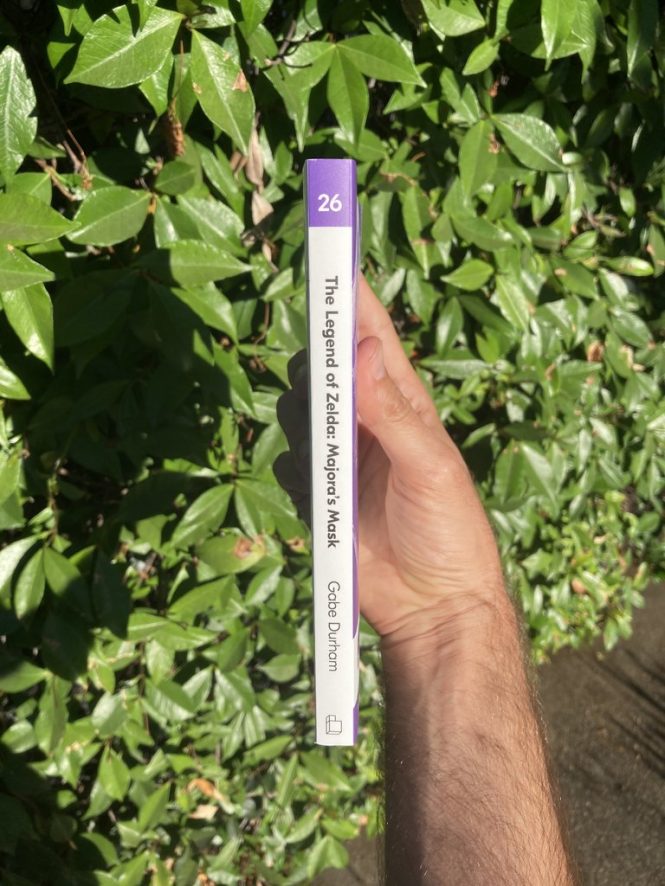
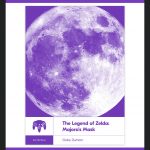
Today, October 26, a new book about the development, impact, and significance of the classic and beloved Zelda game, Majora’s Mask, has been published by Boss Fight Books. This book, written by Boss Fight Book founder Gabe Durham, is the latest in a series of books that explore video games and video game series, delving deep into their importance to and influence on the industry.
To celebrate the release of this book, which is happening on the 20th anniversary of Majora’s Mask‘s release in the United States, I interviewed Gabe to learn about the book’s development, why he chose to write about Majora’s Mask, and what he thinks of the game’s enduring legacy.
Zac Pricener: To start things off, would you mind telling us a bit about the history of Boss Fight Books?
Gabe Durham: I usually give people the business answer to this question, but here’s the more personal one.
In 2013, I was a few years out of grad school, I was teaching college English but becoming disillusioned about my prospects of finding a full-time professor job with health insurance, my first book was about to come out with an indie press, I’d just moved back to my hometown of Los Angeles, and I was approaching 30. I was very much on the lookout for the next big project, both professionally and creatively. My friend Brent and I took a few weeks to develop a business idea that ultimately went nowhere but gave me a new sense that a business is something that even someone like me, with no business background, could start.
Around this time, I was going to the Glendale Public Library a lot, where I noticed that every book about video games I’d ever seen was a zoomed-out history of the industry — stories of businessmen making millions, Nintendo vs. Sega, the rise and fall of Atari, etc. I thought the 33 1/3 books about albums were cool: Where was something like that? Real video game criticism, memoir, and more detailed history? It turns out it existed in articles online, but had yet to make it to the book’s space — and this seemed to me like a huge oversight. I began reading widely, soliciting essay recommendations from friends, which led me to Tom Bissell, Kill Screen’s print magazine, Anna Anthropy’s first book, etc. Seeing people write well about games was very energizing, and helped convince me that writing about a single video game could easily sustain the length of a book.
I reached out to potential authors, and Ken Baumann came up with a book design aesthetic that I really liked, and we put together our first Kickstarter as a big experiment to see what other people thought of the idea. And pretty quickly we learned there was an audience. That first book on EarthBound came out beginning of 2014, and running Boss Fight has been my job ever since. I’m still the only full-time employee of the press, but we’ve got an awesome team — including Mike Williams, who edits all the books with me.
Zac: Wow, that’s really cool that it developed this way. It’s great to hear when someone’s interests lead to a project that takes off.
My next question is about the new book. The answer is kind of obvious, but what is the book about? What topic or topics does it focus on?
Gabe: The books in our series are often pretty different from one another: Some focus more on development history, some on analyzing the game’s story and mechanics, others on its cultural legacy, and others on the author’s own connection — and in this book I was excited to do a little of everything.
The book covers Majora’s Mask‘s speedy development, how the game was built from Ocarina of Time assets, how the game was localized for an English-speaking audience (based on my lengthy interview with Jason Leung), the careers of [Eiji] Aonuma and [Yoshiaki] Koizumi, how the game builds and sustains mystery, how the game defines heroism through service, the challenges the game faced upon its release, and how the game’s legacy has evolved over time. It’s the most heavily-researched writing project I’ve ever done, and I really got into the “treasure hunt” aspect of it: reading the 20th Aonuma interview and discovering an interesting observation that he hasn’t said anywhere else.
One thing I quickly realized when I began my research was just how much Majora’s Mask has been interpreted by fans. There are so many fascinating and creative Majora fan theories out there, and when I began reading them I went into a wormhole of reading how others have interpreted the game. So I wanted to honor those fan theories by listing a bunch of them into the book, and then I focused in on the two most popular fan theories, “The Five Stages of Grief” and “Link is Dead,” and then asking: Where does the meaning in Majora’s Mask come from? The game itself? The creators’ intentions? The fan interpretations? These are questions without easy answers, and that intersect with questions we’ve been asking about art for a long time.
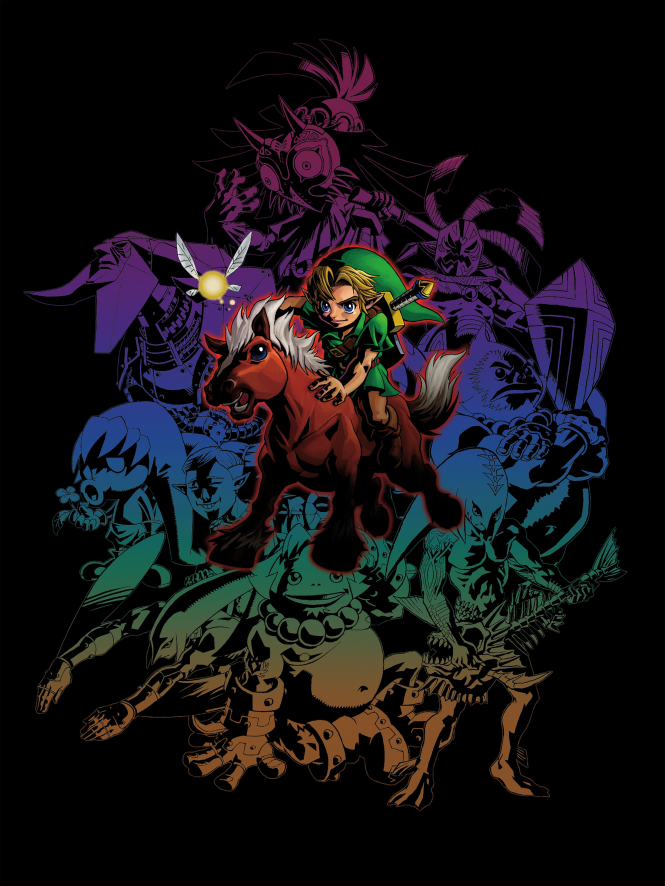
The level of depth found in Majora’s Mask’s story, setting, and characters have made it a unique entry in the Zelda series.
Zac: True, the topics that Majora’s Mask makes the player think about are numerous. It makes sense that this project would demand so much research on your end. The topics you cover and the amount of detail you provide for each go far beyond being simple summaries, and it’s great.
How long did it take you to complete all of the research for this book, and what was your starting point? As you said, there is much to discuss about the game, so I wonder where the research led at the start of your journey and how your direction changed as you progressed.
Gabe: Most of my earliest notes were playthrough notes, a little journal of playing Majora’s Mask for the first time. I’d get through a section of the game and then jot down a combination of description and impressions. This began in late 2017 and continued well into 2018, since games go a lot slower when you’re pausing to write. I began by playing some of the N64 version on my Wii U, but before long wanted to try the remake, and so I started over and did the rest of my playthrough on the 2DS.
Before my playthrough was even finished, though, I couldn’t help but dive into research. I believe the earliest things I read were interviews with Aonuma, Koizumi, and [Shigeru] Miyamoto. The Iwata Asks series is a goldmine, though I was also conscious of the fact that those were the interviews that fans of the game were most likely to have read, and soon I was digging deeper into more obscure interviews buried in old game magazines.
My friend and co-editor Mike Williams used his research skills to put together a huge packet of research for me, which I combed through eagerly. A lot of old articles are junk, of course: another newspaper from 2000 saying “here comes a new Zelda game.” But what’s exciting is never knowing when something small is going to send you off on a new subject. For instance, there was a tiny article that mentioned Nintendo of America was trying out an inventive internet marketing campaign for the game, so using archive.org‘s Wayback Machine I was able to find a series of very charming websites that some people at NOA clearly had a lot of fun putting together. The websites told a story in which, in the real world, the moon is on a collision course for earth, and scientists are looking for The One, a fabled gamer who may be able to stop the apocalypse by beating Majora’s Mask before the game’s release date. It was such a fun and weird marketing campaign that I knew I had to write about it in the book, but I never would have discovered it if not for that little news article.
The book explores every aspect of the game’s release, including the various advertisement campaigns.
Most of the research was done by the time I had completed a “kitchen sink” first draft at the end of 2018, which was about twice as long as the finished book and was, I must say, a total mess. The work from there was about ordering the book, making it coherent, making big cuts, getting the prose into shape, and then showing a draft to someone and incorporating their notes. I think that process actually took more time than the writing and researching of the first draft.
Zac: That is a lot of material and information to sift through. It’s amazing (and appreciated) how much of it people have preserved and archived. I was unaware of the game’s online ad campaign until reading your book. There’s so much to the story behind the game.
On that note, you said you had to make big cuts. What would be an example of those? Were there any particular favorites you wish you could have included in the book?
Gabe: Luckily, I have a Google doc full of cuts from the book to refresh my memory. Let’s take a look!
Really, I can only identify a couple of elements here that are worth preserving: (1) In my interview with Jason Leung there’s a long tangent where I asked him all about his time at Nintendo Power. It was really interesting. It has no place in a Majora’s Mask book, but I’d still love to publish that. (2) There was a short chapter telling the story of how Zelda fans used to debate the series timeline (which was much more of a thing before Hyrule Historia came out). Boss Fight is going to release this chapter as an essay in an upcoming ebook anthology.
Originally, I had more in the book that was just vividly describing scenes from the game that I liked — narrating my playthrough in the book itself. There was a bit about Operation Moonfall. There was an experiment where I endeavored to write my own original fan theory about Majora. It was a lot of fun to try, but including it would be self-indulgent. There are scattered notes on Tingle… I always wanted to write more about Tingle in the book, but could never quite nail down what I wanted to say. I’d also like to give more attention to Majora’s UFO sequence, which I love but touch on only briefly.
In the cuts are a lot of pieces of writing that get too far away from Majora’s Mask for too long. There are riffs about fan culture in general that do not pertain directly to Majora. There’s a riff about interpretation that heavily quotes Margaret Atwood. There’s a rant complaining about fan theory YouTube channels like the Game Theorists. Haha, oh man, I’m glad I cut all this. But I will say that I’m also glad I wrote so much that didn’t make it into the book. For me, writing nonfiction is about discovery. I write to find out what I think, to paraphrase several writers at once. I ramble my way toward something coherent and then pare back the text.
Zac: Well, that’s certainly a decent amount of material. You could probably write a sequel to the book if you wanted to. I guess that’s one of the best things about The Legend of Zelda. The games offer so much to discover and study.
OK, I have one last question I want to ask you. In the book you mention how the game is mysterious and akin to an “open text,” which has inspired compelling and seemingly endless speculation. How do you think the discussions and theories about Majora’s Mask will develop in the future, or, at least, what about the game would you like to see fans explore and analyze more?
Gabe: What a cool question. I think that the fan response to Majora’s Mask that I’d like to see in the future would be creative reimaginings, remixes, and responses to the game. I’m thinking of ambitious fan projects like the short film “Terrible Fate” or the Majora’s Mask Piano Album. I could imagine new comics set in Termina, a band of the Indigo-Go’s who tours the world dressed like fish performing rock or jazz interpretations of Majora’s music, or an art project in which an artist depicts a character on Day 1, 2, and 3, imagining their progression as the moon grows closer. I’d also love to see game developers pick up the torch of Majora’s core mechanic, creating new games in which you play the same time frame again and again — finding new things to do with an under-explored genre.
The passion that fans have for Majora’s Mask continues to amaze people.
But you asked about discussions about the game. My big wish for the fan theory community is that we reframe most fan theories as creative instead of dogmatic. Less “I’m right,” more “what if.” As for articles, I’d love to see more deep-dive articles appreciating individual scenes and characters from the game. I think plenty more could be written applying the game’s lessons to real-world problems. I only briefly mention this in the book, but our response to the climate crisis is going to call for both individual-level acts of kindness and big picture heroics — both of which are called for in the game. I also would love to see people continue the discussion of how this game encourages us, in a safe way, to confront our own mortality and accept it as a natural part of life. Honestly, though, the best ideas probably aren’t going to come from me — I’ve written my book! Now everybody else can write their books, videos, posts, and tweets.
The future of Majora‘s fandom depends partly on Nintendo, though. The 3DS remake was huge for the game, but I don’t get the sense that people are playing their 3DS and 2DS as much as they did in 2015. I’d love to see the remake ported to Switch — maybe bundled with Ocarinaof Time? This would take some work, removing the second screen from the game. But Majora is unlikely to catch new fans if it’s only available on outdated hardware, and I’d love to see what today’s kids and teenagers come up with as they encounter the game for the first time.
Zac: These are all good points and ideas. There’s so much depth to Majora’s Mask, it’s a shame to see people try to put parts of it into unmovable categories. And hopefully Nintendo will release an HD version of the game. The 3DS remake was nice at the time, but I think only a new console version of the game, and of Ocarina of Time as well, would do the trick of reaching newer gamers. Hopefully such remakes are in Nintendo’s plans.
Well, I want to thank you for taking the time to answer all of my questions about you and about the book. It was a fun and enlightening read, and I’m betting it will help a lot of fans develop a greater understanding of and appreciation for Majora’s Mask.
Gabe: I agree, the full Link’s Awakening treatment would be best of all! I didn’t dare to dream that big.
Thanks for taking the time, Zac, and for the good work you all do for the fan community.
If you would like to learn more about the book, Gabe, and Boss Fight Books, you can visit their Twitter page. And if you are interested in learning all of the fascinating facts and details about Majora’s Mask that Gabe provides in his book, you can purchase a copy on the Boss Fight Books website.
Zac Pricener
Zac Pricener has been an avid Zelda fan for twenty years. The series has been a source of creative inspiration for him and fueled his desire to become a writer. That desire to write in turn led him to now serve as the Features Manager, Assistant Columns Manager, and Assistant News Manger for Zelda Universe.


 by Zac Pricener on October 26, 2020