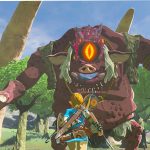
One of the biggest shifts that Breath of the Wild made away from the classic Zelda formula was the removal of traditional dungeons. They were replaced with Shrines, the introduction of which had some mixed responses. Many found the new system refreshing and an intriguing change from the larger dungeons (particularly breathing a sigh of relief at the absence of a Water Temple). For those that missed the longer puzzles, the Divine Beasts helped soothe some of that nostalgia. And others gave it a go, but ultimately decided they preferred the old ways.
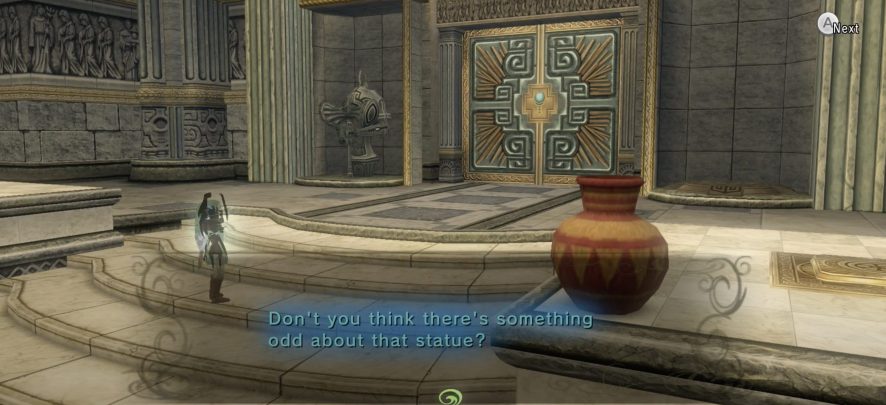
Link, Medli, and Laruto restoring the Master Sword’s energy in the Earth Temple in The Wind Waker HD.
With the Breath of the Wild sequel approaching, it remains to be seen what form any potential dungeon system might take. With the same version of Hyrule appearing again, we can expect the overworld to still be scattered with completed and now-dormant Shrines, unless they have sunk below the earth once more. Furthermore, with the Divine Beasts no longer hostile, there’s no need to venture back into them.
As always, theories have swirled in the dust left behind by the short teaser we received back in June. But ultimately, it’s unknown whether Link will face more Shrines, a classic dungeon system, or something new entirely. Of course, this hasn’t stopped avid fans from drawing theories, seeking out potential evidence, and debating the best way for the sequel to continue Breath of the Wild’s legacy while preserving some of that traditional Zelda blueprint.
New Abilities versus New Items
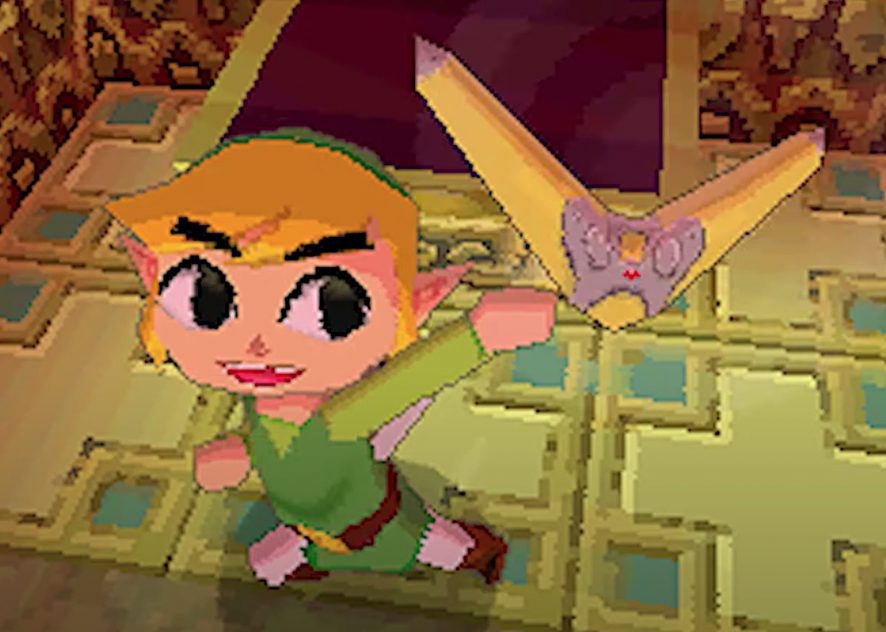
Link obtains the Boomerang in the Temple of Fire in Phantom Hourglass.
In older Zelda games, a new dungeon would typically present you with a new item or tool, which would then be essential to your progression through the rest of the area (and often the rest of the game). For example, the Double Clawshots were obtained in the City of the Sky in Twilight Princess. This is also how weapons such as the Bow were unlocked pre-Breath of the Wild. The latest game, however, opted to grant abilities in return for completing Shrines — specifically the three atop the Great Plateau.
With the Sheikah Slate, Link commands Cryonis, Stasis, Magnesis, and Remote Bombs, among other things. While bombs have appeared in many Zelda games, the ability to use them had to be unlocked from a dungeon later down the line. Even then, they were a finite resource that players had to replenish some way, such as by collecting Bomb Flowers or purchasing them with rupees. Similarly, whereas bows previously had to be unlocked and were used more sparingly, in Breath of the Wild, bows are available immediately, in many forms, and are as useful a weapon as any sword.
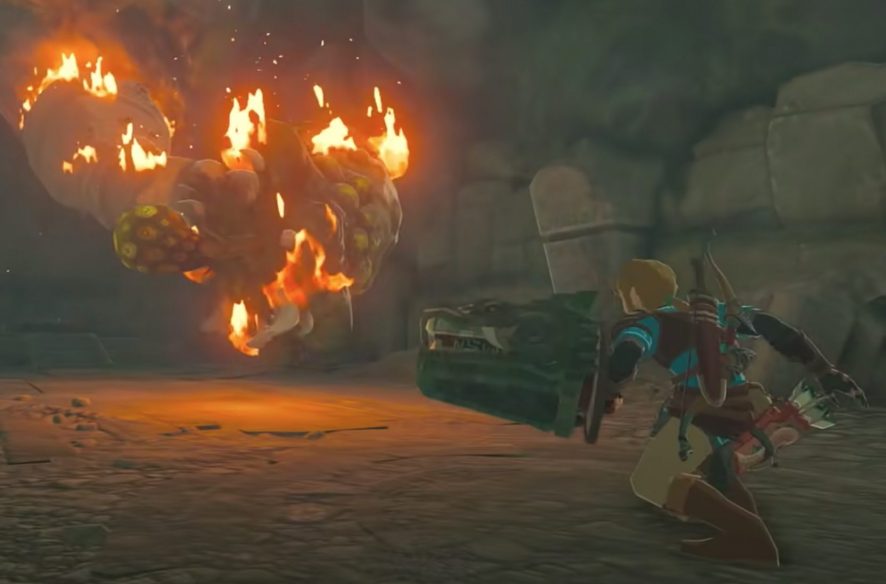
We have already seen from the June teaser that Link will wield new abilities in the sequel, most notably the power to move through solid stone. We were also shown an updated version of Stasis, as well as some form of flame-throwing shield (or shield attachment). So not only are new abilities inevitable, but new tools and weapons would also seem to be on the way. The way such things are obtained could potentially be through dungeon-like trials, Shrines, or other methods altogether.
Link’s new abilities are assumed to be connected to his arm, which in and of itself is the cause of some debate. Some fans believe it to come from a previously unseen source of power, granted to him by something that lurks beneath Hyrule Castle; others theorize that it is Sheikah technology, supported by the fact we see Link wield Stasis by using his hand, not the Slate. Either way, it appears that either possibility (or any others) will be heavily woven into the story. Thus, Link’s new skills will not simply be the result of a dungeon item. However, the journey beneath Hyrule Castle in the first place could well serve as a dungeon or something similar: There is certainly potential for new area exploration, puzzles, and boss fights alike. Again, though, the payoff is most likely to be an ability, rather than an item.
Urbosa grants Link the ability to use Urbosa’s Fury in return for defeating Thunderblight Ganon in Breath of the Wild.
Even the Divine Beasts, the closest thing in Breath of the Wild to a classic dungeon, grant new abilities as their main reward for completing them. Weapons are also granted, but they are still breakable (something that frustrated many players) and are no more powerful (often even less so) than many weapons that can be easily found across Hyrule. For example, defeating Waterblight Ganon will grant you Mipha’s Lightscale Trident, which has an attack power of 22; you can also find a Silver Longsword with the same attack power simply lying against a wall in Zora’s Domain. You do not receive anything concrete with the same permanence or unique ability as a traditional dungeon item.
We have already acknowledged that two of the most useful items, Bombs and the Bow, have been remodeled into a Sheikah Slate Rune and a permanent weapon category, respectively. Other items that commonly appeared in Zelda games, such as the Slingshot, appear to have been discarded. Thankfully, that fire-breathing shield attachment seen in the June teaser shows there is potential for new items to be introduced.
What’s more, unlike the Sheikah Slate, these may not be closely connected to the story and will instead be sought out to enhance fighting prowess and puzzle-solving. It seems unlikely that such items will just be left lying around the overworld (though this can’t be stated with much certainty, given that some of the highest-level weapons in Breath of the Wild can simply be picked up rather than fought for). Instead, it could be possible that this item, and any others, are unlocked after a larger challenge, puzzle, or boss fight, making it more similar to traditional dungeon rewards.
Taken from the June teaser; Link wields a previously unseen shield/shield attachment.
Though, if this item (and any others) follows in the footsteps of other Breath of the Wild weapons and abilities, rather than being like traditional rewards, it may not be essential for beating the game. This leads us to the next important discussion point.
Open World Shrines versus Linear Dungeons
In linear Zelda games, players are carefully led from one dungeon to the next, picking up items in a specific order. The item would be essential to completing the corresponding dungeon and might be required again further down the line. Therefore, the expansion of inventory is controlled and inevitable. Furthermore, dungeon puzzles usually have a single solution, which, again, is linked to the relevant item. In a nutshell, in order to beat the game, the dungeon had to be completed, meaning its item had to be used.
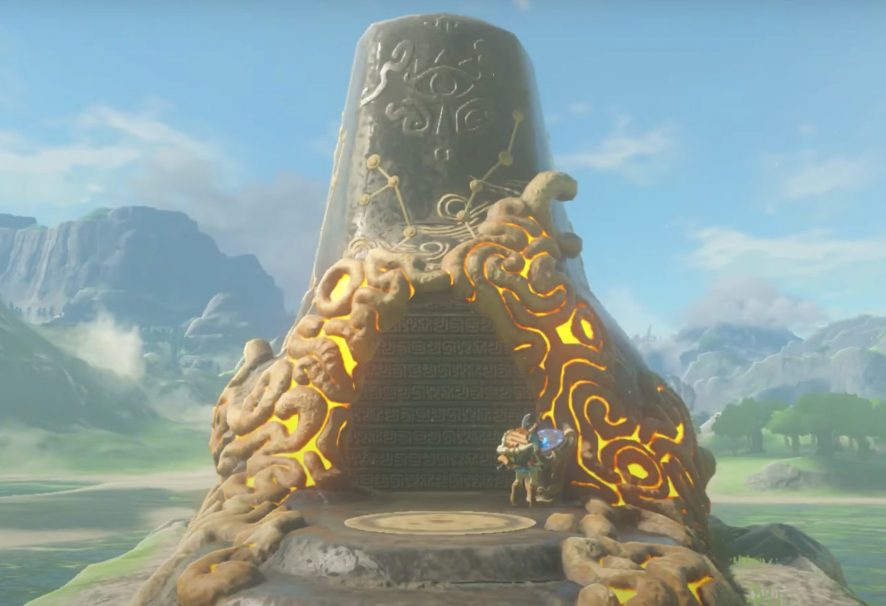
Breath of the Wild introduced a starkly different system. Next to nothing is essential to beating the game, to the point where speedrunners have even found ways to bypass the Great Plateau completely and head straight for Calamity Ganon, armed with nothing but a tree branch and sheer determination. Additional weapons and abilities are encouraged, of course, but their absence will not bring your progress to a complete halt. This is helped in no small part by the fact that most Shrines in Breath of the Wild have multiple possible solutions, so even if the “intended” route isn’t working out, a more creative approach can deliver the same results.
The exterior of Sheh Rata Shrine, one of many Shrines in Breath of the Wild with multiple possible solutions.
This freedom to try different methods without diminished reward was well-received by players, with many challenging themselves to find the most elaborate technique possible to pull off a task. Since the multiple-solution puzzle design was one of the most stand-out features from Breath of the Wild, it seems unlikely that the sequel would return to single-solution puzzles.
Moreover, the open-world design is expected to be preserved, meaning that players can bypass anything that doesn’t take their fancy — including potential dungeons. If this is the case, then whatever is found within the dungeon, whether it be weapons, upgrades, items, companions, or something else, cannot be essential to beating the game. This means that even if a system of larger dungeons returns, there will already be a considerable difference between the traditional versions and this new one.
It should be noted, however, that in these early stages, we can’t claim anything with certainty. Though some things may seem likely or unlikely, we won’t know for sure until release.
Secrets of the Past
With 120 Shrines (excluding the ones added in the game’s DLC) already spread across Hyrule, it begs the question of where future Shrines or dungeons might be found. As of the end of Breath of the Wild, presuming all Shrines were completed, the overworld now has a mass of buildings that have already served their purpose and are now sitting empty after being vacated by the monks. In the Breath of the Wild sequel, these Shrines could either be left as a remnant of the first game, repurposed into a new system, or dismissed back below the earth. Given that at no point do we see the familiar glow of orange or blue on the horizon in either teaser, it seems that the Shrines are being ushered away for something new to take their place.
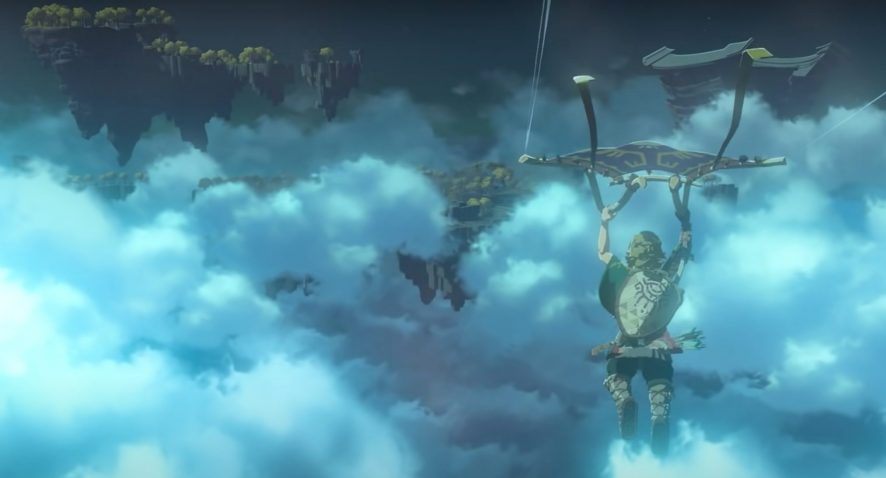
What we have seen is that both the skies above Hyrule and the caves below it are being opened up for exploration. In the sky, particularly, is evidence of a number of ancient structures. One stands out in the teaser: a towering building that bears some resemblance to Sheikah architecture, though much of it is obscured by clouds. A common immediate guess by the fans was that it could be a traditional dungeon, which then spurred further ideas about the potential return of multiple such structures.
Taken from the June teaser; The towering structure to the right of Link is thought to potentially be a dungeon.
Another bit of speculation is that the Link we saw in the teaser, wearing green with unbound hair, is actually a previous incarnation and not the same version we played as in Breath of the Wild. In this case, the player would traverse an older version of Hyrule, long before much of it fell into ruin. Among such ruins could be what’s left of the traditional dungeons, which would then be restored as the clock turns back. Something akin to this was explored in the Era of Twilight: upon Link’s arrival at the Temple of Time, it appeared to be simple ruins. But when restored to its splendor of the past, the temple was revealed to have a sprawling dungeon hidden within. Perhaps a glimpse into the past in the Breath of the Wild sequel could unearth some similar secrets.
The restored Temple of Time in Twilight Princess HD.
The Possibilities and Uncertainties
With a community of players as large and dedicated as The Legend of Zelda’s, threads have been drawn from every part of the timeline in an attempt to weave a tapestry of what we might see in the Breath of the Wild sequel, dungeons or otherwise. Unfortunately, there are several obstacles that make theorizing challenging.
First, there still hasn’t been absolute confirmation of where the current era falls in the overall timeline. Second, Breath of the Wild reshaped the traditional Zelda formula more than any game in the series has done before, making it somewhat difficult to predict what will be changed and what will be preserved in the sequel, and whether more classic elements will resurface. Finally, it is sometimes easy to forget how little we have actually seen of the Breath of the Wild sequel. With an explosion of fan content and speculation in response to every canon detail, separating what we do know from what we might know is a complex process.
That said, looking at the combined knowledge of past games, the current era, and the potential for the future, we can draw the following conclusions:
Any dungeons or Shrines that may appear in the sequel will likely grant abilities rather than items, much like its predecessor. However, if the sequel is to maintain the same level of open-world freedom, these items or abilities will need to not be essential to beating the game, thus giving the player the choice as to whether they unlock them before facing the final boss.
If certain items or abilities are locked into the story, the sequel may need to enforce a more linear style, at least in some parts of the game, in order to direct the player along its desired path. It seems very unlikely that the classic dungeon item system will return. That said, new items, tools and weapons may be introduced. How they are accessed and equipped remains to be seen, though.
There is a potential for larger, classic-style dungeons to appear in the Breath of the Wild sequel. The motivation to complete them and the rewards for doing so will almost certainly be adapted to fit the new era though. A blend of old and new seems to be the inevitable outcome, aiming to move The Legend of Zelda forward without letting go of its past.
Caitlin Stratford
ZU feature writer and aspiring fantasy author. Hobbies include reciting obscure Zelda trivia to people who are politely feigning interest.


 by Caitlin Stratford on October 18, 2021