The most famous Legend of Zelda developers, Shigeru Miyamoto and Eiji Aonuma, are household names amongst fans. Takashi Tezuka, the co-creator of the series, is well known, too. But there are many lesser-known figures who have had a deep impact on the Zelda series.
Yoichi Yamada is one such hidden figure. The first Zelda title he worked on wasA Link to the Pastin 1991, where his role was Assistant Game Director. Since then, over more than thirty years, Yamada has worked in a directorial, game design, or supervisory role in almost every single Zelda title, 18 in all.
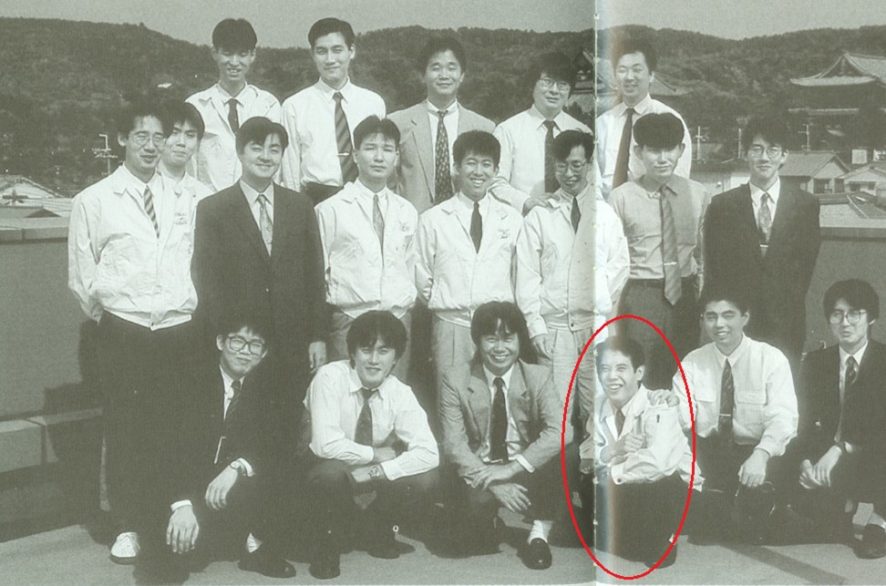
A Link to the Past development team with Yamada circled. Image scanned from Shogakukan Game Guide, via History of Hyrule.
But despite this illustrious history, Yamada is an enigma. As part of my work for the website Hyrule Interviews, I’ve catalogued nearly a thousand interviews with Zelda developers, but I’ve only been able to find two interviews with Yamada. Only one, about Star Fox (SNES), was translated to English.
I commissioned Alex Highsmith of Shmuplations, a hero of the interview translation world, to translate this Yoichi Yamada interview with Nintendo Online Magazine from Japan about Oracle of Ages and Oracle of Seasons. Both games were developed by Capcom’s Flagship studio and directed by Hidemaro Fujibayashi, who would later go on to direct games like Skyward Sword and Breath of the Wild at Nintendo. Yamada was one of the Nintendo supervisors who oversaw Capcom’s Zelda projects.
Originally conducted in the year 2000, this interview is our only glimpse into the developer who helped ensure that the two Oracle games had that special “Zelda” feeling, and who played a role in almost every game since. Enjoy!
Q: What was your role in this Zelda [the Oracles]?
Yamada: Capcom had already been working on these games when I joined the development. They’d come up with a lot of ideas, but at that point, it still didn’t have that special “Zelda-ness”.
Q: What do you mean by “Zelda-ness”?
Yamada: One example would be the way we give hints. In the Zelda series, when you pick up an item, we always ask the player to do a simple task to practice at first. For example, if the player picks up a shovel, he or she might first dig to find a heart piece. There’s also a type of scrolling unique to Zelda that we call the “Zelda Scroll”, and we asked Capcom to revise the maps so they would look better with that scrolling.
Q:It sounds like the game was a little more difficult in the beginning, then?
Yamada: Well, I couldn’t beat it, at least. [laughs] The thing is, Capcom had already been developing Oracle for several months at that point, which meant that their staff was used to the difficulty and kind of numb to it. That happens to us at Nintendo a lot, too. Miyamoto used to warn us about that danger, and actually, when I saw it happening here, remembering Miyamoto’s words is what prompted me to make the same suggestion.
Q:It sounds like you were the “Zelda-ness” Supervisor.
Yamada: Yeah, that’s right. Without that special Zelda-ness and Nintendo-ness, it will feel like a “fake Zelda” game, even if it’s a solid game in its own right. There were many changes I asked them to make in order to prevent that from happening.
Q:What are some of the things you did to ensure the success of this cooperative endeavor between Nintendo and Capcom?
Yamada: I had our team create some materials explaining Nintendo’s way of working, and we created some rules and guidelines. Being a joint development between Nintendo and Capcom, it was important to find a common format we could both accept.
Q:Did you give any specific advice regarding the content of the game or the scenario?
Yamada: I’d sometimes point out things, like “Hey, if we leave it this way we’ll get bugs, so please fix it.” So I guess I gave away some of our production secrets. [laughs] On the other hand, sometimes I saw what they were going for in a certain area, and I left it up to them. Also, at first they were planning to release Ages and Seasons sequentially, as two separate games… but I made them change it to a simultaneous release. I also told them I wanted them to add more things to take advantage of the linking system, since we’d gone to the trouble of building it.
Q: Was the Linking System idea there from the beginning?
Yamada: It was there, but it was left vague. Capcom had the basic idea, but they weren’t very specific about it because they thought they might not be able to make it in time. I suggested that they should focus more on that as a main part of the gameplay. I also gave specific advice about the Link System, like “Oh, this part would be better this way.” There’s already a Zelda game on the Game Boy, Link’s Awakening. You explore a whole different world this time, and I thought we needed a new gameplay system like the Linking System to help further strengthen the distinction.
Q:Do any other parts of the games bear your personal touch?
Yamada: Well, they started working on Oracle of Ages after Oracle of Seasons was partially completed. I was especially aware of the need to make sure Ages had a distinct personality from Seasons. I also asked them to be mindful of the Gameboy Advance’s upcoming release in March.
Q: When you joined, the partnership between Nintendo and Capcom was already complete, wasn’t it?
Yamada: Yes, but we endeavored to retain the “Capcom-ness” of these games too. For example, the opening sequence has a large single picture that pops out at you. That kind of presentation is something that only Capcom can do. We made sure we left in things like that.


 by Max Nichols on February 1, 2023