The Legend of Zelda: Skyward Sword is a game that has generated split opinions between fans of the Zelda series. Many players love the game due to its compelling story, charming visuals, and superb soundtrack. Other players find its controls and repetitive elements problematic. Regardless of opinions, one thing is certain: Skyward Sword delivered new content that has left a permanent impact on the Zelda series.
Story elements, gameplay features, and more from Skyward Sword continue to influence the series. To understand how these additions have and will continue to be influential, it’s important to know exactly what they are.
10. Intricate Motion Controls
Though no one considers Skyward Sword‘s motion controls to be perfect, they still served an important role in the series. Before this game, motion controls were a basic addition to the Wii version of Twilight Princess. They were fun, but aside from helping aim certain weapons, they didn’t add much to the experience.
Skyward Sword‘s motion controls brought actual depth to the gameplay. They didn’t just help the player aim. They allowed the player to immerse themselves more into the game. This is something seen in Breath of the Wild. Between the more intricate control over the Bow and the Shrine challenges that required the use of the gyroscope (as imperfect as some of those were), motion controls are here to stay.
9. Emphasis on Stamina
Stamina and Stamina Gauges have all but replaced the use of Magic and Magic Meters in Zelda games, and Skyward Sword was the start of that shift. Giving Link limited stamina introduced a level of complexity to the gameplay. Players couldn’t breeze through sequences that would have been mundane in any previous title.
The limited stamina might seem like a nuisance to some players, but it has a massive benefit: It keeps them focused on the game by making them work with a limitation. It also balances game progression. A Link Between Worlds uses this to great effect. Items and Ravio’s Bracelet have limited capacity. Players cannot use them haphazardly. Doing so would actually lead to boring gameplay.
8. Shield/Weapon Durability
This one is almost identical to the introduction of stamina limits. Most of the shields in Skyward Sword break after taking too much damage. Players need to be strategic about how they use their best defensive option. The limitation takes what players learned from all previous games and completely rewrites it.
Breath of the Wild showed how this durability system could add depth to almost every combat element in the game. The swords, shields, bows, and other weapons all break eventually. Players generally agree that weapons shouldn’t break as quickly as they do, but the fact that they break at all is still a great way to increase the challenge and encourage creative thinking.
7. Non-conventional Weapons
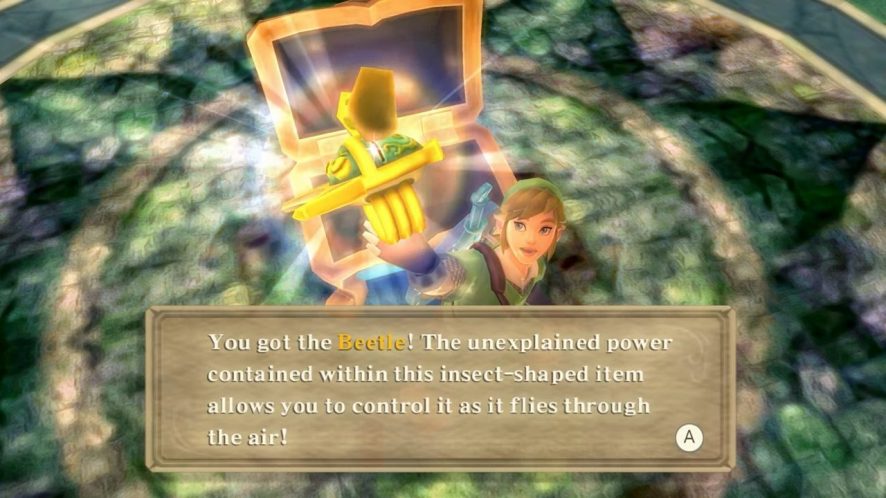
Skyward Sword was the first “core” Zelda game to omit the Boomerang as an obtainable weapon. Despite being a staple of the series, it was replaced with the Beetle item. The developers knew that the Beetle would serve the game’s needs better than the classic weapon.
The replacing of conventional weapons and items had not been done till then. Skyward Sword proved it could work when it made sense to do so. Breath of the Wild took that proof of concept and made something new and wonderful with it.
6. Sky exploration
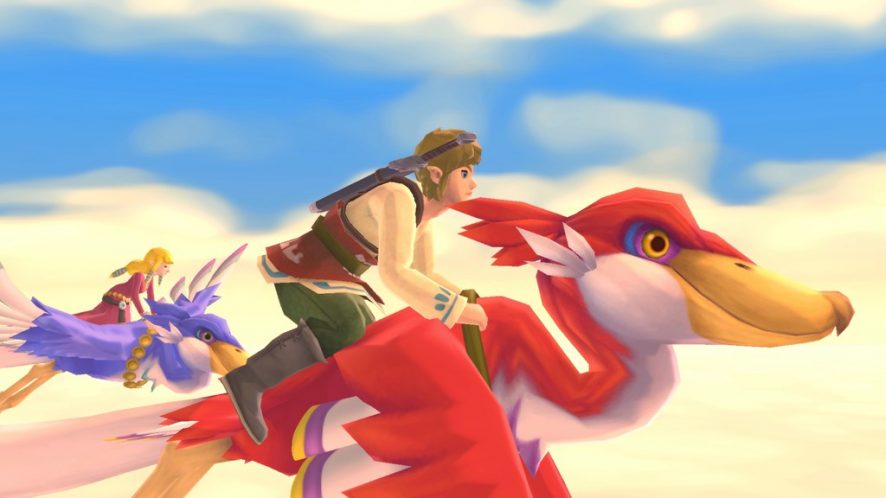
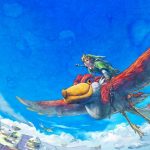
Link has traveled to the skies in games that came before Skyward Sword, but he never truly explored them. His time above the clouds was mostly spent in dungeons, such as the Palace of Winds in The Minish Cap. Skyward Sword was the first game to make the skies a major and complete part of the explorable environment.
The Breath of the Wild sequel is going to take players back to the skies over Hyrule. As seen in the game’s E3 2021 trailer, Link will be spending a significant amount of time in the air. This inclusion is all about increasing the game’s total amount of depth.
5. Zelda’s/Hylia’s Origins
For decades, the series opted to provide no clear, narrative-driven reason for why The Legend of Zelda was named after the princess rather than the main playable character. That changed when Skyward Sword explained that Zelda was actually a goddess who both started her own reincarnation cycle and ensured that a Hero would always arise to defeat any evil that threatened the world.
Now, Zelda is important because she’s a goddess in human form. Her connection to the supernatural, the Triforce especially, is eternal and pivotal. And Hylia’s connection to Hyrule only grows as the series continues.
4. The Master Sword’s Origins
Much like the series’ title, the Master Sword was another mystery in the games. Players did not know where it came from, they only knew it was the key to stopping Ganon. They only understood that it was special because the game told them so.
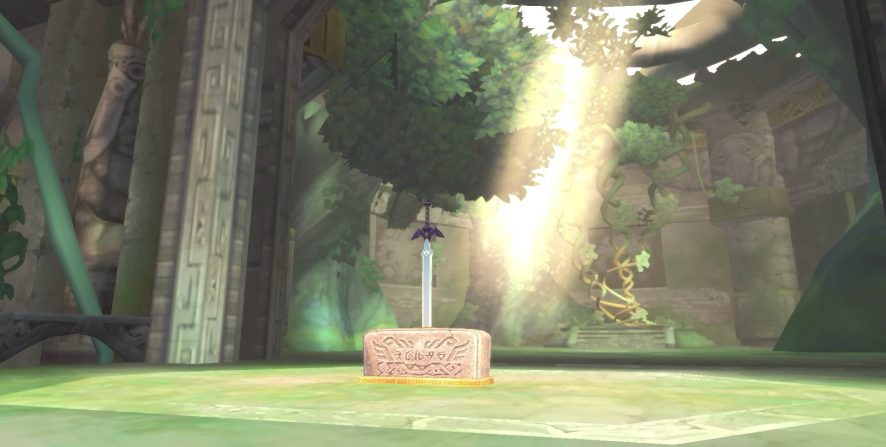
Skyward Sword gave the Master Sword some much-needed lore. In the game, the sword is one of Hylia’s most vital components for her elaborate plan to save Hyrule. It needed to be forged by the Golden Goddesses to grant it the evil-destroying powers. The Hero also needed to be the one to take it before each Goddess so he’d be worthy of wielding its full power.
3. Making Link Right-Handed
Till the release of Twilight Princess, Link had always been left-handed. His dominant hand became a unique feature that made him stand out to fans. This changed when the Wii launch title switched his dominant hand to help improve the use of motion controls for the majority of players. But this was not a “true” change per se, as Link was still left-handed in the Gamecube version of the game, which is the original version of Twilight Princess.
Skyward Sword was the game that cemented Link as a right-handed. It was the first game built from the ground up to better suit motion controls. And in Breath of the Wild, despite motion controls not seeing constant use, Link was again made right-handed. Keeping Link’s weapons in his right hand seems to make things simpler for the increasingly complex controls, both traditional and motion. Nintendo might have him switch back at some point, but Skyward Sword has made it a standard for now.
2. Ganon’s Origins
Where Ganon came from and where he got his evil powers was always a mystery. For years, players could only regard him as a menace with no clear starting point. He was just the monster they needed to slay, and he inexplicably kept coming back.
Demise, the final boss from Skyward Sword, changed that. At the end of the game, players watch as this demi-god of sorts places a curse on Link and Zelda by creating another reincarnation cycle. An incarnation of his hatred would take on a life of its own and follow Link and Zelda and their descendants throughout the ages. Ganon was this living hatred.
1. A starting point for the timeline
For a few years, Ocarina of Timewas considered the start of the Zelda timeline. Though, this was only because none of the other games gave any obvious evidence that they came before it. The game also showed how Zelda, Link, and Ganondorf all first obtained their pieces of the Triforce. It set the pattern in motion for those three to fight over the Triforce. The only problem is that it didn’t actually reveal the origins of the characters or the land of Hyrule.
The answers to these questions came from Skyward Sword. The questions about Zelda’s origins, Ganon’s origins, Link’s role as the Hero, the foundation of Hyrule, and many others were finally answered. The Zelda franchise now had a starting point that didn’t leave players with more questions than answers.
Zac Pricener
Zac Pricener has been an avid Zelda fan for twenty years. The series has been a source of creative inspiration for him and fueled his desire to become a writer. That desire to write in turn led him to now serve as the Features Manager, Assistant Columns Manager, and Assistant News Manger for Zelda Universe.


 by Zac Pricener on July 16, 2021