Composer and producer Lufus takes a handful of iconic Zelda melodies and translates them into something sweet and gliding and strange in “Zelda’s Merry-Go-Round“, something with soft strings and a half-whimsy, half-haunted kind of swing, reminding me of carousel horses.
Press play on the video below and listen along with me, and you’ll soon notice that it isn’t hard to hear Studio Ghibli in the mix. Maybe it’s the world-famous studio’s animated classic Howl’s Moving Castle that can be heard, or maybe it’s Whisper of the Heart? Whatever it is, there’s a warm, off-kilter softness, the sense of turning gently toward something sad and lovely at the same time.
It’s not exactly new to say that Zelda and Studio Ghibli would work well together. But why do they work so well?
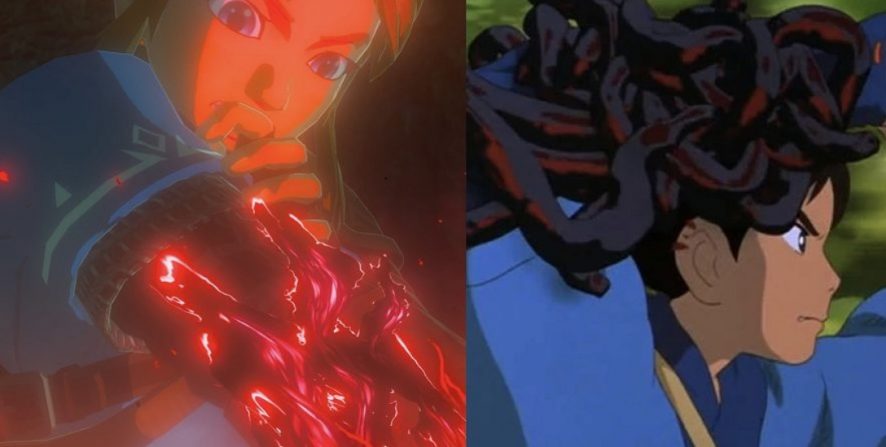
The connection’s been pointed out before, especially after Breath of the Wild dropped – with its painterly skies, ancient ruins, and moments of total silence, and the Princess Mononoke influences on the story and general vibe. But let’s break that down a little more.
Zelda and Studio Ghibli are both obsessed with sacred mundanity. In Breath of the Wild, even boiling mushrooms or watching fireflies feels reverent; just like how My Neighbor Totoro treats waiting for the bus as a kind of ceremony. Neither Nintendo or Studio Ghibli fully explain their worlds – and that’s the point. You’re always piecing things together from ruins and whispers, like finding the backstory of the Arbiter’s Grounds or catching a glimpse of a forgotten spirit in the woods. Shrines crumble, forest gods sleep beneath the soil, and the wild quietly climbs back in through the cracks. Magic is powerful, but nature always wins.
So, combining Zelda music with this classic Studio Ghibli tune like Lufus has done in this song naturally makes sense. Zelda music very often has a tinge of melancholy, and so does a merry-go-round. You go in circles, forever chasing something you can never quite catch. I wouldn’t call Lufus’ “Zelda’s Merry-Go-Round” a combat track. It’s more the kind of thing you’d cue up when you’re feeling indulgently aimless, wandering the Lost Woods without a destination, riding across Hyrule Field just to watch the sky shift.
This track also works outside of the games and films. I tried it as a walking soundtrack, and suddenly every tree looked mysterious and full of memory. I tried it while doing chores, and it turned my kitchen into a weird little side quest. It’s a song that adds mood, even if you weren’t asking for one.
There’s nothing new in the song itself. These are old melodies, reworked in a new style. But that feels fitting. That’s how both Zelda and Studio Ghibli tend to operate: layering the familiar until it becomes something rich, strange, and new again.