The Last Campfire is a puzzle-adventure game developed by Hello Games. I first learned of it back in March when its announcement trailer was played during a Nintendo Direct. From seeing the gameplay in that trailer, I knew that this would be an indie title I would want to play. With no news about the next Legend of Zelda game being offered in more than a year, I am always looking for new games that will satisfy my hunger for environments to explore and, especially, puzzles to solve. Did The Last Campfire fulfill that yearning?
A tale begun in mystery and motivated by kindness
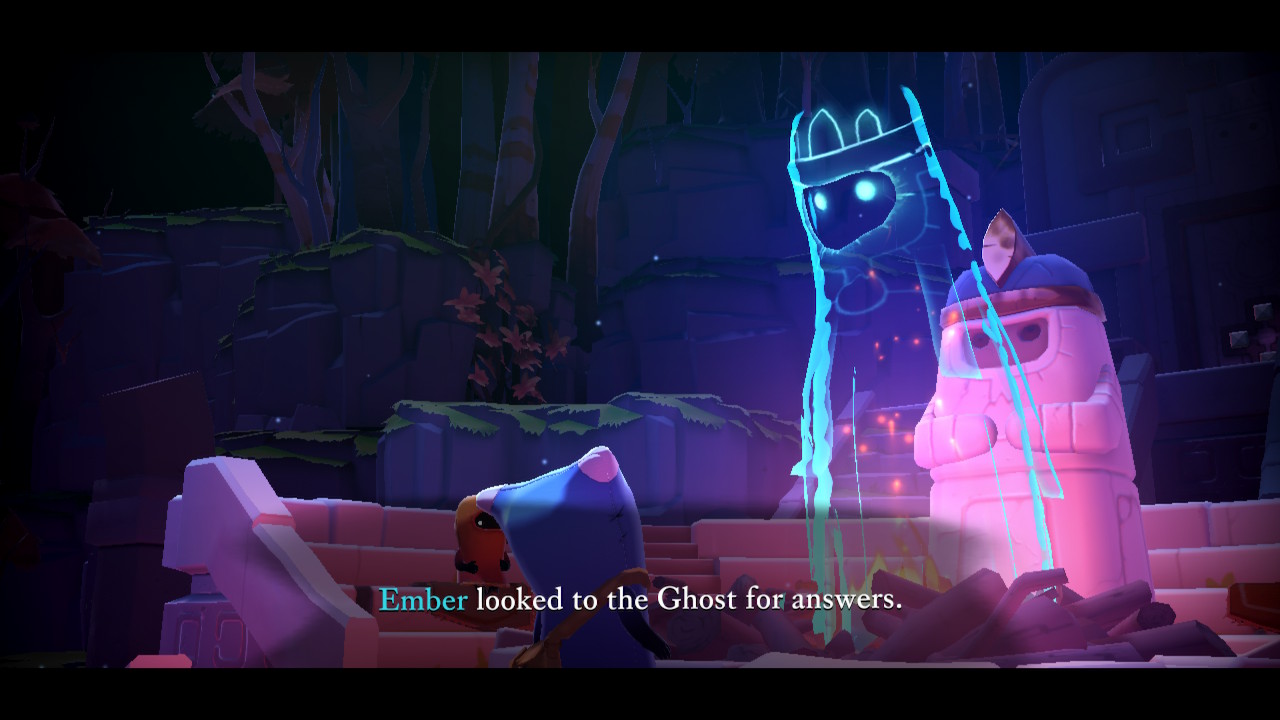
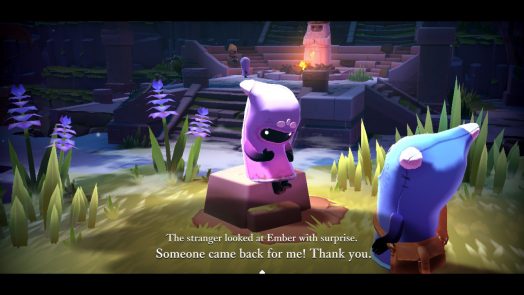
The game stars an unnamed being referred to as Ember, a description shared with most of the other characters, which are of the same species. The story begins when Ember, who had been sleeping in the middle of an area unknown to them, awakes and begins to explore their surroundings. Eventually, Ember finds another, smaller campfire, which is watched over by a mysterious spirit known only as the Ghost.
This Ghost informs Ember that many others have come this way seeking the same destination, but they had been refused passage by a being called the Forest King. When the embers could not find their way, they lost their hope and faded into a lifeless state, becoming what the Ghost called the “forlorn.” Ember, being a kind soul, wishes to help them, and Ember also realizes that helping them will lead to their end goal, so Ember sets out to find and rescue all of the forlorn.
This game is built to make you think
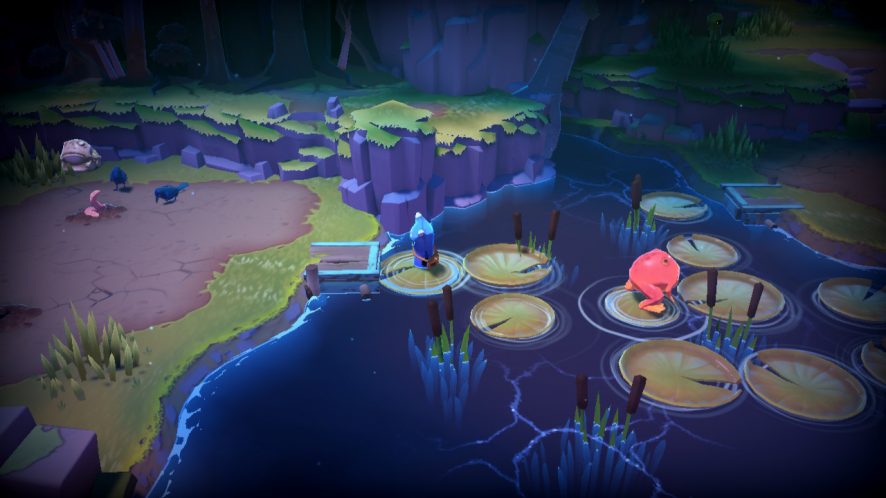
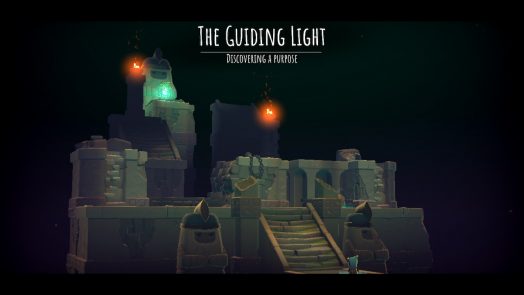
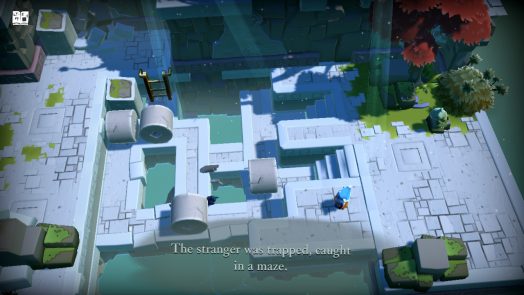
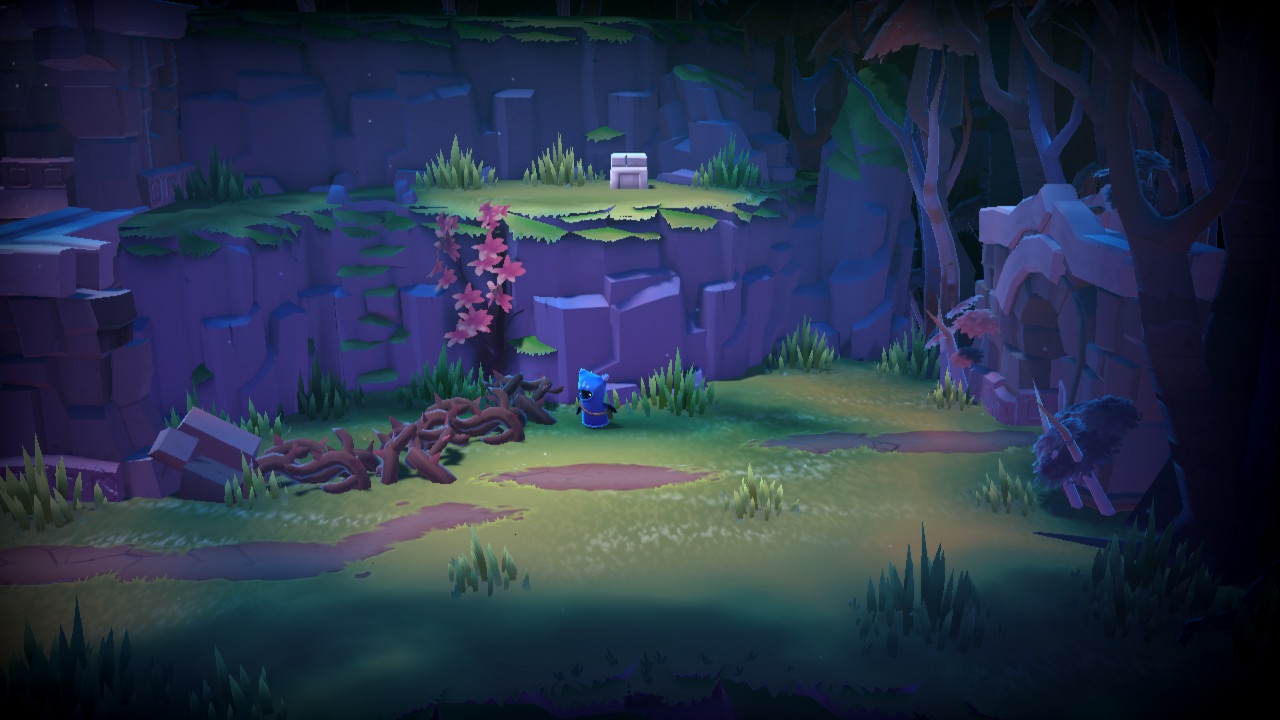
This premise, though somewhat ambiguous, sets the goal for what Ember and you need to do. The first phase of The Last Campfire begins in what appears to be temple ruins overgrown with jungle vegetation. This is where the puzzle elements begin, which is welcomed. Thanks to the destruction of the landscape by time and mystery, Ember needs to find the correct routes and tools to traverse the region. Some paths are obscured, some are hidden in caves, and others are created, such as when Ember needs to hop across lily pads to reach the other side of a pond. The setting teaches you to think about where they are going and how they will get there. It’s a thought process that remains crucial throughout the adventure as challenges become more complex.
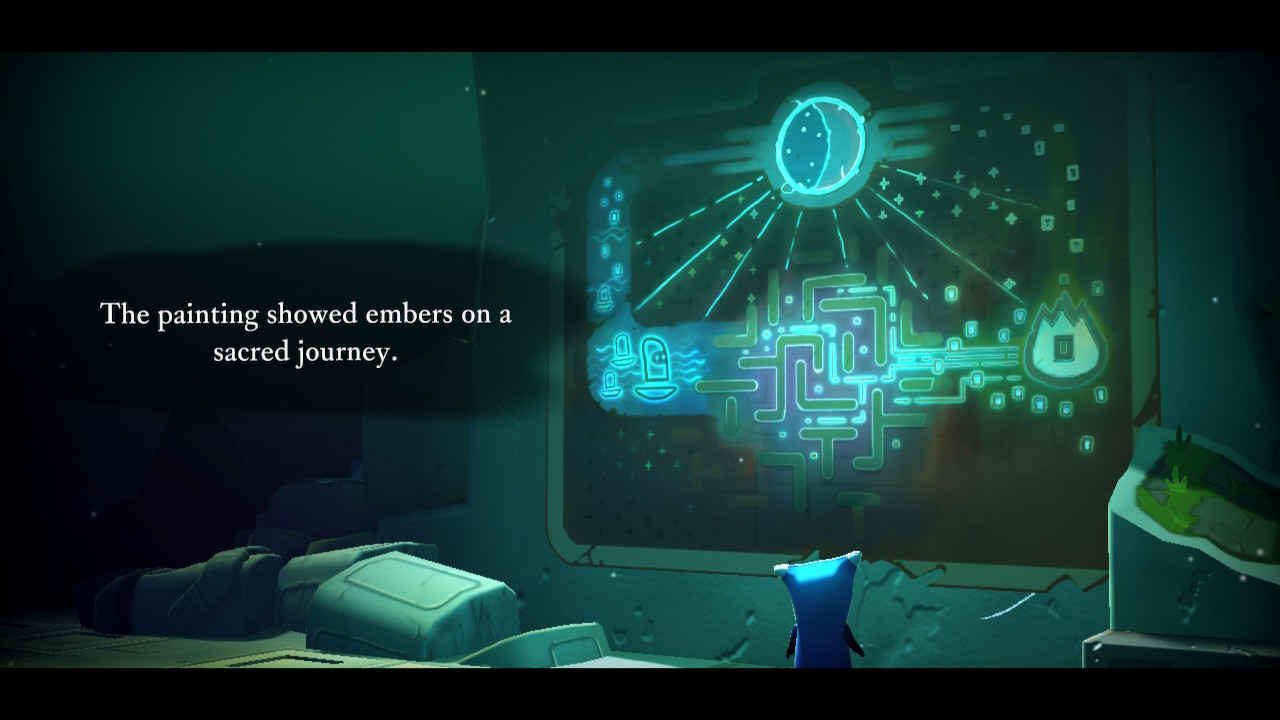
The locations are detailed and imaginative and do a good job of pulling you into the experience.
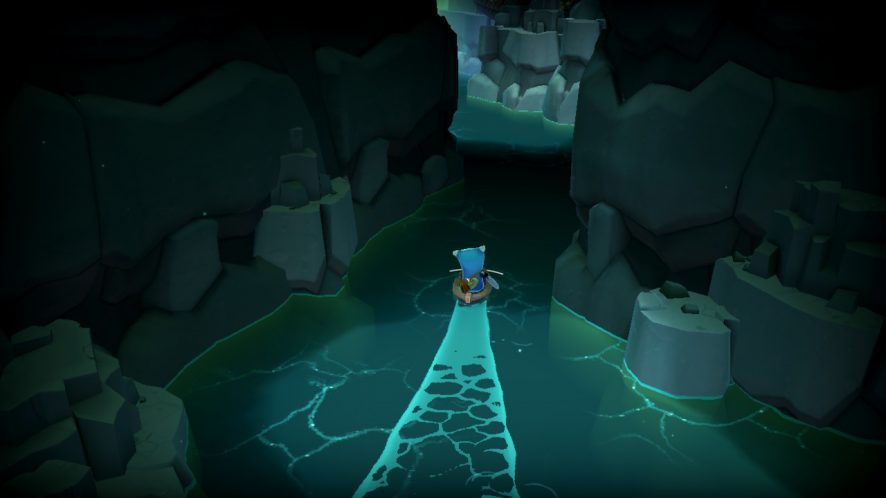
And to put possible concerns aside, the game does not take place only in the jungle setting. It is still an island, so the locations do not vary drastically, but the geography does change enough to create new experiences, both in terms of visuals and exploration. One example is a large network of caves where manipulating light becomes important. The changes in location are sparse, but they happen at the right times to prevent you from ever getting bored.
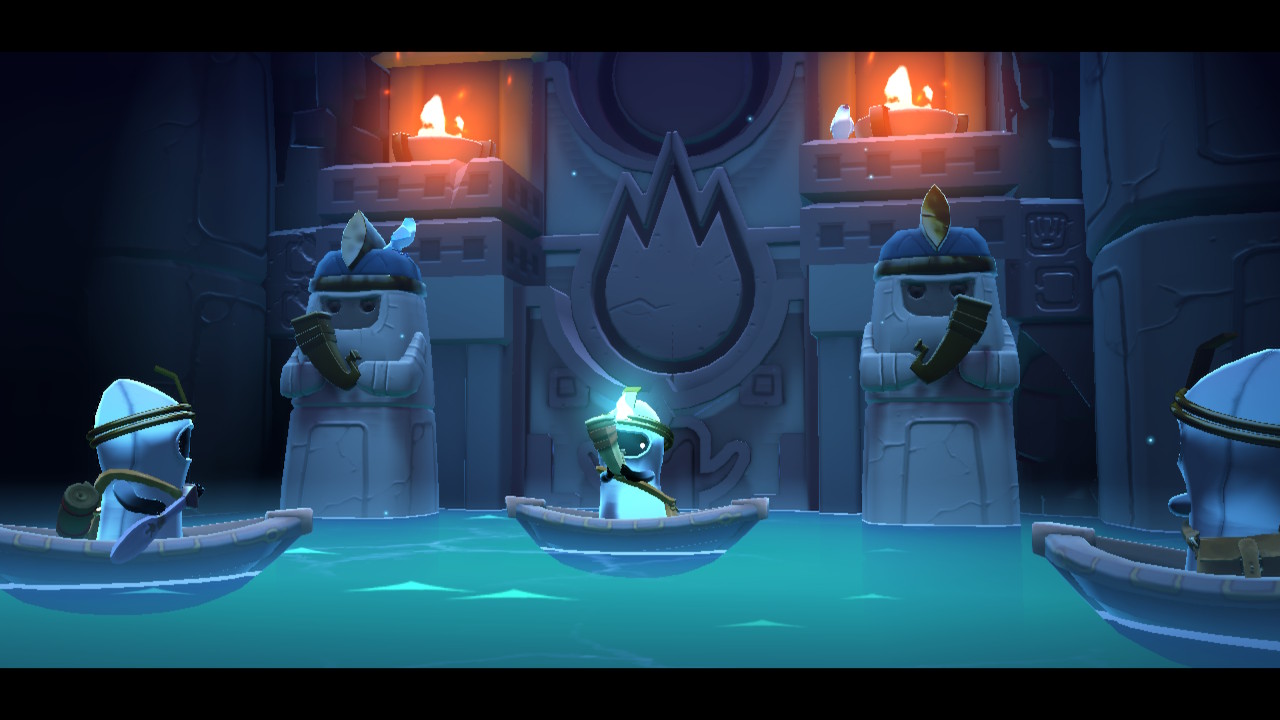
Ember’s tools to help on the quest are limited, but each serves a purpose to the creative puzzle-solving skill that the game demands from you. From the start, Ember can climb certain surfaces, carry small objects, find and collect key items that affect certain puzzles and characters, and push and pull larger objects like levers and barrels. A couple of hours into the story, Ember finds a new tool to use: a magic horn. When Ember plays the horn, they are able to magically move and manipulate certain objects. This feature adds an important level of depth and complexity to many of the game’s challenges, and it does so for the remainder of the adventure.
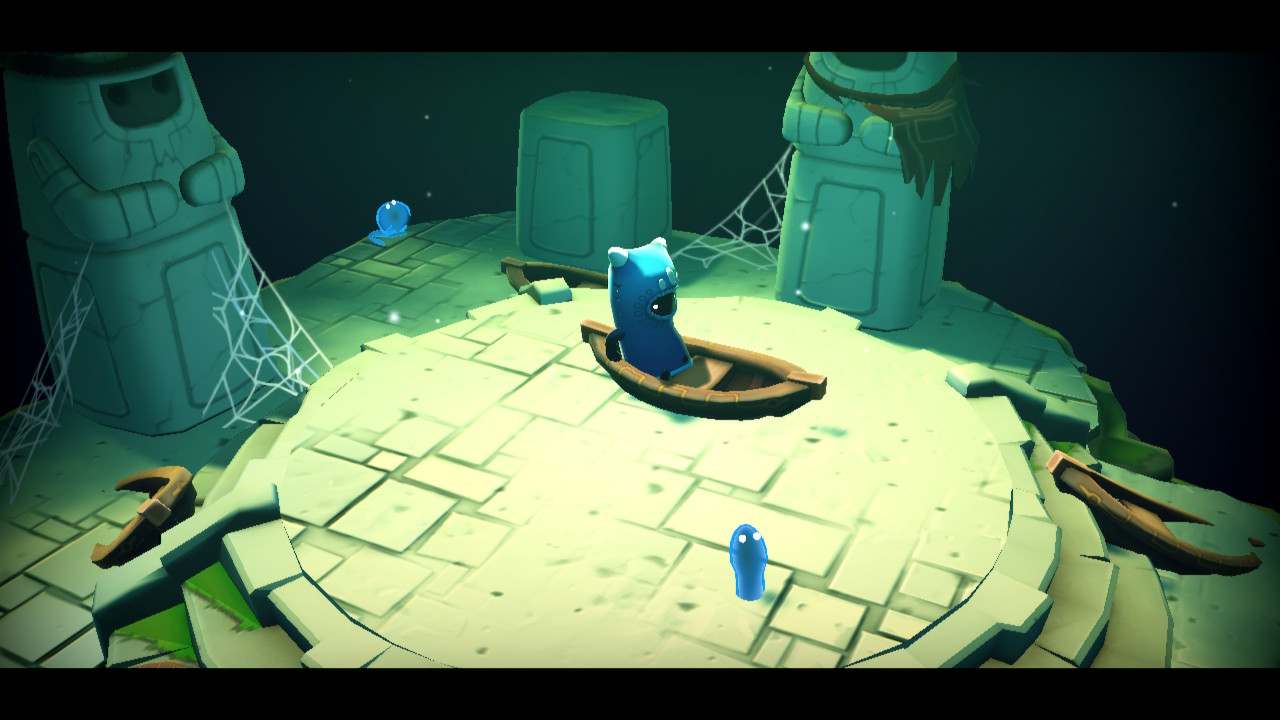
Each puzzle level takes you away to a strange realm.
These abilities of Ember’s are modest and simple, which brings up an important factor to consider: There is almost no action to be found in The Last Campfire. There are no health bars, no attacks, and the rare encounters with what could be loosely considered to be enemies amount to little more than roadblocks. The Last Campfire is all about the puzzles, which it should be. Still, if you are looking to satisfy a need for both puzzles and combat, you will not find an opportunity in this game.
The heart of the game’s challenge comes when Ember finds one of the lost forlorn. When Ember touches them, they are transported to what seems to be an isolated level in an alternate realm of existence. Once there, Ember must navigate the mysterious space, clearing any and all puzzles to find a green flame, which, though not explicitly stated, can be assumed to be the forlorn’s spiritual essence. Once Ember finds this flame, they are transported back to the island.
You have the option to save more forlorn than is required, though there is no real reward for doing so.
Given their purpose, the unknown factor about their exact locations, the focus on solving puzzles, and the repeated prize found at the end of each iteration, these levels can easily be compared to the Shrine Quests from Breath of the Wild. They provide most of The Last Campfire’s fun factor, and they progressively become more complex as the game progresses.
Vibrant visuals with melodies to match
The Last Campfire’s puzzles, both in the overworld and in the challenges, remain entertaining throughout the adventure, and the art style and the music both put in equal effort to make the experience engaging. The bright colors and cartoonish appearance of the landscapes and characters offer a good contrast to the story’s more serious themes. They make Ember and all that they see and hear feel charming. Ember’s design makes them endearing, a sentiment that is double when paired with the character’s natural empathy and desire to help the other embers. The presentations draw you in, like how a fantasy children’s book takes a reader to an unforgettable dream world.
The music routinely shifts to match the significance of every situation.
The music is a faithful companion to the narrative. It matches the mood of each moment, from the somber tones that follow Ember after being separated from the other embers, to the chipper melodies that express Ember’s delight in solving a challenging puzzle and making progress through a foreign land.
Fun, but very far from perfect
As much as I loved solving the puzzles and felt satisfaction in finding my way while also rescuing the forlorn, I do have a few unavoidable problems with the game that I need to address.
The first is that I witnessed a number of performance issues while playing. Too often, the game’s framerate would dip, such as when I would quickly move from one screen to the next. There were also many times when the screen would pause for a second, as if the game was having trouble loading everything. This would happen every time I made contact with a forlorn and was transported to one of the puzzle sections. They didn’t last long, but they happened frequently. On average, I would notice a weird pause every ten minutes. The game has a slow pace, so it by no means made me want to quit playing, but it was still always noticeable.
Passing through an entrance into a new area would often result in the frame rate issue.
My second is that there were technical issues that were far more serious than the previous ones mentioned. I encountered multiple bugs, some of which prevented me from progressing in the game. In one instance, I was left with no choice but to save and quit to escape being trapped on top of a statue, which I was not meant to gain access to in the first place. Another time, the game was partially frozen. I had to close the game and restart it. I know some of these were fixed by an update released a few days after the game’s release, but it only makes me wonder if there are any more still unfound. I was playing the Switch version of The Last Campfire, so I do not know if these bugs could occur in other versions of the game.
My third and last major issue is with the ending. I won’t give any details as to avoid spoilers, but when I thought back to the pacing of the game’s beginning and all that I had done throughout the other parts of the adventure, the ending felt underwhelming and almost rushed. I would not be surprised to learn that the game had its ending cut for the sake of meeting a release deadline. I know that many games released this year have been greatly affected by global conditions, so I can understand if that was the case, but the fact remains that the ending was not on par with the rest of the game.
Fun for those looking for a quick, puzzle-filled escape
The Last Campfire is a fun and short experience for those who love solving puzzles. The locations have depth and complexity packed into every corner, the characters are quirky and charming, and the desire to best every puzzle and challenge keeps you invested.
Still, the bugs, the ending, and the game’s duration (My playthrough was about ten hours), could be valid turnoffs for some people, especially at the game’s initial price point of $14.99 USD. There is also no substantial replay value. So, while I mostly enjoyed my time with the game, I think the best option, unless you are someone who adores puzzles, would be for anyone interested to wait for it to go on sale. Once it does, I encourage you to take some time to enjoy all of the perplexing fun that The Last Campfire has to offer.
SCORE: 7.5/10
Zac Pricener
Zac Pricener has been an avid Zelda fan for twenty years. The series has been a source of creative inspiration for him and fueled his desire to become a writer. That desire to write in turn led him to now serve as the Features Manager, Assistant Columns Manager, and Assistant News Manger for Zelda Universe.


 by Zac Pricener on September 11, 2020