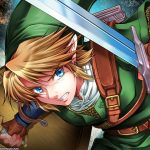
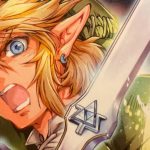
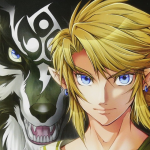
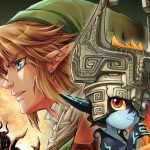
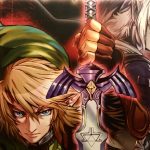
We’ve known for a long time that the Twilight Princess manga would feature an interpretation of Link that is different from the one The Legend of Zelda fans remember from playing the video game. The opening volume in the series wasted no time in revealing significant changes to the character, most notably that Link’s birthplace was destroyed by a mysterious catastrophe before he came to consider Ordon his home. The memory of that calamity has haunted him since the earliest pages of the Twilight Princess manga, and his lingering trauma swells to new heights in Volume Seven.
This is not the fearless, unflappable warrior that we controlled in the game. As Volume Seven begins, Link is a broken soul who continues to be devoured by his tragic past. It’s perhaps the most vulnerable that we’ve ever seen Link in any The Legend of Zelda production. He spends nearly the first half of the book bedridden on a pile of straw in the back of a dilapidated barn, cared for by a young woman named Anika, who has survived similar horrors.
But while Anika can treat Link’s physical wounds, she can’t do much for those that lie deeper. It takes someone who can empathize with the burden of being a hero to restore Link’s confidence. Volume Seven taps into one of the most popular pieces of Zelda lore to highlight the Hero’s Shade’s previous life as the legendary Hero of Time.
The ancient champion understands better than anyone how the weight of the responsibility behind saving an entire kingdom from certain doom can overwhelm an inexperienced champion. What more, he also understands that Link’s unique struggles exacerbate the trying circumstance.
Link became so desperate to redeem himself for failing to save his former home that he lost sight of the virtue needed in a true hero, leading to both the Master Sword rejecting him and the chaotic finale to Volume Six in a shadowy alternate realm (or so we’re lead to believe, since we still haven’t been given a complete explanation as to what exactly happened in Volume Six’s conclusion). The story arc where the protagonist must rediscover their belief in themselves and their cause is a staple in the hero’s journey, but the resolution is rarely as satisfying as this. Link gets back on his feet and receives a round of stern instruction and encouragement from the Hero’s Shade; he gets back to his mission once he has provided similar guidance to the young Anika, who knows even less about coping with tragedy than Link does.
Glimpses of the Hero of Time’s battle with Ganondorf are excellent callbacks to Ocarina of Time.
While Link’s first encounter with the Hero’s Shade in Volume Seven mostly boils down to exposition, Link does witness a more visceral look at the ancient warrior’s deeds in the Temple of Time. Seeing images of the adolescent Hero of Time pull the Master Sword free of its pedestal, and also seeing his adult self do battle with Ganondorf seven years into the future channels some of the most memorable moments from Ocarina of Time while establishing a new level of world-building for The Legend of Zelda manga. By having Twilight Princess’s narrative be so closely connected to and influenced by the happenings from Ocarina of Time, Akira Himekawa has made a meaningful stride in legitimizing the history and mythology of these manga adaptations.
That connection is equally compelling when it brings Ganondorf to the fore. The Twilight Princess manga already made efforts in earlier volumes to make Ganondorf more prominent in the story than he was in the video game, and those efforts continue with a substantial section of Volume Seven that’s dedicated solely to he and Princess Zelda. (A sequence that gives her more time in the spotlight, as well, than she had in the game.) It shows an eerily debonair side to the franchise’s iconic villain, as he literally sits down to enjoy a cup of tea with Zelda as his “guest.”
Perhaps no character in the Twilight Princess manga benefits more from the connection to classic Zelda stories than Ganondorf.
Their conversation also gives insight into Ganondorf’s motivations, which run a bit deeper than merely a desire for ultimate power. The manga follows the established lore of the Child Timeline, where the royal family of Hyrule had Ganondorf executed before he could lay waste to Hyrule with the scheme that played out in Ocarina of Time, thus avoiding the apocalyptic years of his rule during the Adult Timeline. The way that Zelda describes this in the manga, however, strongly implies that the Gerudo leader was captured and killed before he even began formulating his diabolical plan. It presents an uncomfortable moral quandary for Zelda’s lineage — the killing of a man who may have been fated to do wrong, but technically was innocent when he was put to death. Ganondorf now lusts for revenge, and he intends to satiate himself by targeting the descendants of those heroes who defeated him in both the Child and Adult Timelines.
Unfortunately, Zelda is not awarded the same opportunity to expand her presence in the story. While it is nice to see her in additional scenes following her apparent sacrifice to save Midna, her role in this tale still doesn’t evolve past being a prisoner to the antagonists. She never once loses her composure while conversing with Ganondorf, but she remains unable to contribute to the cause to save her kingdom. Hopefully Himekawa will do her justice in the series’ finale and adapt her wielding of the Light Arrows in battle against Ganondorf. Midna is another character who feels short-changed in this entry. Considering that she was absent for much of the previous volume after being appalled by Link’s rising aggression, she has now had very little impact on the story for a book and a half.
Volume Seven’s shortened length may be partially to blame. Where the previous volume maximized a slimmed-down page count to deliver a hard-hitting entry filled with dramatic moments, Volume Seven feels somewhat lacking by comparison. It’s heavy on exposition and features almost no action, save for a panel or two of the flashbacks to the Hero of Time’s encounter with Ganondorf. This is an entry that really could have used an extra twenty or thirty pages to add some high points and to have Link and Midna make discernible progress in their journey.
That will surely come in the remaining volumes, though, as Himekawa stated earlier this year that the series was nearing its conclusion. With combat lessons still to be learned from the Hero’s Shade, a trip to the City in the Sky being inevitable, and a showdown with both Zant and Ganondorf on the horizon, the final books in the Twilight Princess manga are positioned to close out this stellar adaptation with a bang.
SCORE
Volume Seven has a little too much exposition for its own good, but it still manages to introduce a fascinating connection to Zelda lore and enriches the world-building of Twilight Princess.
8/10
Jeffrey Pawlak
Jeffrey Pawlak is the Features Director for Zelda Universe, and has been a member of the website's community for more than 20 years. He is also a high fantasy author and an aspiring comic book artist.


 by Jeffrey Pawlak on August 17, 2020