Before its first volume even saw publication, the Twilight Princess manga promised a more ambitious narrative than what The Legend of Zelda fans were accustomed to seeing from Akira Himekawa. Previous manga adaptations by the two artists behind the pen name were highly condensed retellings of various games in the series, with most being a single book in length; rare exceptions like Ocarina of Time and The Four Swords were still only allowed two books to tell their stories. Twilight Princess’s manga has always been poised for a much grander scope, originally being set to span four volumes, and now confirmed to venture on beyond that total.
That means the opening volume is in no rush to hurl Link into a kingdom-trotting adventure. The approach is perhaps ironic, given that the game this manga is adapting has an infamously slow introduction, but the earlier goings of the Twilight Princess manga are far more compelling than what occurs in the video game.
Instead of completing menial tasks as part of a prolonged tutorial for the Wii’s motion controls, readers get a substantial look at Link’s peaceful life in Ordon Village. Also unlike the video game, Ordon Village is not Link’s hometown. Rather, he was previously a wanderer who eventually earned a place in the secluded, idyllic settlement. Link is clearly grateful to enjoy such carefree days in Ordon, particularly because a grim chapter from his past keeps reaching for him.
The manga’s beginning is far more compelling than the game’s, with readers getting a substantial look at Link’s life in Ordon Village.
Volume One is a terrific exercise in dread, as it takes its time building toward the inevitable conflict that readers know is coming. Despite the friendship, adoration, and safety that surrounds him in Ordon Village, Link struggles to bask in it all as he copes with the tragic, mysterious catastrophe that claimed his previous home and the people he once knew. He tries but fails to hide this inner torment, leaving Ilia, Colin, Rusl, and others concerned as to why this noble, admirable young man is seemingly so haunted.
All the while, Zant’s darkness encroaches upon Ordon Village. Glimpses of his spreading corruption and his inhuman forces are interspersed throughout the scenes focused on Link’s daily life, always a portent of the harrowing events that loom for the hero and his friends.
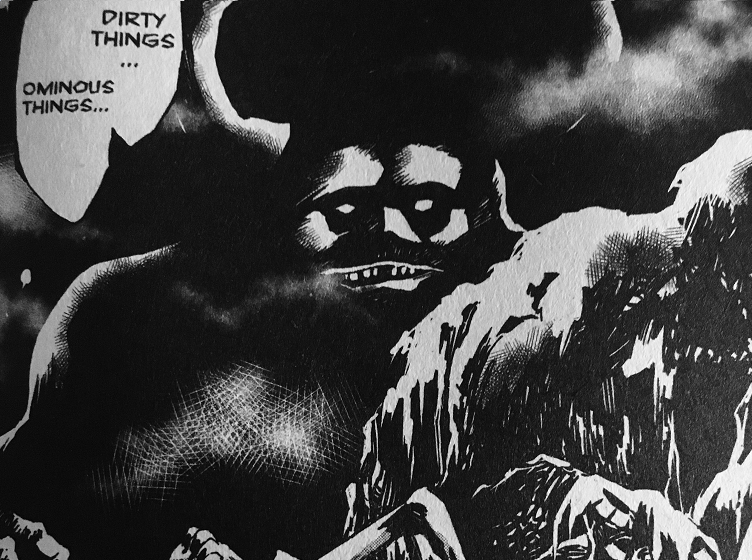
Akira Himekawa’s art has never been better as they balance views of the vibrant Hyrule and the stygian Twilight. They have dramatically expanded their use of shading when visualizing the story for Twilight Princess, expertly conveying different degrees of light, shadow, and tone of the world’s implied colors. Their effective implementation of that artistic technique could not have been more appropriate for a manga adapting a game whose very foundation ― visual and thematic ― revolves around the contrast between light and darkness.
Akira Himekawa’s art has never been better.
There is also a far greater level of detail on display here than in previous editions. Even small frames are often abundant in environmental features. Because the Twilight Princess manga doesn’t have the same restrictions on page count that previous The Legend of Zelda mangas were shackled by, it doesn’t need to cram an excessive number of frames onto each page. Panels are larger and able to show more elaborate images, with several full-page or two-page spreads that are particularly impressive. Himekawa’s detail shines brightest when up close to the characters, whose faces are fuller and more expressive than in any other manga adaptation.
No one benefits from this fantastic artwork more than King Bulblin. Since Zant’s presence is only fleeting in Volume One, it’s King Bulblin who carries the villainous load in this first book. Whereas in the video game, he is an imposing, yet somewhat oafish brute, the manga delivers a far more menacing interpretation. He is often drawn with demonic embellishment, while his behavior and many of his gestures are certifiably creepy. His monstrous cohorts are given similar treatment, as Bokoblins, Bulblins, Stalhounds, and Shadow Beasts always amass on the page to form devilish imagery.
These familiar enemies are at the center of some surprisingly violent moments toward the end of Volume One. As Zant’s forces descend upon Ordon and encounter various villagers, Himekawa isn’t as conservative about presenting brutality quite like Nintendo is. One fight sequence features more blood than what has probably been seen in every The Legend of Zelda video game combined. The violence is never over the top, and gore never rears its gruesome head, but this story probably isn’t suitable for the youngest of fans. While this manga could still be comfortably recommended for a wide age range, it earns the Teen rating it was assigned.
The Twilight Princess video game is renowned as being a very somber, cinematic experience in The Legend of Zelda franchise, and the opening volume in the Twilight Princess manga lives up to that reputation. There might be a long wait for action to manifest on the pages, but this debut book never dawdles. It smartly builds its world and characters before thrusting them into the adventure that will span the remaining volumes, assuring that this will be the very best of The Legend of Zelda manga adaptations yet.
Score
Volume One smartly builds its world and characters before thrusting them into the adventure that will span the remaining volumes, assuring that this will be the very best of The Legend of Zelda manga adaptations yet.
8.5/10
Jeffrey Pawlak
Jeffrey Pawlak is the Features Director for Zelda Universe, and has been a member of the website's community for more than 20 years. He is also a high fantasy author and an aspiring comic book artist.


 by Jeffrey Pawlak on June 20, 2019