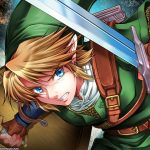
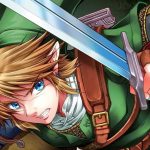
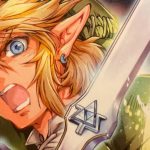
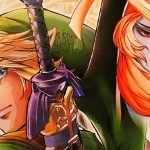
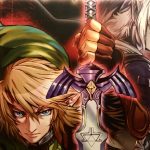
With its first two volumes, the Twilight Princess manga by Akira Himekawa proved that it had far grander ambitions than any other The Legend of Zelda comic that came before. Free of the length limitations that handcuffed previous projects, Twilight Princess’ turn in the manga medium has showcased a narrative, setting, and cast that all possess unprecedented scope for such comic adaptations of Nintendo’s iconic video game series. After a strong debut, followed by a solid sophomore outing, the Twilight Princess manga reaches new heights in its phenomenal third volume.
Nothing has benefited from this elongated series more than the array of characters, who fans will recognize from the acclaimed video game it’s based on. Link has been granted the time necessary to become a reasonably complex, dynamic character, but the supporting cast have also been thrust into the spotlight on occasion. The plot is in full stride as Link exits Faron and enters the sprawling Hyrule Field, and by now a lot of different people have been affected by the events that set his mission into motion.
Volume Three capitalizes on the opportunity, giving significant pages to Ilia and the Ordon kids as they go about their moments in the adventure, even when Link is not around. Readers will see multiple sequences that were never actually played out in the video game, only alluded to. Chief among those sequences is how they came into contact with Renado and Luda of Kakariko Village, both of whom become key figures in the many happenings across Hyrule.
Between the previous volume and this one, Ilia is provided scenes to vocalize the whirlwind of thoughts and emotions inside of her while caught in such a precarious situation. Thus far, there’s no sign that she’ll be afflicted by amnesia in the manga adaptation, which is for the best. That element held her back from developing as a character in the video game, her memory loss making her mostly a plot device for Link’s plight.
In any other manga adaptation, a character with as little impact as Coro had on the video game’s story probably never would have made it to the page, but he gets his own scene here in Twilight Princess’ third volume.
Then there’s the Hero’s Shade, the enigmatic figure whose appearances were optional in the video game save for his introduction. His significance in The Legend of Zelda lore has earned him a place in the Twilight Princess manga, with Himekawa clearly intent to put him in a leading role going forward. This latest appearance all but confirms his legendary heritage that fans came to love more than ten years ago, and maybe some new narrative twists to his identity. Midna shares a very tender moment with his wolf form upon encountering him, at the same time revealing that she somehow knows him, but abstaining from specifying for the audience. Keen-eyed readers may remember Midna having a wolf companion by her side during the prologue sequence in the opening book, confirming another instance of clever foreshadowing born out of Himekawa’s liberties in telling the story.
The Hero’s Shade is impressively illustrated by Himekawa, appearing both magnificent and ghastly.
In the visual sphere, the Hero’s Shade’s wolf form is a great example at how Himekawa conveys bright color in black and white, and amid heavy use of shading. The contrast reveals brilliant light where the stygian inks are absent. We got a glimpse of the Hero’s Shade before, but now readers get to see him in his full glory, and eeriness. Himekawa realizes all of the fine detail on his intricate design, his bones, pieces of armor, and traces of overgrowth all drawn with evident care. Equally as impressive is how Himekawa illustrates the compelling duality of his character. The Hero’s Shade is both magnificent, and ghastly. Through him, we see the nobility and benevolence of an illustrious hero weighed down by the shadow of regret. Link’s lengthy meeting and subsequent duel with him would have been the most memorable part of Volume Three, if not for a superb climax.
Fights in The Legend of Zelda manga often end after just a couple of panels. The rare battles that do manage to take up a few pages feel drawn out. For Link’s rematch against King Bulblin and his score of Bulblin Riders, the Twilight Princess manga provides ample pages to deliver the greatest action sequence of any The Legend of Zelda comic ever. There is no hyperbole in that statement.
The battle is panel after panel, page after page of combat, as Link contests with a horde of mounted enemies before the melee spills onto the Bridge of Eldin. Its kinetic, rousing pace and scope outdo the miniboss fight as seen in the video game, evoking the thrill that Twilight Princess’ debut trailer elicited. Renado gets involved at one point, showing his worth in battle as a skilled archer, while Epona shows her strength as a brawny warhorse, cooperating with Link well beyond just carrying him in battle.
The sequence is so well laid out by Himekawa that as Volume 3 closes out soon after, you will have forgotten the only real issue with the book. Midna does very little in this volume, which feels quite bizarre given that every other character, major or supporting, from the game gets their turn, or turns, to shine. She mostly acts on the periphery here, having scant impact on the story save for the hint that she has an apparent relationship with the Hero’s Shade. Don’t expect to see Zelda in any capacity, either, even in a flashback. Hopefully, her role can eventually be expanded, as other characters’ have been through the manga adaptation, and that Midna can return to prominence in Volume Four.
the Twilight Princess manga provides ample pages to deliver the greatest action sequence of any The Legend of Zelda comic ever.
But with just how consistently and how emphatically Himekawa is capturing everything that made Twilight Princess great, readers should feel confident that the two heroines will eventually thrive, along with so much else about this adaptation. The ending to Volume Three sets up a meeting with the Gorons, who at the tail end of this entry are revealed to have suddenly become hostile. The manga may not be covering Twilight Princess’ plot with haste, but that’s been solidified as a wonderful thing to this point. There is a whole lot more of a riveting adventure left for fans to enjoy in forthcoming volumes.
Score
This is the best volume thus far, with an incredible climax.
9/10
Jeffrey Pawlak
Jeffrey Pawlak is the Features Director for Zelda Universe, and has been a member of the website's community for more than 20 years. He is also a high fantasy author and an aspiring comic book artist.


 by Jeffrey Pawlak on June 22, 2019