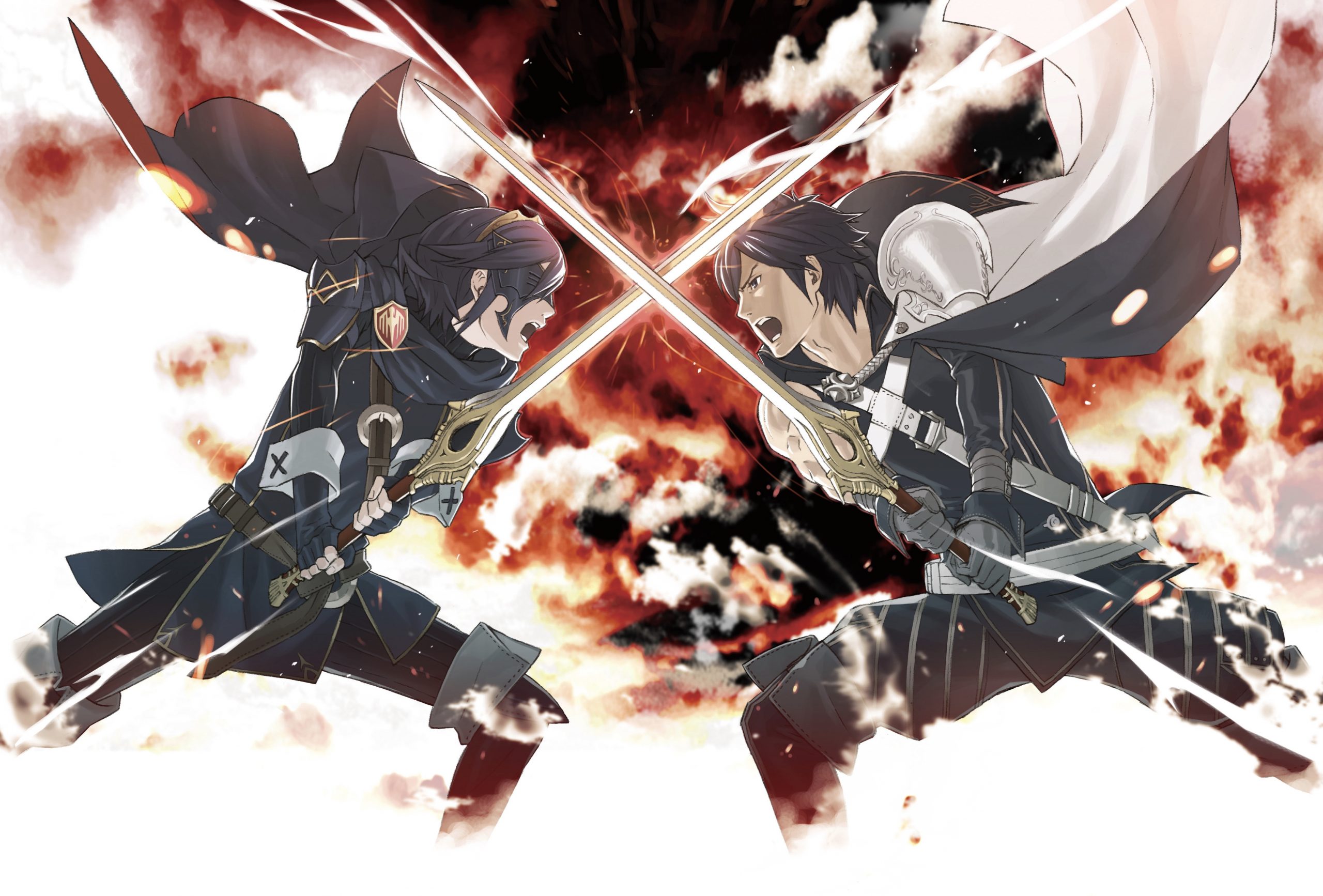
For Fire Emblem to celebrate its 30th anniversary while the series enjoys historic popularity is much more than an achievement — it’s a victory.
Any video game property that remains critically and commercially successful over the course of three decades deserves to be celebrated, but few other properties have fought as hard as Fire Emblem has to earn this milestone.
Simply finding an international audience proved to be a challenge for the tactical RPG series. Fire Emblem’s first 13 years in existence were spent exclusive to Japan, with the first six games in the series never seeing worldwide releases. Its introduction to global markets wasn’t even one of its own games but instead was when the characters of Marth and Roy appeared in 2001’s Super Smash Bros. Melee.
Nonetheless, those surprise entrants in Nintendo’s fighting crossover created the breakthrough that Fire Emblem needed. After Marth and Roy generated enough interest from Western fans to see what their franchise was all about, Fire Emblem finally made a proper international debut with the seventh entry in the series.
Venturing into uncharted territory
2003’s Fire Emblem (known as The Blazing Blade in Japan), released on Gameboy Advance, followed shortly by 2004’s The Sacred Stones, also for Game Boy Advance. Both were highly praised by those who played them, and while their sales were a modest success, they sold enough for Nintendo to offer Fire Emblem a more grandiose platform.
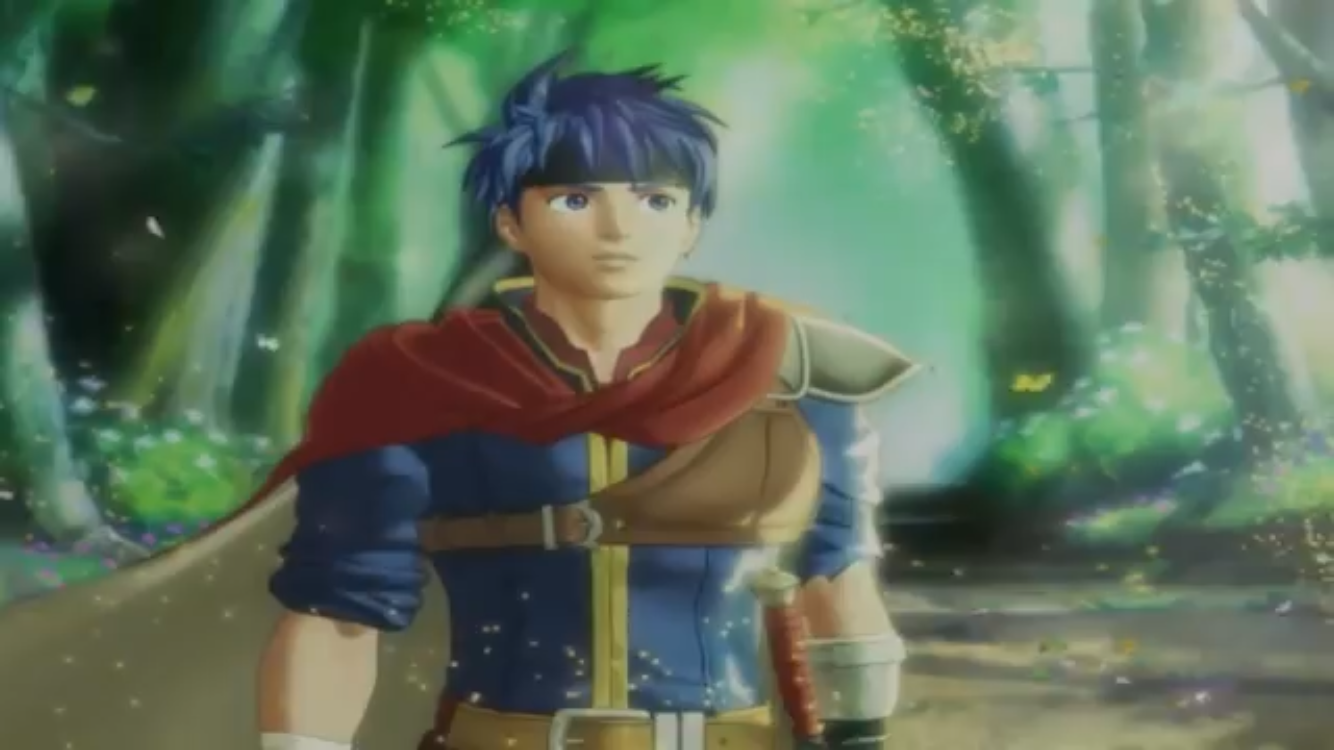
Fire Emblem transitioned to home consoles as the next two releases (Path of Radiance and Radiant Dawn) were developed for GameCube and Wii, respectively. The two games, now referred to as The Tellius Series, sought to make a bigger impression than their handheld predecessors by featuring 3D visuals, larger maps, and animated cutscenes to accompany their strategic gameplay and sweeping narratives of war, adventure, mythology, and political intrigue.
The results apparently did not end up being quite what Nintendo hoped for, however. While both Path of Radiance and Radiant Dawn went on to become two of the franchise’s most beloved titles in the Fire Emblem fandom, their commercial success was comparable to the Game Boy Advance releases, if only slightly better. A remake of the very first game, which would release on the Nintendo DS in 2008 (early 2009 for North America) sold somewhere north of 500,000 units. The numbers were admirable, but admirable was not enough for the series to shed its niche status.
After five years and five games, Fire Emblem was off to a largely inauspicious start as a global property. The games lacked spectacle to grab audiences in the way that blockbuster contemporaries did, particularly the other RPG standouts. Whether in 2D or 3D graphics, Fire Emblem was still about top-down perspectives, grid-based movement, and stories primarily told through character portraits and hand-drawn images without voice acting.
Fire Emblem titles were deemed inaccessible by many western gamers for their difficulty.
But there was a far greater hindrance to Fire Emblem achieving mainstream success — the games’ difficulty. Fire Emblem titles were quickly deemed inaccessible by many if not most Western gamers for their challenging blend of strategy and roleplaying mechanics. Most daunting was the permanent death feature, which punished players for failing to protect their units on the battlefield. When a character was killed by an enemy, it meant either proceeding through the rest of the game without that character or resetting the game and starting the mission over from the very beginning. When many Fire Emblem missions are known to stretch into the hour-long territory, that’s about as unappealing as a pair of choices can be.
Fire Emblem unfortunately tried to secure a foothold worldwide before “get good” was a proudly championed phrase in the gaming industry. Punishing difficulty was more readily embraced in games like Ninja Gaiden Black and Devil May Cry 3 than it was in slow-paced strategy titles with a scarcity of stunning imagery. Radiant Dawn was especially targeted by gaming journalists for what they deemed to be unreasonable difficulty. This was just a few years before Demon’s Souls would spawn an acclaimed franchise that is revered to this day for its brutal difficulty.
The message from gamers was clear. Dying over and over again in an exhilarating battle against some vicious monstrosity could still be fun. Seeing your flying unit get shot down by an enemy archer because you forgot to move it back one space to be out of range was cheap and aggravating.
Fair or not, that line of thinking kept Fire Emblem from winning over all but the most dedicated fans. It left the series in an infamously precarious situation where Nintendo strongly considered putting Fire Emblem on indefinite hiatus prior to Awakening, the game that would save the franchise.
By returning the series to handheld consoles, Awakening immediately solved the issue of audio and visual expectations. Where home console releases like Path of Radiance and Radiant Dawn were perceived as having underwhelming production values, Awakening did not need to be cutting edge. A game on the Nintendo 3DS would not be scrutinized by fans or critics for 2D maps, dated 3D models, or a narrative mostly told through still images with minimal voice acting.
Awakening’s greatest impact, however, was a more calculated decision during development. It was also a controversial one within the team at Intelligent Systems and Nintendo. The addition of a Casual Mode (which was previously seen in the Japan-only New Mystery of the Emblem) did away with permanent death by bringing back fallen units at the start of the next chapter.
Awakening’s roaring success ensured that Fire Emblem would live on to see more releases.
That single feature forever changed the course of Fire Emblem‘s future. It broke down the seemingly impenetrable wall that kept countless gamers from giving the series a chance, offering an experience that was more forgiving with the challenges while staying true to the series’s tradition of detailed battle preparation and tactics. Awakening was the perfect introduction for many, but it was also a terrific entry for those already familiar with the series. Its array of difficulty options, the pair-up mechanic, relationship building between characters, greater flexibility in character classes, and even a customizable avatar protagonist allowed gamers to personalize their experience with the game in a way that no previous Fire Emblem had done before. Awakening went on to sell nearly two million copies and commenced the franchise’s journey into unprecedented popularity.
Flourishing like never before
The immediate follow-up to Awakening — the trio of Fates titles — recognized the boon that player choice was to the series. The concept of the Fates games was that of a Fire Emblem production with multiple paths through the story, offering three distinct adventures in the lands of Hoshido and Nohr. They kept all of the customization systems seen in Awakening while bringing new ones into the mix, such as building up your very own home base into a sort of village where you could interact with your units. Fates‘ over 1.8 million copies sold fell just shy of Awakening‘s total, proving that their predecessor’s success was no fluke and that Fire Emblem was here to stay.
Acknowledging the franchise’s resurgence on the 3DS and eager to capitalize, Nintendo began to provide more Fire Emblem products to the masses. The 3DS would see one more major entry with Shadows of Valentia, a remake of the second installment from 1992 (titled Fire Emblem Gaiden in Japan). But the series would venture to many more platforms aside from the 3DS. Fire Emblem took to its largest potential audience of all time with Fire Emblem Heroes for mobile phones. It was an ideal property for Koei Tecmo to make a Fire Emblem Warriors on Switch and 3DS. Few fans, if any, expected to see Tokyo Mirage Sessions, an unlikely crossover between Fire Emblem and Shin Megami Tensei, originally on Wii U and later ported to Switch.
If Fates proved that Fire Emblem was here to stay, the brand’s spinoffs proved that it was here to thrive. Fire Emblem Warriors held its own during the Switch’s bustling first year, going on to enjoy lifetime sales of over a million copies. The Musou style of hack-and-slash, crowd-clearing gameplay saw a welcome injection of depth by channeling Fire Emblem’s strategic elements and left a future sequel as a very strong possibility.
the Fates games proved that Awakening was no fluke, and that Fire Emblem was here to stay.
Fire Emblem Heroes will need no sequel for a long time, judging by the money it continues to rake in. As of January 2020, Heroes accounts for well over half of Nintendo’s total mobile revenue, having earned an incredible $656 million. That’s box-office smash-hit kinds of revenue.
The spree of releases culminated in the Fire Emblem: Three Houses for the Switch, a game that launched the already prospering franchise to a whole new level of prestige. Three Houses emulated Awakening‘s and Fates‘ focus on customization and then expanded the options even further. Freedom is paramount during your time at Garreg Mach Monastery, where varying casts of characters and four different paths through the story’s central conflict await. As a teacher, your avatar character has the ability to choose what skill sets your students master, what weapons they become proficient in, and inevitably what class of warrior they become. Whether a student becomes a magic user or wields one of the various martial tools is your decision. If you have ever wanted to fight alongside a squad comprised entirely of warriors on horseback or Wyvern Riders, this is the game where it is possible. Those players willing to take on the responsibility and effort are rewarded with the satisfaction of having a real, discernible influence on the units they command in battle.
That’s the beauty of Three Houses — you can put as little or as much as you want into the game, yet you always get a fulfilling, complete video game experience. The meticulous and monotonous nature of teaching will not be for everyone, but exploring it opens the door to a staggering amount of opportunities.
Enormous monsters often challenge you on the battlefield in Fire Emblem: Three Houses.
Spectacle may have been missing from Fire Emblem‘s past, but it was on full display in Three Houses. Garreg Mach comes alive as a sprawling hub setting that can easily make the game feel like a life simulator just as much as it is a tactical RPG. Engaging with students and other monastery inhabitants can be as simple as sharing conversations, or it could be something more in-depth such as eating dinner together, cooking meals, having tea parties, singing hymns, or participating in combat tournaments. Enormous monsters must be dealt with in battle regularly; these creatures take up multiple spaces on the map and require you to methodically break down their defenses to slay them. From the countless support conversations to the story’s pivotal cutscenes, every line of dialogue is done through full voice acting, and there is an astounding amount of it packed into the game.
After 29 years, Fire Emblem finally felt like a blockbuster.
Welcoming any and all gamers
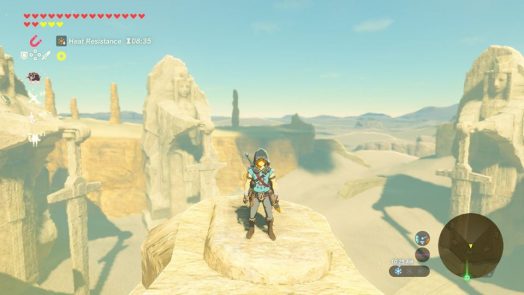
There are more than a few parallels between Fire Emblem’s rise to mainstream prominence and that of another iconic Nintendo franchise. Just two years before Three Houses shattered Awakening’s sales record (it is approaching 3 million units sold at the time of this article’s publication), Breath of the Wild turned The Legend of Zelda into a household name all over again by championing freedom and scope. Breath of the Wild took full advantage of the Wii U’s and Switch’s hardware to deliver the high-definition odyssey that fans had dreamed about for years, welcoming them to an enormous rendition of Hyrule that dwarfed any world the series had known beforehand. It even made the daring choice to have voice acting for its cutscenes.
Both Fire Emblem and The Legend of Zelda have benefited tremendously by offering players freedom.
While The Legend of Zelda was never in the same danger that once threatened Fire Emblem, it did spend several years where it was never close to commanding the mainstream attention that it now does following Breath of the Wild‘s impact or even the attention that past titles like Ocarina of Time and Twilight Princess garnered. A myriad of factors contributed to this, but key ones among them were The Legend of Zelda‘s contemporaries boasting vastly more impressive production values and Zelda’s structure being too intimidating for those uninitiated or only casually familiar with the series.
Elaborate dungeons filled with mind-bending puzzles and perilous platforming are what come to mind for most when they think of The Legend of Zelda. It’s why Ocarina of Time‘s Water Temple has become a meme that strikes fear into the hearts of many just by its mentioning. In the past, the inability to surmount an obstacle in The Legend of Zelda meant that Link’s quest came to a grinding halt. Such a roadblock was highly unlikely to occur in Breath of the Wild, because anything you could not overcome could easily be skipped in favor of a different challenge. Your path through Hyrule was made through your own volition. What realms you visited, what foes you fought, what equipment you bore, and what characters you interacted with were entirely up to you.
This is an era where the philosophy of unrestrained exploration resonates in video games like no other. Freedom to journey through fantastical worlds whichever way that the individual desires is the most enticing promise to consumers. It’s why Minecraft, The Witcher 3: Wild Hunt, and The Elder Scrolls V: Skyrim became modern classics. Those who grew up playing and adoring video games, including brands still going strong today, have any number of real-life responsibilities that limit their available time to devote to gaming. Most of us have full-time jobs, significant others, children to raise, elderly parents to care for, houses to maintain, finances to manage, artistic endeavors to pursue, or any and all other duties. Some gamers may prefer a less loaded path through a new entry in a series they love. Fire Emblem and The Legend of Zelda are now accommodating that preference, all without sacrificing content for those who may wish to dive deeper.
Fire Emblem continues to grow beyond its game design and production values. For years now, the series has readily incorporated new aesthetics to forward greater representation. Fire Emblem may be a brand primarily influenced by the trappings of European high fantasy, but recent entries have also featured other cultural inspirations.
After Say’ri, Lon’qu, and the country of Chon’sin brought a distinctly Eastern Asian quality to Awakening, the Fates games introduced an entire kingdom that evoked East Asia. The land of Hoshido is one of ninjas who wield shurikens, shape-shifting Kitsune like Kaden, the magnificent Castle Shirasagi that is lined with pagoda towers, and magical spells modeled after animals in the Chinese Zodiac. Fates‘ protagonist, Corrin, can assume a dragon form that resembles the mythical Qilin.
Dark-skinned characters had appeared in games prior to the series’ renaissance, but they are steadily becoming more prominent in Fire Emblem‘s adventures. Heroes like Vaike, Basilio, Flavia, Rinkah, Niles, and Benny took the stage in Awakening and Fates, while Claude von Riegan, Dedue, Petra, Cyril, Hapi, and others led the way in Three Houses. Claude’s aspirations in his story route, Verdant Wind, are particularly compelling, as he vies to unite the many different countries that surround Fodlan and bring the continent’s peoples together.
Much like Claude, Fire Emblem now seeks to broaden its horizons. On this illustrious anniversary, there is just as much to look forward to for the series as there is to celebrate. After 30 years of hard-fought success, Fire Emblem still has many triumphs ahead — maybe its greatest.
Jeffrey Pawlak
Jeffrey Pawlak is the Features Director for Zelda Universe, and has been a member of the website's community for more than 20 years. He is also a high fantasy author and an aspiring comic book artist.


 by Jeffrey Pawlak on April 20, 2020
 The message from gamers was clear. Dying over and over again in an exhilarating battle against some vicious monstrosity could still be fun. Seeing your flying unit get shot down by an enemy archer because you forgot to move it back one space to be out of range was cheap and aggravating.