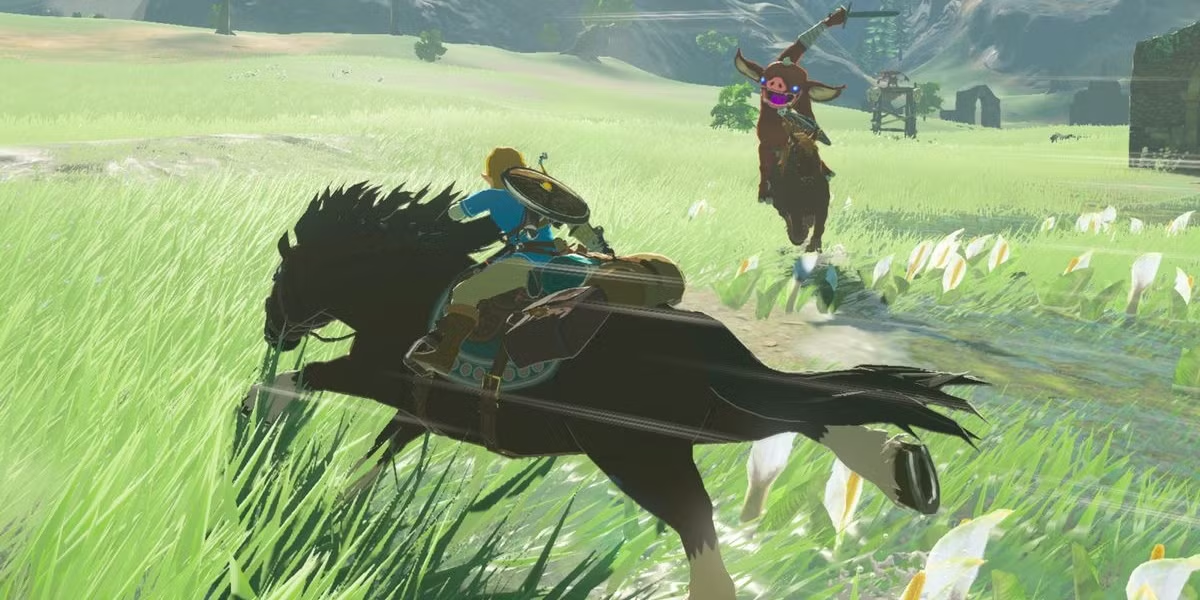
The Legend of Zelda franchise has always put forward games that encourage players to be resourceful and creative, oftentimes giving players large sandboxes, rigorous optional challenges, and an abundance of resources to experiment with. As a result, no two people really experience the games in quite the same way – the stories may be the same, and some of the games are certainly more linear than others, but we all tackle the challenges a little differently.
Among these challenges there is one (near) constant for all players. Prior to the Nintendo Switch installments in the franchise, nearly every dungeon had a “dungeon item” – like the Forest Temple’s Fairy Bow in Ocarina of Time, or the Grappling Hook used to traverse Dragon Roost Island in The Wind Waker. These dungeon items are important to Link’s quest, used to traverse the world, unlock new areas, and defeat or make short work of new and old enemies. However, the games also needed to teach players how these items were intended to be used. This led to them becoming core to not just traversing the dungeon they are found in, but also in making them a particularly effective, if not mandatory, tool in defeating the dungeon boss.
In Breath of the Wild, and again in Tears of the Kingdom, gone are the key items of previous installments. They are instead replaced with Sheikah Runes, and the Zonai Arm and Sage Abilities, respectively. However, these games do not lose the element of teaching players the traversal and combat uses of these abilities. Magnesis, Bombs, and Cryosis play core roles in defeating the second stage of various Blights in Breath of the Wild, and all of the Temple bosses of Tears of the Kingdom require the aid of their respective Sages to defeat, along with those abilities being important to the traversal of the areas themselves.
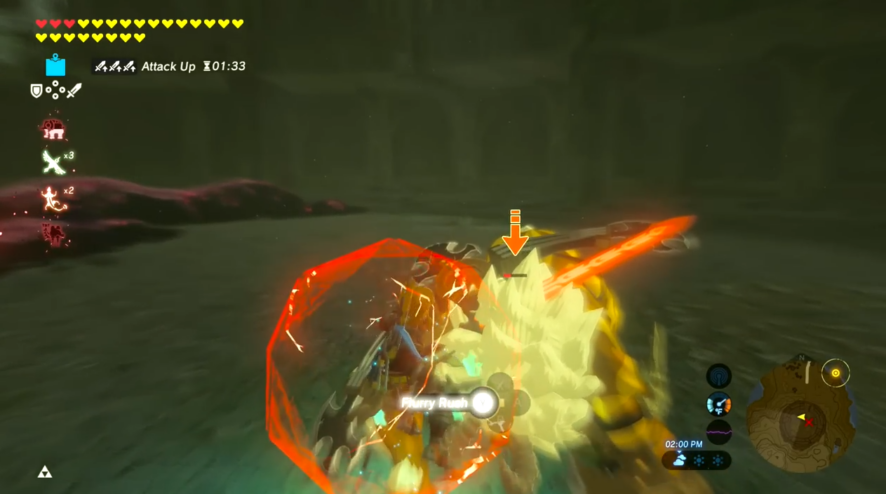
Above all of these, though, is the mechanic I would like to direct the spotlight on this week: the common combat mechanics of the Switch games. Parrying, Flurry Rush, Power/Spin Attacks, and Archery Bullet Time have been crucial across both Switch titles in dispatching enemies, both large and small. They are also skills that devout Zelda fans have spent the better part of almost eight years refining, myself included. They provide the moments that feed a heroic fantasy for the Hero of the Wild: felling a horde of Bokoblins mid-flight with precise bow shots, valiantly dodging the crushing might of a hammer-wielding Lynel, or parrying the fiery laser of a Guardian. Some fans push these skills to their limits, learning the patterns of enemies and perfecting their slaughter to defeat even Gold Lynels without so much as a scratch. Others use them as occasional tools, thinking little of the skills beyond their necessary use (like Thunderblight Ganon) and their epic aesthetic.
Now I admit, I have lost sleep over my attempt to achieve 100% completion in Breath of the Wild on Master Mode. I am also admittedly stuck on the final Trial of the Sword and have been for two years. Lizalfos are nasty buggers when you have limited resources. Imagine my satisfaction with the years of practice fighting countless enemies when I finally reached the confrontation with Ganondorf himself in Tears of the Kingdom.
The battle with the Demon King himself begins as how many remember Ganondorf. He is a proud and skilled warrior, alternating between a variety of weapon stances and styles. Wielding gloom weapons, and creating patches of the life-draining substance with his own power attacks that mirror the ferocity and style of a Lynel’s, truly put him a step above many of the formidable creatures Link has faced in either of the Switch games. It is made quite clear to the player in an opening gambit that Ganondorf is strong, agile, and skilled. Simply avoid his attacks and strike when his guard is down…
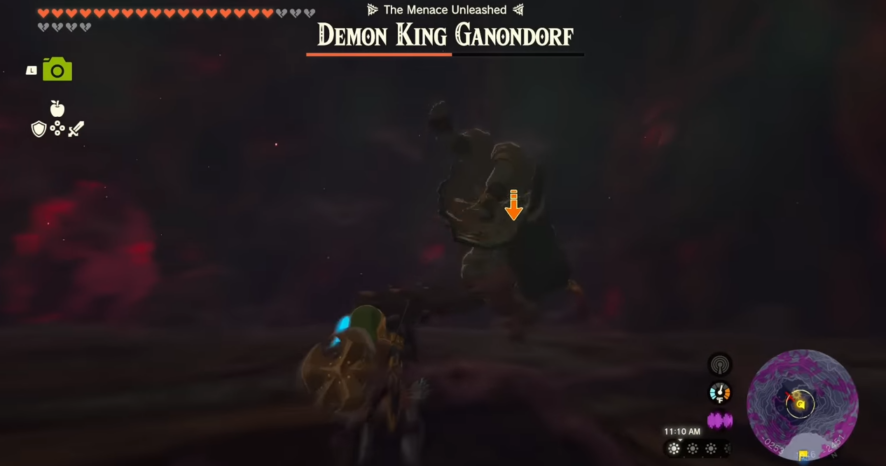
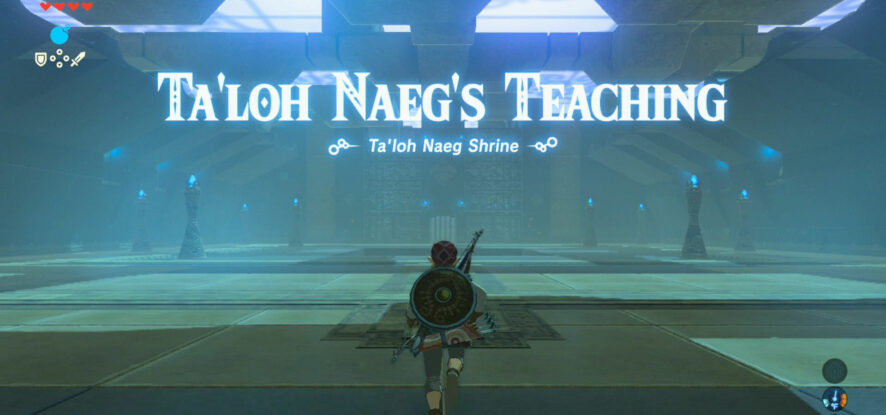
Only to be caught off guard when, for the first time in either of these games, we see an enemy who also clearly practices Ta’loh Naeg’s Teaching; where Link learns the Flurry Rush and other maneuvers in Breath of the Wild. The Demon King becomes that much more of a threat when, even with careful timing, Link must try his hardest just to have a chance of harming the usurper reborn.
Of course, as the braggart general makes us well aware, we only see a fraction of his power before we enter his second stage. In true Soulsborne style, we witness helplessly as the health bar continues to expand. He summons multiple phantoms to his side, not unlike the midgame fight we are treated to at Hyrule Castle. Few mechanics change here, but the extra combatants, both the Phantoms and the arrival of the Sages, complicate matters.
The true terror of Ganondorf’s final fight, and the one that caught me very off guard beyond the “oh, this is terrifying, but also a really cool inversion of the mechanic,” comes when the warlock’s phantoms are dispelled, your allies taken from the fight, and it is simply Link versus the unbridled hatred of a historic warrior and mage. In this form, Ganondorf’s attacks not only deal gloom damage, but fully remove hearts from Link’s pool. He clearly plans to win in a war of attrition, only fortified when we see him dodge Link’s Flurry Rush, as I’m sure most players experienced once in their own fights. It is clear Ganondorf is on another level. His martial prowess rivals, and arguably may exceed, Link’s own. He wields powerful sorcery mixed with his attacks, paying an homage to the age old Dead Man’s Volley of past Ganondorf fights. We can see in the fight that, much like Skyward Sword‘s Demise, he hardly flinches at the raw holy power of the Master Sword. Chills.
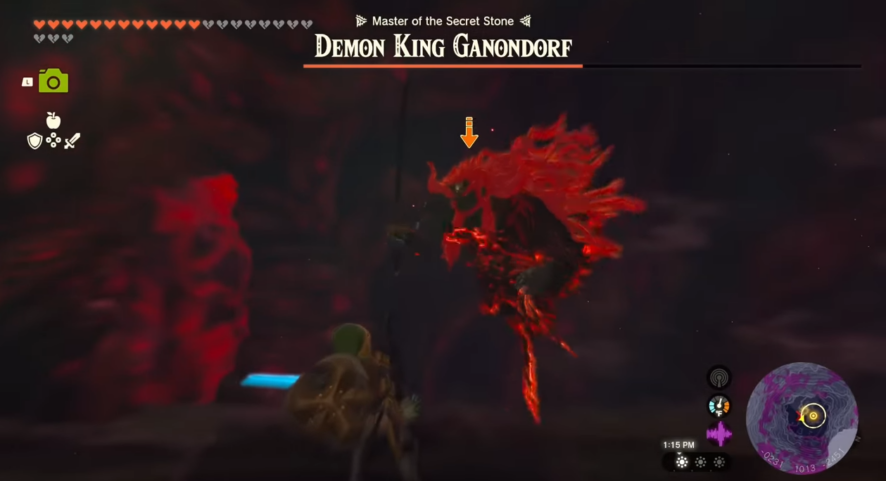
To this day, and likely for a while to come, the fight against Ganondorf will live on as one of my favorite final boss fights across all my video game experiences. Especially when looking at Nintendo games, it lives alongside other triumphs like Bellum of Phantom Hourglass, Pokemon’s Sinnoh Champion Cynthia, and Volo from Pokemon Legends: Arceus. I can only look forward to what lies ahead, as the developers of these older series begin to realize that their players love the challenge that comes with facing enemies that clearly outclass them.