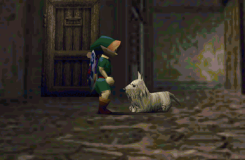
The overworld is a classic feature in game design to assist the player in traversing to the many landscapes and challenges the game has to offer. An overworld is something of a world terminal, a central nexus. Termina Field, found in Majora’s Mask, embodies this concept. Termina Field can act as a reflection of Ocarina of Time’s Hyrule Field; the dangerous wilderness of the monsterous Chuchus and Deku Babas, and a gateway between the safeguarded towns to the main dungeons of the adventure.
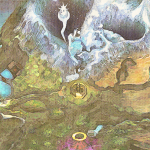
Unlike Hyrule Field in the game’s predecessor, Ocarina of Time, Termina Field is more structured and quadrant-based, containing four distinct sections, divided into the four cardinal directions. To the frigid north is the snow-capped mountain region, where Snowhead Temple waits in frozen stillness. To the east is the shadowy ruins of Ikana Canyon where spectral Stone Tower Temple looms. The Southern Swamp, home of the Deku Scrubs, also houses the Woodfall Temple, enshrouded in a toxic bog. Finally, a journey to the west will bring you to the Great Bay and the Great Bay Temple waiting submerged beneath the waves. Other notable locales include Milk Road, which leads to Romani Ranch and Gorman Track, as well as the Astral Observatory.

What elevates Termina Field beyond a mere overworld is it’s underlying symbolism. Each direction leads to a distinct biome, one of four major dungeons, giving the adventure a sense of deliberate directionality. This design choice might be as simple a player navigational aid, but it also hints at the ethereal nature of the Termina. The precise and segmented destinations allude to the fact that Termina is not just a physical realm, but an illusory one. Termina Field stands as a testament to intentional and thoughtful game design. Something as simple as an overworld might not just be a simple transitional space, but an invitation to explore the game’s intricate themes.