Core to many games is the idea of weakness and resistance. Be it the type charts of Pokémon, the Lance beats Sword beats Axe of Fire Emblem, the targeted weak/strong/null of various Persona, or something similar, many hobbyist gamers have interacted with the idea that water beats fire. Across the Zelda franchise, there have been a handful of elements Link and other characters have interacted with as sages or sorcerers alike.
This week I want to write about my favorite interaction with the elements of the Zelda franchise, but was unable to decide between two entirely different games: Ocarina of Time and Phantom Hourglass. Both games make unique use of the dungeon item to manipulate puzzles and the boss fight using albeit a similar gimmick, and I couldn’t bring myself to choose one favorite.
If you’ve read my articles before, you will know that I am a diehard fan of the DS title releases, with Phantom Hourglass being chief among them. Gleeok of the Isle of Frost is far from the only enemy which makes use of the elements, but is unique in that the fight is won by using the elements against it. The two-headed sea dragon bends both fire and frost to its whim, between stirring tidal waves in an attempt to wash Link away. The fight itself made for so many creative uses for the dungeon item, the returning Grappling Hook, from ricocheting Gleeok’s attacks between its heads to catapulting Link over harmful tidal waves.

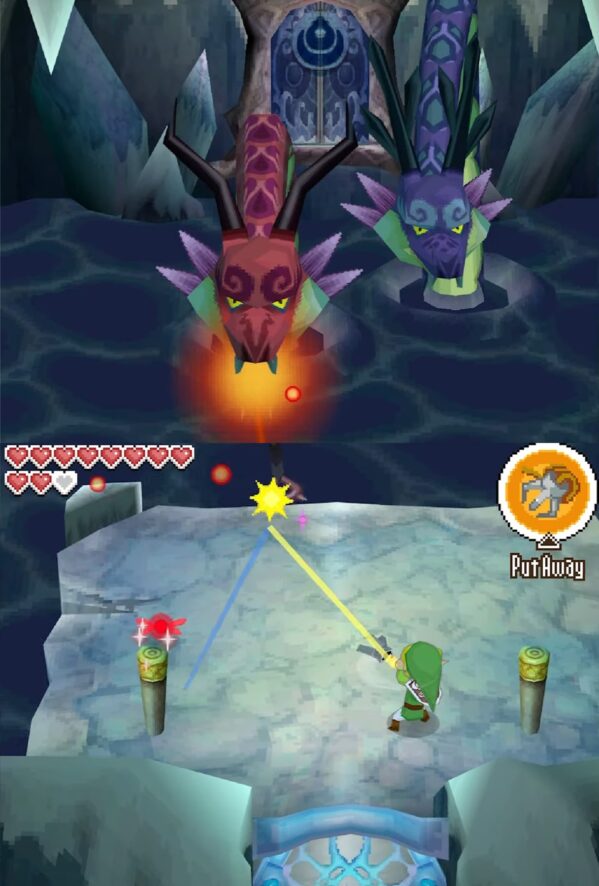
I admit, I completely forgot about the fight against Gleeok until recently when I replayed Phantom Hourglass for research towards another one of my articles, in no small part thanks to the 10 years since my last playthrough. With my recent playthrough almost completed, though, it stands out as one of the better boss fights in the game. The use of the two-screen setup to telegraph attacks was a unique way to restrict Link’s arena space to a portion of the screen in the fight – something seldom done in boss fights in the franchise. Even with limited space to move, Gleeok’s fight was dynamic and there’s seldom a moment Link isn’t moving.
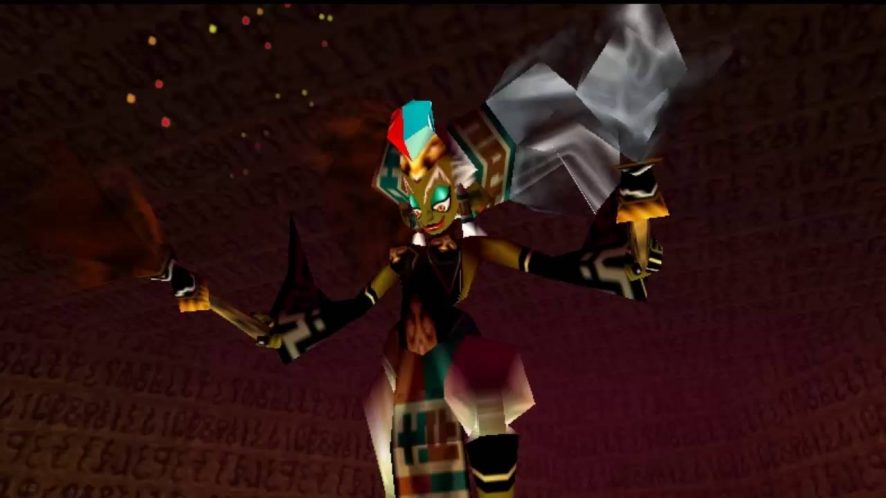
Going a bit further back in time, and to one of my favorite items in the franchise, Twinrova’s fight in Ocarina of Time was truly a dance of fire and ice. Koume and Kotake, the sorceresses of flame and ice, have appeared in various installments in the franchise — first in Ocarina of Time, again in the Oracle games, and most recently in a memory within Tears of the Kingdom. In Ocarina of Time, the tricky sorceresses seek to sear Link’s flesh to the bone and freeze him to his soul, were it not for the Mirror Shield. Once more, it is not a fight where Link himself has the power to twist the elements, but uses the enemy’s mastery of them to his advantage. Twisting one sister’s magic against the other is the name of the game, directing the energy not unlike the light puzzles in the Spirit Temple so far.

Twinrova herself is a whole new beast. The sisters have 800 years between them, and that wisdom shows in Twinrova – who prefers the use of light magic attacks over the beams the sisters channeled. Our hero now needs to collect energy from multiple blows, but ensure to not lose that progress by blocking the wrong attack. All of the players in the fight move more, trying to outplay each other while avoiding the biting cold and searing heat.
All of this may be a long way of appreciating the importance of elemental magic in Zelda games; after all, I was overjoyed to see their use for common enemies in Breath of the Wild and the ease of crafting elemental weapons in Tears of the Kingdom. But both of these fights left an impression of something more than just magic and the elements. They were dances where Link was outclassed in skill and had to make his own openings, rather than wait for the weak spot to reveal itself.