Who among us hasn’t indulged in a good, cheesy soap opera at least once in our lifetimes? Sure, we may not religiously follow the daily hijinks of those who populate the universes of Days of Our Lives and General Hospital (and if you do, you have far more patience than I ever will), but I think we’ve all stumbled across a random episode of a popular melodrama at some point and found ourselves unable to look away from what was happening on the screen. I mean, how could we? Hopelessly convoluted relationship dynamics, storylines plagued by logical fallacies, explosive plot twists, and enough hysterical sobbing to fill a silo mix together into a cocktail of pure, utterly glorious chaos that one can’t help but find strangely amusing. And when an ongoing narrative is lagging, what’s the one trope guaranteed to shake up the status quo and reinvigorate interest? Well, the reveal of a long-lost evil twin is clearly the most effective tactic, but a devastating betrayal comes in at a close second.
Since many of us can relate to the anger and heartbreak that comes with finding out a beloved relative or friend broke our trust, the betrayal trope continues to be a powerful, if overused, tool in crafting compelling stories, especially those of the romantic variety. Even the creators of Zelda couldn’t seem to resist using it, as it plays a minor role in one of the most famous love stories in the entire series. In Majora’s Mask, when an insecure Anju discusses Kafei’s disappearance with her mother, the latter insinuates that Kafei may have abandoned Anju in order to elope with Cremia, the ranch girl who just so happens to be Anju’s best friend. We as players know this isn’t true, but this harsh accusation does indeed heighten the tension of the story, as it sews seeds of doubt into Anju’s mind and forces her to question whether she should continue waiting for her missing fiancé to return.
But what if I were to tell you that this small but intriguing element to the Kafei and Anju sidequest wasn’t what the creators of Majora’s Mask originally had in mind? It would seem that our lovely friend Cremia once had a much different relationship with the mayor’s runaway son, and the key to unlocking this secret lies within an exceedingly rare artifact from the N64 era of gaming.
In the months preceding the retail release of Majora’s Mask, two different types of “Not for Resale” cartridges circulated around kiosks at particular stores (some say Walmart, others say Toys ‘R’ Us) in an effort to promote the game. One cartridge, the more abundant of the two by far, came in the iconic gold color that we have come to know and love, containing more or less the same game as the one sold in retail. The far more obscure Gray Cartridge, on the other hand, hid a remarkable treasure behind its deceptively bland facade: a preview demo with a level select, strange glitches, and a number of textual differences that were amended prior to release.

Most of the changes made to the text for the final version of the game were rather mundane, usually done to fix formatting errors and restructure clunky sentences. For example, when speaking with the guards at the Deku Palace, the phrase “Those not on official business may not enter” was changed to “Only those on official business may enter”, because the latter sentence sounds more natural to an English speaker. But while watching AlecKermit’s Gray Cartridge review video, one seemingly inconsequential alteration to Cremia’s dialogue caught my eye and sent me spiraling down a rabbit hole. If you visit Romani Ranch in the finalized version of the game and speak to the ranch girl while wearing Kafei’s Mask, she will ask if “some middle-aged woman” put you to work, the woman in question being Kafei’s mother. However, in the preview demo, Cremia instead asks if her aunt was the one who gave you the assignment.
Yes, this means exactly what you think it means. In an earlier version of Majora’s Mask, Madame Aroma was meant to be Cremia’s aunt, which would have made Cremia and Kafei biological first cousins! How’s that for an exciting plot twist?

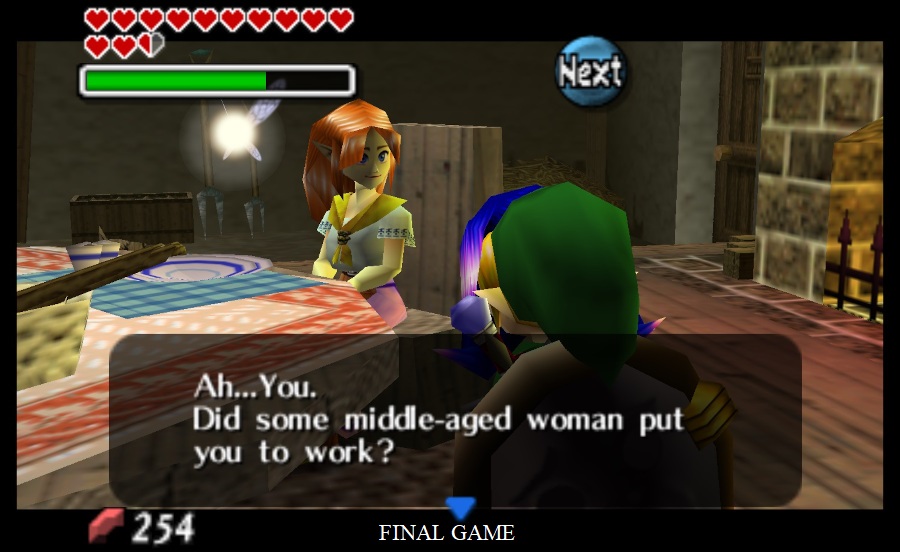
Interestingly, this unusual revelation does resolve a few issues that niggle at the corner of my mind whenever I play the game. That “some middle-aged woman” line has always struck me as extremely awkward, suggesting a last-minute change that didn’t allow enough time for fine-tuning. And if that’s the case, then it also explains why the supposed love triangle between Anju, Kafei, and Cremia feels a bit like an afterthought. The cutscene between Anju and her mother can be skipped without affecting the outcome of the Couple’s Mask sidequest, so why go through the trouble of altering Cremia’s relationship with Kafei just to incorporate this insignificant subplot? Isn’t there a way that the story could have been improved by keeping their familial bond intact?
Well, if you would kindly indulge my silly self for just a few more minutes, I have an idea for how this may have worked in the game’s favor. Anju’s mother mentions that Cremia needs financial assistance in the wake of her father’s unexpected death, so instead of achieving this through an elopement with Kafei, perhaps we could have a short segment where Cremia begins receiving money from an anonymous benefactor. She could task Link with tracking down this mystery individual in order to thank them, and by following cleverly dispersed breadcrumbs in a fun little detective sidequest, he eventually discovers that Madame Aroma has been sending the payments. She could then explain that her niece would never accept help from her extended family to keep the ranch afloat, so she must maintain her anonymity to ensure that Cremia won’t return the money; she could even offer Link a Piece of Heart in exchange for keeping her secret. Madame Aroma doesn’t contribute very much to the game as it is, playing a rather passive role as a worried mother awaiting updates on her son’s well-being. Being proactive about her niece’s dire situation could have done wonders for her character development, revealing an empathetic and generous spirit that prevails even when mired in deep despair.
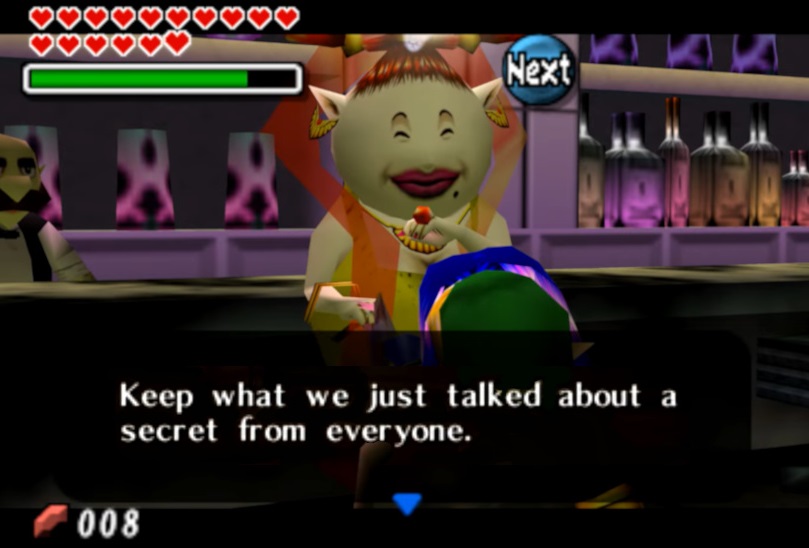
If you want to see for yourself all that the elusive Gray Cartridge had to offer, I highly encourage you to check out AlecKermit’s video; it provides an in-depth breakdown of this unique piece of gaming history for you to enjoy at your leisure. Also, you can find all the changes made to the in-game text in this nifty little document from The Cutting Room Floor.