Earlier this spring, I completed my first playthrough of Phantom Hourglass. While I have several fond memories of the game, there is a single character whose story has stuck with me longer than any of the others, though not for the reasons the game’s developers may have had in mind. I’m talking about the Old Wayfarer, a character presented as something of a hopeless romantic who longs to explore the great uncharted waters, but whose actual recorded actions paint a somewhat dubious picture.
At first blush, from reading the stones on Molida Island in the southwest quadrant of the World of the Ocean King, the Wayfarer seems to be a kind of kindred spirit. He has managed, with some difficulty, to chart a course to the Isle of Gust, home to the Temple of Wind. As you’d expect with a name like “Temple of Wind”, the game will eventually require Link to find this place himself, so the player is highly motivated to follow in the Wayfarer’s footsteps. To uncover his secrets, Link must clear areas riddled with enemies in order to gain access to a series of “hideaways”, which the Wayfarer uses to store some treasure and sensitive information.
By the end of this sequence, Link does in fact discover a secret course through the fog-plagued northwestern quadrant that allows him to reach the Isle of Gust, advancing the plot. It is here, however, that we must pause to reflect on the human toll of this discovery. Instead of learning these secrets firsthand from the Wayfarer himself, we must rely on the written materials he left behind. So what became of him? At the start of the quest, Link speaks to the Wayfarer’s wife, Maronie, and his son, Romanos, both of whom still reside on Molida Island. It’s through them that you begin to learn the truth about our intrepid fellow explorer: it turns out that he’s effectively a deadbeat dad.
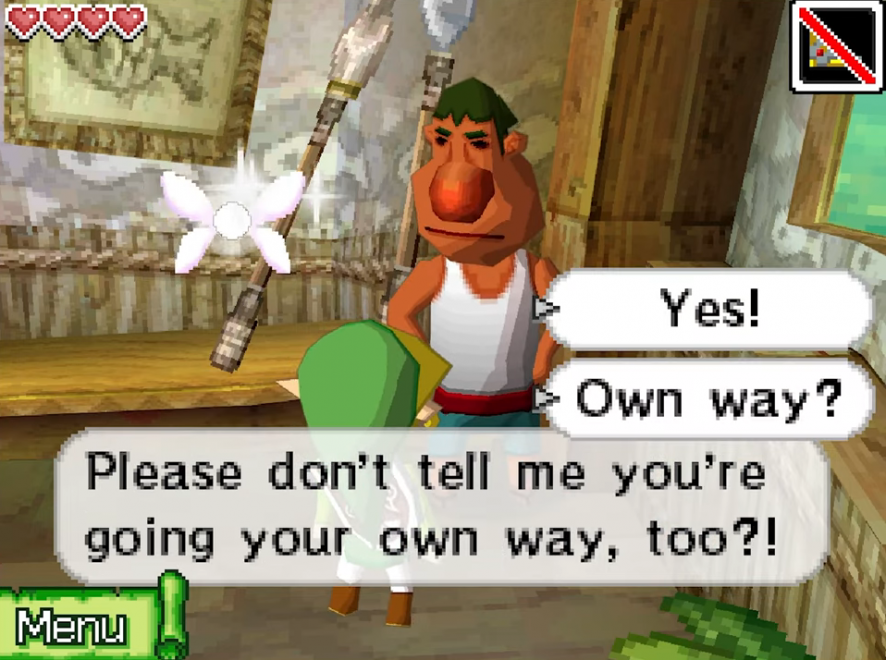
Upon finding out that Link is interested in his father, Romanos immediately gets fired up. Maronie rather succinctly relates the sad story of how her husband, once a fisherman, abandoned his work and ruined his boat in his relentless efforts to brave the northern fog. As of the time that this story takes place, the man has been missing for over a year. Later, in one of the Wayfarer’s own “hideaway journals”, he confesses to feeling completely at peace, comforted by the knowledge that no one can find him there.
From this, it’s reasonable to infer that the Wayfarer used the hideaways to get away from his family, who were becoming increasingly concerned that his erratic behavior would put their livelihood at risk. Then, roughly a year prior to Link’s arrival on the island, he up and left for good. That strikes me as a pretty cold turn for a solid B-tier NPC. So many times throughout the Zelda series, our protagonist has answered his own call to adventure and similarly left his old life behind. But since Link usually doesn’t have a family or anyone else relying on him (aside from an entire world that needs to be saved, that is), he can do it with a clean conscience. The only notable exception to this is The Wind Waker, wherein Link, the very same hero that we later see in Phantom Hourglass, must leave his grandmother alone on Outset Island in order to save his sister.
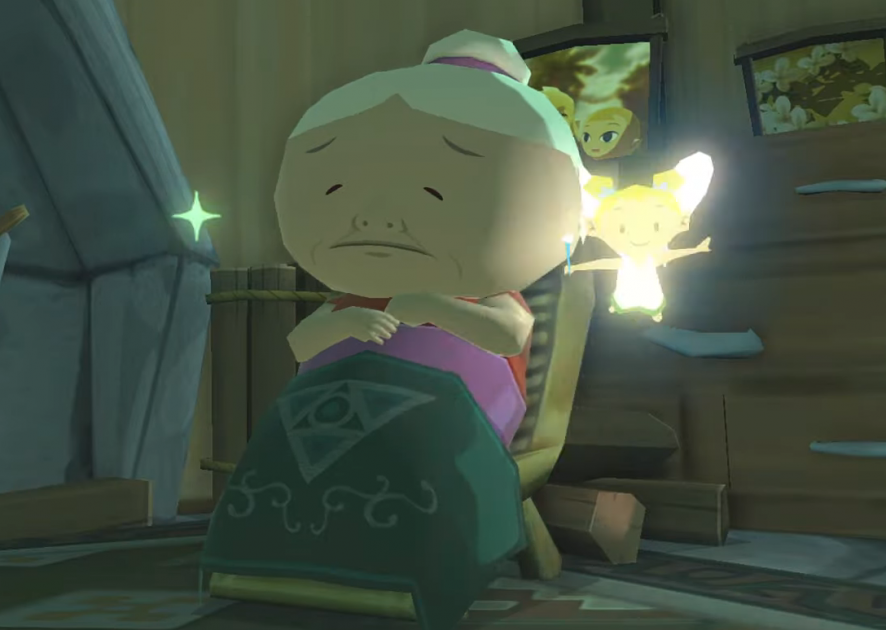
Unlike the Wayfarer, though, Link actually honors his familial responsibilities by returning to care for his grandma when she falls ill later in the game. This is because he is a decent human being, a characterization I feel rather disinclined to extend to the Wayfarer. His abrupt departure left his son angry and disillusioned, and his family is likely impoverished now as well. He even acknowledges the selfishness of his deeds by apologizing to Romanos in his final hideaway journal, calling himself “the world’s worst father” for leaving his family behind.
Wayfarer writes further, making a vain attempt to rationalize his behavior by claiming that his goal is to unravel the mystery of the Ghost Ship and find out what became of the people who crossed its path; he then closes the letter with one more plea for forgiveness. On its face, this might strike a heroic tone and provide a plausible reason for leaving. However, consider the fact that this missive is left behind in his hideaway (which Wayfarer thinks no one can find) rather than delivered to his family by the oddly proficient Postman. It’s pretty pompous to assume that his son will eventually find it and forgive the Wayfarer simply because, deep down, he shares that same sense of wanderlust.
Later in the game, however, Romanos does discover these journals and have a change of heart, forgiving his father and embracing his own dreams (to open up a shooting gallery minigame, apparently). Alright, I do acknowledge that this is a game for children, but come on, really? It strains credulity that someone would abandon his family only to be conveniently absolved of any blame, without putting forth effort or sincerely expressing contrition.
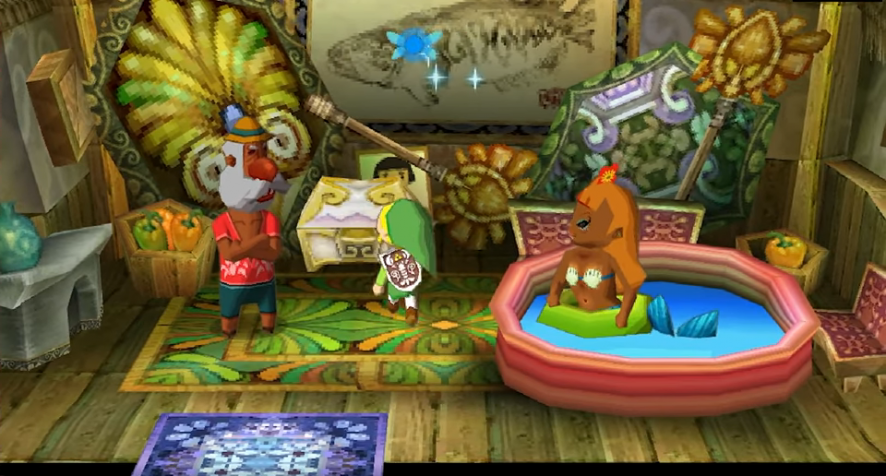
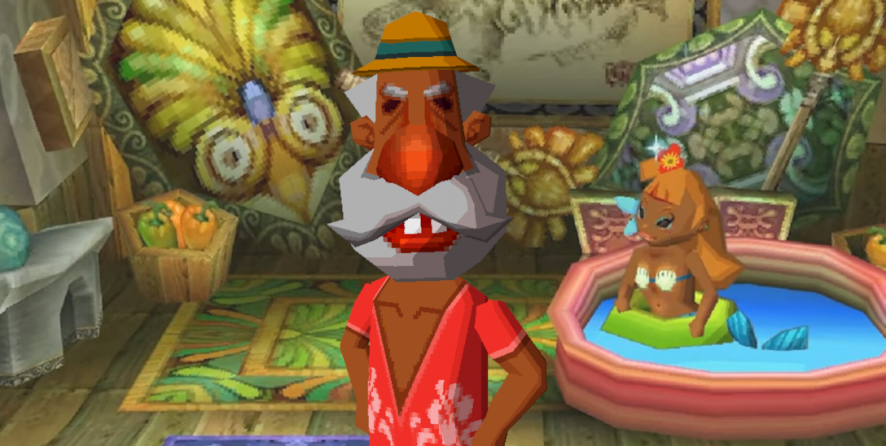
Most of us play Zelda games for the thrill of adventure, but Old Wayfarer provides a cautionary tale about how we should only scratch that itch through games; that way, we won’t simply stand up and walk out on our lives one day for the open air of the sea. For all the grief he causes his family, what does the Wayfarer have to show for it? Lest we forget his last known whereabouts at the close of the game: he is living on an uncharted island with a woman in a kiddie pool, unware that said woman is a catfisher passing herself off as a bona fide mermaid. Can’t exactly say that I saw this one coming, but I suppose we should expect nothing less from Old Wayfarer.
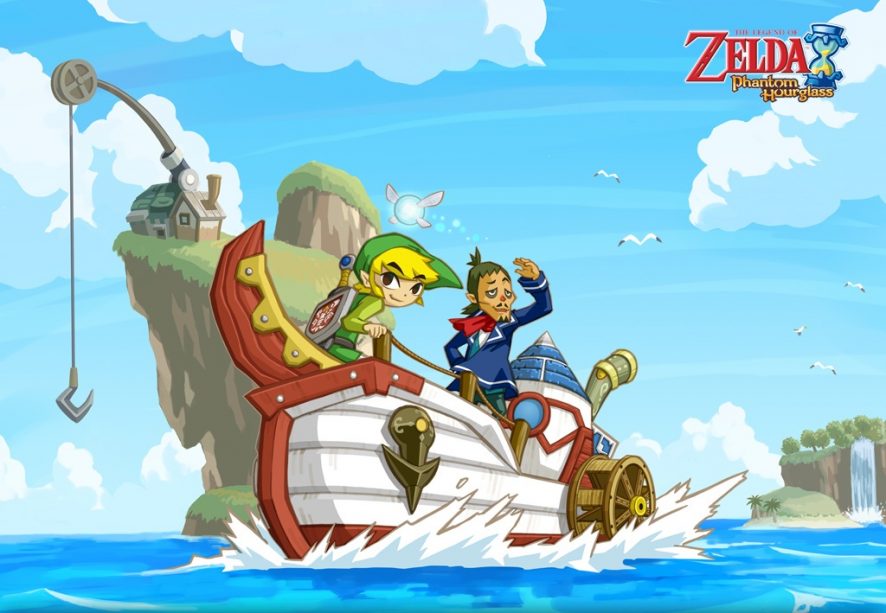
Phantom Hourglass is 15 years old on June 23, 2022! We’re celebrating with dedicated articles all week.