The Zelda series is heralded for its cast of intriguing and diverse characters, and perhaps no installment in the series embodies this truth more so than Ocarina of Time. From the childish and playful Kokiri to the more reserved civilizations of the Zoras, Gerudos, and Hylians, Ocarina of Time is filled with contrasting worldviews and philosophies.
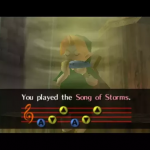
Accompanying this dichotomy of opinion and thought is an equally rich and engrossing soundtrack. Every region and key character is supplemented by a precisely composed leitmotif, but one particular theme warrants a bit more time and attention: the “Song of Storms.”
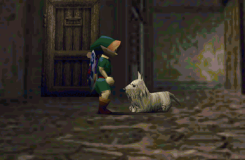
Upon our initial arrival to Kakariko Village, we are greeted with a rather nonchalant and relaxed melody. The simple and slow tones of the Kakariko Village theme personify a carefree town filled with a simple yet light-hearted culture; one particular villager, however, is unlike his suburban counterparts. Located in the Kakariko Village Windmill, the Phonogram Man is filled with vivacious mystery. The corresponding song that accompanies this strange encounter is one of the more memorable tracks from Ocarina of Time.
Bootstrap paradoxes aside, the “Song of Storms” is a masterpiece of composition and design. Based on the 18th-century waltz, the “Song of Storms” features an upbeat tempo set in 3/4 timing. This style of music naturally lends itself to the subtle images of two parties playfully dancing in concert. Although the Phonogram Man would likely disagree, this dance between the musician and the time-traveling hero creates an iconic experience.
The original “Song of Storms” relied on a simple blend of percussion, wind, and keyboard instruments to create variety and depth. While many outlets have expounded upon the original theme by adding a full orchestra, one gifted musician enhanced the track by reducing the number of instruments to a single piano.
Dubbed the “Piano Man,” Erik Correll composes and plays video game covers with a singular instrument: the piano. By utilizing a series of advanced piano techniques, Erik not only replicates the depth and variety of the original theme but also expounds upon it. His ingenious mix of the diatonic and chromatic scale, range, and tempo results in a truly immersive experience.
Erik’s introduction immediately captivates the listener with an impressive series of allegro scales that seemingly touch nearly every piano note. After a subtle pause, familiarity returns as the first verse begins. The “Piano Man” establishes the base with the left hand, introduces the melody with the right hand, and adds dramatic flair by altering the tempo.
As the verse is about to reach the chorus, Erik’s improvisational skills emerge even stronger. He defies the listener’s expectations by hiding the melody in a sequence of well-crafted chord progressions before unleashing a series of chromatic and diatonic scales that would challenge even the most adept pianist. The rest of the composition is pure genius and nearly impossible to describe so be sure to listen until the end.
If you are a fan of Zelda music or other video game covers, be sure to check out Eric Correll’s YouTube channel. Sheet music for his arrangements can also be found on the website Music Notes. Enjoy!