The Legend of Zelda franchise has consistently been acclaimed for its music, and for the first handful of Zelda games, Nintendo had one individual to thank for that: Koji Kondo. The Japanese composer is one of the most influential figures in the video game industry, having pioneered game music in its earliest stages and set the standard for how music can create an immersive atmosphere in a game.
Although Kondo has most notably composed music for the Super Mario Bros. and Zelda series, among many other projects, Ocarina of Time is by far his most impressive work. This claim is not a biased opinion but rather a nod to the genius sound design that Kondo needed to implement in order to score the game.
Redefining the Gaming Norm
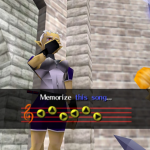
When Ocarina of Time was in development back in 1998, Nintendo noticed that most RPGs being released at the time had players casting magic spells, but the process of choosing a single spell by scrolling up and down a list was very tedious and not very enjoyable. The development team brainstormed how that could make this process more fun, so they thought that players would enjoy playing melodies on a musical instrument to cast these spells. Producer Shigeru Miyamoto’s love for world music led the team to settle on using the ocarina, an instrument that Miyamoto described to be the most “Zelda-esque.”
This idea was great from a development point of view, but it was extremely difficult for the person in charge of writing such melodies. The main problem was that the N64 controller only had five buttons, meaning that the player would only be able to play five notes. Kondo was left with the daunting task of creating twelve separate melodies from the same five notes.
The ocarina melodies needed to be easy to remember but also distinct from each other. Back in 2021, Kondo described how difficult it was to create different character melodies using the same pool of notes. Courtesy of a translation from Glitterberri, we can read the entire interview, but more importantly, the sections regarding his involvement with the game’s sound design.
“The original orders from the director were “For the dungeons, try to create music that doesn’t really have a melody, nothing to latch on to”. However, he also requested pretty melodies for pleasant places like the Market, so I had two patterns to follow.
“In all, there are 12 ocarina melodies, each corresponding with a theme. I had only 5 notes to use for the ocarina tunes (because of button limitations), be they upbeat major or sad minor songs, making composing difficult.
“In dungeons when enemies draw near, the battle music will steadily grow louder. If you come to a standstill in Hyrule Field, the music will have slow phrasing. Should an enemy appear, the music will change to percussion.”
It is quite ironic to think that the restrictions imposed upon Kondo led him to create some of the most memorable melodies in video game history, such as “Zelda’s Lullaby”, “Saria’s Song”, and “Song of Storms.”
Kondo’s Formula For Success
Kondo used the following notes for the ocarina: D, F, A, B, and D an octave higher. We could only imagine how much time and effort went into choosing these specific notes. The five notes create a D Minor 6th chord, making for a very distinct sound. Without getting too much in-depth into music theory, there are a few recurring patterns that any listener should be able to hear across the 12 songs.
If you look at the six main ocarina songs (“Zelda’s Lullaby”, “Epona’s Song”, “Saria’s Song”, “Sun’s Song”, “Song of Time”, and “Song of Storms”), you will notice that they all follow a repeated three-note motif. When thinking about why Kondo would use this structure, we can only presume that it was to ensure that the players would be able to easily remember the songs. This would prevent them from constantly opening the song list in the menu every time they needed to use the ocarina, which would have taken away from the game’s overall experience.
When listening to those ocarina songs in their full length, you will notice they follow a similar structure in phrasing. They begin with two short phrases consisting of the three-note motif and then resolve with a longer phrase. In “Zelda’s Lullaby”, “Saria’s Song”, and “Epona’s Song”, Kondo uses the initial three-note motif in the longer phrase to create a more cohesive sound.
Another pattern revolves around the trajectory of the notes in the phrases of each song. For example, short phrases that have an upward motion, such as “Song of Storms” and “Saria’s Song,” tend to finish with a long phrase that has a downward motion. Likewise, short phrases that have a downward motion, such as the “Song of Time” and “Zelda’s Lullaby,” will finish with a long phrase that has an upward motion.
These basic patterns all contributed to Kondo’s success in creating the ocarina songs. Each song enhances the experience for the player while also being able to stand alone as memorable and dramatic melodies.
Ocarina of Time’s Lasting Legacy
Ocarina of Time was the last game that Kondo composed entirely on his own, and the game’s music is arguably his best work. Kondo was given a demanding and challenging task in developing the game’s sound design and music, yet his final product was one of the most beloved game soundtracks in history. One could even argue that the success of the sound design was because of the restrictions that were put upon Kondo.
For myself and the countless others who grew up with Ocarina of Time, the game’s music continues to provide us with some of the most heartfelt nostalgia that we can remember from our younger years. Gaming may not be for everyone, but it is safe to say that anyone can appreciate the brilliance of Ocarina of Time’s innovative sound design.
Dima
Features writer at Zelda Universe. Has been gaming since his earliest days. He also enjoys writing about soccer and music.