My teenage friends and I were anything but cool, but we were pretty proud of that. We were all gamers to some degree, though some were more Animal Crossing-inclined casual gamers than others.
Not that there’s anything wrong with that at all; play what you love and don’t let anyone tell you otherwise. But when we got together for our weekly Friday night sleepover, we gals would stretch out in our sleeping bags after “lights out,” bags of Doritos and marshmallows at the ready, and all boot up our Nintendo DS’s.
When we’d all swapped and bartered through our Animal Crossing promises (“You said you had a Lovely Phone you’d give me!”), we’d take it in turns to go head-to-head in multiplayer. Whatever we picked we’d get obsessively into, all desperate to win, feral competitiveness overtaking us. Or maybe that was just me. I’ve mellowed since then. A bit.
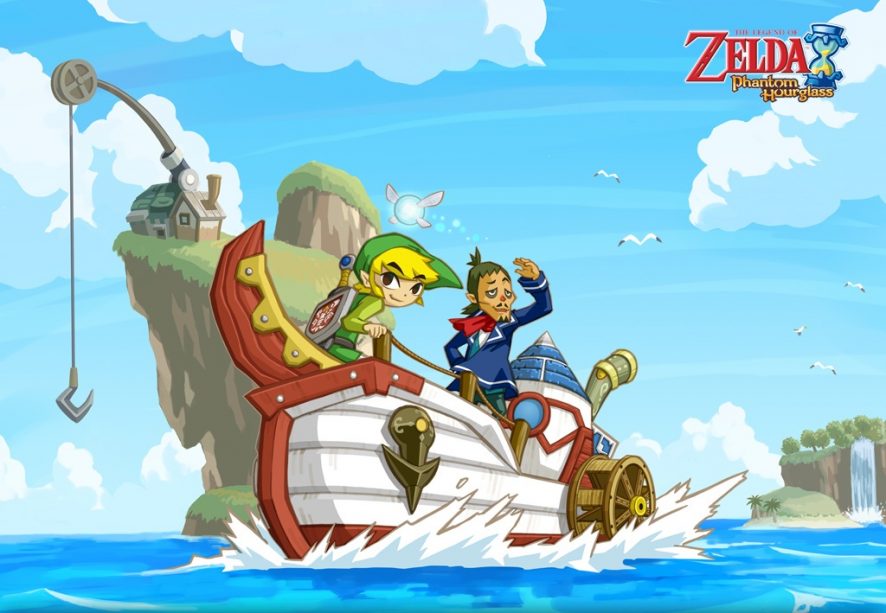
One would offer Bomberman. Others liked Mario Kart. But I would always go for The Legend of Zelda: Phantom Hourglass.
I’d been a Zelda fan for years by this point. My friends all had varying degrees of interest in the series, but because we all swapped DS games between us they had all played this one, at least a little. I liked that it felt like a continuation of The Wind Waker, but with all the customization a teenage girl could want from her handheld games console.
I could make my ship pretty, or like a pirates’ galleon, or purely functional. It could be as cool or as nerdy as I wanted, and I could change it at a moment’s notice. I loved being able to make notes on the map and that this lent a casual nature to the game; it meant that I could always come back later because I’d made a note of what I had found.
The portability of the game was, of course, a major plus. The game felt, to me, like it really had the spirit of a Zelda game, for these reasons and more.
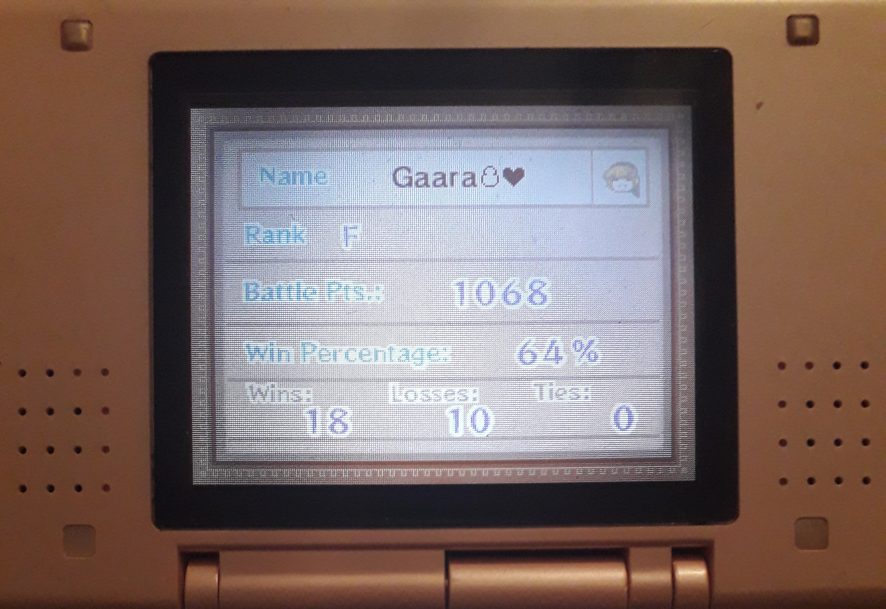
But it holds a different place in my heart because of the Battle Mode. Up to four players could play, with multiple cartridges or via DS Download Play, which is a feature that Nintendo should bring back but unfortunately has yet to do so. So four of us, most Friday nights, would set up and play Phantom Hourglass Battle Mode.
It’s a deceptively simple capture the flag (or in this case, Force Gems) game. The players take turns as Link, stealing the little gems and placing them in their colored safe zone. Passing through a neutral safe zone renders Link invisible to the Phantoms, though you can see the Force Gems moving around either way.
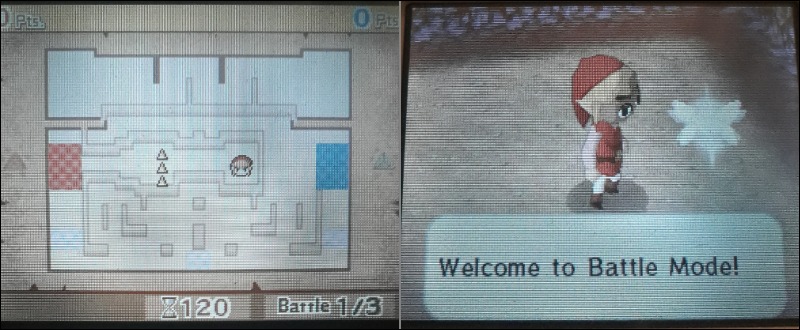
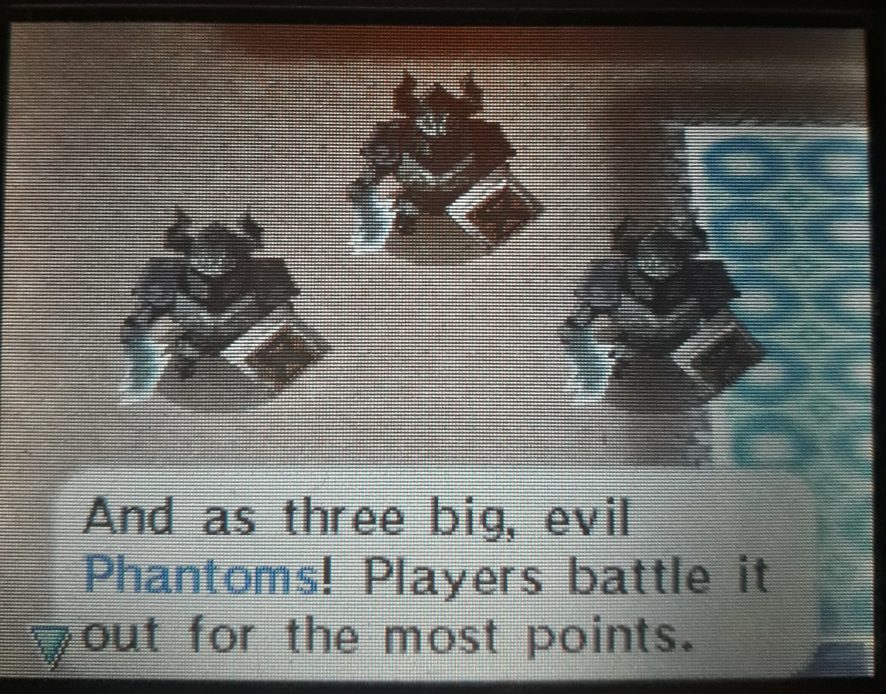
Whoever isn’t playing as Link controls three Phantoms, using the touchscreen to create routes for them through the maze-like Battle stages. One hit of the Phantoms’ sword renders Link’s turn over unless the player has picked up an item to counteract this.
Battle Mode is a mix of strategy and chance. If you select to have your course randomized, you could end up with additional hurdles, bases, or shortcuts. The tighter the stage, the harder it is to evade the Phantoms, but also the lesser the distance between the safe zones and your home base. Items will pop up to help you out, and you can steal another player’s items as sabotage, though you can’t use them.
Needless to say, Phantom Hourglass became a competitive sport for us, and we were out for blood. When I think of playing, I think of us screaming at each other, laughing so hard we couldn’t breathe, and accusing each other of cheating when the connection lag gave one of us an advantage.
The music, a version of the Fairy Fountain theme that I remember from Majora’s Mask, has a nostalgic quality to it. It sounds like an electronic emulation of earlier Zelda themes. When I have booted it up since those sleepover days, I feel the carpet underneath my legs, my back propped against the bottom of a wardrobe, as we all violently stabbed our styluses against those little touch screens, urging Link or the Phantoms onwards.
I’d played Zelda with people, I’d collaborated with friends and family on a single save file, passing the controller back and forth, but this is the only time I’ve ever played a Zelda game competitively and against people. I’m sure there were boring or frustrating matches in there, but I really only remember playing Battle Mode fondly.
It’s hard, too, to think back to those days. I know that the games we played allowed us to create a feeling of normality and fun during what was a difficult time. The reason for the Friday night sleepovers, always at one girl’s house, was because our friend needed medical treatment once a week. We couldn’t muck about outside on the trampoline, or go and cause mischief elsewhere, because she had to sit in her room for several hours in discomfort.
So we played tag through Zelda. We had our fun digitally, excitedly cheering for each other like watching professional sport. Through the games we played, we made silly and fun memories, but mostly we made each other laugh.
Playing together through Phantom Hourglass made difficult times better, and normalized a time that would otherwise have felt very strange. Is the gameplay objectively great? Probably not, but when you’re playing with an excellent group of people it doesn’t matter that Phantom Hourglass isn’t the strongest game in the series.
We had endless hours of fun, stealing Force Gems from each other’s bases, watching the hourglass run down, and waiting for our turn to exact our revenge. We would even learn how to exploit each map to swindle our opponents out of as many points as possible.
The mechanics were fun and the fact that it was a Zelda game made it awesome, but what made it the best was the fact that it was us playing it. I could try and find a friend with a still-functioning DS now and try to recreate this feeling, but it simply wouldn’t be the same.
The best-kept secret wasn’t the Battle Mode itself, but the fact that we could finally play The Legend of Zelda together.