The 1990s was an odd time in pop culture, and teenage Matt was completely engrossed in the hype. My hairstyle featured a buzz cut with lightning bolts etched into both sides as I strolled the classroom hallways with a Trapper Keeper in one hand and a Walkman on my belt. Friends swapped Dunkaroos and Surge for Hot Pockets in the cafeteria, and we all raced home after school to watch Nickelodeon and check in on our Tamagotchi pets (mine always struggled to live). After finishing our homework, we had just enough time to sneak in a quick episode of Friends or play video games. We were kings.
While most of the awkwardness eventually faded into nostalgic memories, two of my favorite entertainment mediums went mainstream: The Legend of Zelda series and American hip hop music. Little did I know that the Japanese version of A Link to the Past contained a special Easter egg that proved my counterparts across the Pacific shared the same nostalgic sentiment.
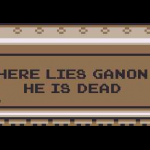
My Walkman always favored East coast hip hop cassette tapes, such as Wu-Tang Clan and Jay-Z, but apparently, my Japanese counterparts held a close affinity for California-based artists. At least, that is the conclusion I reached upon discovering the following pop-culture reference in the Dark Palace from A Link to the Past.

Yes, you read that correctly (if you can read Japanese, which I cannot; special shout-out to Google Translate). The Magic Hammer is actually called the “MC Hammer” in the Japanese version of the game. Now before you dawn your golden parachute pants and start another Link to the Past playthrough just so you can loudly proclaim that it is “hammer time,” there is actually more to the story.
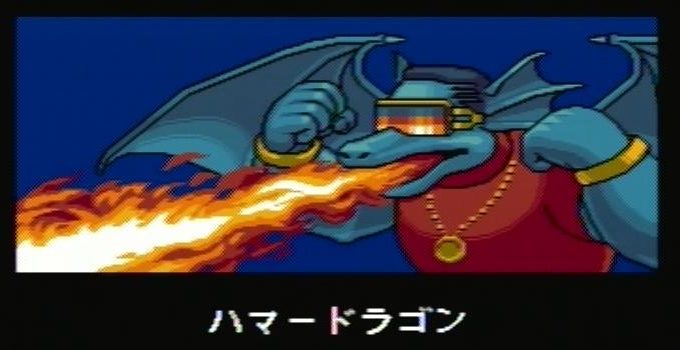
During the early 1990s, the battle for global domination in the music industry required that artists integrate their craft with other forms of media. Several musicians gravitated towards the television and film industry; however, MC Hammer decided to merge his image with the video game industry. While A Link to the Past is the most prominent reference, MC Hammer appeared in several weird Japanese video games. Perhaps my favorite is the Wakusei Woodstock: Funky Horror Band, which features a dragon dressed up in MC Hammer’s infamous golden attire. The Japanese subtitle even reads “Hammer Dragon.”
After promoting his music and likeness in Japan through multiple video games, MC Hammer decided to partner with GTE Interactive Media to create his own game for the Sega Genesis. Titled Hammer vs. Evil D. in Soulfire, the game was designed as a brawler, and MC Hammer would use fireballs to beat up zombies while his famous soundtracks played in the background. Overall, the concept was promising; however, GTE Interactive and MC Hammer both filed for bankruptcy before the game could release. Hammer’s popularity eventually faded, and he did not appear in future video game releases.
While my East coast bias would have preferred a “Vanilla” Ice Rod reference in A Link to the Past, the inclusion of MC Hammer in the Japanese version will forever bring a smile to my face. I may no longer be able to enjoy Dunkaroos or Surge soda; however, I know that whenever Aghanim tosses Link into the Dark World a sense of 1990s nostalgia soon awaits. As Link proudly displays the Magic Hammer from the ledge within the Dark Palace, I will take a moment and proudly declare, “U Can’t Touch This.”