


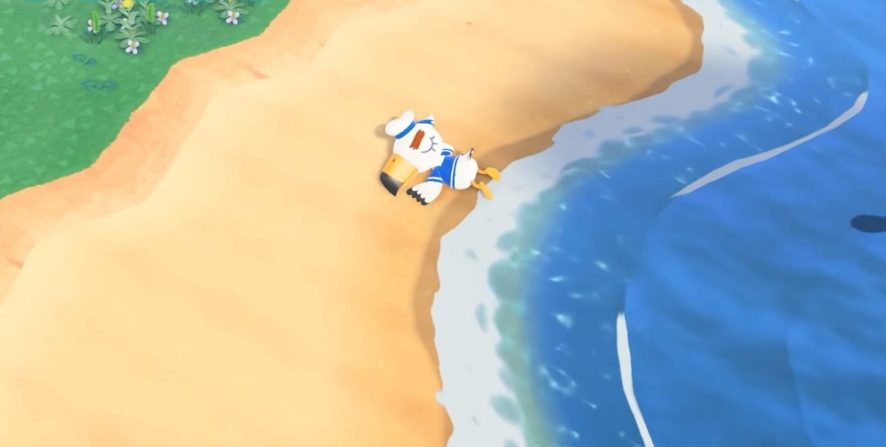
The character Gulliver from Animal Crossing is a video game trope that pays homage to Jonathan Swift’s satire from 1726. In both novel and game, Gulliver experiences a series of travel mishaps that result in grand adventures. In the novel, Gulliver’s escapades are a vehicle to ridicule English customs; however, in the Animal Crossing series, Gulliver’s tales serve as subtle Easter egg references to other Nintendo franchises. No matter how dire the situation, the Gulliver from both outlets always finds his way back home with the story to tell.
Examples of Gulliver’s Easter eggs from previous Animal Crossing games include references to EarthBound, Star Fox, and multiple Super Mario titles. While the Easter eggs are always charming, the latest installment of Animal Crossing, New Horizons, has Gulliver sharing a dream world with the Hero of Legend.
After multiple attempts to wake the island castaway, Gulliver regales the player with details of his shipwrecked voyage. While taking a nap, a violent storm tossed the sailor overboard and destroyed his communication device. By locating Gulliver’s five lost communicator parts, he can make contact with his crew and leave the island.
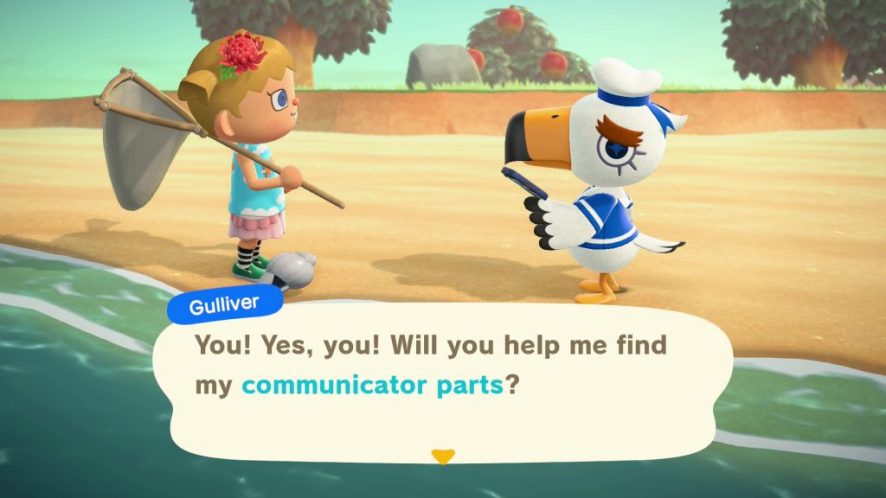
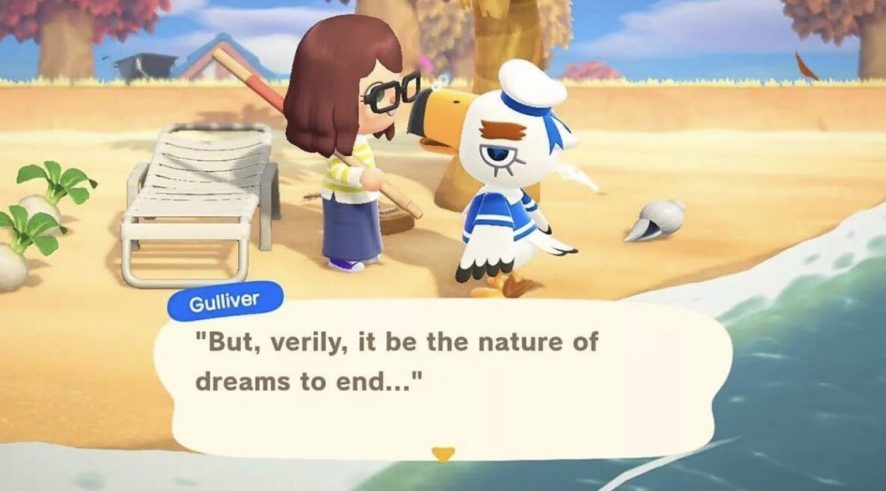
Despite rescuing the shipwrecked lad, Gulliver inevitably washes up on shore every few weeks. While the underlying story of Gulliver’s mishap is generally the same each time, the dialogue will change subtly. After multiple encounters, players are rewarded with a clever nod to Link’s Awakening.
In yet another sleepy haze, Gulliver provides a further explanation for falling asleep at the helm by proclaiming, “But, verily, it be the nature of dreams to end…” He even mentions that he once overheard a special fish make the same statement, which is a direct reference to the final cutscene in Link’s Awakening.
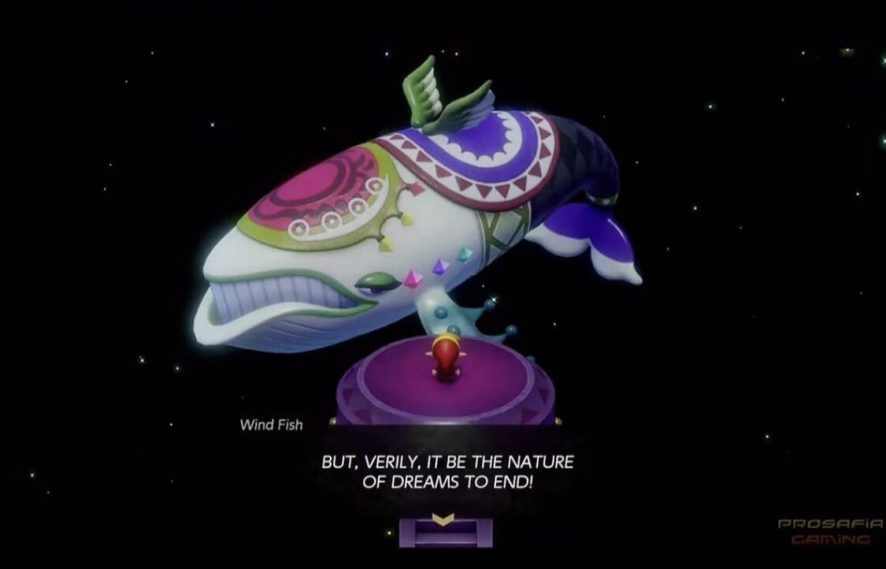
As Link climbs the staircase to meet the Wind Fish, the mystical creature reveals the origins of Koholint Island. The Wind Fish fell into a deep slumber, and the entirety of Koholint Island was the creation of the whale’s dream. Upon defeating the Shadow Nightmares, Link awakens the Wind Fish, and the island of Koholint along with its inhabitants fades from existence.
Gulliver is nowhere to be found in the original Link’s Awakening or the 2019 remake; however, an unanswered question remains: is it possible for two beings to share a dream world? More importantly, are the adventures in a dream world any less genuine than those in reality? Perhaps the Wind Fish said it best with the dialogue that followed Gulliver’s Easter egg reference.
“When I dost awaken, Koholint will be gone… only the memory of this dream will exist in the waking world… Someday, thou may recall this island… that memory must be the real dream world…”
Who are we to challenge the legitimacy of a dream world? Gulliver might not appear in Link’s Awakening, but his chance encounter with the Wind Fish was real to him and lives on in a memory. My only question is how did Gulliver escape and find his way back home? Perhaps the next Animal Crossing game will reveal more details, but until then, I will just smile because I know that my favorite castaway shares a memory with my favorite Zelda game.







![The Legend of Zelda Breath of the Wild - Nintendo Switch Presentation 2017 Trailer.mp4_snapshot_00.23_[2017.01.13_23.27.31]](https://zeldauniverse.net/wp-content/uploads/2017/01/The-Legend-of-Zelda-Breath-of-the-Wild-Nintendo-Switch-Presentation-2017-Trailer.mp4_snapshot_00.23_2017.01.13_23.27.31-150x150.jpg "Nintendo Dream readers know who to be stranded on a desert island with")


