The Zelda series has its fair share of eccentrics, and it’s safe to say that Majora’s Mask accounts for many of them. Most intriguing of all, though, is the Happy Mask Salesman. He’s been the subject of speculation from fans ever since he first arrived in Clock Town. Where did he come from? Why does he collect masks? How did he get his hands on Majora’s Mask, and how does he know how to transform troubled spirits into masks?
In good old Nintendo fashion, we will most likely never get solid answers to these questions. But fortunately, the Zelda fanbase’s imagination — myself included — offers limitless interpretations. And isn’t that the beauty of Nintendo creating these whimsical characters? We get to fill in the gaps ourselves.
When you start to explore this mysterious merchant of masks and the role he played in Link’s journey, you quickly realize that, behind his amicable smile and folded hands, there’s undoubtedly a twisted mind, whose mask collection comes far above anything else.
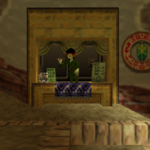
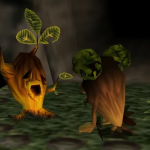
The Happy Mask Salesman, with his strange mannerisms and suspicious friendliness, is the first person who welcomes Link when he arrives in Clock Town as a Deku Scrub. He speaks his famous first line with an unnerving smile: “You’ve met with a terrible fate, haven’t you?” It’s certainly an over-analyzed bit of dialogue, but for good reason.
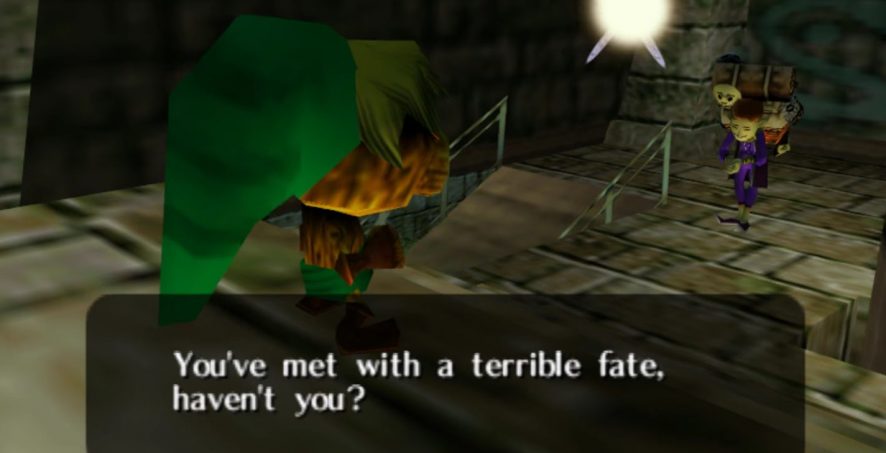
This introductory line has been the foundation for all sorts of theories, including one of the most famous regarding whether Link is alive or dead in the game. But regardless of what you believe, it first and foremost sets the tone of the game. In that single line, the Happy Mask Salesman lets us know that this isn’t a story of a hero and hope, like its predecessor Ocarina of Time. It’s a story that will be lined with tragedy and loss.
Sure, he goes on to say that he knows of a way to change you back, and reassures you of your “tremendous courage.” But this is all enveloped in uneasiness and urgency about the consequences of failing to get it back. From this point on, the idea of a “terrible fate” recurs throughout the game, which establishes him as a centerpiece of its darker theme and someone who is familiar with “terrible fates.” And he certainly is.
After all, it’s not just his opening line — spoken with a smile rather than an empathetic expression — that makes us see the Happy Mask Salesman as quirky at best and a sociopath at worst.

It’s during this first meeting with the Happy Mask Salesman that he introduces himself as the owner of the Happy Mask Shop, which interestingly implies he is not just a parallel Terminan, but the same man from Ocarina of Time who Link once met. We realize he has a backpack filled with various masks, and he tells us he is widely traveled. And then, as the game progresses, we even learn that he knows a certain song, which “heals evil magic and troubled spirits, turning them into masks.”
All of these intriguing slices of his personality quickly start begging serious questions. How did he get to Termina from Hyrule, how did he learn this song, and how did he acquire Majora’s Mask? In fact, how did he acquire any of the masks in his collection? When you see his pack literally overflowing and you realize that his magic song can turn spirits into masks, you can start putting two and two together.
Majora’s Mask may have been a rare find, but what about all the others in his pack? Are his journeys across various regions of the world all about finding troubled souls — those who have met terrible fates — and turning them into items for his collections? I don’t know if we should take this as an act of kindness or the work of a serial killer.

What lengths will the Happy Mask Salesman go to for his collection?
After all, he really is only in it for himself. He may seem concerned for the welfare of Termina, but if you pay close attention to his dialogue, his colors are clear. He states that he will return you to normal, but only once you get Majora’s Mask back for him, and he closes his request with, “Well then, I am counting on you.” Not “The world is counting on you,” or something similar.
And he absolutely loses his mind when you fail to return it, yelling, “What have you done to me!!!”
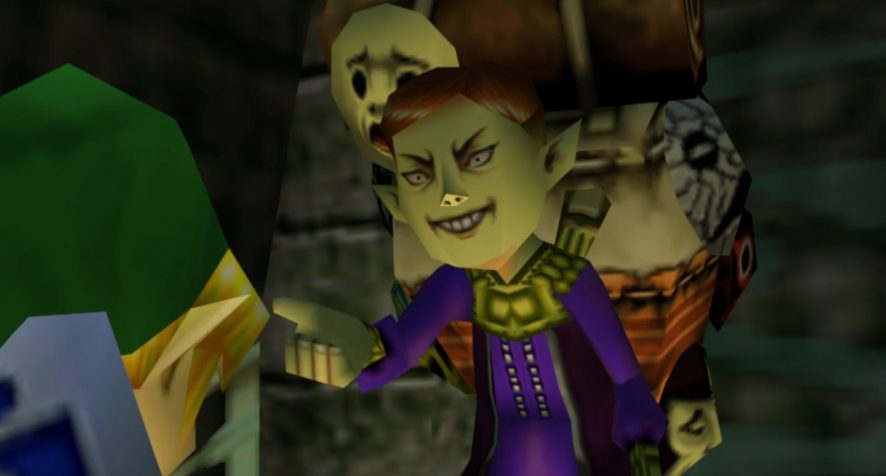
So, we’ve toyed with the theory that the Happy Mask Salesman uses his Song of Healing to actively seek out people who have met a “terrible fate” to expand his mask collection. With that in mind, we can theorize a little further and more boldly by thinking about how this ties into his encounter with Link.
The Happy Mask Salesman tells Link, “Now don’t think me rude, but I’ve been following you… For I know of a way to return you to your former self.” I think there’s a lot of room for interpretation here. This line tells us that he was following Link for a while, given that he knows he has a “former self,” which makes you wonder why he was following him in the first place. He’s a “busy fellow,” after all — his words, not mine — and his travels are all about collecting masks.

Is it possible that he wanted to add Link to his rare collection? A boy who he knew had great strength, and who he knew was a troubled spirit who left Hyrule in search of a lost friend?
The more innocent interpretation is, of course, that he realized his best chance of getting back Majora’s Mask was by making a deal with Link, but the fact that he had such faith in him to face Majora’s Mask, which has tremendous power, tells us that the Happy Mask Salesman knows that Link is a capable individual, one who is worthy of a mask for his collection. One who he has seen in a previous realm — in Hyrule — who he has followed since then.
This also offers a perfect explanation of how The Happy Mask Salesman managed to get to Termina — Link seemed to find it by chance when wandering through the woods, and the Happy Mask Salesman just happened to arrive there at the same time. Hardly a coincidence. Plus, both Link and the Happy Mask Salesman were ambushed by Skull Kid in the Lost Woods — it adds up.

So, what happened to this plan after all? It seems to me that, firstly, he needed Link to recover his most prized possession, Majora’s Mask, so this opportunity had to wait. Secondly, once Link had a new quest and, by the end, had discovered a new friend in Skull Kid, this determined spirit was no longer something the Happy Mask Salesman could transform. Link found a new purpose doing what he does best, as the Happy Mask Salesman himself says at the end, “But, my, you sure have managed to make quite a number of people happy. The masks you have are filled with happiness. That is truly a good happiness.”
Plus, I think Link’s actions had more of an impact on the Happy Mask Salesman than he lets on, which perhaps led to some soul searching about his mask-hunting methods. His last words about Link’s masks are really interesting when you think about what he has left unsaid. If masks can be “filled with happiness,” especially those transformed from troubled spirits, can masks be filled with sadness? How does he know the difference? Is this perhaps an indication of the sort of emotions he feels in the masks he owns? Those he acquired with less than pure intentions, unlike Link?

Those last lines, ones that come out quite spontaneously as if he is thinking aloud, after he has already said, “With that, please excuse me…” make you wonder if he’s pondering over his masks, and whether or not they are filled with happiness. And if not, maybe they should be. He is the “Happy” Mask Salesman after all.
Alas, we will never know for certain what is truly going on in the mind of the Happy Mask Salesman. We’ll never know for sure what his intentions were and what they became by the end of the game. But it sure is fun to theorize, isn’t it?