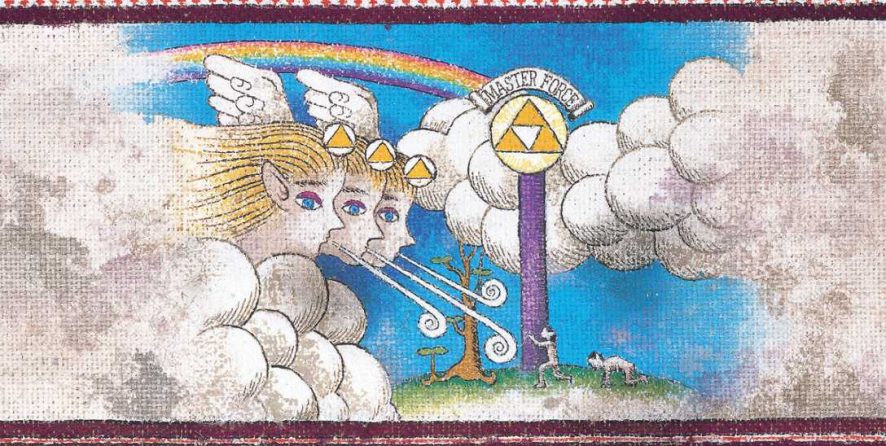
I miss instruction booklets.
Once, long ago, when video games were still trying to establish themselves as a separate art form, every game seemed to come with a fat pamphlet filled not only with the basic control scheme and tips to play a game — vital information at a time when customizable controls and hours-long tutorials were not even a glint in game designers’ eyes yet — but with vibrant art and entire info-dumps of game lore.
Now, some games benefitted from this treatment more than others, particularly in the SNES era in which I first started gaming seriously. Super Mario World, with a plot description the size of a postage stamp and a world setting as detailed as a finger painting project, used most of its booklet to elaborate on the game’s surprisingly complex movement set. Donkey Kong Country sprinkled a great deal of humor in its booklet, courtesy of Cranky Kong and his sarcastic bon mots at the expense of the hero’s, and player’s, dignity.
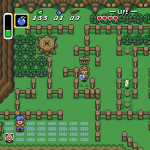
But the first instruction booklet I truly delved into, at length, was the one accompanying The Legend of Zelda: A Link to the Past.
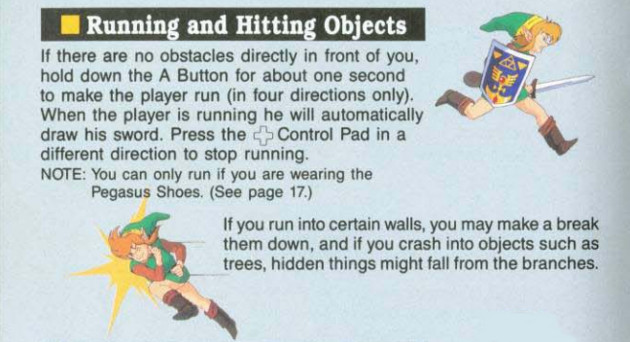
After all, this book wasn’t just a simple set of instructions on how to swing your sword, how to change your special item, or how to dash into objects (though all that was in there, too). The game, being much more text-heavy than the platformers that dominated the era, was happy to tell you these things as they came up in the course of your adventure.
No, the instruction book was a treasure trove of Hylian history in a way franchise fans couldn’t otherwise obtain in a time before giant hardback tomes were sold in big box stores with such information.
Here, I could read of the Imprisoning War, of the Knights of Hyrule and of Ganondorf Dragmire, a name for a man we’d never met in the games at the time, having only seen him as the Dark Lord Ganon, transformed by his own hate and the power of the Dark World into a bestial thing of evil.
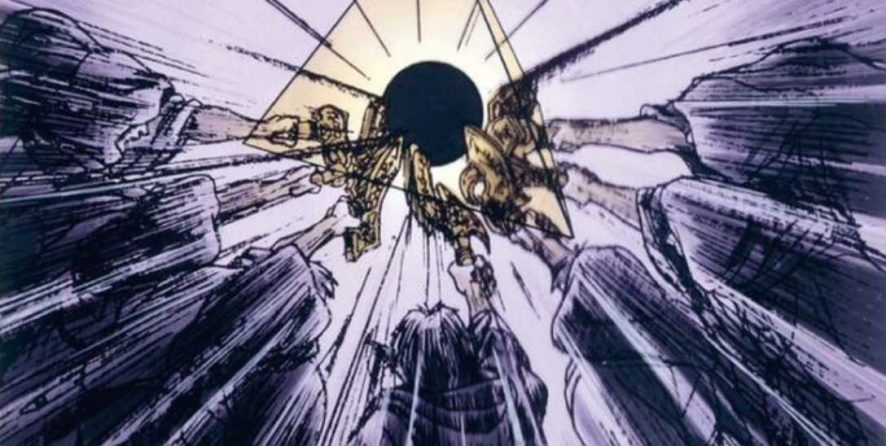
These were the sorts of details my brain, primed by a steady diet of fantasy novels, were eager to absorb. Combined with the expansive art spread throughout the book, I could visit Hyrule even when I couldn’t turn on my SNES, all with a turn of the page.
When Ocarina of Time came out, I picked up my preordered copy and didn’t even wait to get home before I was tearing into the box and poring over the instruction book for this new game, marveling at the new look of Hyrule and wondering what wonders I would find there.

Unfortunately, the golden age of instruction booklets was already waning by then. They shrank more and more with each year until soon they vanished altogether. All that comes in game boxes now are legal warnings, warranty advisories, and advertisements.
But I still have my old Link to the Past booklet — a bit out of date when I have the Hyrule Historia and Zelda Encyclopedia on my shelf, but still beloved even now. Some of its invented lore has been replaced by in-game events as Nintendo continues to expand its Hylian world, but it fires the imagination, even now, as only the instruction booklets of old could.