I distinctly remember being very young when I played on an NES for the first time. For so long it had been Pac-Man on a single arcade machine at a local restaurant, but after playing a game at a friend’s house, my dad decided to buy one for us. We played the original Super Mario Bros. for hours, getting stuck on the pipes because we couldn’t figure out how to enter them, raging about Hammer Brothers, and marveling at this wonder of entertainment.
Back then I thought adults could do anything. I couldn’t time the jumps to beat Bowser correctly, but my dad sure could. I couldn’t aim correctly to shoot 8-bit ducks out of the sky, but my dad took them out like a professional hunter. Eventually, as I aged, I grew into the game systems they gave me, moving from Nintendo briefly to Sega then to the Super Nintendo. Soon I was a professional, able to pass my knowledge onto a younger generation — that generation being my nephew who was five years my junior.
He was struggling with a game which featured some kid in a green outfit with pink hair and a sword, running around the largest map I’d ever seen. I told him to give me the controller and that I could take care of it. I’d been playing games for a long time now after all, way past the games my dad could handle, and soon enough I’d figured out the controllers and beaten this monster: a lizard with a tail that whipped around the screen. I handed my nephew back the remote and said, “Here you go. By the way, what is this game?”
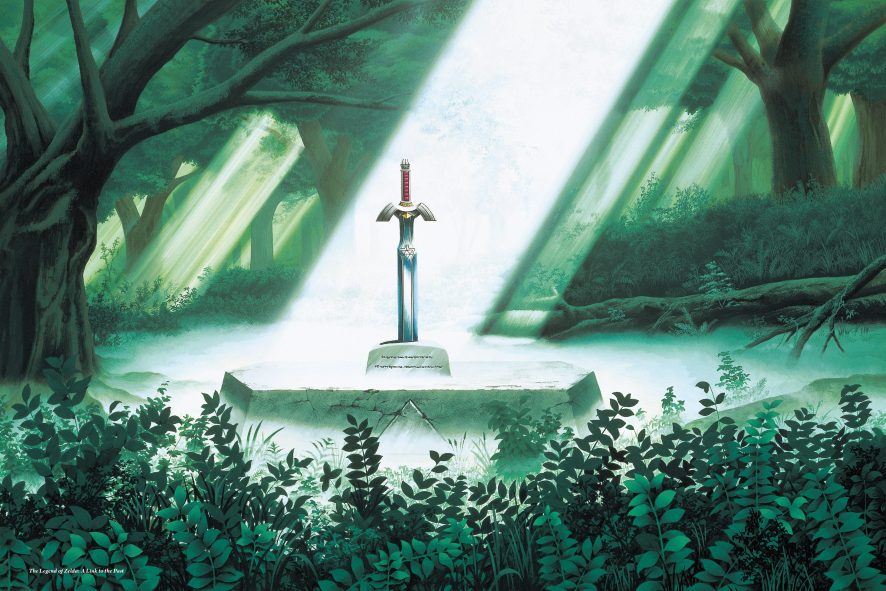
That was my cocky introduction A Link to the Past. I was about eight or nine at the time, clearly older and wiser than I’d been when I played Super Mario Bros. My nephew and I played it the entire week I stayed with my sister, but afterward I wasn’t able to purchase it for my own home console. I rented it from the local shop and beat it several times, but I unfortunately never owned it. This seemed to be my experience with several Zelda games: A Link to the Past, The Legend of Zelda, The Adventure of Link, Ocarina of Time and Majora’s Mask were all games I played through but never owned. This began to change after I graduated, when I had more control over what I could purchase and when. Ocarina of Time was first, but A Link to the Past was the second game I bought in a nostalgia binge.

Unfortunately, soon after I bought the game, my SNES console gave out. It was old at this point and had been through several moves and several lost cables. I was disappointed, but I’d also moved on in terms of games so while I had fond memories of A Link to the Past I had more of an attachment to Ocarina and the games that came after it. I frequently and fondly discussed the game with several people, but I had no console to play it on so the experience remained in my childhood.
This all changed when I broke down and bought a SNES Mini. They’d been out for a while when I purchased one, but it excited me to play some classics again, A Link To The Past among them.
However, as soon as I started the game up I realized that the arrogance I had as a child would not carry over.
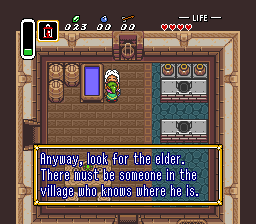
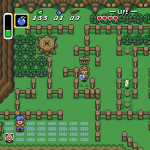
I remembered the map, but I had little clue of where to go. I’d retained just bits and pieces of the times I played through it and had almost no idea what to do or where to go first. I knew I needed to get a whistle, and I knew there were shoes to help me race across the map, but heck if I knew where or how to find them. The most familiar thing to me was the music for the different areas, but beyond that, it was a wash. It was like a blind playthrough all over again.
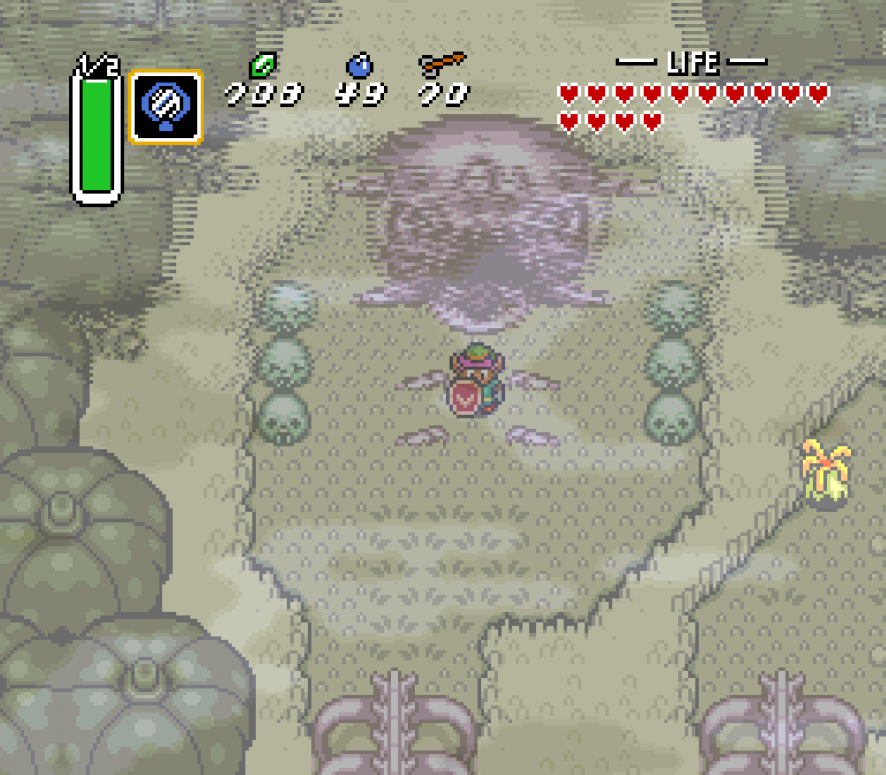
I kept thinking, as I got stuck in Skull Woods then wandered completely blind into Blind the Thief’s boss battle: How did I beat this as a kid? How did I take the controller with such confidence and play through it in a single day when it was taking me almost a week to get through it this time? Had my gaming skills degraded that much as I aged? Had I blocked out the difficulty of the game in favor of the fond memories of the music and sharing the experience with my nephew? I couldn’t put my finger on it, but as I struggled through I remember feeling both angry and embarrassed that it was taking me so long when I knew others who could complete it in three hours or less.
It was a humbling experience to say the least, and when I finally got to the battle with Aghanim and Ganon I was simultaneously so angry that I wanted to quit, but also too stubborn to give up. I lost count of how many times I entered that battle, but eventually, I emerged victorious, to the ruin of my own childhood as well as everyone who was watching me.
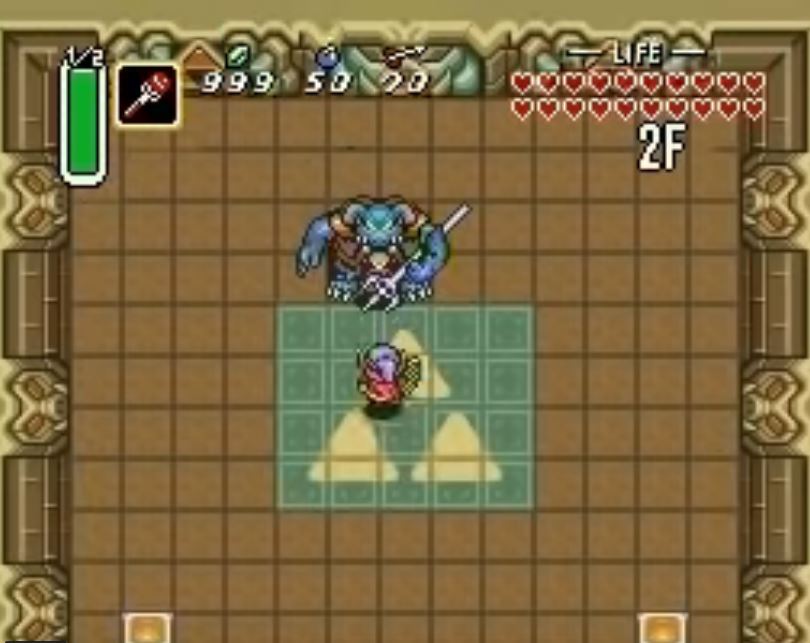
I realize in the months that have passed since this event it was not ineptitude that caused me to struggle, but rather familiarity. A Link to the Past was a game I’d played a lot when I was between the ages of eight and ten but after that, I wasn’t ever able to pick it up. The memories were there, but muscle memory in my fingers and little nuances that made the game unique had all but faded.
Zelda games are renowned for being immense and filled with secrets, and only by consistently playing them multiple times can you commit all those nuances to memory. The people I knew who could beat the game in three hours played it at least once a year if not more. Familiarity with a game lends skill, which is why Ocarina is a game I can beat in a few hours whereas it took me days to finish A Link to the Past.

I haven’t been able to pick up the game again, but I plan on doing so once I finish a few others. Not for a speedrun attempt, but simply to make myself more familiar with a casual plethora and the little nuances that make the game so incredible.
For a 16-bit game, A Link to the Past is enormous, from its map to the items and to the story held within. If you haven’t picked it up in a few years, it’s absolutely worth a playthrough. But be warned, if it’s been a while, you may not have the same amazing gaming skills you once had when you were a child with nothing to do but play games all day.