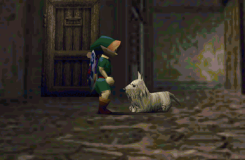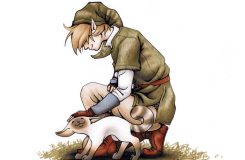
We learn much about Link through his interactions with the various inhabitants of the lands he travels. Sometimes, through the player’s ability to choose how Link should react, the player learns a little about him or herself. In that way, some characters that Link encounters serve as moral tests, questioning how Link, and the player by extension, conduct themselves when tempted by power or greed. A perfect example of this is the hidden Hinox in A Link Between Worlds. Meeting it was one moral test I am ashamed to say I failed miserably.
Link discovers this Hinox hiding in a clandestine cave behind a waterfall in the northeastern part of Lorule. By this point, Link has encountered many hostile Hinox on his journey, so stumbling into the den of one puts Link on high alert. But this Hinox does not attack Link or throw any explosives. It cowers in a huddled mass until Link approaches and interacts. To Link’s surprise, the Hinox begs him to spare its life and leave it in peace. It reinforces its request by giving Link a Blue Rupee.

Here is where the test begins. So far, Link has simply received a small payment for talking to this recluse. He now has the choice to tell the Hinox that the five rupees was enough incentive to leave it alone or demand more rupees as hush money.
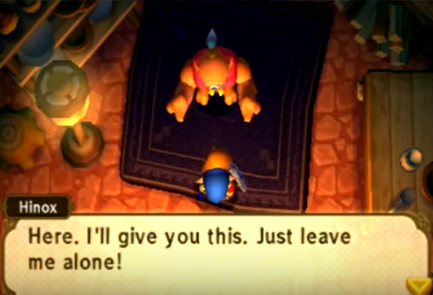
If Link tells the Hinox he is satisfied with the fee paid, it will end the conversation. Link can then talk to the Hinox again, and it will ask Link not to tell anyone so as to protect its reputation. It even says, “Let’s keep this a secret to everybody,” alluding to the Secret Moblin found in the original Legend of Zelda. At least, that is all according to Zelda Wiki. I wouldn’t know from personal experience.
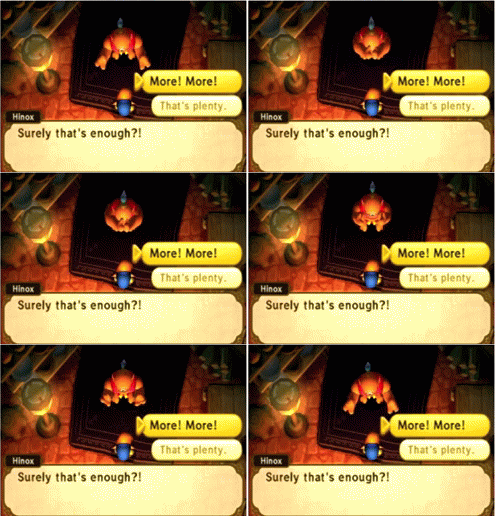
No, I chose the darker path. Driven by greed, I made Link demand more and more rupees, each time ignoring the Hinox’s pleas to take the money and leave. Initially, the amount of rupees increased with each instance of insistence, leading me to believe the Hinox was holding out on its greatest treasure. My desire for something grand made me extort the maximum possible 300 rupees out of the poor Hinox (the maximum is determined at random after the first 100 rupees). Then, my avarice not yet satiated, one final demand turned out to be the straw that broke the Hinox’s back.
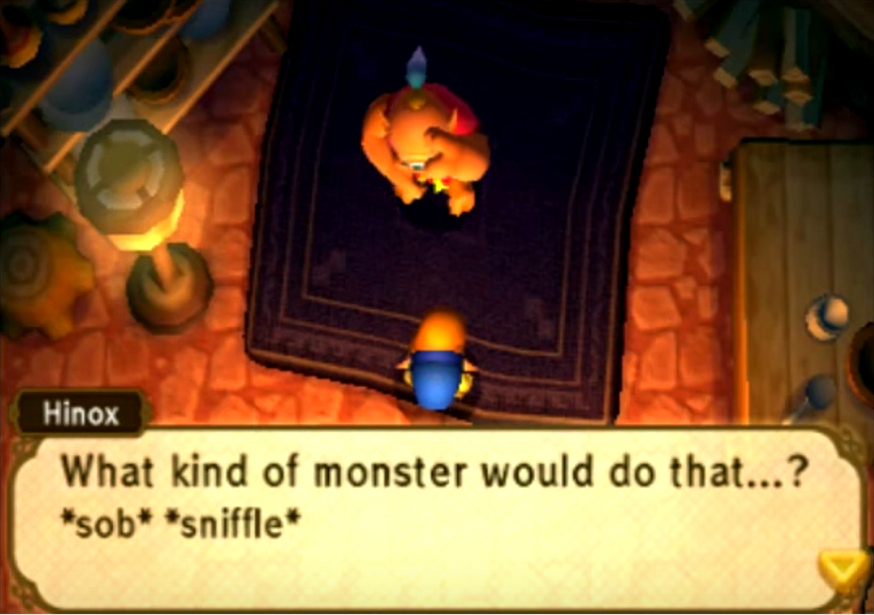
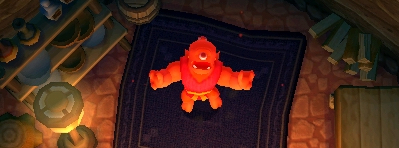
Fed up with the ceaseless requests that are bleeding its wallet dry, the Hinox begins to weep, asking what kind of monster would stride into someone’s home and take all their rupees just for asking to be left alone. Despair quickly morphs into anger as the Hinox flies into an unbridled rage, screaming at the intruder to return its rupees. Now glowing hot red, the Hinox begins stampeding around its abode with the ferocity of a cornered feral animal, trying to slam into Link and deal enormous damage. Even if Link leaves and returns to the cave, the Hinox will immediately resume its unrelenting rampage (at least until you save and quit).
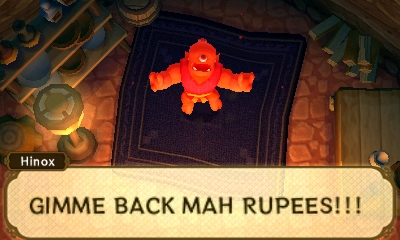
A hero’s true mettle is tested not by his or her strength or by the dangers he or she faces, but by how he or she treats those in need, especially when tempted by power. In this instance, Link (but really me) succumbed to the enticements of his relative power over the Hinox and greed’s everlasting beckoning. Instead of acting like a protector of the weak, Link acts like a mafioso shaking down people for protection money.
Sure, I could try to justify Link’s and my actions by saying that Hinox are villains, or on the grounds that the Hinox could have been holding on to a Piece of Heart, or that Link could make better use of the rupees to deal with Ravio’s exorbitant prices. But at the end of the day, I, through Link, simply exploited this non-confrontational Hinox who wanted nothing more than to be left in peace, only stopping after I had pushed him past the breaking point.
I can only take solace in knowing I would never treat another in real life like I shamefully treated this Hinox. Would I?