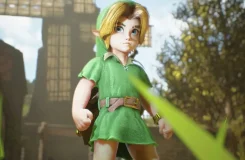
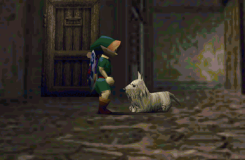
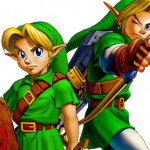
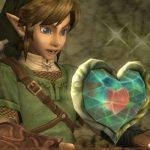
The Legend of Zelda: Ocarina of Time is not only one of my favorite Zelda titles of all time, but there is so much history in this one little cart that helps bolster the game’s staying power in both my heart and in my memory. The game had an epic story that a younger me always compares other narratives and to still do to this day, music that remains as ringtones on my cellphone, and a youthful struggle that helped me grow so much. It is because of Ocarina of Time that I am able to write and read on such a better level had I not been exposed to the game at all.
Picture this: It’s Christmas morning of 1998, a younger Brian is sitting around a tree with his mother eagerly awaiting the chance to rip into some tacky red wrapping paper that is concealing the rectangular shape he had been hoping for. Not only was the big rectangle there, but there were three separate smaller rectangles that rested neatly on top of the larger package.
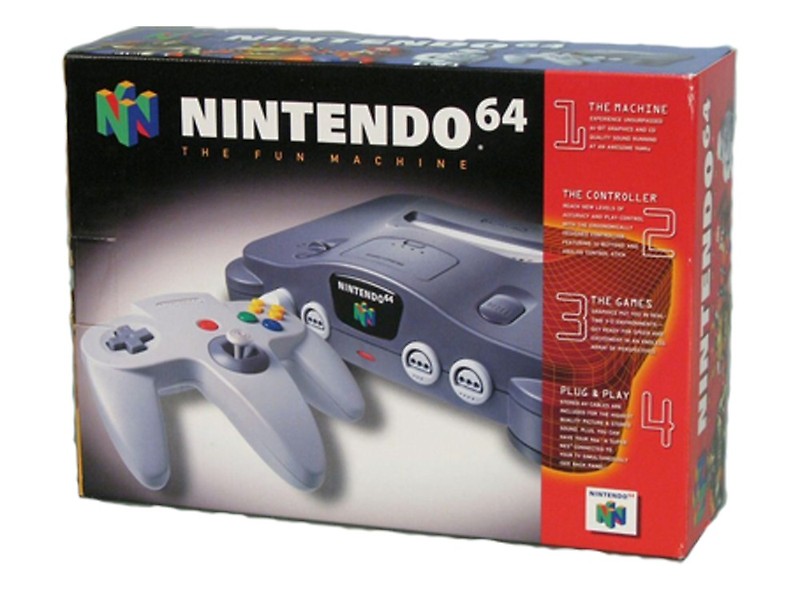
As his mother nodded for him to go ahead, young Brian’s fingers danced madly into the foray of presents. You could see the disappointment when he was told to start with bags and flimsily-sealed boxes that usually contained clothing and smaller toys. After taking snapshots of opening each present, it was finally time. Young Brian ripped open the package and saw the familiar face of Mario, a Storm Trooper, and the font that revealed one of his favorite consoles ever, a Nintendo 64. Now that he knew he had the console, he craved to find out what games he was going to get to play. Leaving the other two games a mystery for now, the gleaming eyes of my seven-year-old self were filled with joy as I triumphantly held up the packaging to Ocarina, told my mother I loved her, and rushed off into my room to hook up the Nintendo 64 up and get started saving Hyrule.
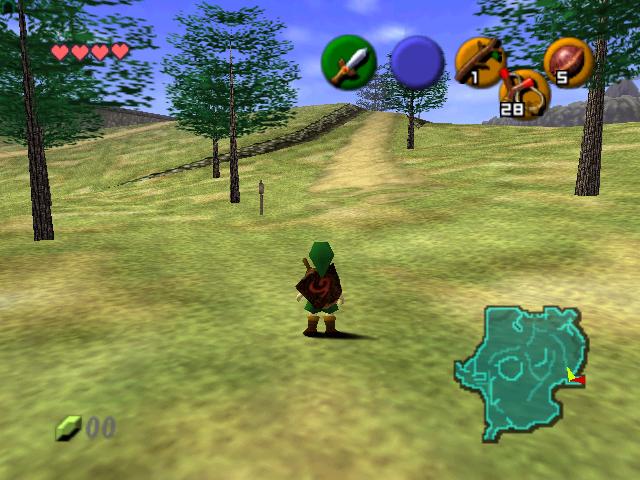
I pushed the cartridge in the dock, flicked the power button, and was astonished to see Link riding Epona across the vast open wildness of Hyrule Field. I pressed start, struggled to name my character LINK in all capitals because that was so much easier, and began the game. Now, at this point in my life, I was struggling with reading. It was quite difficult to grasp some of the words and sound them out. The first bit of text said something about a tree, and the word “Deku” was foreign to me and I couldn’t quite grasp what it meant. In my frustration, I yelled out to my mom to come into the room and read the word. She rushed into the room, but before she could get a look at the word, the text had already forwarded to the next part of the sequence and I was left with this feeling of being stuck and I hadn’t even started the game properly.
Fast forward to the weekend and I had managed to get a little further in my quest to save Hyrule. I took my copy of Ocarina to my aunt and uncle’s house to play over the weekend when I was finally about to meet the Deku Tree face to face. They had their own Nintendo 64 and my uncle was the one to introduce me to Zelda. He owned a Super Nintendo with a completed file of A Link to the Past, which I used to dabble on every now and then.
I asked my uncle to help me with strange words like “Kokiri” and “Deku,” which he did, but he always challenged me to work on the words and sound and spell them out. He was gracious enough however, to read through the entire first dungeon until I made it to Kaepora Gabora and was set loose upon that big open field I had witnessed in the opening title introduction. These sessions took some time as I was playing the game in spurts because of what felt like roadblocks to me. I would get to a section like Lon Lon Ranch, Kakariko Village, or even Castle Town and just wander around.
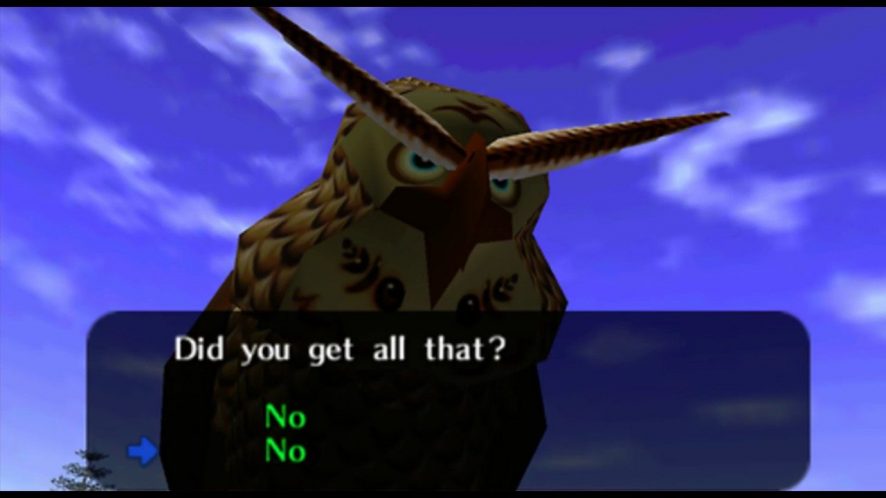
These are pretty basic sections now with all things considered, but at seven-years-old, it was entirely too hard for me to put in the effort to read through all of the non-player character’s dialogue to figure out context clues on what to do next and retain that information in a cohesive manner. My uncle would supervise sections of the game when I played at his house and instead of letting me button-mash my way through the dialogue windows of misery, he would instruct me to sound out the words or even write down the dialogue in a notebook to keep track of what I had heard and to make sure I knew what steps to take next.
This process became its own meticulous grammar class and spelling bee all wrapped up into one. It was tedious and hard on my little seven-year-old spirit. All I wanted to do was go and face Ganondorf with my Kokiri Sword and stop his evil reign of terror; except I was so worried about getting into the action, I wouldn’t have even known more of the deeper details of the plot because I wouldn’t read the narrative.
After several weeks of trial and error, I was starting to learn more and more about how to read the text of the characters on the screen before the timer beat me to it. If I couldn’t get the information I needed from the narrative or to write it down, I would hard reset, come back up to that point, and work my way through the dialogue. I was determined to understand the text of the game and read through the narrative on my own without the assistance of my uncle. It wasn’t that he didn’t want to help, but rather he knew that I could do it on my own and he believed that since it was a topic I was extremely passionate about, that it would help me push my limits even further.
There were setbacks, of course, where I would sit there in self-defeat and halfway cry the way children do because I simply couldn’t read everything that was coming across the screen in time. Cutscenes would be a nightmare sometimes due to just how much I was trying to understand the meanings of the words, how to pronounce them properly, and to try and comprehend everything before the next box of text rolled over the one I was currently trying to get through.
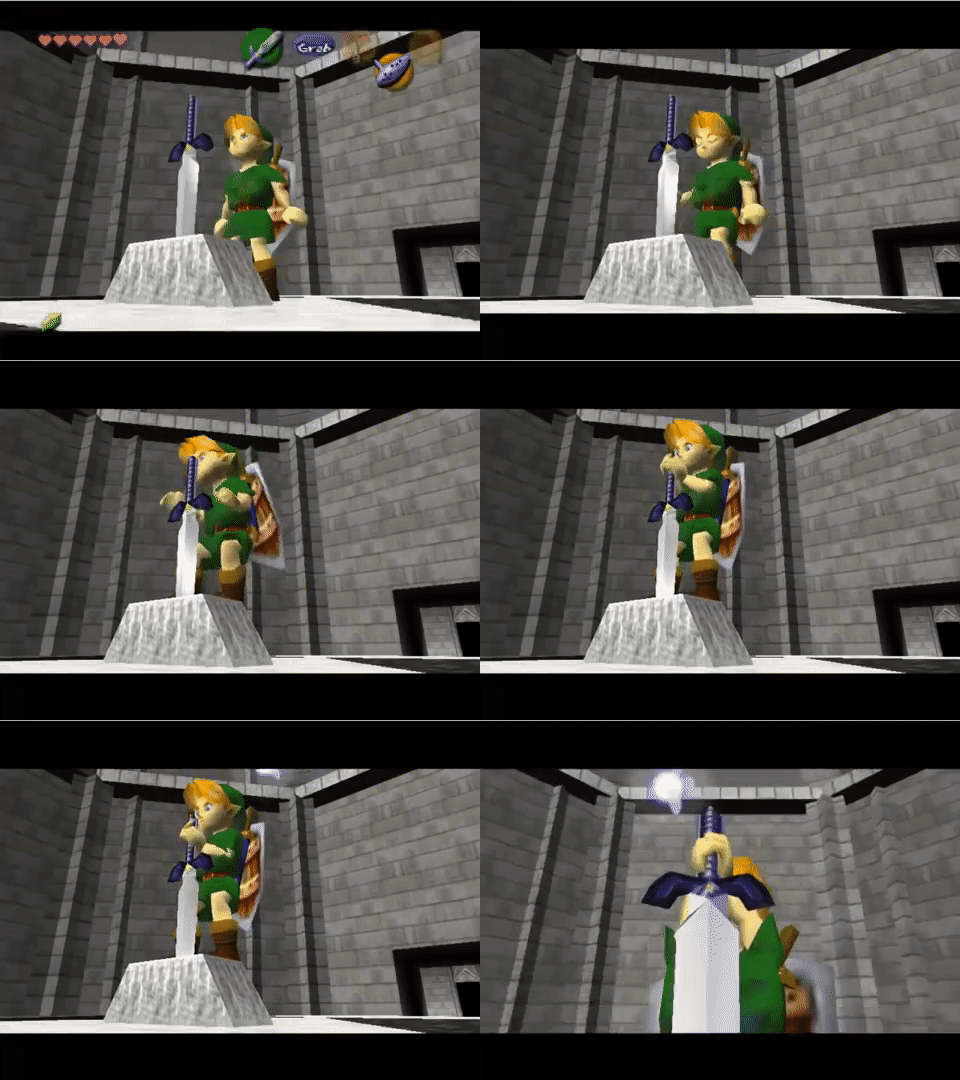
I’m not exactly sure at what point it became apparent that I no longer needed my uncle to supervise or read anything, but that didn’t stop him from always standing behind me ready to offer up help. The last actual memory I have of him standing there in the doorway, ready to support me, was right when Link pulled the Master Sword out of the Pedestal of Time.
Just like how Link had developed and grown through the experiences he had out in the wilds of Hyrule, I had grown mentally in skill with guidance from my uncle and from the amazing story I so desperately wanted to understand on my own. I remember seeing the reflection of my uncle’s face in the small tube television that we had at his house, smiling at me all crossed-legged on the floor. He was proud he was of me and he knew that I could read the whole time, I just had to work at it. I felt so accomplished knowing that I had worked on my reading skills and, by extension, my writing skills thanks to Ocarina of Time.
The Legend of Zelda is known for so many positive things and this is one memory that I’m proud to share that had a positive effect on me for the rest of my life. Did any of the Zelda games help you with reading, writing, work through emotion, or something else? Please, discuss it down below or on the forums!