With a Hollywood blockbuster set to hit theaters next year, and having enjoyed unprecedented commercial success through its groundbreaking releases during the Nintendo Switch era, the Legend of Zelda’s future is certainly bright. But it may not be complete for all fans — in particular, those who still yearn for the classic Legend of Zelda formula that the Era of the Wilds epics couldn’t quite offer.
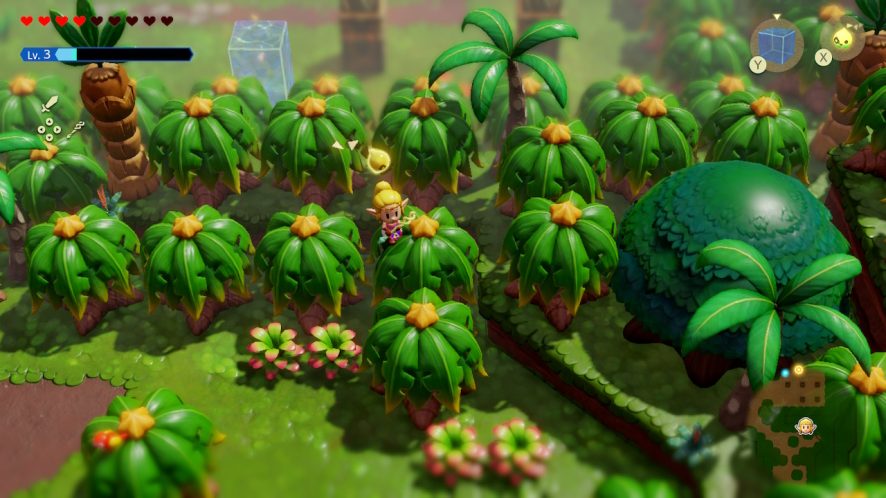
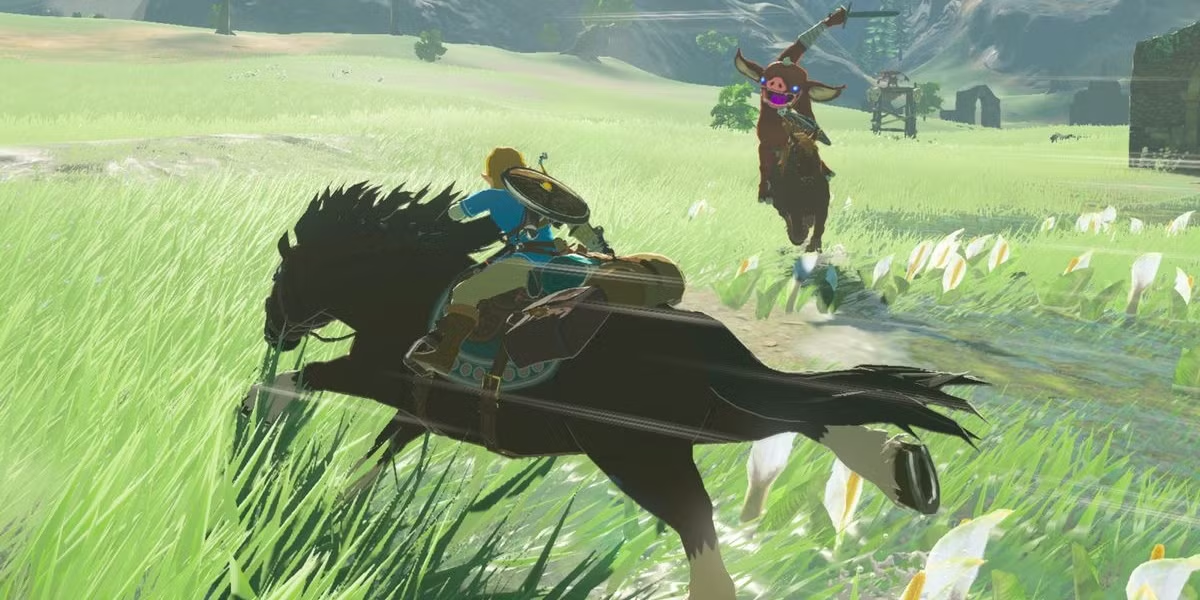
We can safely say that the mainline 3D entries aren’t veering away any time soon from the open world, nonlinear principles as seen in Breath of the Wild and Tears of the Kingdom. If their more than 50 million combined copies sold didn’t signal that enough, series producer Eiji Aonuma all-but confirmed as much with his own words during an interview back in 2023. The future of more structured, story driven entries was a little murky for a bit, at least until Echoes of Wisdom debuted in 2024. While that 2D adventure’s greatest claim to fame is being Princess Zelda’s first, canon solo outing, it also became notable for providing an experience closer to those Legend of Zelda games from before the Era of the Wilds’ sheer size and sandbox design.
Classic Zelda and open world Zelda can coexist. Echoes of Wisdom showed at least one approach for how Nintendo can continue developing Legend of Zelda titles like those of old, even as their grandest productions move in a different direction. They don’t need to look beyond the Switch platforms for a few other potential blueprints. In fact, some of the best examples for Nintendo to take after come from games that aren’tZelda titles, and are developed by third party studios, no less.
Echoes of Wisdom found the perfect sweet spot
To deliver a refreshingly traditional Legend of Zelda experience, Echoes of Wisdom didn’t have to think exclusively decades in the past. Funny enough, it succeeded as a classic Legend of Zelda entry simply by finding a cozy middle ground between the classic and open world approaches to the series.
Echoes of Wisdom features just the right amount of structure to ensure a sense of progression that is akin to the pre-Era of the Wilds games. Its central narrative is linear and all of the major events unfold in the present for Zelda to witness firsthand — right down to a midgame twist that instantly raises the stakes and sets up the premise for the story’s second half. Null’s dramatic entrance in the depths of Hyrule Castle did for Echoes of Wisdom’s narrative what Ganondorf entering the Sacred Realm did for Ocarina of Time’s, or what Midna’s desperate hour did for Twilight Princess’, eventually leading to a very welcome return for the three Golden Goddesses.
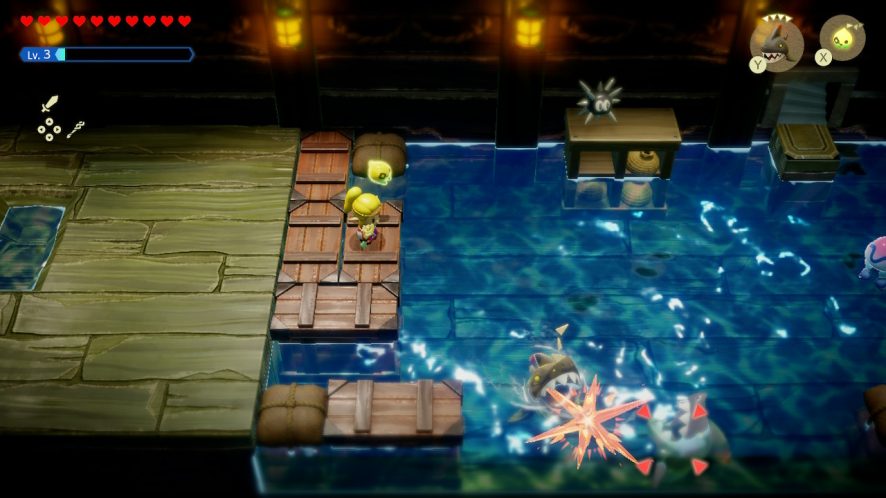
To see all of that story, you have to earn your way through it. Not every area or point of interest is accessible from the get-go, with most of the scenarios being gated behind the degree of progress that you’ve made. Echoes of Wisdom’s dungeons are the sprawling gauntlets of puzzles and enemies that have long been a defining element of the series’ gameplay, their labyrinthine layouts needing to be conquered room by room. By doing so, Zelda’s abilities are constantly evolving over the course of the game. Much like an ever-expanding inventory of unique items, more powerful Echoes become available to her with each trial she completes, opening new ways forward.
For all that Echoes of Wisdom did to ensure a classic Legend of Zelda experience, however, it still took cues from the Era of the Wilds games. Within the structure, linearity, and limitations, so too is there an appreciable amount of choice for the player, far more than what was generally seen in traditional Legend of Zelda games. The 127 different Echoes offer a dizzying array of abilities that can be used for combat, puzzle solving, and navigating environments. Every player will have their own unique set that they favor over the rest, with many that they never touch. Some fans swear by the Water Block and Flying Tile for travel; others will tell you that the Platboom is king. Maybe you prefer to summon Wizzrobes and Wolfos; maybe you prefer to duke it out by calling upon Lizalfos and Darknuts.
That’s only one game mechanic at the player’s disposal. The Accessories and their myriad of upgrades are another feature at the player’s discretion which they would find most beneficial and go on to equip. Swordfighter Mode and the Automatons offer further options for tackling challenges in Echoes of Wisdom. Then there are Smoothies to consider, their variety of enhancements being a more balanced take on the meals and elixirs you could concoct in Breath of the Wild or Tears of the Kingdom. When compiling the many systems in Echoes of Wisdom, each player is sure to end up having their own personalized approach for how they venture through the game’s linear, structured storyline.
In using a handful of the same concepts as those that defined the Era of the Wilds games, but scaling them down, Echoes of Wisdom emerged as a Legend of Zelda game that utilized the advancements of its modern contemporaries, while ultimately resembling what the series was historically known and beloved for.
Many other franchises Nintendo can take after
Echoes of Wisdom proves that, sometimes, great results come from thinking smaller. Distilling a video game’s core elements into a concentrated vision can realize the game’s purest essence just as effectively, if not more than, the blockbuster projects that are far larger in scope. When done right, it ensures a very focused experience that casts attention solely onto what works for a given video game property.
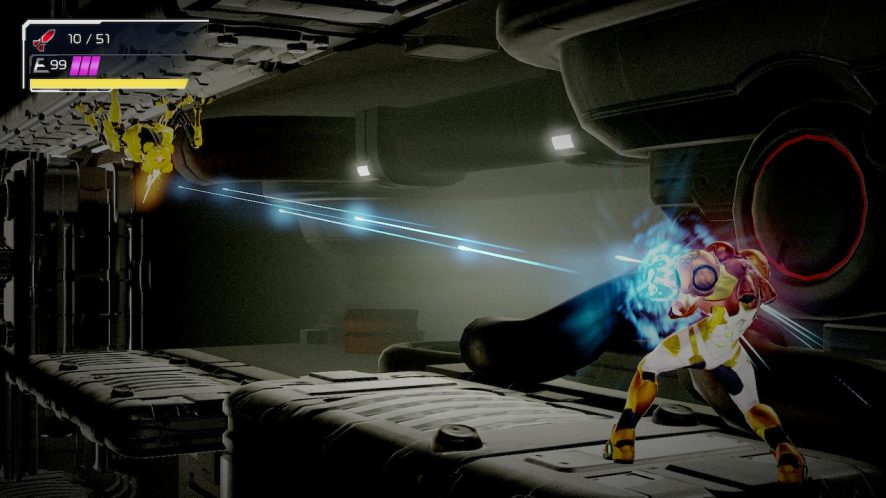
Nintendo fans have seen this in other franchises aside from The Legend Zelda. As Metroid Prime 4 sat in limbo for a near eternity due to development struggles, it was 2D entries like Metroid: Samus Returns and Metroid Dread that sparked a revitalization of the series. In Dread’s case, it did a whole lot more than just help break a cold streak. Dread went on to become the best selling game in the entire series with over 3 million copies and earned overwhelming critical acclaim, including the award for Best Action/Adventure Game at the Game Awards 2021.
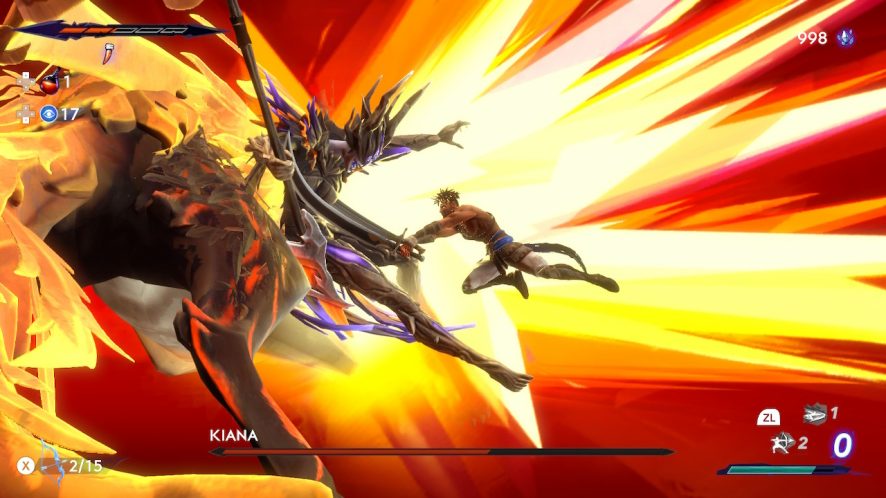
Prince of Persia is another franchise that rekindled its former glory with a stellar sidescrolling release. 2024’s The Lost Crown was far and away the best game in the series since the Sands of Time trilogy, arguably reaching greater heights than some of those 3D action platformers. Although it didn’t quite meet Ubisoft’s commercial expectations (which if we’re being honest were probably unreasonable seeing how it reportedly reached 3 million players), The Lost Crown’s glowing reception encouraged Ubisoft to continue with 2D Prince of Persia titles, eventually leading to 2025’s The Rogue Prince of Persia.
Prince of Persia: The Lost Crown
Sometimes studios think smaller as a way to return to a series’ roots after ambitious projects maybe went awry. That’s what Capcom did to great success with Resident Evil 7: Biohazard, an entry that eschewed bombastic action in favor of claustrophobic survival horror. Instead of Chris Redfield or Leon S. Kennedy battling sheer armies of mutants around the world, Biohazard placed fans in the shoes of everyman Ethan Winters as he fought to escape the Baker plantation and its surrounding bayou. Other times, a studio may think smaller in order to supplement a franchise with familiar experiences as the largest projects forge ahead in bold new directions. Tomb Raider did so with the isometric adventures Lara Croft and the Guardian of Light, and Lara Croft and the Temple of Osiris, which leaned fully into monsters and mythical phenomena, while the Survivor Trilogy leaned more to grit and realism.
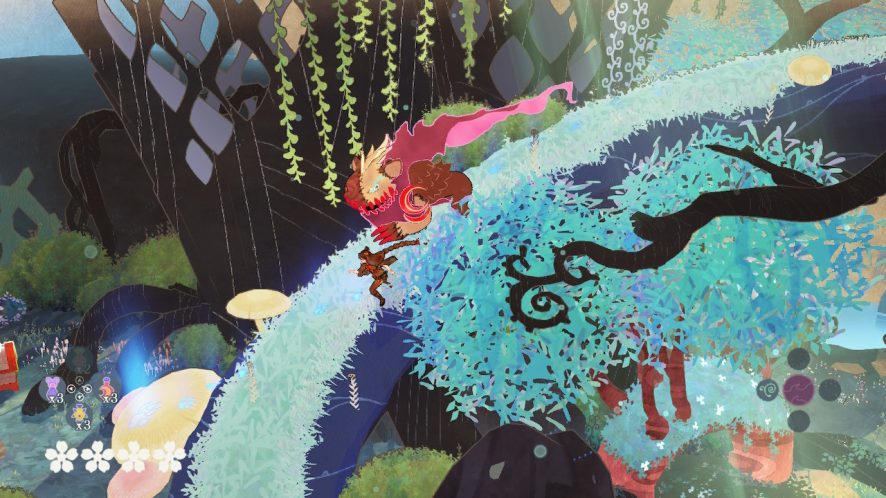
In Bayonetta’s case, the delightful little spinoff Bayonetta Origins: Cereza and the Lost Demon allowed PlatinumGames to get creative with the iconic Umbra Witch, resulting in a cozy, vibrant adventure story that felt a lot like a classic 3D Legend of Zelda game. Rather than the torrid action and risqué humor that the series is renowned for, a youthful incarnation of Bayonetta and her demon cat companion Cheshire work together to overcome puzzles and platforming challenges, often in dungeon-esque environments. Despite the tonal and mechanical shifts, Bayonetta Origins made sure to include plenty of series staples: Cereza’s affinity for dance in combination with her magic, Infernal Demons both friendly and threatening, an extensive skill tree of Umbran Arts, and of course, brewing restoration items with the likes of Mandragora Root, Baked Gecko, and Unicorn Horns. The distinct Bayonetta charm and aesthetics were all there, just in a colorful, family-friendly package.
Bayonetta Origins: Cereza and the Lost Demon
Fittingly, Nintendo can take more from these games than merely the benefits behind reducing scope and scale. The Legend of Zelda could feel right at home in most of the genres and perspectives associated with the games mentioned above. Echoes of Wisdom’s accomplishments doesn’t mean that the classic Zelda formula should now solely be used in 2D, top down adventures. If a full blown, classic 3D Zelda isn’t in the cards, there is tons of potential behind slotting the classic Zelda formula into an unfamiliar genre for the series. The Legend of Zelda could definitely stand to try something other than yet another Hyrule Warriors for its next spinoff.
We’ve only seen it a few times in the canon releases, but there is no question that The Legend of Zelda can work as a 2D sidescroller. Whether it’s hand-drawn sprites or 3D models, graphics have evolved enough to display intricate environments suitable for Zelda’s towns, overworld wilds, and dungeons. Be it Ori and the Blind Forest, the Trine series, the Guacamelee! games, Vanillaware’s titles, or any other high-quality 2D adventure from over the last few generations, there are countless examples of how rich, visually arresting settings are more than possible in the fixed sidescrolling perspective.
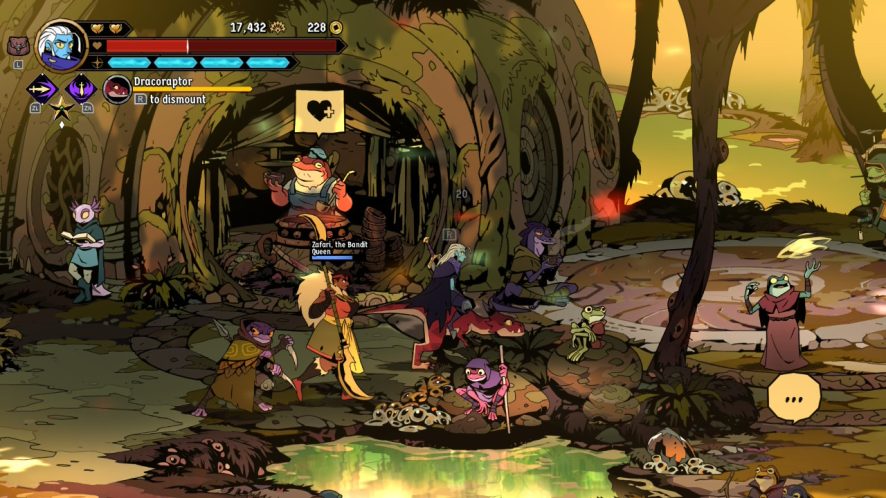
Classic Legend of Zelda games always revolved around item and ability gated progression, which is exactly what serves as the foundation of the Metroidvania genre. Arcade and roguelike beat ‘em ups such as Absolum could make for an ideal dungeon crawler, the slightly deeper plane of movement opening up opportunities for interactions with the environment. That could mean light puzzle solving, searching for hidden secrets, or simply engaging with NPCs. Taken altogether, it could feel like a modernized form of the NES Zelda games, and we’ve arguably already seen a success story for that kind of design with Cadence of Hyrule.
Kakariko Village or Hyrule Castle Town could easily be recreated in a 2D beat ’em up like Absolum.
When the original Paper Mario celebrated its 20th anniversary back in 2020, we noted how much that beloved N64 RPG has in common with The Legend of Zelda’s core gameplay. Mario’s partners are his de-facto items, their unique abilities helping him to access new areas, reach distant objects, solve puzzles, and overcome hazards. They’re put to their greatest use inside the game’s dungeons, which are appropriately filled with puzzles and platforming challenges. If a turn based RPG can feature item gated progression, ample puzzle solving, dungeons, and so many other conventions that comprise the classic Legend of Zelda formula, why not take a shot at a Zelda JRPG?
The need for smaller video games industry-wide
Nintendo has rarely been a company who places cutting edge tech on a pedestal, certainly not above the merit of game mechanics. Being frank, they’re one of the only major video game studios to steer clear of the graphics wars throughout the years. That mantra of gameplay-over-hardware has been proven a remarkable bit of foresight, as the rising costs of game development have nothing short of rocked the industry. With the sheer strain that comes from creating the most ambitious software, requiring exorbitant budgets and protracted development cycles, video games that are smaller in scope and command a slimmer budget are needed now more than ever.
Thankfully, Nintendo seems to understand that, maybe better than anyone else in the business. They see the value of having a diverse library of properties, including those that would be considered secondary, even niche. We still get our fill of Pikmin and Metroid alongside Mario Kart and Animal Crossing. Both Xenoblade Chronicles and Fire Emblem are held in high-enough regard by Nintendo to have been used as the closing announcements of Nintendo Direct presentations.
It was just last year during an investors call when president of the company Shuntro Furukawa expressed the idea of focusing on games with shorter development cycles to offset the rigors of modern game development. Beyond helping their bottom line, the other obvious benefit to Nintendo for embracing such an approach is that it ensures a steady stream of new releases for the Switch 2. The smaller titles fill out their publishing schedule to avoid those dreaded software droughts, and it allows a given franchise to maintain its presence among audiences while the biggest entries take several years to complete.
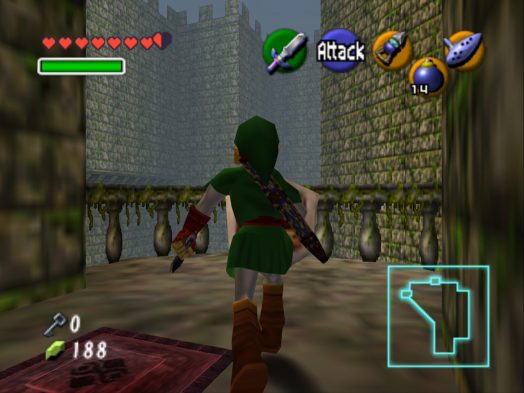
That’s promising for The Legend of Zelda, and any fan hoping to see more games using the traditional formula. A bigger, prettier take on Ocarina of Time or Twilight Princess is highly unlikely to sell as much as the next open world game. Commercially, it doesn’t make sense for Aonuma’s crew to work on that over the eventual successor to the Era of the Wilds. But it makes perfect sense for a different team to develop that smaller, classic 3D Legend of Zelda concurrently, or any spinoff built around dungeon crawling, item gated progression, and a linear narrative. Whichever form it takes, that game solves two different problems: filling the multi-year gap that is inevitable for the next sandbox juggernaut, and appeasing longtime Legend of Zelda fans looking for the traditional experience.
With a 40th anniversary to be celebrated in 2026, and a Hollywood blockbuster coming to cinemas in 2027, the door is just about as wide open as it possibly could be.
Jeffrey Pawlak
Jeffrey Pawlak is the Features Director for Zelda Universe, and has been a member of the website's community for more than 20 years. He is also a high fantasy author and an aspiring comic book artist.


 by Jeffrey Pawlak on April 3, 2026