Pulling the strings is one of Ganon’s favorite diabolical tactics. Since the days of his Gerudo kingship, the Hero’s archnemesis has mastered the art of manipulation to fulfill his dark designs and fool many a poor soul. Though Ganondorf himself is not afraid to get his hands dirty, he will often leverage someone or something else to do the grunt work at his bidding. Thus, this type of figurehead or concept has been aptly tied to the creative theme of puppets by Nintendo and Zelda fans alike.
How do we know the difference between Ganon’s puppets versus the rest of his minions and monsters? Well, the answer is surprisingly simple. One of the chief definitions for the word “puppet” in Webster’s Dictionary is “one whose acts are controlled by an outside force or influence.” A puppet of Ganon is precisely that, a figurehead who performs devious actions that impact Hyrule while being influenced by Ganon from behind the scenes. The key here is that the character’s actions are influenced by Ganon (either from willing persuasion or outright force), which is different from a villain being spawned by or working for him.
This dark theme of Ganon’s puppetry is frequently woven across the tapestry of the Zelda franchise narrative. There’s even a creative writing trope named after him, and it’s called “Hijacked by Ganon.” But while the series is obviously saturated with the trope, it’s not as pronounced in the rest of video game entertainment. “Hijacked by Ganon” is a unique, inverted offshoot of the trope “Man Behind the Man,” a more common narrative tactic for villains in other game and movie titles.
For many Zelda fans, it goes without saying that the “Hijacked by Ganon” stunt has aged into something of a tired cliche. But in spite of its wrinkles, one cannot deny that it has captured the universal fascination of gaming audiences for almost 30 years. The content is easy to understand and the format creates seamless game progression, making its appreciation worth noting.
With this in mind, let’s look back at some of the most dastardly and infamous examples of Ganon’s puppets in the Zelda series.
Agahnim
Agahnim, the first puppet of Ganon. Oh yes, he looks totally trustworthy.
Game: A Link to the Past, Super Nintendo Entertainment System
Release Date: 1991
The classic robed sorcerer Agahnim in ALink to the Past practically placed the “Hijacked by Ganon” trope on the map. In gameplay, he’s a pretty simple sprite character, but it’s helpful to read the original instruction manual to appreciate the big picture. The King of Hyrule appoints Agahnim as an advisor after he supposedly ends a devastating plague. But pretty soon things start to turn foul, and Agahnim captures the Seven Maidens and conjures an incantation to free his master in the Dark World. While it remains unclear what the origins of Agahnim’s past were, he helped establish a narrative foundation that many video games within and outside the Zelda series would follow in the future.
General Onox
Game: Oracle of Seasons, Game Boy Color
Release Date: 2001
This brute was responsible for throwing the seasons out of whack and wreaking havoc in the fair land of Holodrum. His one-sided bully complex isn’t much to write home about, but at least he fulfilled the job description. He also gets bonus points for dishing out a boss fight that gives players a run for their money.
Veran
Game: Oracle of Ages, Game Boy Color
Release Date: 2001
Veran fulfilled what General Onox lacked in the complex character department, and in my humble opinion, she’s an underrated Zelda villain. Her abilities to shapeshift and to possess other characters always kept you guessing, and she was very good at conniving the poor folks of Labrynna. Never mind that those who Veran possessed always inherited her sickly teal skin tone. Perhaps the people of Labrynna were just colorblind.
What’s interesting about the Oracle tandem is that both Veran and General Onox are not only puppets but are part of Ganon’s multilayered chain of command, as they were both summoned by Twinrova from the Dark Realm. (Evil Realm / Dark World vibes, anyone?) They show us a rare glimpse of the inside operations of Ganon’s hierarchy system of minions and monsters.
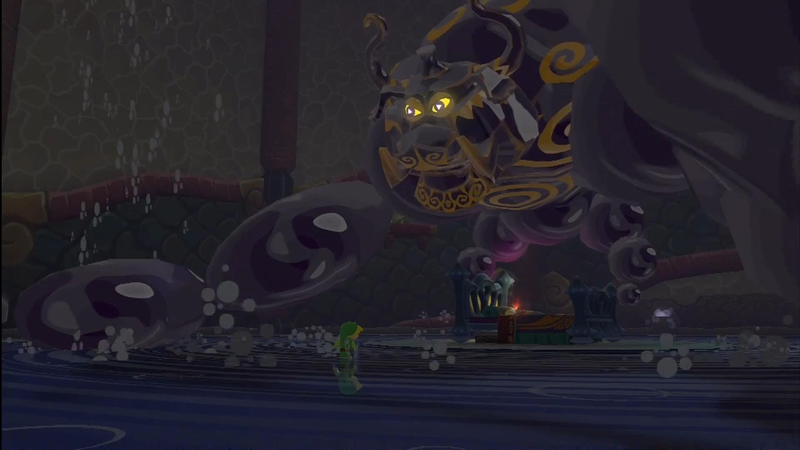
Puppet Ganon
Puppet Ganon is one of the best examples.
Game: The Wind Waker, Nintendo GameCube
Release Date: 2002
This penultimate boss in TheWind Waker is the epitome of all Ganon’s puppets, and it’s my personal favorite for its obvious literal interpretation. The irony is that Puppet Ganon isn’t even real; the monster is nothing but an illusion. But oh, what a powerful illusion it was, and the damage it could inflict on the young Hero of Winds was very real. If you’ve ever encountered Puppet Ganon in TheWind Waker, it’s an experience you’ll never forget. Fun fact — the boss is loosely inspired from Bunraku, a centuries-old style of Japanese puppet theater.
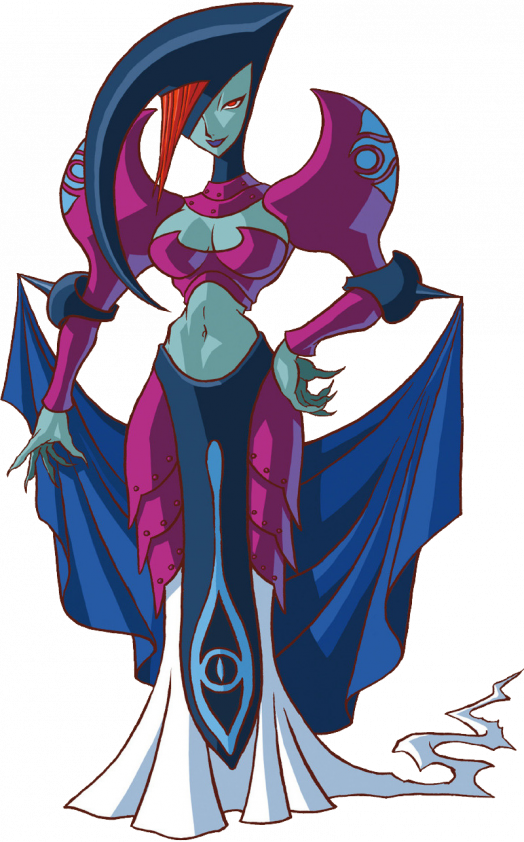
Zant
Behold Zant, Usurper King and probably the most controversial of Ganon’s puppets.
Game: Twilight Princess, Nintendo GameCube and Wii
Release Date: 2006
Zant’s jealousy and bitterness as a rejected candidate for Twili royalty was the prime fuel that Ganon used to control him. But Zant’s motivation from then on was grounded on a somewhat weak foundation, and his complete meltdown by the end of Twilight Princess didn’t help his case either. Zant’s character wasn’t a failure, but his reputation as a mediocre puppet fueled the argument for change to the traditional Zelda formula when it wasn’t broken, at least not at the time. Would Zant have fared better striking against Hyrule on his own? Unfortunately, we may never know in the canon.
Puppet Zelda
Game: Twilight Princess, Nintendo GameCube and Wii
Release Date: 2006
Hold up — two puppets in the same game? Yes, it’s true! Apparently, Ganondorf decided to show off his new Twili magic skills by possessing Princess Zelda. (And yes, it’s creepy.) The boss fight against Puppet Zelda was an obvious “dead man’s volley” clone in gameplay, but the concept is my second favorite among the puppet entourage. The shock value is great. It fits Ganondorf’s personality to a “T,” and let’s face it, Puppet Zelda makes one heck of a cosplay.
Pulling the Strings Once More
SPOILER WARNING: The content below contains significant spoilers for Hyrule Warriors: Age of Calamity, though it does not spoil the ending. Read at your own risk!
By the time Twilight Princess was released, the “Hijacked by Ganon” tactic had clearly lost its finesse and was soon afterward boxed up to collect dust on the shelf. But then after 14 long years, Nintendo decided to give it another try. This time the strings would be pulled in a very different style of game. Enter Hyrule Warriors: Age of Calamity.
Astor
Game: Hyrule Warriors: Age of Calamity
The mysterious cloaked figure is finally identified.
Release Date: 2020
Normally I wouldn’t bring up someone who’s not from an original Zelda title, but Astor in Age of Calamity is completely justified. One reason is that in contrast to the original Hyrule Warriors, Age of Calamity is potentially part of the official Zelda canon as a direct prequel to Breath of the Wild that begins a new timeline split. As far as I’m concerned, Astor is a fair and square mainstream Zelda villain. His ominous cloak screams that he’s a Ganon decoy from a mile away. “But wait!” you may ask, “I thought Breath of the Wild went against the traditional Zelda conventions. What’s up with Astor? Why do the puppet thing again?” Well, I’ll give you one very big reason in two small words: voice acting.
Yes, that’s right — Astor is the very first English voice-acted Zelda villain in a Zelda canon game.
One could say that Astor made history like how Agahnim did. He plays all the right moves, only this time it’s larger than life with a voice in a brand new game style. If you’re going to make history, why not do it in a familiar format that works? He’s probably what Agahnim would have looked like on the big screen in a blockbuster Zelda movie. And if you can’t hide a puppet of Ganon from a big story, you might as well flaunt it.
But that’s not the only thing Astor brings to the table. His presence in Age of Calamity also accomplishes these things:
He stands in as a face for the ethereal Calamity Ganon in a way we can relate with.
He helps fill in important story details that were sorely missed in Breath of the Wild.
Does Astor’s dramatic performance vindicate the “Hijacked by Ganon” trope? I feel it’s too soon for me to say. But what I can say is, I encourage you to play Age of Calamity and decide for yourself whether or not its entertainment value is worth pulling the strings.
Chelsea Reed
I’m a ZU writer and author of an up-and-coming sci-fi fantasy novel. All credit of my nerd prowess goes to a dear friend of mine, the true master of Forsaken Fortress.


 by Chelsea Reed on January 13, 2021