The Demon Sword Spirit: A character study of Lord Ghirahim
 by Caitlin Stratford on August 25, 2021
Skyward Sword has produced some incredibly popular characters in the Zelda franchise, such as the boastful-but-later-humble Groose, Scrapper the outspoken Ancient Robot, a slightly less-hinged version of Beedle than we’re used to, and possibly the most wholesome incarnations of Link and Zelda. As the game that unites Link with the Master Sword and sets the rest of the timeline in motion, Skyward Sword also introduces two beings who are not of Skyloft nor the Surface: Fi and Ghirahim. Both are sword spirits tasked with serving their respective masters throughout whatever great purpose befalls them, meaning they are woven into the stories of those who wield them. And that is where the pair’s similarities end.
While Fi serves the Hero, Link, Ghirahim serves the Demon King, Demise. However, he should not be mistaken for a weak underling. Ghirahim wields a great deal of power on his own, acting as the main antagonist at several significant points throughout the game as he works to resurrect Demise. His entire arc takes place within one game; not only was he introduced in Skyward Sword, but he has not been featured in any games since (excluding Hyrule Warriors). However, his true ending remains something of a mystery.
“In truth, I very much prefer to be indulged with my full title: Lord Ghirahim.”
-Ghirahim
Throughout Skyward Sword, Ghirahim injects his narcissistic, oftentimes violent personality into each of his cutscenes. He also demonstrates a slow-building, simmering rage and a rapidly shortening fuse every time he and Link run into each other. This makes for some surprising, unique encounters, not least of all when he extends mercy to Link more than once — for a price, of course. Though, naturally, the Hero is not so easily turned away. Here, we will pull apart his character, from his makings to motives, to find out what makes the Demon Lord such a beloved villain.

The dangers of conceit
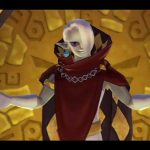
Ghirahim’s most striking characteristic is his vanity. He indulges himself in his own appearance, immaculately put together from the beginning. Later, though, he begins admiring himself as a weapon, boasting of his strength as well as his beauty. As he does, his appearance transforms, his once all-white body becoming splintered with black as the dark power below Hylia’s seal grows stronger. By the end of the game, that darkness almost entirely swallows his form, yet he remains nothing short of elegant. Beautiful yet deadly, as any finely crafted blade should be.
Ghirahim’s self-praise will not settle for his skills being regarded as merely impressive. He must be the best. For a long time prior to Link’s arrival on the Surface, such a claim may well have been truthful. After all, Impa seems to have been the only bother to him, and neither has truly bested the other. When Ghirahim first encounters Link, he thinks of him as nothing more than an inconvenience, and shortly thereafter, a means of releasing his anger.

It is clear that he wouldn’t even consider their run-in a fight, as his confidence in himself and complete lack of expectation for Link’s abilities leads him to believe that the latter will not even be able to put up a defense, let alone land an attack. So when Link bests him in their first battle, he is taken aback. However, he still does not see Link as a threat, even deciding to walk away and let him live, though not without a threat to kill him should their paths cross again. Ghirahim also makes a point to belittle Link’s skills, claiming that it is the sword alone that protects him. Whether he wholeheartedly believes this or is trying to assure himself, he assumes Link will return to the Sky and cause no further trouble.
When the opposite proves to be true time and time again, Ghirahim’s elegant composure begins to crumble. He is unaccustomed to losing, and to be bested repeatedly by a human youth, of all creatures, is a grave insult to his pride. What’s more, it stands in the way of his mission and sole purpose of resurrecting Demise. Yet, despite his best efforts, Link continues to live and wreak havoc on his plans, which, in turn, only makes Ghirahim more aggravated and more dangerous.
Threats dressed up in theatrics
The Zelda series is no stranger to theatrical villains. Zant, the penultimate boss and puppet of Ganondorf in Twilight Princess, is characterized by his erratic behavior. His habits and mannerisms initially seem amusing with their over-dramatic flair, though they quickly become chilling and unsettling when the looming, dangerous power he possesses is realized.
Something similar manifests in Ghirahim; he is incredibly expressive, ensuring every movement is a performance. He does not rush his battles: Rather, he enjoys the prelude with lengthy monologues, often interspersed with colorful descriptions of what he intends to do to his challenger. As a result, his physical skills in combat are enhanced by his ability to thoroughly unnerve his opponent before even drawing his blade. He commands attention, weaving intimidation with unpredictability, leaving onlookers wondering — and fearing — what he will do next.
“I’ll make the affair so excruciating you’ll deafen yourself with the shrill sound of your own screams.”
-Ghirahim
While Skyward Sword has never been considered one of the darker Zelda games (quite the opposite, in fact), Ghirahim delivers some pretty brutal lines of dialogue. The colorful and often harmless surroundings are a sharp contrast to the antagonist that prowls among them; his out-of-place nature is a reminder of what the Surface would become should Demise be freed. For all his threats, fighting prowess, and the fact that he himself is a Demon Lord who presides over the Surface, he is still but a whisper of the evil that slumbers in wait. Though a leader to some, his sole purpose is to serve another: Demise.

The Sword Spirit and servant
Ghirahim is one of only two of his kind (as far as we’re aware). Both he and Fi are spirits who reside within Demise’s and the Hero’s swords, respectively. However, there are considerable differences between the two. On the one hand, Fi is bonded to the Master Sword, never straying too far from the blade on Link’s back. She is also remarkably inexpressive, acting as an interface, offering information and guidance rather than emotional support. That is, until the very end of the game when she tells Link of her happiness and gratitude in a touching cutscene.
On the other hand, Ghirahim has a certain level of independence from his master, even commanding underlings of his own as he roams freely across the Surface. As we’ve already seen, he is expressive and has an intense personality, making him the polar opposite of Fi. The difference or reason behind it is never really addressed. Perhaps it is down to Demise’s imprisonment, forcing Ghirahim’s autonomy, or maybe it is due to his demonic side. Nevertheless, he is still just as much a servant as Fi, and when it comes down to it, his actions are solely to serve his master.

There is another difference between the two Sword Spirits: while there have been a handful of Easter Eggs pertaining to Fi, specifically in Breath of the Wild, there has been no hint of Ghirahim’s continued existence. In addition, evidence suggests that Fi still resides within the Master Sword, remaining a constant throughout every new incarnation. With what we’ve seen of the Breath of the Wild sequel and its resemblance to the Sky Era, many are hoping for more Fi references at the very least.
Though Fi’s permanent return to the Master Sword was confirmed at the end of Skyward Sword, Ghirahim’s outcome remains unclear. He may have perished alongside Demise. However, it’s also possible that he was encompassed in Demise’s persevering hatred, slumbering within Ganon’s sword. Calamity Ganon did not wield such a weapon in Breath of the Wild, but if he returns in another form in the sequel, possibilities could be drawn in from any past game.
With our short insight into the planned 2022 release, it seems a fair prediction that several elements of the Sky Era will be making appearances. It could be that we find out what happened to the Demon Lord once and for all. Alternatively, perhaps he faded away with Demise’s original blade and we have something new, maybe even more threatening, in store.

The Sky Era was home to many rich, expressive parts of Hyrule’s history, some of which have persevered through to future games, while others were wrapped up within one story. The Zelda series is no stranger to plucking inspiration (or whole characters) from its own past and placing them back at the forefront. And with a visit to the skies above Hyrule in the cards for next year, we may well encounter some familiar sights. Whether we meet with Ghirahim again or not, his expressive, flamboyant, brutal personality and sharp, elegant design make him one of the most memorable, entertaining villains of the series.