In the Legend of Zelda fan community, there echoes a legend. A legend held dearly by gamers and foodies alike that tells of a chef… A chef who, after dazzling the world with a book of wild and wondrous culinary delights, crept away from the kitchen that had made him a legend… Done with the kingdom ravaged by calamity and abundant with succulent riches, he embarked on a journey in search of new inspiration… A journey that brought him to a strange land of masks and madness, where the denizens were preparing to usher in the new year with feasts and festivities, unaware that a demon with an insatiable appetite was eyeing them from above…
I must confess: when I first heard that the team behind The Legend’s Cookbook was developing a sequel themed around Majora’s Mask, I was more than a tad skeptical. A cookbook inspired by Breath of the Wildmakes perfect sense because that game incorporates cooking as an essential gameplay mechanic, so there’s a wide variety of dishes that can be adapted to real-world cuisine. But if I’m not mistaken, the only food items you can find in Majora’s Mask are alcoholic milk, “steak” that any non-Goron would shatter their teeth on, and Anju’s horrid lunch that her own grandmother considers hazardous to people’s health. With such an unimpressive selection, I thought people would be more inclined to gobble up a platter of Dubious Food than use a cookbook modeled after Terminian food culture.
But at the same time, I was deeply intrigued. I’ve been passionate about cooking since I first watched Ratatouille as a preteen, and in the last 10 years alone, I have amassed over 20 cookbooks from around the world. And since the game chronicling the Hero of Time’s surreal odyssey through the doomed world of Termina has always been my favorite in the Zelda series, how could I not immediately jump at the chance to see what kind of creative concoctions these chefs have brewing in their pots? So let’s take a peek at what lies beneath the mask– er, lid, and dive right into The Imp’s Masquerade.
Full Disclosure JobJob, LLC graciously provided Zelda Universe with a review copy of The Imp’s Masquerade, as well as the extra accessories.
The Accessories
No hero should venture into the perilous unknown without the basic tools to combat evil, and no chef worth their salt would brave the kitchen without the proper equipment to prepare a mirepoix. The legendary masters recognized this and retreated to the workshop, where they spent hours tempering blades and whittling wood in order to present us with a premium kitchenware set capable of subduing even the toughest cuts of meat.
First of all, we must don an appropriate suit of armor to protect ourselves from the dangers of the culinary frontier, and luckily, we have two options to choose from depending on what kind of mood we find ourselves in. If you’re feeling calm, confident, and ready to wrangle a bunch of ill-behaved ingredients into a beautifully prepared dish, then step into the Fierce Chef’s Apron and restore order to this kitchen of chaos. But if you find yourself possessed by wicked spirits and wish to cook up some crazy experimental concoctions that may or may not burn the house down, then the Hunger’s Wrath Apron is here to help you unleash your inner demon! Both of these aprons are stylish, comfortable, and well-fitting, even for someone with a long torso like myself, and I love all the little alterations they’ve made to the game’s original designs. I think it’s especially cool that Majora’s Mask now bears a strong resemblance to an oni mask, as I’ve always thought Majora’s Wrath looked a bit like an oni.
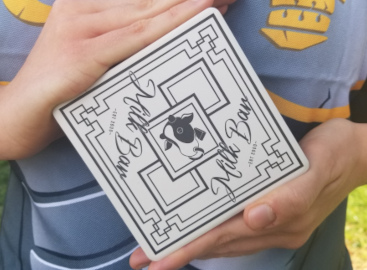
No dish is complete without a hearty beverage, and these classy coasters brought to us by the one and only Milk Bar ensure that our drinks will always have a cozy place to rest. The simple yet elegant pattern is attractive without being flashy or intrusive (the “Est 2000” label is particularly charming), and the sandstone surface is silky to the touch, yet still has enough grip to keep your mug from slipping. Just keep in mind that sandstone is porous, so if you spill a dark liquid on them, wash immediately to prevent staining.
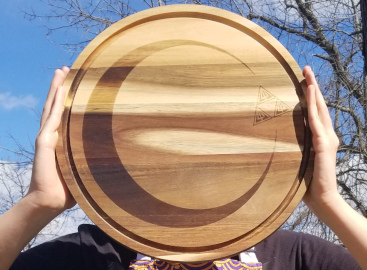
If not for cutting boards, our countertops would bear the horrible scars of our cooking escapades, so make sure you equip one of these Mincing Shields to keep your surfaces unblemished and pristine. This cutting board is made of acacia, a strong, highly-durable wood known for its gorgeous variegated patterns of reddish-brown heartwood and pale yellow sapwood. One side features an adorable hungry Goron face, while the other has a sleek crescent moon and Triforce motif that reminds me of the original crest of the Gerudo. It’s sturdy enough to double as a serving platter, and I think that’s what I’m going to use it for primarily, because I don’t want to mar its lovely facade with gouges.
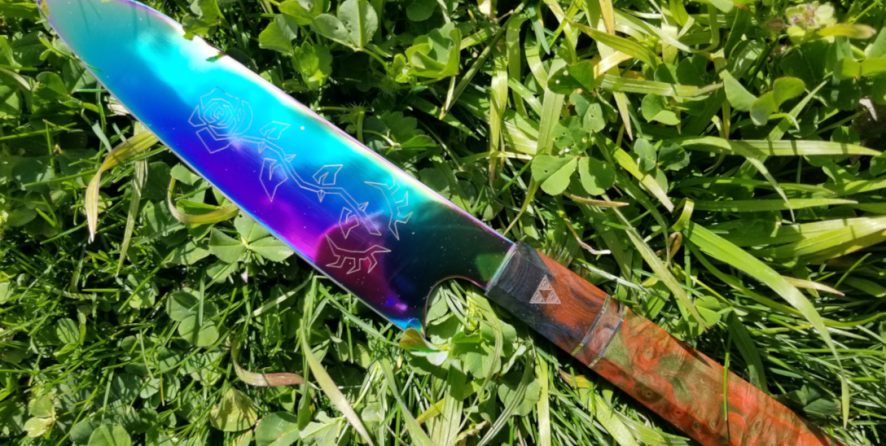
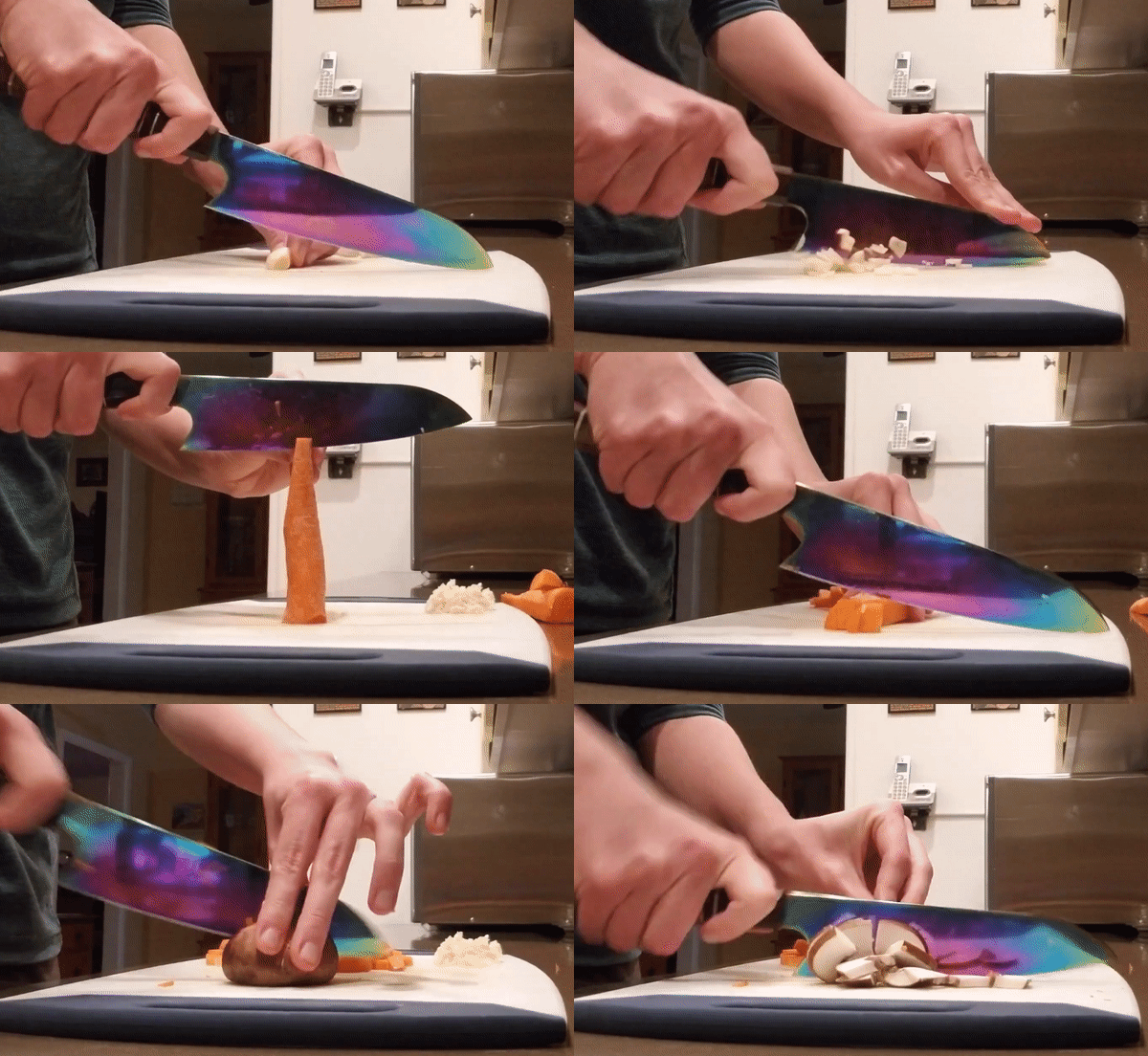
Finally, we must arm ourselves with a powerful weapon that will help us smash, chop, mince, and slice our way to victory. When it comes to the Great Fairy Knife, the question is not whether the blade is worthy of us, but whether we are worthy of wielding the blade. I’m not exaggerating when I say that this knife is a true work of art – a delicately carved rose floating on a lake of shimmering rainbow, supported by a handle that appears to be composed of reddish-green marble. It’s even more mesmerizing than the actual Great Fairy’s Sword, and it’s just as razor-sharp as you would expect a premium knife to be, so be sure to use caution when cutting with it. But the GIF demonstration above is probably the last time anyone will ever see me use it. It works amazingly well, but I’d rather preserve it as a collector’s item and trust that the knives from my regular arsenal will carry me through the trials of dinnertime prep.
The Cookbook
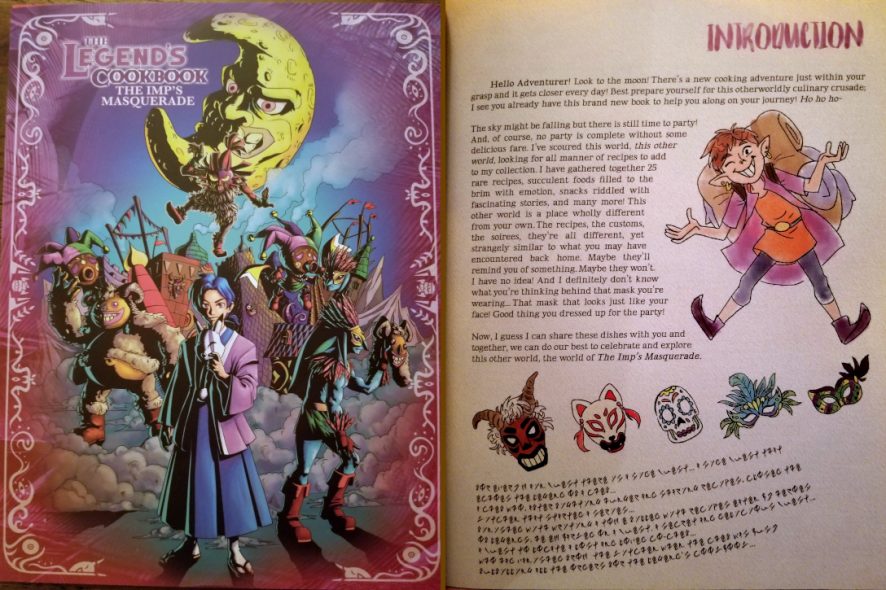
The book jacket and the page of introduction.
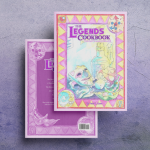
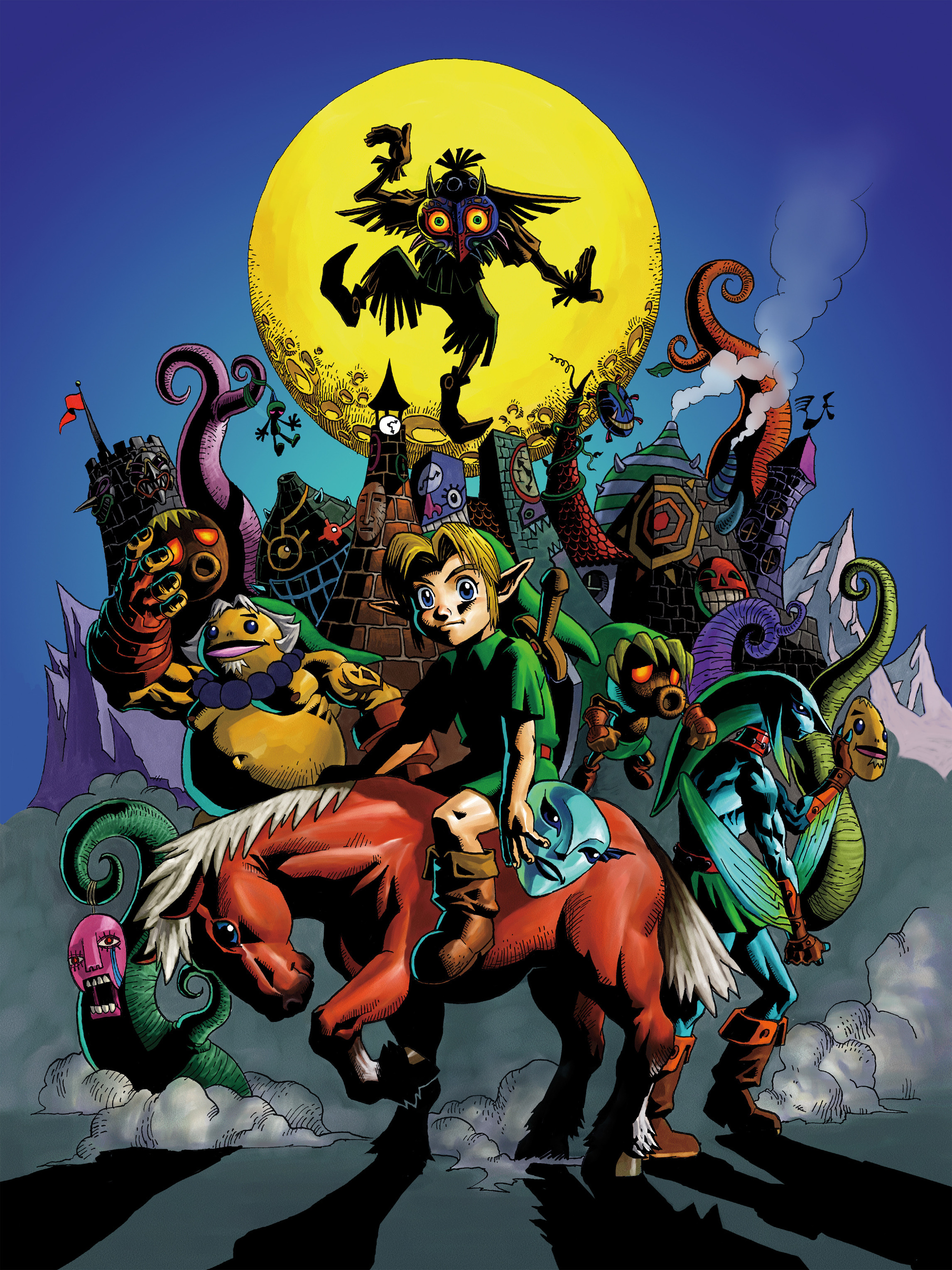
Now that we’re properly prepared, we can commence our journey through the actual cookbook, which, like its predecessor, is penned by professional pilot and chef Peter J. Abreu. Right away, the artwork on the new cover jacket (created by the brilliant artist and cosplayer Li Kovács) leaps out at you. It’s an incredible homage to this iconic Majora’s Mask portrait, perfectly capturing the eerie atmosphere and the distinct art style with its hard shadows and sharp contrasts. The book as a whole is positively bursting with fantastic illustrations, contributed by several different artists who clearly poured a ton of creativity and deep love for The Legend ofZelda into their creations. And cipher lovers will get a kick out of the hidden messages sprinkled throughout, which appear to be written in mock Terminian script. The creators clearly had a ton of fun compiling this book.
After the introduction and a four-page guide on how to properly care for one’s knife and cutting board (which is greatly appreciated), we come to the main section of the cookbook where all the recipes are, and I finally get my answer about what kind of foods to expect from a Majora’s Mask cookbook. In an ingenious twist, each of the five regions of Termina represents a different mask festival from the real world, and the dishes correspond to the cultures that the festivals belong to! Clock Town’s Carnival of Time is now Japanese New Year, Woodfall hosts the Mardi Gras parade, Snowhead shines a light on the obscure Busójárás festival in Mohács, Hungary, Great Bay pays tribute to both the Brazilian and Venetian Carnival celebrations, and Ikana commemorates the Mexican holiday known as Day of the Dead. This is an amazing idea that immediately hyped me up for the food storm that I would soon be cooking up.
There are 24 total recipes in the book (plus an extra one submitted by the winner of the Masquerade Cook Off), so to get a solid idea of how the recipes themselves hold up, I decided to prepare seven of them: two from Clock Town (one from the main hub and one from the Milk Bar), one each from Woodfall, Snowhead, Great Bay, and Ikana, and the special Moon-themed one at the very end. So without further ado, let’s light the fires and sizzle up some scrumptious sensations!
I do have one word of advice going in. There are discrepancies between the volume and weight measurements for some of the ingredients, so when it doubt, go by weight. It’s more precise and will increase the likelihood of a successful outcome.
Clock Town Treats: Granny’s Supper and Ikana Cocoa
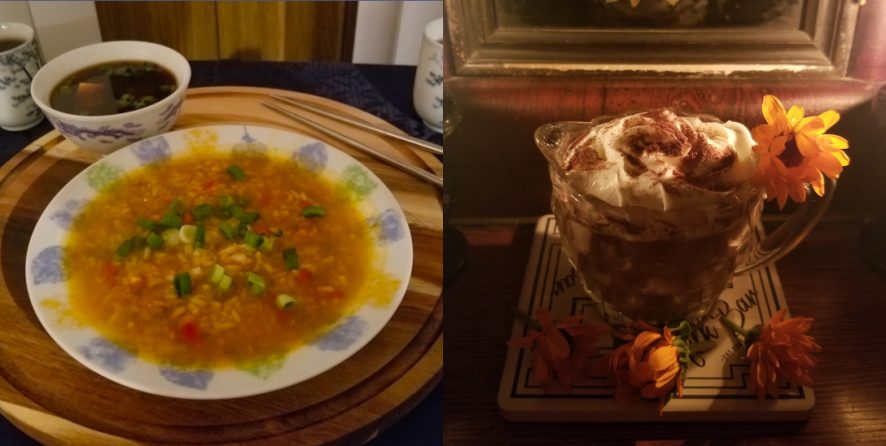
Okay, I disparaged Anju’s cooking skills earlier, so now I feel I owe it to her to see if this cookbook can offer up a nourishing and tasty meal for her dear old grandmother. What we have here is a light vegetarian supper consisting of savory rice congee and miso soup. Congee, known as kayu in Japan, is a smart choice — not only is it regarded as an ideal food to serve elderly individuals, but a specific type of congee known as Seven-Herb Porridge is traditionally served after Japanese New Year to help the digestive system recover.
This congee stands proud as its own unique creation, with a blend of aromatics that transforms ordinary rice into a comforting, intensely flavorful dish that fills the belly and warms the soul. The soy sauce packs an umami punch without being too salty, and the tiny bit of ginger powder laces the congee with a peppery heat. And the miso soup, which I prepared with frozen cubes of homemade dashi, serves as the perfect palette cleanser. All in all, I think that Granny’s days of feigning senility would instantly come to an end if Anju brought this wonderful dinner into her room.
Stepping into the Milk Bar, I decided to order up some hot cocoa from the land of wandering souls. Some people may think the idea of adding chili peppers to chocolate is strange, but this can actually be traced back to early Mayan culture, before sugar was brought to the Americas. Chili powder is said to accentuate the complex flavors present in cacao, and that is certainly the case with this thick, decadent brew oozing with chocolaty goodness. Forget Magic Beans and Fish – this is the earthly delight that the Gibdos beneath the well should be craving. And if you find hot chocolate just a bit cloying, then I suggest pouring in some hot black coffee and sending your taste buds on a journey with your very own Mexican mocha!
Swamp Snacks: Woodfall Beignets
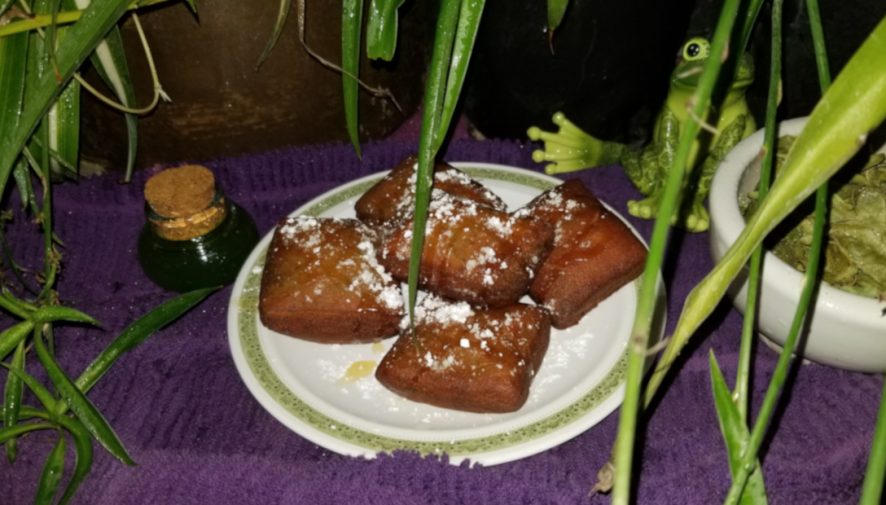
Everyone likes to attribute Odolwa’s erratic behavior and volatile temperament to the fact that he contains the essence of Majora’s evil, but did anyone ever stop to consider that it might be a severe case of hangriness? Maybe he would calm down if the Deku King presented him with a platter of delectable vittles, such as these classic Louisiana-style beignets. These delicious fritters evoke nostalgia with the familiar flavor and aroma of homemade doughnuts, but they’re lighter and far less rich, allowing you to get lost in their honey-glazed goodness without feeling like you’re going to collapse into a sugar coma. And they’re pretty easy to make if you know your way around a deep fryer!
This recipe does bring me to one piece of criticism I have with the book as a whole: a number of the recipes include specialty ingredients that are expensive and/or difficult for the average person to acquire, and substitutes aren’t always offered. In this case, all-purpose flour is combined with the more elusive chestnut flour, an ingredient used on the island of Corsica to make its version of beignets, known as fritelli. I do understand that a specific ingredient is sometimes required to elevate a recipe to new heights, and trying to blend Louisiana Creole cuisine with traditional French cooking is a really innovative idea. But from what I can tell, the chestnut flour doesn’t alter the flavor profile enough to justify its inclusion. In fact, I think the incorporation of this low-protein, gluten-free starch is why my beignets were a bit denser than I would have preferred. So unless you have a particular fondness for chestnut flour and can purchase it at a reasonable price, I would recommend just using regular flour and experimenting with the amount until you get the desired result.
Mountain Meals: Stuffed Powder Keg
After the unusually long and exhausting winter that California has had to endure, I think I can better empathize with the Gorons trapped by Snowhead’s endless blizzard. At this point, I desperately wish I could toss a Powder Keg into the heavens and blast the clouds away, allowing the bright rays of sunshine to coax the slumbering earth awake and herald the coming of spring. But unfortunately, no one will sell me a Powder Keg anymore after the “accident” at the local Cucco farm, so I’ll have to settle for blasting away the cold in my own body with this sizzling bomb modeled after töltött paprika, or Hungarian stuffed peppers.
Describing what this dish tastes like as a whole has proven challenging for me, so it’ll probably make more sense if I break the dish down into parts and explain what each one is like. Hot peppers and spices are liberally applied to the pork and rice filling, making it extremely spicy with a bit of an acrid tang. By contrast, the tomato broth is sweet and fruity, with hints of garlic and onion sprinkled throughout. Neither component is terribly impressive on its own, but when the two collide on a dinner plate, they send a shock wave of perfectly-balanced flavors rocketing across your taste buds. Sharp, meaty, fiery, bittersweet, salty – all in one combustible package. It did indeed banish the chill for a short while, so I highly recommend it to anyone battling the winter doldrums.
Fun fact: mere milliseconds after this picture was taken, the sparkler actually exploded. It was a completely unexpected turn of events, adding a layer of realism to our photo session. Don’t worry, though, nobody was hurt.
Ocean Entrées: Bossa Nova Cheese Puffs
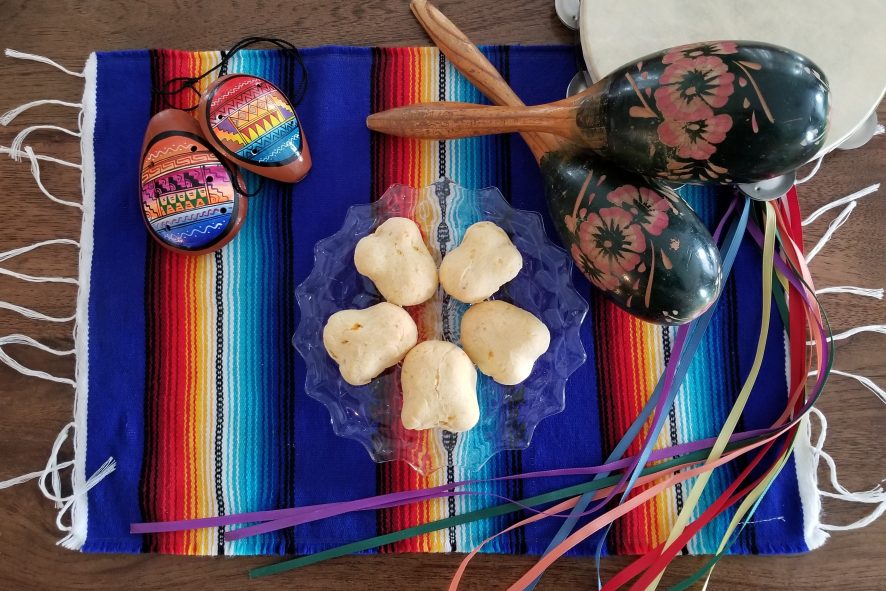
The Indigo-Go’s are musical trailblazers who have set Termina ablaze with their groovy beats and smooth, jazzy compositions, and if there’s one nation they have to thank for inspiring them, it’s Brazil. Without bossa nova, we wouldn’t have been blessed with their showstopping performance at the Carnival of Time, nor would we know the joy of hearing newborn Zoras sing the song of their people. So it makes sense that The Imp’s Masquerade would choose to honor Brazilian cuisine with its own sultry spin on pão de queijo, a popular cheese bread traditionally made with cassava flour.
This recipe calls for a teaspoon of “your favorite seafood seasoning,” so I decided to mock up some tempero baiano seasoning, which is commonly used to flavor fish in the state of Bahia. The result was a chewy roll that tasted a bit like Goldfish crackers with nice, herby overtones. They were pleasant to eat, but I was a bit surprised by just how subdued the flavor was, so I decided to do some additional digging into the dish. Apparently, bakers usually utilize a combination of creamy mozzarella and tangy Parmesan for Brazilian cheese bread, and the ratio of cheese to flour is almost 1:1. By comparison, this recipe asks for a relatively small proportion of cheddar cheese, which might be too mild to really stand out. So while I like these well enough on their own, I think I’m going to try swapping out the cheddar next time and seeing if a more pungent cheese really gets my taste buds swaying to the samba rhythm.
Valley Vittles: Nejicha
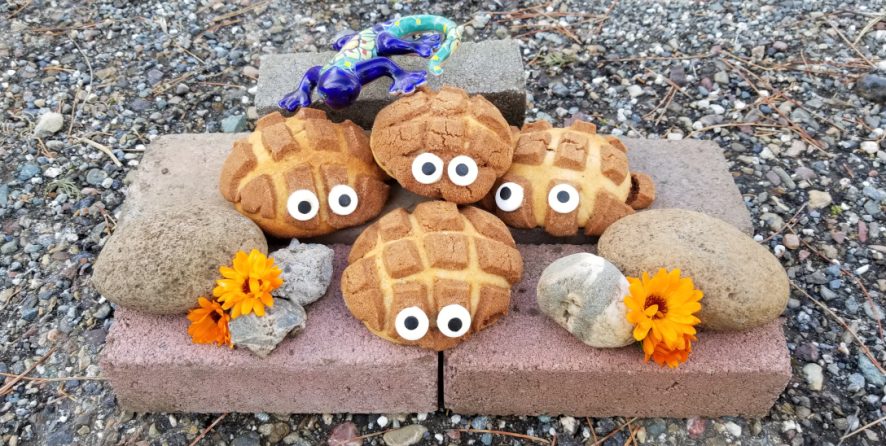
You know those obnoxious Nejiron enemies that hang out on the Road to Ikana, waiting to pop out of the ground and give Link a heart attack right before exploding in his face? Well, if you’ve ever wanted to exact some sweet revenge on these creepy Goron wannabes, now you have the opportunity to bake your own edible voodoo dolls! And the revenge is indeed “sweet”, because these desserts modeled after conchas, a type of Mexican sweet bread, make for a truly delightful afternoon snack. Not only do they bear an uncanny resemblance to the ground-dwelling gremlins (seriously, this was an extremely clever choice), but they’re light and fluffy with a subtle, mellow sweetness, making it the perfect treat to temper the bitterness of black tea or coffee. The chili powders add a lovely heat and ensure that the intoxicating blend of cocoa and cinnamon lingers in your mouth for quite some time.
The only real downside to these Nejichas is that the edible google eyes make them look far more adorable than the actual enemies, so I feel more guilty than triumphant whenever I eat them. But luckily, they’re so addictive that I only feel a slight twinge of regret before gobbling them down like the gluttonous fiend that I am.
Moon Menu: Mooncakes
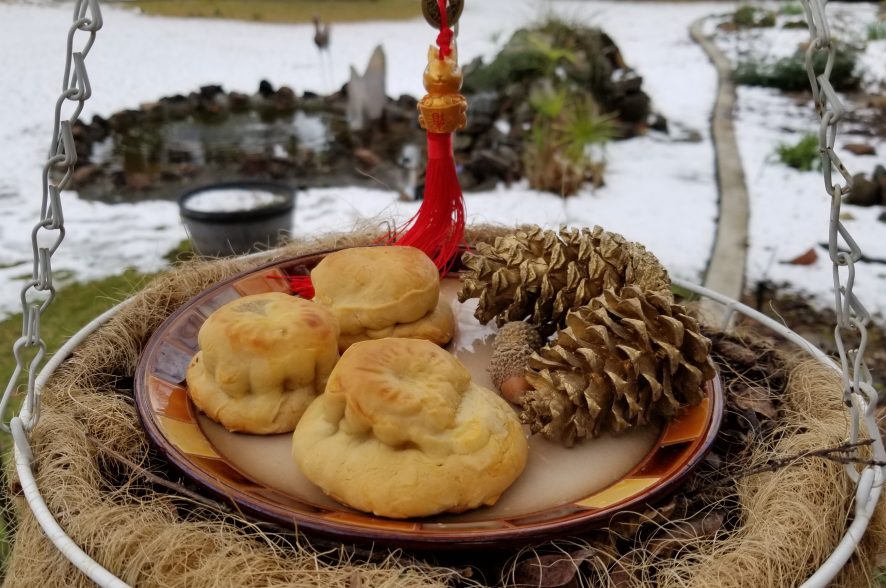
Did you know that, if you look at the full moon a certain way, you can see the silhouette of a rabbit wielding an enormous mortar? The people of East Asia observed this long ago and incorporated the Moon Rabbit into their various mythologies, with China portraying it as a companion of the Moon goddess Chang’e, whose job is to prepare the elixir of life. The Mid-Autumn Festival, a celebration held on the day of the Harvest Moon, is meant to honor our shining natural satellite and the mythical entities who govern it, and one of the best ways to do so is savor some delicate mooncakes with your friends and family.
Now, we know that there are no rabbits on the cursed Moon of Termina, and the being who rules over it is a sadistic god of chaos who deserves to be annihilated rather than venerated. But we should definitely be paying tribute to the four guardian deities who prevent such bloodthirsty demons from consuming the land, and I can’t think of a better gift than the magnificent mooncakes that this cookbook has to offer. It’s difficult to put into words just how phenomenal these confections are. The dough is a buttery, velvety cocoon that practically melts in your mouth, allowing the lotus seed paste to burst forth in all its salty, sweet, nutty glory. I started celebrating Lunar New Year back in 2020 because of my fascination with China’s cultural landscape, and now I can also look forward to ushering in the autumnal equinox every year by whipping up a batch of these delicious celestial treats!
One word of caution about this recipe, though — the dough is extremely loose and sticky, so it can’t retain the classic mooncake shape for long before it starts to melt. If you only care about the taste, then follow the recipe as written and just roll the cakes into simple balls. But if you do want the intricate patterns that mooncakes are so famous for, try adding more flour and/or chilling the dough to stiffen it up and make it easier to handle.
Final Thoughts
One of the reasons I consider Majora’s Mask to be a masterpiece is because, even to this day, it continues to challenge my perceptions of everyday reality and pose meaningful questions about the nature of life itself. It’s a game that took countless risks and bravely pushed the boundaries of what The Legend of Zelda should be, establishing itself as a timeless work of art born of pure creativity and passion. And by bringing together a team of out-of-the-box thinkers who sincerely respect this game and wanted to further enrich its already vibrant world by adding something brand new, the creators of The Imp’s Masquerade honored the legacy of Majora’s Mask a thousand times over.
This cookbook not only expanded my knowledge of worldly cuisine and encouraged me to step out of my comfort zone in the kitchen, but it further deepened my connection to a game I have cherished for over 20 years. It is a passion project brimming with love and imagination, and while the cooking process could be frustrating at times, the overall experience is one that I will always be grateful to the Legend’s Cookbook team for giving me. I eagerly look forward to their next sojourn onto Hyrulean soil, but until then, I shall sheath my knife and continue my own eternal search for new inspiration.
UPDATE: The Imp’s Masquerade Cookbook and all the custom kitchen accessories are now available for purchase at JobJob, LLC. You can use our affiliate code ZU at checkout to obtain a discount. This is a limited-time opportunity while supplies last, so head on over and pick up a copy of this wonderful cookbook today!
Score: 8.5/10
Meredith Lord
Columns Writer and Editor with far too much time on her hands. Strongly passionate about audio engineering, animated films, books, music, cooking, gardening, and Japanese culture. ...Oh, and a video game series about an elf boy with a silly green hat probably fits in there somewhere as well.


 by Meredith Lord on March 15, 2023