Renowned Irish folk artist Frank Harte believed that musical composition was the essential component to understanding the history of a civilization, and he considered the Celtic ballad as the harmonious equivalent to documented records. The Celtic ballad employs techniques that offer a wider range of possibilities for melodic variation and improvisation, and the spontaneity that ensues creates opportunities for individual expressions of personality and emotion. The result is a melodious art form that adds feeling and sentiment to the dark, cold pages of written history.
Harte’s favorite saying was that “those in power write the history, while those who suffer write the songs, and, given our history, we have an awful lot of songs.” Despite a rich history of conquest over Ganon’s evil plights, Hyrule and its citizens have suffered immense loss throughout the nation’s past. Coupled with a vast array of cultural diversity, Hyrule societies are perfect candidates for a crossover with Celtic diversity and spontaneity.
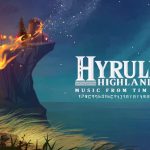
Hyrule Highlands is a crossover album that adds Celtic flare and contrast to popular Zelda soundtracks. Composed and orchestrated entirely by Tim de Man, the compilation focuses on adding emotional depth to the franchise’s most recognizable themes. The result is a masterpiece that magnifies Hylian culture through Celtic storytelling. The album is currently available on Apple Music, Spotify, and a host of other platforms.
FULL DISCLOSURE:
Tim de Man graciously gave Zelda Universe a review copy of Hyrule Highlands.
A Collective Celebration
Although Hyrule’s races unite together under separate banners, their corresponding themes gravitate toward praising the individual over the collective. While the former creates a sense of personal intimacy and seclusion, the latter is a more accurate representation of the societies at large. By infusing Celtic tones and scaling variations, Hyrule Highlands transforms three Zelda tracks into celebrations of community and tradition.
“Dragon Roost Island”
The Rito are a proud tribe who reside on the fiery island of Dragon Roost. The right of passage for the Rito children is when they travel to the island’s peak to receive their wings from the sky spirit Valoo. Upon completing the journey, the Rito are expected to pay homage to Valoo with individual musical performances. As such, the original “Dragon Roost Island” resembles the personal relationship between Valoo and each member of the Rito tribe.
Tim de Man’s interpretation remains true to the original with the focus on stringed and percussion instruments; however, the introduction of a harmonic choir adds depth to the theme and transforms the singular performance into an ensemble. Each instrument rotates between leading the melody and fading into the harmony, which symbolizes both individual and collective admiration of the Rito culture. As the melody crescendos, the instruments and vocals blend together and climax into a collective celebration of the island’s proud history.
“Korok Forest”
Residing deep within the forest, the Koroks are a peculiar tribe. Shy yet playful, “Korok Forest” matches the group’s hesitation and curiosity. The collection of light vocals creates an atmosphere of many eyes observing from the shadows, which could represent the group’s trepidation from Link’s initial arrival. In addition, the swift pace combined with alternative musical techniques, such as the pizzicato, further emphasizes the tribe’s nervous playfulness. Although the Korok Forest is a peaceful oasis from the dangers of Hyrule Castle, the music of the inhabitants indicates that visitors are welcomed by exception.
Instead of nervous hesitation, Hyrule Highlands‘ rendition is a ballad that honors the alliance between Link and the Korok tribe. The accordion and whistle set the melody, which symbolizes Link and the Korok’s discovering of each other for the first time. Both instruments trade off playing the lead role; however, after the initial back and forth, the vocals take the lead as if to represent the entire Korok tribe accepting Link as one of their own. The drums, bass, and percussion instruments slowly become more pronounced, and the accordion concludes the piece with an improvised solo, which illustrates Link fully embracing the Korok’s culture and joining the celebration.
“Gerudo Valley”
If songs are written by those who suffer, the Gerudo tribe epitomizes the Celtic motto. Accordingly, the original “Gerudo Valley” employs Celtic variation with strong percussion undertones. The single harp remains the focal point of the entire piece, and the accompaniment creates an atmosphere of personal sadness. However, despite being a collectively oppressed and downtrodden society, the “Gerudo Valley” track feels more like a leitmotif of an individual instead of a collective expression of the tribe’s history and culture.
No longer the saddened outcry of an individual, the Hyrule Highlands presentation pays tribute to the struggles of the past while also celebrating the proud history of the Gerudo tribe. Instead of introducing “Gerudo Valley” with percussion and focusing the melody on a single instrument, Tim de Man employs a wide array of instrumental variation. The accordion begins the melody; however, each instrument has equal moments in the spotlight. The result is a song that exchanges both sadness and regret for confidence, and the feelings of despair ultimately evaporate into a collective celebration.
Transformative Lament
Although Celtic variation naturally favors celebration and cheer, the scaling of chord progressions also creates opportunities to introduce melancholy and sadness. Dubbed the lament, this mournful expression of sorrow and grief emerges as a vividly passionate response when Celtic technique is introduced. While most Zelda soundtracks adequately portray the character’s emotions, Hyrule Highlands transforms three compositions into compassionate portrayals of loss and regret.
“Hateno Village”
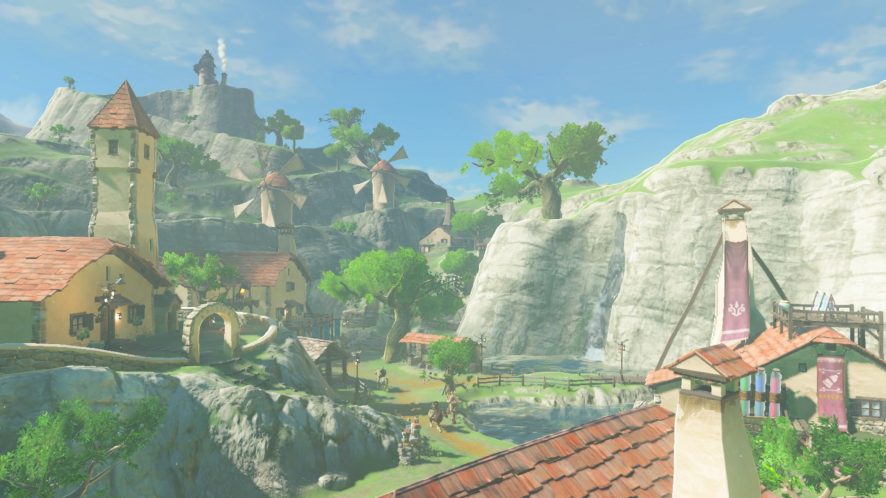
By virtue of Fort Hateno’s sacrifice, Hateno Village is one of the few untouched settlements remaining in Hyrule. The inhabitants are cheerful, and the corresponding theme matches their mood. While the xylophone and stringed instruments in the original song elicit feelings of peacefulness, the melody is almost sad, as if the town is still trying to push aside feelings of mourning. Instead of embracing the fragments of a broken past, the original “Hateno Village” suggests that the citizens are struggling to forget their fallen heroes.
Leaning into the melancholy undertones of the original track, Hyrule Highlands adjusts the arrangement to create a more authentic representation of the village’s sorrow. The low flute sets the mood by opening the song in a minor chord, and it resembles the fallen Hateno soldiers taking part in the present-day song. Throughout the piece, the darker notes of the low flute serve as a background complement to the happier melody of the guitar and accordion. The overall lament creates a more pronounced struggle between the village’s desire to focus on a hopeful future and struggle to forget the sorrows of the past.
“Hyrule Castle”
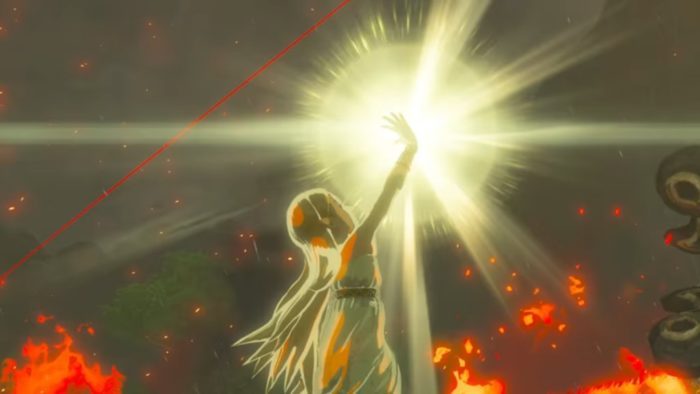
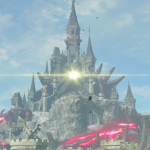
Hyrule Castle is the most dangerous and foreboding location in Breath of the Wild, and the location’s theme portrays the ongoing clash between Calamity Ganon and Princess Zelda. Reminiscent of climbing the staircase in Ocarina of Time, the pipe organ represents Ganon’s motivation with its chilling tone. Zelda’s counter is a lonely flute playing “Zelda’s Lullaby.” The overarching message is the struggle between good and evil, and although well-constructed, the original track does not allude to Zelda’s personal feelings about the dire situation.
Hyrule Highlands’ rendition is a lament to Zelda’s personal struggle. The commanding vocals symbolize all of Hyrule depending on the princess to seal the beast, and the accordion slowly becomes louder, symbolizing Calamity Ganon’s growing strength. As Zelda’s power wanes, the percussion and accordion threaten to conquer the princess’s refrain; however, Tim ingeniously crafts Zelda’s response with shrill cries of a high-pitch flute. The piercing notes not only add sharper contrast but also exude feelings of pain and sorrow. Originally remembered for its soothing tone, Hyrule Highlands transforms Zelda’s Lullaby into a lamented cry for help in the “Hyrule Castle.”
“Ballad of the Wind Fish”
Few soundtracks tug at the heartstrings quite like the “Ballad of the Wind Fish.” As Koholint Island fades from existence, Link awakens and seems to question the reality of his relationship with Marin. In the final cutscene, the hero’s faith is restored as a picture of Marin comes into view and her theme begins to play. Link smiles because he knows that Marin will live forever in his memories. While the ending is happy, we are left to question Marin’s feelings.
Hyrule Highlands‘ final track transforms the “Ballad of the Wind Fish” into Marin’s lament, and her message is simple: Do not forget me. The pacing is much slower, and the harmony employs minor tones, which creates feelings of sorrow and grief. Hints of happiness emerge, as if to express that Marin does not regret the time spent with Link, but they are quickly followed by frustrated riffs from the drums and heavy bass. The overall effect is a beautiful representation of lost love.
Futures Connected
The Dutch watchmaker Corrie ten Boom once said, “Memories are the key not to the past, but to the future.” While each installment in the Zelda series features new locations and characters, a handful of similarities typically transcend multiple titles. For those common threads, the musical accompaniment is slightly altered with hints of familiarity as if to memorialize past generations. Hyrule Highlands expands upon the premise by turning common themes into cross-generational celebrations.
“Kakariko Village”
The original “Kakariko Village” is one of the most recognizable themes in Zelda history. Although this peaceful settlement of working-class Hylians remains on the outskirts of Hyrule’s nobility, the village’s inhabitants are a proud people with a rich history. Despite reoccurring conflicts, the town has endured the passage of time. Subsequently, “Kakariko Village” is nearly identical in every game; however, each showcases unique instruments to add variety and explore different sentiments.
Hyrule Highlands pays homage to “Kakariko Village” by creating a multigenerational celebration. The introduction immediately adds depth by featuring the collection of key instruments from A Link to the Past, Ocarina of Time, and Twilight Princess. The string and flute instruments alternate between the melody and harmony, which creates the feeling of multiple generations participating in a celebration of the village’s history. The conclusion is a rich crescendo of improvisation as Tim adds the hallmark Celtic flare. Overall, “Kakariko Village” is my favorite song on the album.
“Stables & Lon Lon Ranch”
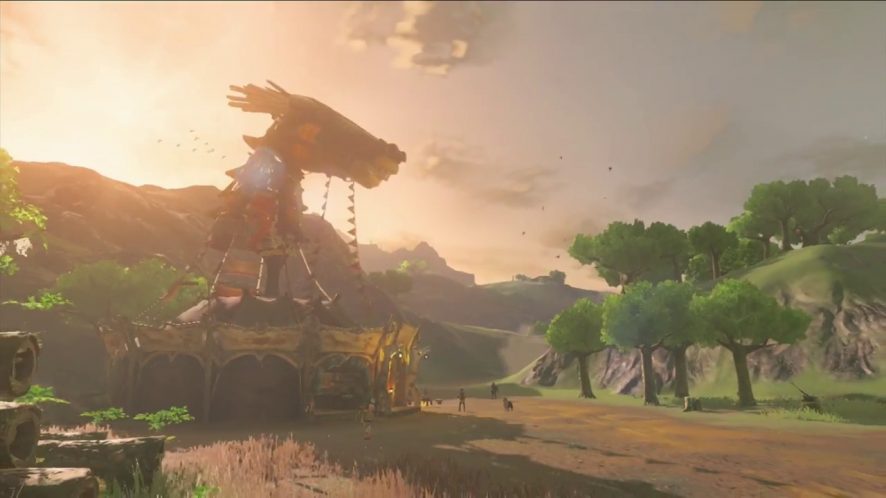
Throughout the Zelda series, the stables are symbols of hope and stability in a world torn apart by evil. In both Ocarina of Time and Breath of the Wild, Ganon destroys nearly every corner of Hyrule; however, the stables remain relatively untouched. The stable themes in both games are diverse yet overly simplified, which provides a feeling of certainty in a dangerous and broken world. Upon hearing the faint melodies in the distance, Link can take comfort in knowing that security and protection are nearby.
Consequently, Hyrule Highlands focuses on combining songs from some of the Legend of Zelda‘s most memorable locations. After finishing the first verse of the Breath of the Wild stables theme, the melody pays tribute to Lon Lon Ranch by concurrently playing the Ocarina of Time song on Malon’s pan flute. As the instruments featured in both versions come together for the climax, Tim yet again concludes the arrangement with Celtic improvisation. In essence, the rendition appears to eulogize the characters who kept the stables safe throughout Hyrule’s history.
“Clock Town”
Possibly the most unusual location in the Zelda franchise, Clock Town has an equally peculiar theme. The Carnival of Time is the town’s annual celebration of the balance between nature and time; however, the Skull Kid’s mischief has knocked the two forces out of balance. The residents are willingly oblivious to the moon crashing into the town, which is the foundation of their song. As the danger looms closer, the orchestration of higher-pitched instruments adds feelings of anxiety by increasing the pacing and distortion. Returning to the slower melody on the first day is a welcomed reprieve.
The Hyrule Highlands arrangement feels as if it is a future celebration of Link saving Termina. The tempo is faster than the original theme on the first day, yet the pacing remains even throughout the song. This creates an atmosphere that replaces feelings of anxiety and dread with confidence and genuine celebration. The composition is proud and tells the story of a town that conquered a dire evil and is now honoring the past by genuinely celebrating a rich history of overcoming adversity.
Final Thoughts
Given the franchise’s medieval setting, the Legend of Zelda is the ideal candidate for harmoniously infusing Celtic flavor with the series’ masterful soundtracks. While several songs from the franchise already employ subtle undertones of Celtic variation, Hyrule Highlands fully embraces the genre’s depth of melodic variation and improvisation. The album’s interpretation of popular Zelda songs is divergent and serves as a catalyst for novel perspective and storytelling. Upon finishing the compilation of nine songs, listeners will attain a greater appreciation for the series’ characters and synopses.
The entertainment industry is filled with talented artists, but Hyrule Highlands‘ composer Tim de Man is, in my opinion, one of the most gifted multi-instrumentalists on the internet. While Tim specializes in Zelda arrangements, he has also created variations on the Animal Crossing and Super Mario franchises. Be sure to visit and subscribe to Tim’s YouTube channel for his latest video game covers. Hyrule Highlands is currently available on Apple Music, Spotify, and many other platforms.
“Those in power write the history, while those who suffer write the songs, and, given our history, we have an awful lot of songs.”
Matthew Evon
Matt is a retired military guy who loves to jump out of airplanes, leap tall buildings in a single bound, and write columns for Zelda Universe. Ever the narcissistic lover of his namesake, he hopes to channel his inner Zach Galifianakis and one day assemble an army of Matt's to overtake the Zelda Universe.


 by Matthew Evon on November 19, 2020