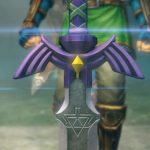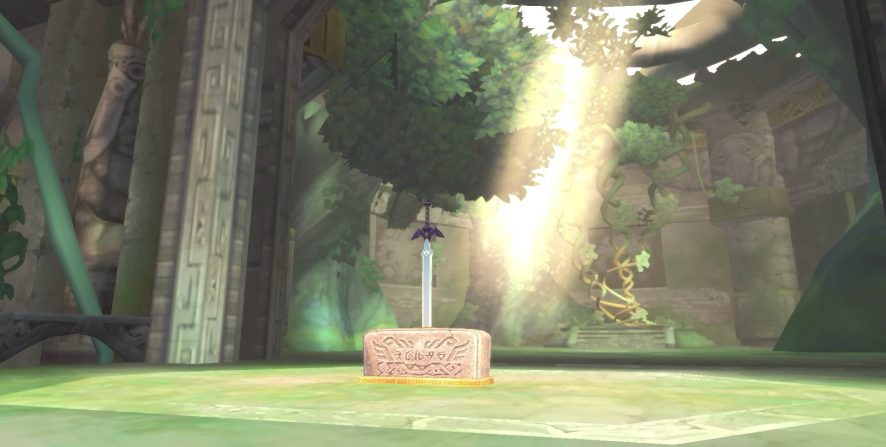
From the beginning, the Zelda series has placed intense importance on swords. In the original game, the first item you are likely to get (because it’s “dangerous to go alone”) is a simple wooden sword. It wasn’t until A Link to the Past came around though that we were introduced to the Hyrulean equivalent of Excalibur: the Master Sword.
From that point on, Blade of Evil’s Bane became a silent partner on many of Link’s adventures. It is the R2-D2 of the Zelda series. While the characters and lands may change, it (more often than not) is still there to tie the series together. From Skyward Sword to Breath of the Wild, the Master Sword accompanies the hero. Sam Dillard celebrates the steadfastness of the blade’s help through time in his song “The Sword that Seals the Darkness” from his Zelda Cinematica album.
Initially, I expected this song to feature heavy use of “Fi’s Theme,” because when I think of the Sword that Seals the Darkness, I often think of the sprightly spirit who accompanied the Hero of the Skies. That’s why I love that we don’t seem to hear it much, if at all, in “The Sword that Seals the Darkness.” I appreciate the surprise. Instead, we are treated to a song that ties in themes from throughout the timeline of the saga.
The “Zelda Main Theme” is there rubbing musical note elbows alongside the “Breath of the Wild Main Theme,” “Zelda’s Lullaby,” and “Ballad of the Goddess,” just to point out a few. The breadth of tracks from all across the timeline reminds us that whether given voice or not, Fi and the Master Sword are almost always there to help the hero. Whether fighting while aloft in the sky, shrouded in twilight, or surrounded by calamity, the Master Sword is there both in spirit and in form.
There is so much you could analyze in this song, so I’m going to just choose two specific instances where Sam Dillard mixed established themes that I particularly loved.
Early on in the song, Sam Dillard combines “Zelda’s Lullaby” with some strings and some notes that remind me of both “Zelda’s Main Theme” and “The Great Sea” to create a fantastic feeling almost reminiscent of Celtic music. The emotion conveyed through that choice and its fast-moving and fun tempo causes me to tie this version of “Zelda’s Lullaby” to the Zelda from Skyward Sword. The lack of her royal title in that game allows Zelda to be less formal and more like a “girl next door” who teases Link for oversleeping and pushes him (sometimes quite literally) to be his best self when he hesitates.
Around the 2:45 mark, Sam Dillard combines two tracks that I’m surprised we don’t see mixed more often: “Ballad of the Goddess” and “Zelda’s Lullaby.” The combination speaks to Zelda’s role in the series as a whole. She is royalty, but she’s also much more than that. She is the physical embodiment of the goddess Hylia. Beyond just serving as a reminder of the many facets of Zelda, the mixture also reminds us of the insistent flow of time that swirls around the Master Sword. It saw both the rebirth of Hylia in Zelda and has seen descendant after descendant of that young girl from Skyloft partner with the hero time and time again to repel and seal the darkness. The Master Sword isn’t connected only to the hero but to the one who shares Hylia’s bloodline as well.
Just as the Master Sword has accompanied Link and Zelda through many of their adventures, Sam Dillard reminds us that it has been there for us as well. We have wielded it throughout many games and conquered many foes. The Master Sword has not been our only constant companion though. Sam Dillard reminds us that the recurring musical themes from the Zelda series have also been there. Whether they are ballads or lullabies, these tunes have thrilled us and brought us comfort. Perhaps they are just the musical musings of Fi as she sleepily dreams of all the adventures she’s been on with Link, Zelda, and us.