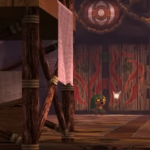
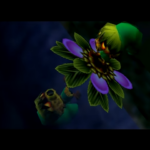
The second starring vehicle for Link on the Nintendo 64, The Legend of Zelda: Majora’s Mask, was not the first time the legendary hero had traveled to another world. There was first the mirror dimension of the Dark World in A Link to the Past and then the dream realm of Koholint Island in Link’s Awakening to pave the way for Termina in the follow-up adventure to Ocarina of Time.
Termina, however, probably best fits the parameters of a popular subgenre of fantasy narratives, the portal fantasy. Link’s journey through this doomed world echoes many of the most popular examples of the portal fantasy tale in a way that his previous extradimensional journeys do not.
For all of the many parallel worlds that appear in subsequent Zelda games, Termina likely remains the one that players spend the most time in (even if it’s technically only ever three days), and the one that fits the portal fantasy formula the best.
Link’s journey through this doomed world echoes many of the most popular examples of the portal fantasy tale in a way the previous extradimensional journeys he encountered do not.
But how, exactly, does Termina fit that formula? And how does a high-fantasy series like Zelda manage to dip into another style of fantasy without breaking the immersion entirely?
What is a portal fantasy?
First, we must define what a portal fantasy is, although most are probably familiar with some of the more famous examples of the subgenre.
A portal fantasy differs from the predominant form of the fantasy genre, the secondary world fantasy, which Zelda games primarily fall into. Hyrule, like Middle-Earth or Westeros, is a distinct world with its own history and culture, and we explore the limits of that setting in nearly every game in the series.
In a portal fantasy, however, the protagonist does not start in the environs of the primary setting of the tale. Instead, the hero or heroine begins in another, usually more mundane world — often our own, though this is not required — and is transported to a wilder, more fantastic world via some mechanism. That mechanism can come in many forms: magical artifacts, dreams, time or space travel, various forms of motorized transportation, or even death. The important part is, upon arriving at the new world, the protagonist quickly realizes they “are not in Kansas anymore.”
As a genre trope, it solves many of the problems facing any fantasy setting: By making the protagonist a newcomer to the world, all exposition explains the rules to both the hero and reader simultaneously. Our unfamiliarity with the setting is echoed in the protagonist, increasing our identification with them and their plight.
The important part is, upon arriving at the new world, the protagonist quickly realizes they “are not in Kansas anymore.”
As a narrative structure, the portal fantasy is especially popular in children’s stories, though it is not restricted to such. But it is probably best known for this age range because most people are exposed to the subgenre through stories intended for younger audiences, often beginning with a tale about a little girl named Alice.
The many forms of the portal fantasy
Perhaps the most famous of all portal fantasies, and possibly very first two, are Alice’s Adventures in Wonderland and its sequel, Through the Looking Glass. Both follow the story of a young girl from Victorian England who, first by falling down a rabbit hole and then by walking through a mirror, finds herself in the titular Wonderland where she encounters a bizarre menagerie of characters and must navigate a world of unknown rules and challenges to find her way home.
Other portal fantasies would follow. The two other cornerstones of pre-modern children’s fantasies, Peter Pan and The Wizard of Oz, are both portal fantasies — though both Neverland and Oz are technically implied to lie within the same world as London and Kansas respectively, with travel there possible by ship or hot air balloon. The distinct split between normality and the fantastic ensures the stories fit the basic form of the portal fantasy even if portals, in a more literal sense, are not utilized.
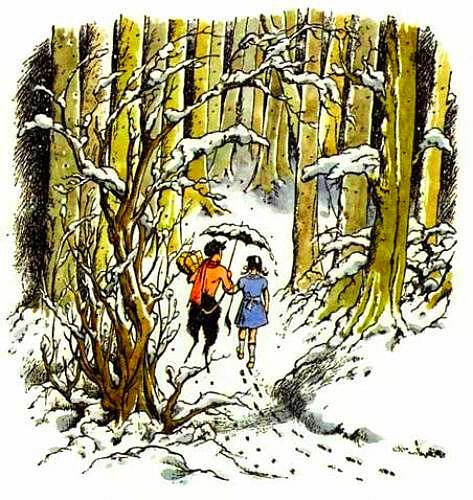
A portal is definitely used in the first book of what is possibly the most famous of all portal fantasies, C.S. Lewis’ Chronicles of Narnia. In the first book, The Lion, the Witch and the Wardrobe, the four Pevensie children are whisked from wartime England to the world of Narnia by walking through the titular wardrobe.
In the succeeding books, the children and other protagonists were transported by other objects such as paintings and magical rings. Sometimes, they would simply find themselves appearing in Narnia after being summoned there. But the distinction between Earth and the parallel realm of Narnia is clear, even down to time: Although the Pevensies grow to adulthood in the first book as kings and queens of Narnia, on returning through the wardrobe, they find themselves young again and that no time at all has passed since they first entered the other world.
Although high fantasy in a secondary world is probably the most published form of fantasy… the portal fantasy trope is still widely used, both in children’s and adult fiction.
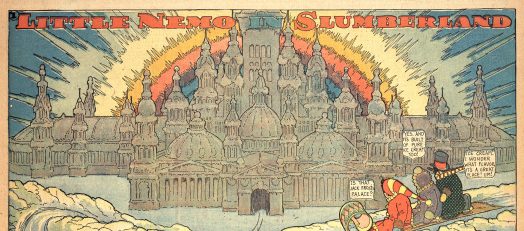
It’s not restricted to prose, of course. The Little Nemo in Slumberland strips of Winsor McCay sent Nemo to the realm of dreams each night, where fantastic adventures awaited. The strip received an animated film adaptation in the 1980s, a decade that also gave us Jim Henson’s Labyrinth, a movie where his puppet creations are the inhabitants of a parallel realm ruled by a glam David Bowie.
The subgenre is also seen in fiction that’s intended for adults. Stephen R. Donaldson’s trilogy The Chronicles of Thomas Covenant the Unbeliever not only uses portal fantasy rules to send the leper antihero to the fantasy realm of The Land, but it also uses its peculiar nature to make the protagonist constantly question the reality of everything he sees. Neil Gaiman also uses it for adults in Neverwhere and for children in Coraline.
Although high fantasy in a secondary world is probably the most published form of fantasy, in the mold of Tolkien and later imitators beginning with Terry Brooks and continuing even now through George R.R. Martin, the portal fantasy trope is still widely used in both children’s and adult fiction. Authors as disparate as Stephen King to Haruki Murakami have used it.
It even forms the backbone of the current most popular trend in manga and anime, the isekai story, in which someone is transported to or reborn in another world. Stories like Sword Art Online and That Time I Was Reincarnated as a Slime are portal fantasies, even if virtual reality and reincarnation are the portals used.
Termina as a portal fantasy realm
With such precursors and successors to guide us, it’s easier to determine how Termina fills the same role as a world like Narnia or Neverland.
Majora’s Mask is unusual in that the portal fantasy exists within another fantasy tale. Hyrule, not the mundane setting of our own world, is the starting point for this tale of interdimensional travel. But that doesn’t stop the tale from fitting the basic form of the portal fantasy in many other ways.
First, though, I’d like to discuss why Termina fits so well as a portal fantasy setting while other Zelda realms do not. After all, the A Link to the Past and Link’s Awakening gave us parallel worlds first. But the Dark World doesn’t adequately fit the trope because the game allows free travel between the two settings of Light and Dark. Most portal fantasies send the hero to another world without an easy way back, and the quest involves finding a return mechanism. Meanwhile, Koholint Island only reveals itself as a dream world midway through the game; for much of the story, Link, and the player, can easily assume they’re just stuck on a remote island, not in another world, which dilutes the portal fantasy setting.
Later games also involve parallel realms, such as with the Twilight Realm in Twilight Princess and the Sea in Phantom Hourglass. But the Twilight Realm is more of a temporary stop along the way of a greater journey, while Phantom Hourglass‘s sea has a nebulous connection to the wider world (also the fact it has no distinct name of its own, which is often used to distinguish the new world from the original).
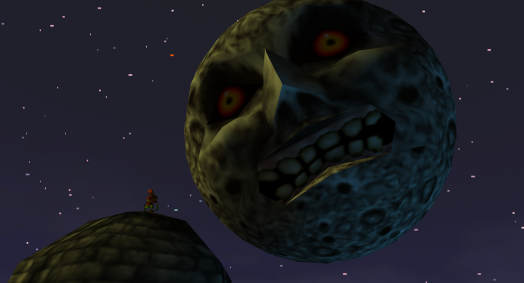
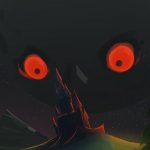
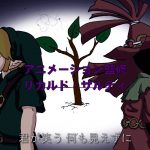
Termina, however, is clearly a portal fantasy realm. Link only reaches the land after encountering the Skull Kid, who wears Majora’s Mask, and has his horse stolen. While trying to rescue Epona, he is thrown into a deep pit (similar to Alice falling down the rabbit hole) and awakens to find himself in a new world, easily determined by the far different nature of the moon, with its hideous face and decaying orbit.
Once there, Link has to find a way home, which occupies the first three days of the game; only by encountering the Skull Kid again, and realizing the moon will destroy everything, does the quest expand to stopping the moon’s descent and saving Termina from destruction, along with Link’s desire to resume his journey back in Hyrule.
The nature of Termina has come into question due to clashing descriptions of the world in the extended literature around the series. Based on the Hyrule Historia, Termina seems to be an existing otherworld that Skull Kid and Link travel to through the power of Majora’s Mask. Yet, The Legend ofZelda Encyclopedia suggests Termina is more in the nature of a temporary dream world, conjured by Skull Kid using the mask, and, much like Koholint in Link’s Awakening, it will vanish upon the completion of the quest.
You are free to choose which interpretation you wish, but I tend to favor the former, if only because the Encyclopedia‘s explanation has no in-game evidence to support it. Termina is there when you leave, and I’m content to believe it would still be there if you could find the power to return. But this is more of a side issue, as either interpretation remains firmly within the rules of the portal fantasy.
Termina is clearly a new world, even without the presence of the moon. For one, there are the inhabitants who, despite their familiar faces, possess different names and histories from their Hylian counterparts. Though Cremia and Romani may look like the older and younger versions of Malon from the Hyrule you left, they are not your ginger friend but rather different people with unique backgrounds and histories. They just happen to live on a ranch and keep livestock, like their doppelgangers.
by making the story a portal fantasy, the reuse of such assets also reinforces the dreamy, odd feel of Termina, revealing it as a strange otherworld parallel to Hyrule.
This is not an uncommon trait in some portal fantasies. The film version of The Wizard of Oz does this, with the actors who play the farmhands on Dorothy’s farm also playing her new companions: the Scarecrow, Tin Man, and Cowardly Lion, or the traveling “psychic” Professor Marvel also being the Wizard of Oz himself. (The book does not do this, nor does it use the film’s “all a dream” ending.)
It was also a trick used in the original stage productions of Peter Pan, in which the same actor usually plays Mr. Darling and Captain Hook, a tradition that continues into many of the film adaptations, including Disney’s animated version and the 2003 film.
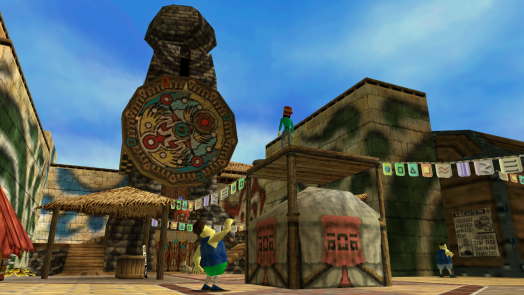
In Majora’s Mask, this trick is used primarily to save on the need to recreate assets: Much of Termina’s resemblance to Hyrule, in the form of its locations, people, and other content, was a game design tactic used to create a sequel to Ocarina of Time within a couple of years and without needing to build everything from the ground up. But by making the story a portal fantasy, the reuse of such assets also reinforces the dreamy, odd feel of Termina, revealing it as a strange otherworld parallel to Hyrule.
Yet, like a proper portal fantasy world, Termina has its own history and culture. The legend of the giants who can stop the moon’s fall is clearly old, as are the crumbling temples where they can be summoned. In Ikana Kingdom, you encounter an entire cursed clan of ghost warriors who come from an extinct race of ancients. The Gorons, Zora, and Deku Tribe all have elaborate homes and distinct cultural practices. This is not a fly-by-night world, but one of antiquity.
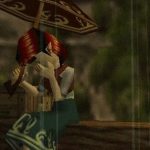
The game has other genre signifiers: The Happy Mask Salesman serves as your guide to the new world while having a heavy sense of otherworldliness about him, filling the role of the mystical mentor who must introduce a new world to the protagonist. There is also the suggestion of others making the same trip as you: Epona is rediscovered at Romani Ranch, having apparently escaped Skull Kid and made her way to a safe harbor. Meanwhile, Skull Kid has apparently been here before, as he has a history with the Giants who seem unique to the Termina setting.
There is even a blurring of worlds at the end, when Link travels to the sinister moon as part of the final battle, making the travel between worlds even more complicated. There are portals within portals in Termina, it seems.
The nature of a fantasy
Ultimately, Majora’s Mask is one of the oddest adventures in the Zelda series due in large part to its portal fantasy nature in a franchise primarily devoted to high-fantasy swashbuckling. This might partially explain the unique feel of the story, which is darker and more sinister than even the melancholy Ocarina of Time or grittier, adult-skewing Twilight Princess.
By making Majora’s Mask a portal fantasy, the Zelda team tapped into a different type of storytelling and made it their own, which has made Majora’s Mask not only one of the most beloved games in the franchise but also one of the best-executed versions of a portal fantasy in video games.
Stephen Milligan
Stephen Milligan first played a Legend of Zelda game when he was 11 and he's never quite gotten over it ever since. Now he writes essays about it in a continual but futile gesture to exorcise the Triforce from his soul. You can find him online on Twitter at @StephenThief, where he never posts, so there's not much point in following him, sorry.


 by Stephen Milligan on April 6, 2020