Medli’s Melodies is a series in which we choose our favourite tracks from the Zelda franchise, or highlight a special piece of music from the perpetually creative fan community. Music has always such been such an integral component of Zelda games, and we’re here to celebrate that every week!
This week, we’re celebrating Halloween! Our team of regular columnists has come together to pick out some of the most creepy and unsettling tunes from the Zelda series. Pour yourself a cup of hot cider, plug in your earphones, and prepare for a haunting musical journey through Hyrule… and beyond. You could almost say that this week is more like “Majora’s Melodies” and not Medli’s.
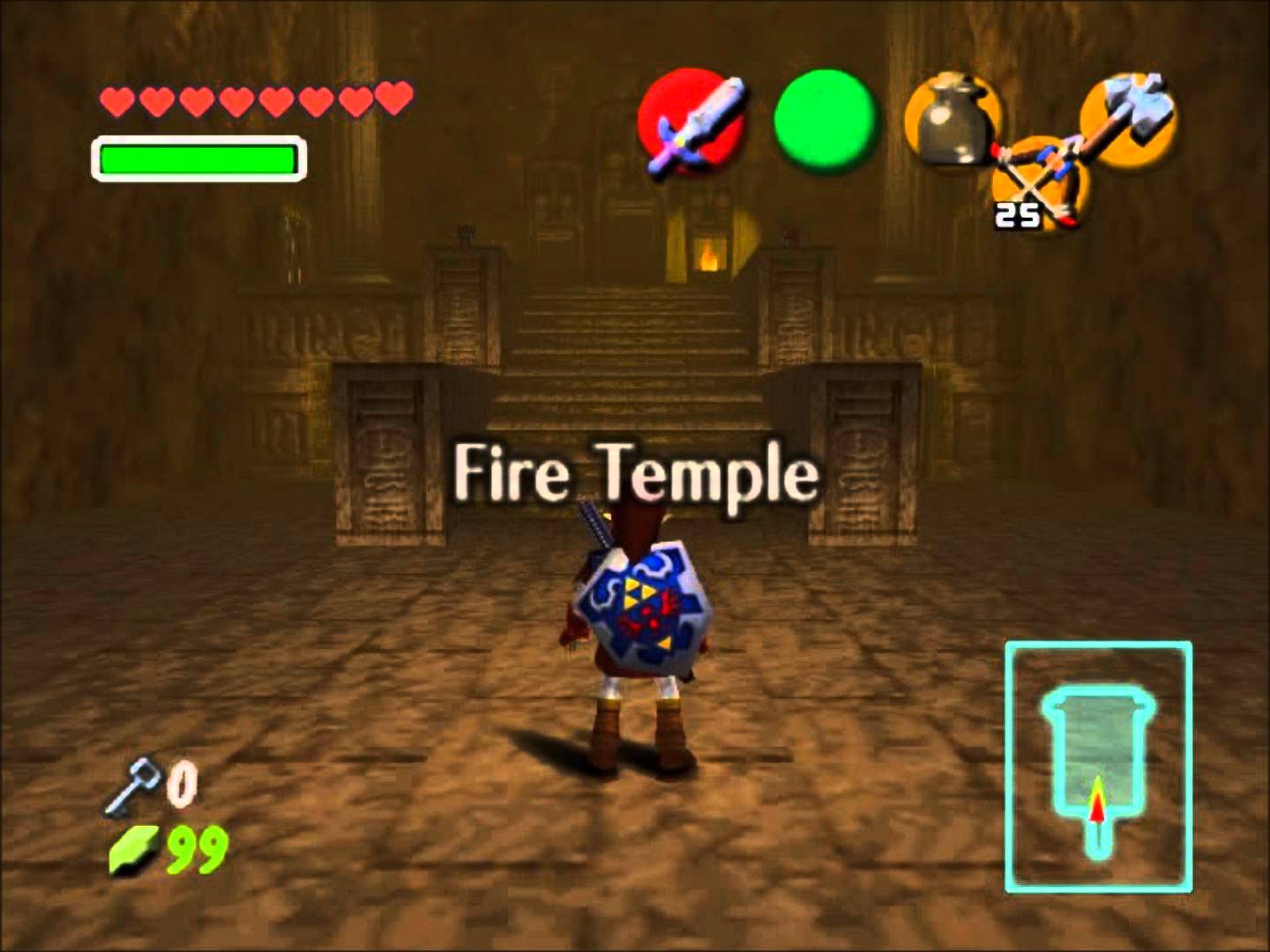
Ocarina of Time’s Fire Temple theme
Author: Sara Seferian
One of my favorite things about the Zelda series is how the music scores fit perfectly with the atmosphere each game tries to evoke. And each game, regardless of art style and gameplay, always includes music to make the player uneasy or feel afraid at certain moments within the game. Whether it’s the battle music, dungeon themes, or cutscene melodies, the Zelda series understands the importance of musical atmosphere and its impact on the game dynamic.
I wanted to choose a melody that hasn’t been overly discussed throughout the series’ history, but in terms of creepy atmosphere and in the spirit of Halloween, I had to pick the melody that has probably caused the most intrigue since it was first heard: the Fire Temple theme from Ocarina of Time.
I grew up with the later version of the Nintendo 64 cartridge which had the updated Fire Temple music, as opposed to the original which had Islamic chanting (and thus drew some controversy), so of course this is the version I’ll be focusing on.
The Fire Temple is actually my favorite temple in the game in terms of how easily I can get through it — it’s fairly linear, and I’ve always had little difficulty in navigating the map. But like the Shadow Temple and the Forest Temple, this dungeon still makes me feel uncomfortable and uneasy when I explore it, mainly due to its musical score.
The track opens up with just the sound of harsh blowing wind, and the somber continuous drum beat in the background sets the stage for the dissonant harmonies of the main melody. With its metallic, hard-sounding notes, the voices remind me of iron and fire, and almost sounds like people (or maybe the Gorons) singing in anguish. The repetition of the lower singing, mixed with the erratic upper melodies creates a sense of unease, pain, and confusion.
I feel this music perfectly reflected the atmosphere in the temple themes, as the dungeon uses many elements of fire and metal (rusty switches, the Megaton Hammer, fire walls, and jail cells). The background drums are similar to those heard in Goron City; the effects used on the voices make them sound grating and heavy, and the other added instruments seem metallic in nature.
THIS DUNGEON STILL MAKES ME FEEL UNCOMFORTABLE AND UNEASY WHEN I EXPLORE IT, MAINLY DUE TO ITS MUSICAL SCORE.
While I feel that every dungeon theme track fits each respective dungeon in their own way, this is the theme I feel the most sense of loss, depression, and slight eeriness that makes me want to get out as soon as I arrive. Sure, the Shadow Temple music is actually quite similar, but I felt that that dungeon was intended to be creepy, whereas the Fire Temple had a slight edge that was unexpectedly uncomfortable rather than exaggeratedly frightening.
Touching on the removed version: I think as a standalone comparison, and not factoring in playing through the actual dungeon, the original version is creepier. I also think the original chanting is more unsettling than the updated version because you can distinguish language in the original, while the updated singing is more tonal and without real words.
Overall, however, I feel the updated version actually fits the dungeon and story aesthetic better. The Fire Temple goes hand-in-hand with the Gorons, and therefore I prefer the music to relate to that. I also have to give Koji Kondo credit for creating the newer track on such short notice.
So there you have it: my pick for a Zelda track this Halloween. Go play through the Fire Temple yourself and see if you agree!
Hyrule Castle Tower music from Twilight Princess
Author: Michael Laverty
I always find it a surprise when Zelda hits me with a creepy or scary moment. Perhaps it’s because, most of the time, my brain is too preoccupied with releasing endorphins while I’m exploring beautiful environments, visiting cosy towns and villages and opening treasure chests. Often, I’m not prepared for the darker side of Zelda.
The series has caught me off guard personally a few times with unsettling experiences, where I get startled more than an abused Cucco. Startles have arisen in the form of loving hugs from ReDeads (who could forget that horrendous scream?), the clinging shadows of the Floormasters, and even the uncertainty behind the moon and Skull Kid in Majora’s Mask as Termina faces a terrible fate.
Musically, there are a few dark examples that really stand out to me. While they are a bit on the tense and thrilling side, they are also beautiful, engaging melodies which really add to the atmosphere in the contextual moment of the individual game.
In that sense, perhaps the most thrilling Zelda melody for me is this absolute stroke of genius, straight from the master mind of Koji Kondo: the Hyrule Castle Tower theme from Twilight Princess.
When you enter the castle, you hear a slight hint of that familiar, climactic tune you expect from a Zelda title, and you expect your ears to endeavour in a huge treat. At the beginning of the castle, it feels so empty and a little bit eerie. What you don’t expect, and what you pleasantly end up experiencing, is a glorious intensifying of the song as you climb your way up the castle to slay Ganon. It’s beautiful to listen to, and it gets you raring to put an end to Ganon. It makes it feel very personal and like a one-on-one fight, as opposed to the Breath of the Wild rendition which feels much more like a war to coincide with the Great Calamity.
The song feels nostalgic and creates an almost adrenaline-filled aura. As you near the top, climbing the broken stairwell, you feel that not only is there a huge boss waiting, but you feel empowered and at an optimal peak to take it on. The intense feeling provides the player with a sense of direction. Equally, if you travel back down to the entrance, the music drops intensity, signifying a bit more comfort and safety.
You end up experiencing a glorious intensifying of the song as you climb your way up the castle to slay Ganon.
While it isn’t quite in the same category of outright creepiness as Ikana Canyon or the Shadow Temple theme, it strikes a perfect balance which allows it to feel like a huge clash between Link and Ganon. It somehow empowers both sides, while making Link feel like the quietly confident underdog.
I preferred the ending in Ocarina of Time, due to the final boss fight and the castle’s art style, but Twilight Princess still blew my mind with the intensifying music and it had me excited to journey into the finale of this underrated title.
Zelda is full of musical masterpieces in which the themes of light and darkness clash, and it is always difficult to choose a favorite. However, this theme hits all the right notes for me in the context of the gameplay out of all the darker Zelda tunes.
The End of the World from Majora’s Mask
Author: Liz Burton
Initially, I searched to find a remix that could match the unsettling, yet hauntingly beautiful tone of this track, but it didn’t take me long to realise that none can. Only the original composition of disquieting yet calming sounds can capture this truly paradoxical blend of despondency, and acceptance of the inevitable.
At the risk of sounding cliché, it genuinely is difficult to put into words the extraordinary qualities of this piece. And that is exactly why it’s so powerful. You’re supposed to feel unsettled and utterly silenced, because you’re experiencing something beyond anyone’s comprehension. And that is the concept of life and death.
“The End of the Word” communicates this concept through a multilayered blend of emotionally stirring sounds in a way that few other melodies ever come close to replicating.
The piece’s main melody is slow and low-pitched, occasionally ascending to higher notes, while in the background a soft gong or bell recurrently reverberates, which creates a sense of time drawing to an end and, to me, sounds like a funeral bell. Together, these tones are undeniably evocative of tragedy, particularly the end of life.
However, what’s truly extraordinary is the overlay of other sounds, which heighten the tone to something more than just sadness evoked by death. The high-pitched hum and fleeting synthetic tones that permeate the whole track sound otherworldly, almost supernatural, suggesting that what’s happening is something entirely beyond the world’s control.
These components harmonise with the gentle gong and the ascending melody, which now sounds strangely uplifting, to create a blend that unexpectedly feels like peaceful despondence. It signals that tragedy approaches, yet the world has resigned to its fate. For who knows where we go after death? We are taken by the unknown — something otherworldly, something we can’t comprehend, but that we know is inescapable and natural. It’s frightening, yet part of the extraordinary cycle of the universe.
THE MELODY UNEXPECTEDLY FEELS LIKE PEACEFUL DESPONDENCE. IT TIES IN BEAUTIFULLY WITH THE THEME OF PEACEFUL DEATH THAT UNDERPINS THE WHOLE GAME.
This unsettling yet remarkable communication of such a deeply psychological experience is why “The End of the World” impresses so strongly in our minds, particularly in context of what takes place in Majora’s Mask. It ties in beautifully with the theme of peaceful death that underpins the entire game, as well as the process of grief (in which acceptance is the final stage) that many people agree is, although likely unintentional, undeniably central to the game.
The melancholy side of the tune implies that the end of the world is unpreventable — that the otherworldly force of Majora and the Moon will bring Clock Town to its end. But the other creates an enveloping sense that, while some cower in fear and flee the town as it trembles, most of Termina’s citizens accept their fate. The world is at peace with what’s happening, because it cannot escape it. No one can.
This blend creates an ambience that feels cripplingly bleak and distressing to the player, yet simultaneously liberating and comforting. It contradicts our hero’s instinct to save the world and suggests that he is powerless against the inevitability of life’s end. However, it wants you to know that whatever happens, will happen. To me, that communicates the idea of fearlessness in the face of death. And in the final hours of uncertainty, it is exactly what our hero needs to save the world from the brink of its end.


 by Zelda Universe staff on October 31, 2017
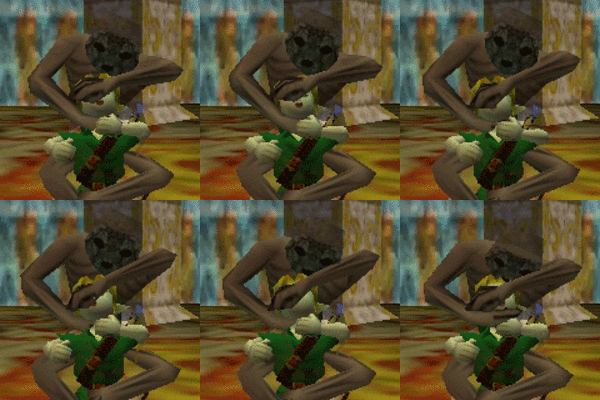 The series has caught me off guard personally a few times with unsettling experiences, where I get startled more than an abused Cucco. Startles have arisen in the form of loving hugs from ReDeads (who could forget that horrendous scream?), the clinging shadows of the Floormasters, and even the uncertainty behind the moon and Skull Kid in Majora’s Mask as Termina faces a terrible fate.