When the air grows chill and the snow begins to fall, winter weather can create some of the most picturesque scenery in nature. Those cold temperatures and icy conditions can just as well be a nuisance to endure, however, and when they reach extremes, they can be downright hazardous to most living creatures. This spectrum that runs from beauty to danger is something that Legend of Zelda fans have experienced time and time again when guiding Link into wintry environments. Some locations covered in snow and ice have been stunning to behold, others have been a struggle to overcome, and then there are those that manage to be both. Whatever experience may await in them, these are the ten most memorable wintry environments in The Legend of Zelda.
Spoiler Warning: The rest of this article may contain spoilers for Echoes of Wisdom about the story, gameplay mechanics, and other details that you might not wish to see. Continue reading at your own risk.
10. Hebra Mountain
Rising on the northernmost point of the map in Echoes of Wisdom, Hebra Mountain is a snowy region where one of the most memorable chapters in Zelda’s adventure plays out. Reaching the Lanayru Temple is a journey in itself no matter which Echoes the player chooses to help them ascend to the mountaintop. The climb takes Zelda through pine forests, icy caverns, hot springs, and narrow passes that are ringed with clouds. The view from high above Hyrule’s surface can be stunning, but Hebra Mountain has no shortage of ways to test those who step foot on its snowy slopes: blizzards, frigid waters, rolling snow boulders, and that’s not even mentioning the massive beast known as Skorchill who is on a rampage! Yet for all of these dangers, Hebra Mountain is home to perhaps the most affable character in the whole kingdom, the friendly yeti-like creature Conde.
9. Ice Ruins
Depicting a sense of scale and vastness is tricky business in the 2D Legend of Zelda games, due to the camera angle being locked in a top-down view just above Link. A Link Between World’s Ice Ruins circumnavigates this challenge by emphasizing the verticality of its dungeon layout. Since the player can only look down, the Ice Ruins makes sure that they can see exactly how far the dungeon descends. The many gaps in the flooring provide harrowing views of the levels beneath you, as well as a great chasm that runs all the way down to the molten void of the earth. The Ice Ruins’ outstanding environmental design is complemented by equally outstanding puzzle and platforming design, along with a very entertaining boss fight against Dharkstare.
8. Ice Cavern
Ocarina of Time’s Ice Cavern is just about the perfect blueprint for what constitutes a “mini-dungeon”. It’s relatively easy to navigate, it packs several different types of challenges within its rooms, and it lasts long enough to give players their fill of adventuring, but without overstaying its welcome. The gentle chimes that ring out in its background music are relaxing enough to almost make you forget just how many dangers are lurking in its handful of rooms. Between falling icicles, Silver Rupee hunts, spinning ice blades, ice block puzzles, and the introduction of enemies like Freezards and the White Wolfos, there is a lot going on before Link learns the Serenade of Water from Sheik and acquires the Iron Boots. It’s also home to an infinite source of that nifty Blue Fire.
7. Snowhead Region
The Snowhead Region in Majora’s Mask is a fantastic representation of the bleak and unpleasant side to wintry weather. The curse that inflicts ceaseless snowfall upon the mountains is a far cry from the pretty, gentle snowfall associated with the holiday season or amusing winter activities. This is where that white, powdery snow becomes grey, heavy, and suffocating. It’s the kind of winter weather that is, at best, miserable to endure, and at worst, outright dangerous to living creatures. The relentless blizzard traps the Gorons within their homes, threatening to bury them alive. That is, if they don’t freeze to death, first. Such heavy snowfall has made the path to Snowhead Temple all but impassable by foot, with the Goron Roll being just about the only means of viable travel up along the peaks.
6. Gerudo Highlands
Regions bearing the Gerudo name have traditionally been sandy, arid environments, but the Gerudo Highlands in Breath of the Wild brings a chillier bit of variety to The Legend of Zelda’s all-female tribe of warriors. The Gerudo Highlands is a series of snow-covered ridges in Hyrule’s southwestern corner, the towering, reddish rock formations visible from miles away. There’s a stark ecological contrast at play while you trudge through the freezing cold clifftops, all while the scorching Gerudo Desert is in plain sight just beneath you. It marks a rare, and welcome instance where a video game features the climate diversity that comes with varying elevation in a desert ecosystem. Although sparsely populated, the Gerudo Highlands contains several points of interest waiting to be discovered: monuments to ancient Gerudo heroes, Sheikah Shrines hidden behind elaborate puzzles, one of Farosh’s flight paths, and even Bokoblins who ride bears into battle.
5. Stormwind Ark
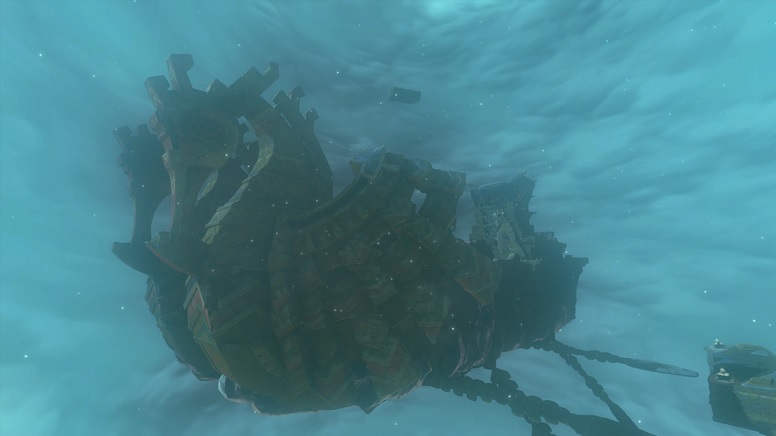
Tears of the Kingdom’s Wind Temple, otherwise known to the Rito as the legendary Stormwind Ark, is an awe-inspiring dungeon. The enormous ship sails the sky high over the Hebra region, concealed within a massive cloud formation as a period of unnaturally intense cold and snow assails the land. But for as memorable as the Stormwind Ark is on its own, the journey to it is perhaps even more memorable. It’s a long climb from the mountaintops up to that floating ship, one that takes Link and Tulin countless miles above the surface of Hyrule. The anticipation for the Stormwind Ark’s eventual reveal builds as you ascend higher and higher into the sky, to the point that it feels as though Link and Tulin are nearly reaching the stratosphere. The view of Hyrule from such a vantage point is nothing short of breathtaking.
4. Temple of Droplets
At first glance, The Minish Cap’s Temple of Droplets appears to be little more than a block of ice floating in Lake Hylia. But once Link shrinks down to minuscule size, he finds an entire dungeon hidden inside. The Temple of Droplets is just as much a water-themed dungeon as it is an ice-themed dungeon, seamlessly blending the two elements into its excellent level design. Exploring this tiny, frozen labyrinth sees Link carefully tread icy floors (that are sometimes lined with gaps just waiting for him to fall into) along with using the Gust Jar to propel himself throughout the watery chambers while standing on a lily pad. Being one of the Minish-sized dungeons, the Temple of Droplets cleverly makes use of ordinary features that feel larger than life in the diminutive setting. Beams of sunlight prove warm enough to quickly melt entire ice blocks when those same blocks are smaller than ice cubes, while the temple’s boss is just your average Octorok, but who happens to seem like a colossal kraken while Link is shrunk down.
3. Lanayru Temple
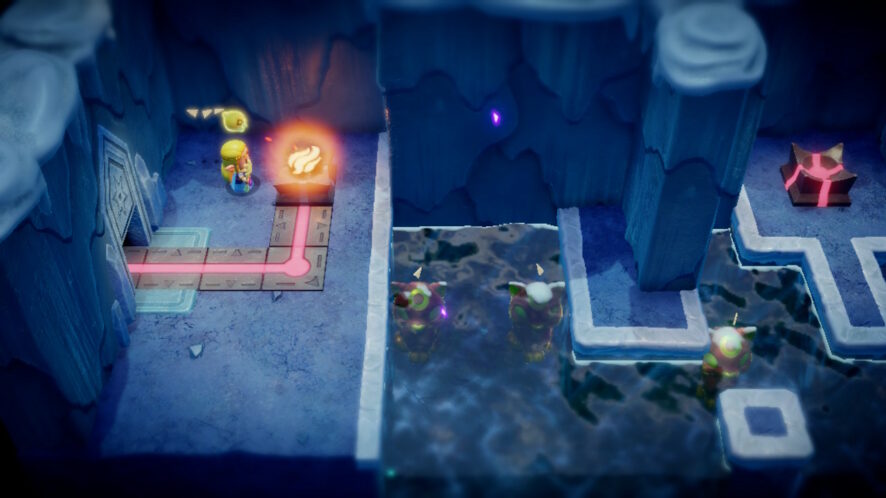
The quest to receive Nayru’s Sanction takes Zelda all the way up Hebra Mountain and into the Still World, before finally arriving at the Lanayru Temple. In a game that many longtime Legend of Zelda fans found refreshing for its return to traditional dungeons, the Lanayru Temple is the very best that Echoes of Wisdom has to offer. The icy theme is spiced up by a heating and cooling mechanism that runs through much of the dungeon, which Zelda uses to manipulate the temperature to her needs. In some sections, she’ll have to freeze objects or pools of water in order to progress; in others, she’ll have to melt the frozen obstacles standing in her way. It’s about as good as puzzle design gets in The Legend of Zelda, with several puzzles spanning multiple rooms as Zelda’s actions in one area bring about changes in another. All the while, players are treated to a sublime piece of theme music, with graceful chimes and vocalizations that will be stuck in your head long after you’ve completed the temple.
2. Hebra Region
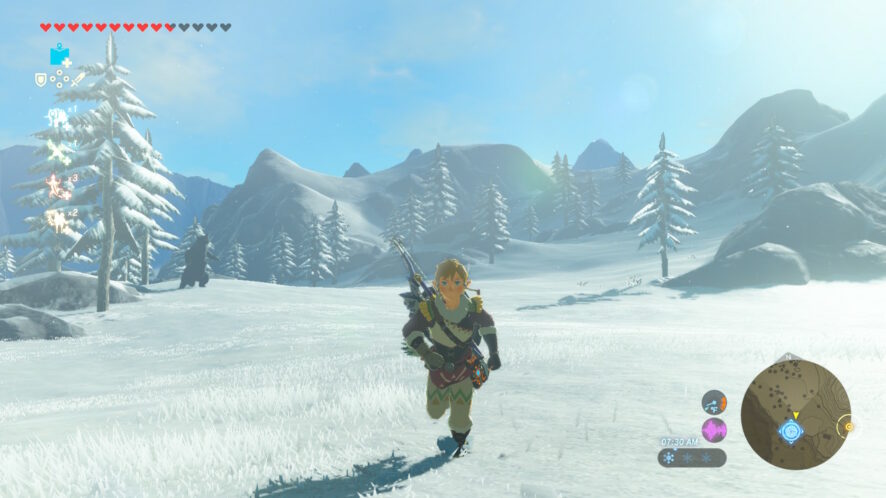
It may not have been the first snowy environment in a Legend of Zelda title, but the Hebra Region in the Era of the Wilds is definitely the biggest. In fact, the Hebra Region is bigger than the entire overworlds from most of the games that came before it! The southerly stretch is a boreal ecosystem, where conifer trees grow in dense groves and which the Rito call home. The temperature plummets after just a short hike north, and snow blankets the vast mountain chain as far as the eye can see. For any Legend of Zelda fan who ever wanted to get lost exploring a winter wonderland, the Hebra Region is where to do it. The mountains are laden with discoveries waiting for players to uncover within the snow, in particular some of the most well-hidden Ancient Sheikah Shrines in the game, and addictive minigames like those at the Flight Range, Selmie’s shield surfing spot, Pondo’s Snowball Bowling. When the weather is just right, auroras can be seen shimmering in the night sky high over the peaks.
1. Snowpeak Ruins
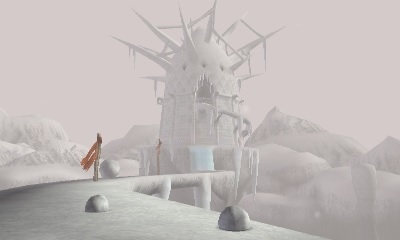
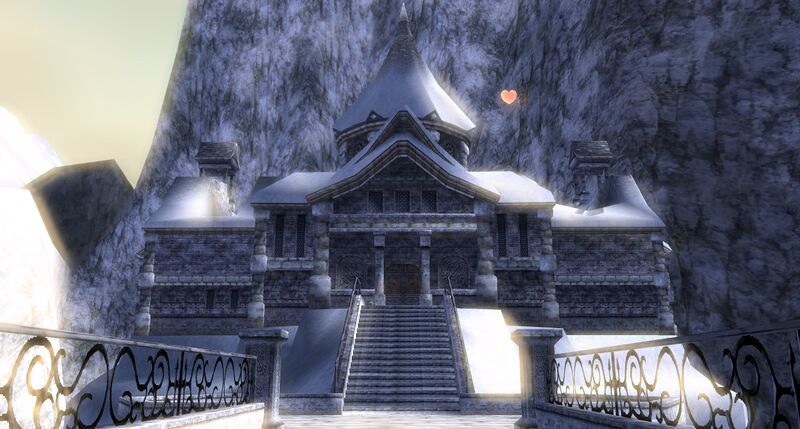
From the moment we first stepped inside Twilight Princess’ Snowpeak Ruins, it was abundantly clear that this was no ordinary Legend of Zelda dungeon. Snowpeak Ruins might be loaded with the usual dangers that Link must contend with, but it’s also someone’s home. In what is the single most creative premise for any Legend of Zelda dungeon to date, Link essentially goes on a grocery run for a lovely Yeti couple. While Yeta sits comfortably beside the fireplace and Yeto boils a giant pot of soup in the kitchen, players go off in search of cooking ingredients throughout Snowpeak Ruins’ lavishly furnished rooms. Finding those ingredients isn’t so easy as just grabbing them off the shelf, though. Exploring the luxurious mansion means battling the ball and chain wielding Darkhammer, overcoming waves of Chilfos, traversing icy floors, solving ice block puzzles, transporting cannon balls between rooms, and several other challenges that make Snowpeak Ruins an all-time great Legend of Zelda dungeon.
Jeffrey Pawlak
Jeffrey Pawlak is the Features Director for Zelda Universe, and has been a member of the website's community for more than 20 years. He is also a high fantasy author and an aspiring comic book artist.


 by Jeffrey Pawlak on February 21, 2025