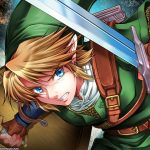
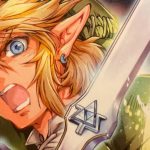
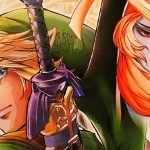
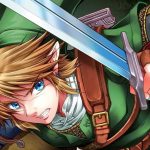
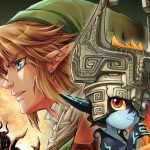
If Volume Eight of the Twilight Princess manga tells us anything, it’s that readers can expect this stellar adaptation to continue firing on all cylinders down the stretch. With Link and Midna closing in on their fated confrontations with both Zant and Ganondorf, the story is showing no signs of coasting to the finish, thanks to an ambitious effort by Akira Himekawa. The artist duo seems to recognize that a series that has gone on for so long and has been so consistently great deserves only their best work to reach a fitting conclusion. Volume Eight lives up to the loftiest expectations, while also finding new ways to raise the bar for The Legend of Zelda comic adaptations.
Spoiler Warning: This review contains information about important story details from Volume Eight of the Twilight Princess manga. Read at your own discretion.
The latest book is a longer read than the truncated Volumes Six and Seven, returning to the length of the earlier entries (around 190 pages). Those additional pages have never been more welcome, as Volume Eight needs every single one of them to showcase its abundant action. Featuring lessons in swordplay with the Hero’s Shade, battles against a bevy of monstrous foes, and even some pleasantly surprising dungeon exploits, Volume Eight is jammed pack with one exciting sequence after another.
It’s a punchy experience right out of the gate, as the opening chapter is a juggling act of backstory, action, and some excellent nods to the Twilight Princess video game. After the exposition-heavy Volume Seven, it’s a refreshing change of pace that Volume Eight begins with the Hero’s Shade teaching Link several of the Hidden Skills, including the Helm Splitter, the Back Slice, and the Mortal Draw. The two swordsmen perform the techniques just as they did in the game, and Link later uses all three against different foes throughout Volume Eight.
But Link’s training with the Hero’s Shade entails more than flashy swordplay. Their meeting also serves to bring a revelation or two to the fore. As most readers likely had guessed by now, the Hero’s Shade confirms that he is the same golden wolf we previously saw by Midna’s side in flashbacks to her time shortly before Zant cursed her and took over the Twilight Realm. The bigger reveal, however, is that Link’s hometown on the border of Hyrule was built over a portal to the Twilight Realm. After being led to believe it was destroyed, we now know the city was actually swallowed into the Twilight Realm, and its people may still be alive. What’s more, the Hero’s Shade intervened directly to keep Link in the world of light during that harrowing event.
This is just the first of multiple instances in Volume Eight that provide a visceral reminder of how devastating the Twilight Realm’s magic can be to Hyrule. Another soon follows when the shard of the Mirror of Shadow hidden within the Temple of Time starts to cause trouble, warping the ancient sanctuary and corrupting at least one unsuspecting inhabitant.
Common shortcomings of Himekawa’s manga adaptations have been the disappointingly short journeys through the dungeons that we spent so much time in while playing the games. The Twilight Princess manga has been guilty of this in most cases as well. You can’t blame Himekawa for eschewing the many puzzles and platforming sequences (they wouldn’t make for very exciting reading, after all), but fans have always yearned to see much longer sequences through the temples than what have typically been put to page. Volume Eight marks a tremendous improvement in the way that the dungeons are adapted for the manga, with both the Temple of Time and the City in the Sky being done justice and, in some ways, outshining their video game counterparts.
Armogohma received a major upgrade for its appearance in the Twilight Princess manga.
By adding narrative purpose to the dungeons beyond just being the location of another relic Link must collect, it allows them to host lengthy sections of the book. Between his training session with the Hero’s Shade, putting the Hidden Skills to use against a Darknut, and a terrific battle against Armogohma, Link has a lot to take care of in the Temple of Time. Armogohma and its many, smaller kin felt rather out of place in that particular dungeon of the video game, but through the shard from the Mirror of Shadow, the manga makes the decaying Temple of Time a more suitable home for such hideous creatures.
Volume Eight also sets a new standard for encounters with boss enemies in The Legend of Zelda comics. In previous adaptations, it wasn’t uncommon to find Link vanquishing a memorable monster in just a few panels. Armogohma doesn’t go down anywhere near as easily, and that’s fitting for how nightmarish Himekawa illustrated it to be. The enormous, corrupted arachnid is far more grotesque than it ever was in the game, and its violent battle with Link is the visual highlight of the book. Blood, ichor, and debris spray freely in the drawn-out, back-and-forth brawl between Link and Armogohma. From the moment Armogohma first appears, to the finishing blow, the encounter lasts for 17 pages (the fight with Argorok gets nearly 22 pages later on). For reference, the finale against Ganon in the Ocarina of Time manga is barely 11 pages.
The only dungeon journey that may be more impressive for a manga adaptation than the Temple of Time’s can be found in the same book. When Volume Eight sends Link and Shad to the City in the Sky, Himekawa treats the floating technological marvel like the metropolis that it’s meant to be. The scope of the City in the Sky feels realized with so many points of interest along the way to the dramatic battle against Argorok, including friendly conversations with the Oocca, dealing with pesky Aerolfos, and navigating the magnificent yet dangerous architecture that floats countless miles above the surface of Hyrule. Argorok being the city’s former guardian as a majestic golden dragon is another fine touch of Himekawa’s creative liberty, and continues the ongoing theme of Twilight magic being a deadly source of corruption to the world of light.
These game scenarios are successfully brought to life only because of the large cast of supporting characters that the Twilight Princess manga has heavily invested into by this point. The Temple of Time’s chapter benefits immensely from Link’s solemn interactions with the Hero’s Shade. The sequence through the City in the Sky wouldn’t be half as entertaining as it is without Shad and the quirky Oocca lending their efforts to the cause. Amid all of the banter between Link and Shad, their unique talents complement each other perfectly, and they go on to develop a newfound respect for one another. Even in the moments of action and adventure, the lore and characters of the Twilight Princess manga are always developing.
The adventure through the City in the Sky is a very amusing section of Volume Eight.
The members of the Resistance once again prove that they can carry an entire chapter of a book even while Link is elsewhere. Ilia, Shad, Telma, Rusl, Auru, and Ashei all make an appearance as they begin determining the way to the City in the Sky before defending Castle Town from a gang of Bokoblins and Bulblins.
It’s a little odd, though, that the major players in the story such as Zelda, Zant, and Ganondorf are absent from this entry. Midna is also quiet for most of the book, having one moment of introspection in the Temple of Time before fading into the background until the final pages. But if that’s the worst misstep that Volume Eight makes, then there is no doubt that it is one of the best entries in the Twilight Princess manga thus far. When an entry this thrilling and ambitious is described by Himekawa as the “calm before the storm,” we can only imagine what wild conclusion to the series awaits us.
SCORE:
9/10
Volume Eight keeps the momentum going for the Twilight Princess manga in a big way while making great strides for the way that The Legend of Zelda comics adapts fan-favorite game scenarios.
Jeffrey Pawlak
Jeffrey Pawlak is the Features Director for Zelda Universe, and has been a member of the website's community for more than 20 years. He is also a high fantasy author and an aspiring comic book artist.


 by Jeffrey Pawlak on March 12, 2021