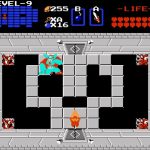
A final boss battle is the cherry on top of a great game. It tops off the experience and rewards the player’s patience and perseverance. And The Legend of Zelda certainly has the vibes going for it. The treacherous trek through Death Mountain with its ominous music and the unsettling breathing of the enemy you’ve only glimpsed shadows of in the instruction booklet, all prepare you for an epic battle. Sadly, the NES could only convey so much, and the final fight with Ganon is fine for the time, but later entries in the series put this fight with the Demon King to shame. In their art, “Just Like Old Times”, Pikminion gives us the brutal brawl we always imagined as we sat cross-legged on the floor in front of our boxy televisions.
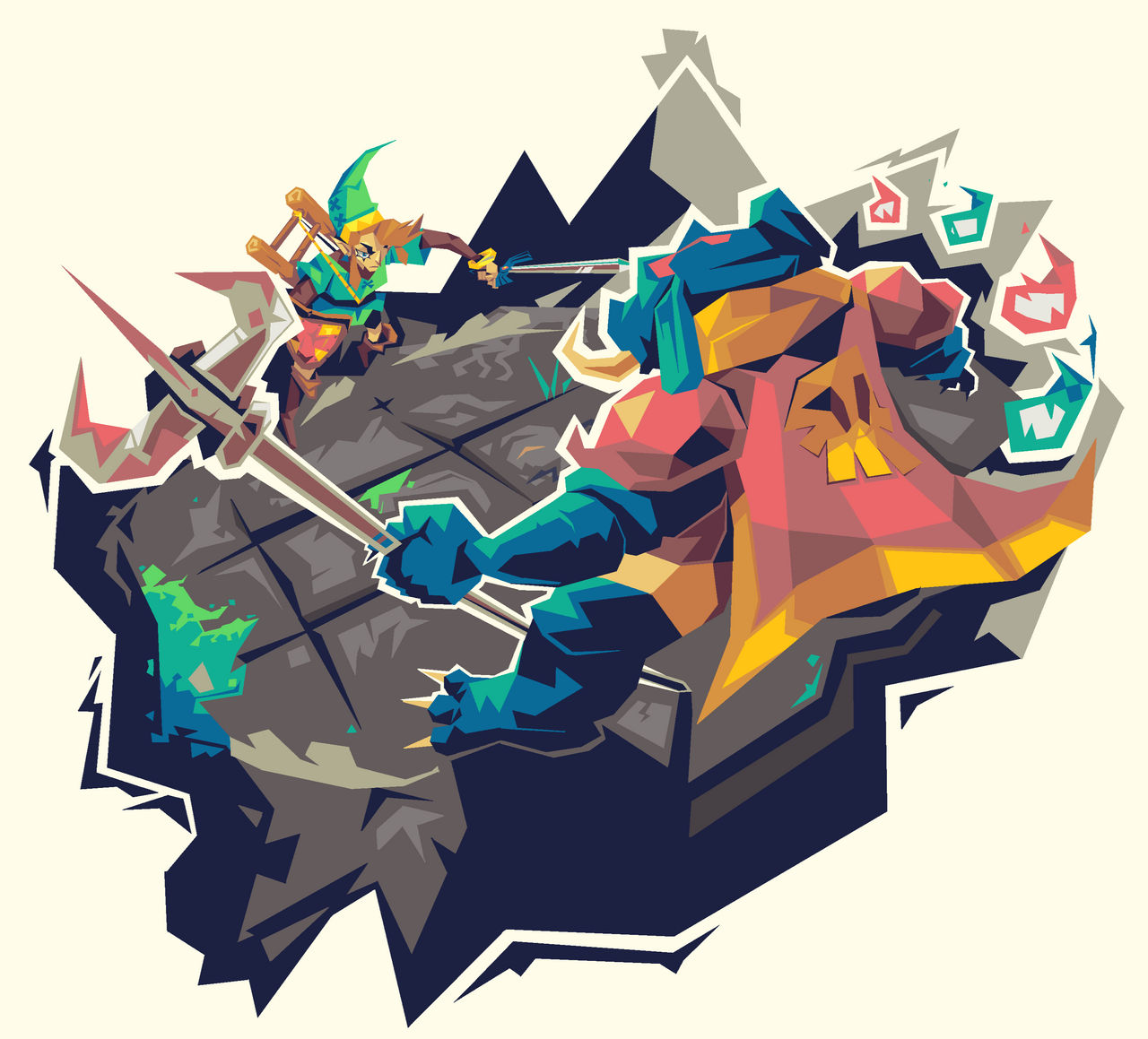
One noticable choice Pikminion made is having the fight be framed by a white background. Beyond the sheer amount of time needed to fill in all those other details, this choice only serves to emphasize the battle. It causes our eyes to be drawn to the center where the conflict is waged. It also gives the art the appearance of a sticker. The jagged edges of the stone floor and the gray mountain peaks on the top is a far cry for the simple stickers celebrating the Zelda series in the 80s.
The looming presence of Ganon in this art initially made me think that this was depicting A Link to the Past‘s amazing final battle. After all, the Demon King has his signature trident that was introduced in that game. Here its tips are drenched in blood, old and crusty from decades of waiting for a foe worthy enough to dispatch himself. His cape also calls to mind the regal ruler of the Dark World, a realm twisted by his greed and anger. Even the green and red flames in the upper right corner bring to mind the fireballs the SNES behemoth would toss the player’s way. In all honesty, the decision to model this Ganon off of that 16-bit adventure was a good one because it was there that this villain first appeared menacing. If we’re being real, the original Ganon thrived off of the vibes of Death Mountain and the threat alluded to in the manual. The actual boss fight and look of the evil one was not as impressive as it could have been. By choosing a more ominous version of this dark menace, Pikminion has crafted a more dangerous and dynamic looking image.
So if Ganon’s appearance is almost entirely straight from A Link to the Past, how do we know that this is art of The Legend of Zelda? As with most things Zelda, it all comes down to the hero. Looking at Link’s shoulder, we see a simple Ladder, an item used in a cartoony way to cross single tile stretches of lava and water. The warrior’s shield also bears a cross which was a common feature of the original hero. It wasn’t until later that the traditional Hylian Shield became a staple. A large bracelet reminiscent of the Power Bracelet rests on his arm as well, where later entries might have a gauntlet or glove. Even with all these details, one element of A Link to the Past appears though. The hero doesn’t wield the Magical Sword, which is the strongest sword in the original adventure; instead, the Master Sword has found its way through time and to our hero’s hand.
When creating art, the purpose isn’t always to create an accurate image but to create a memorable one. Pikminion’s rendition of this climactic battle lies somewhere between two games, but the story it tells is the one told in our minds. It’s the story we imagined when we held that blocky controller, our hands sweating, as we fought the invisible, teleporting pig lord. It may not be pixel perfect, but it is a perfect image of our imagination.