There are many quintessential enemies across the fantasy genre, from Giant Rats to Skeletons and Dragons to Evil Mages. A Ghost by any other name, like the Poe, is just as invulnerable to your non-magical weapons. Today’s discussion is about the unenviable low-level threat that is the slime, or I suppose the Chuchu.
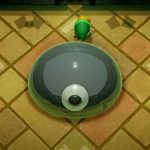
For a creature that is often regarded as a low level “trash mob” by so many games and media references, the Chuchu is an unforgettable part of the Zelda franchise. Appearing in most of the mainstream games, and in many different forms, the Chuchus are a player’s first lesson in “not mashing the attack button.” These little slimes are typically trivial foes to beat (being slow-moving), but often demonstrate a number of instances where they are unable to be hit — be it sinking back into the ground like in The Wind Waker or executing a high jumping tackle in Twilight Princess. Depending on the game, these enemies may also split, shock, freeze, or explode after death, making timing all the more valuable for foes that you could easily fell in one blow.
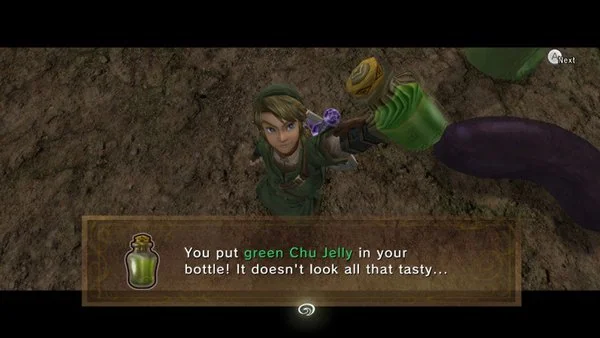
Despite their poor constitution, Nintendo still does an excellent job of keeping Chuchus relevant throughout the game. In Breath of the Wild and its sequel, the Chuchu’s are invaluable for their jelly; they are used as a weapon, tool, and upgrade equipment. In Twilight Princess the value lies in some Chuchu being the least expensive source of potions and oil (if you can land a hit on the early-2000s animated Jell-o physics they use). Even in later parts of the Toon games, Electric Chus can prove problematic to a player when dealing with a group of enemies, making options like a Spin Attack unavailable for fear of electrocution.
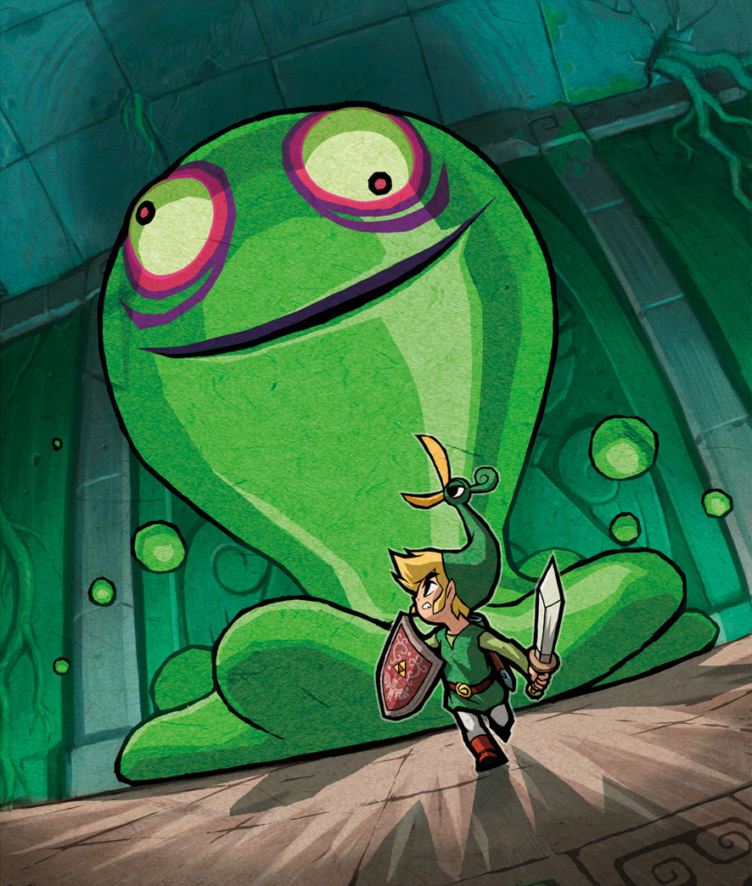
Perhaps above all of these, The Minish Cap hits the nail on the head. As the Boss of Deepwood Shrine, and again as a miniboss in the Temple of Droplets, Link encounters Chuchus that are, comparatively, titans. I’ll never forget the entirely nonchalant buildup to the Big Green Chuchu in The Minish Cap, where the amorphous creature simply stepped on the wrong crack, providing an otherwise unguarded final chamber with the boss it so desperately needed to throw in our hero’s way. No magical guardian or monster warped by dark magic— just a pest that got stuck in a hole. It will forever be one of my favorite boss intros in the franchise on the comedic value alone, let alone the way in which it subverts the player’s expectations well before you face the creature — a creature you have already fought at full-size many times to make it this far.
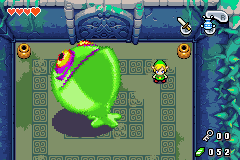
Of course, these are just our garden variety Green and Blue Chuchus; when your sword is smaller than a needle, they become formidable opponents indeed. The fight teeters between a chase where the Chuchu doesn’t feel nearly as slow to Link’s diminutive stature and a desperate attempt to not make like a graduate from the Prometheus School of Running Away as the colossal foe falls. I suppose, in all fairness, I may be just a little too keen on David versus Goliath fights and the concept of a small hero; it’s what I enjoy about Toon Link, and games like Ori or Hollow Knight. Being impossibly small in a massive space is a favorite theme of mine.
Similarly, The Minish Cap is the only appearance of the Metal Chuchu, a variety that turns into a massive spikeball should Link wander too close. These particularly sharp slimes make for an adversary just as irritating as King Dedede’s Gordo Throw but are a welcome change from the electrifying entries before. A bomb or boomerang makes quick work of them, but they are quite a fright in the Cave of Flames. Without bombs or a boomerang to my name, they almost made quick work of me despite my liberal use of spin attacks.
So, I suppose without further ado, I’ll be off to replay The Minish Cap for the nostalgia alone.