The Minish of The Minish Cap have their own way of speaking, which initially leads to some confusion on Link’s part when he first encounters the tiny civilization. Thankfully, the Jabber Nut makes quick work of that problem and Link hardly has to deal with the language barrier with the Minish for the remainder of the game. However, before Link acquires the translating nut, any attempt to converse with the Minish will bring the player face to face with a bunch of completely random jibberish. However, while the Minish speak random jibberish in the English version, it appears other translations of the game treated the Minish language differently.
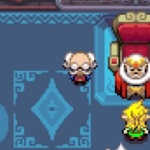
Pictured below is the Japanese version of Minish Cap and a conversation with one of the first Minish you can encounter upon reaching the village. In the English version, this Minish will say: “Pico riki poko ti po!” which is just jibberish meant to represent the Minish language. However, in the Japanese version, these apparent nonsense words can actually be read backwards. This particular sentence reads “ガバトコ ヨイナラカワ” or “Gabatoko yo Inarakawa”. This doesn’t really mean anything but, when the katakana letters are reversed, it can be read as “Wakaranai yo Kotobaga” which roughly translates to “I don’t understand your words.”
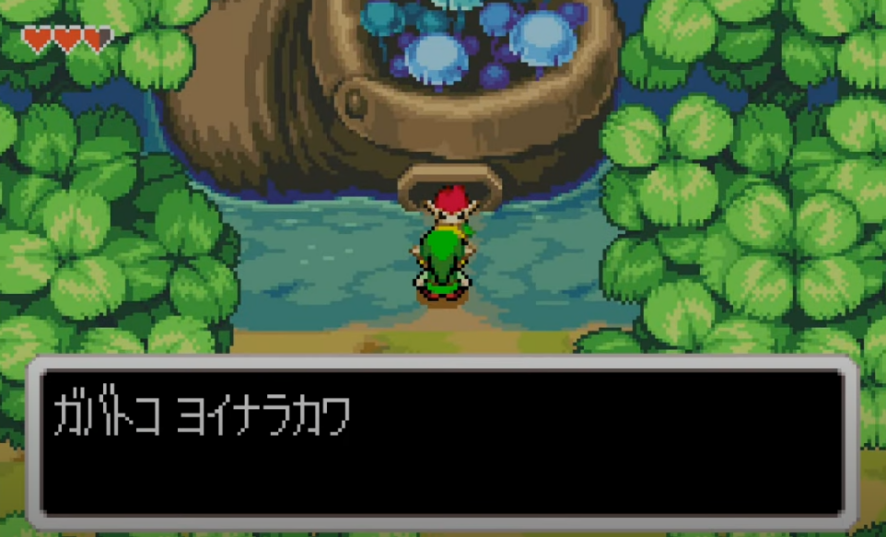
Apologies if my translation isn’t perfect; I’m working off my own very basic understanding of the language. Interestingly, Japanese is not the only language that approaches the Minish language like this, as the Italian, French, and German languages also treat Minish dialogue as being spoken backwards. The actual difference in gameplay is nonexistent, as Link requires the Jabber Nut to progress through the game; no amount of backwards reading is going to save the player from having to get the translation item. Since I’ve only ever played the game in English, I was unaware of this fun little localization difference until recently, but it’s very interesting for me to see how the Minish language was originally portrayed.