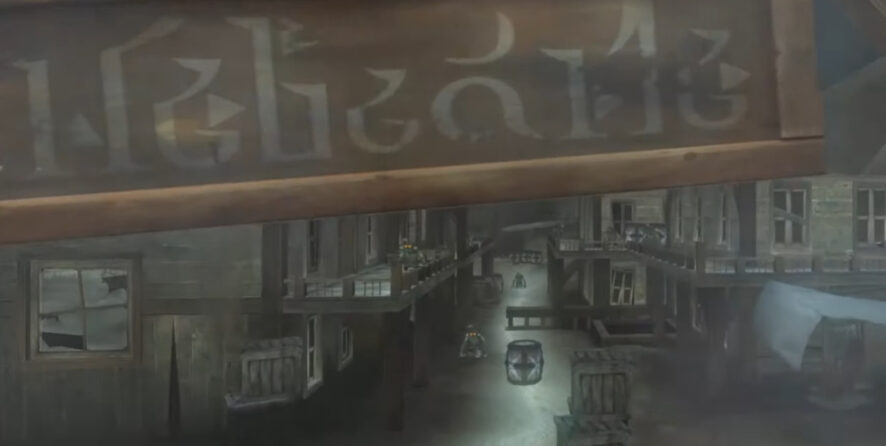
Of all the games in the Zelda series, my love of Twilight Princess is second to none. As a fan who became involved with the series during the DS era (with Phantom Hourglass and Spirit Tracks), I did not experience a truly dark Zelda story until I picked up Twilight Princess, and it quickly became my favorite of the franchise. One thing I loved about it was how surprises regularly lurked around every corner. For example, who would have guessed that, after pulling back the curtain of twilight surrounding Hyrule and restoring the Blade of Evil’s Bane, I would find myself in a place like the Hidden Village?
I grew up in a home where my grandfather would fall asleep most nights to a staticky cable airing of some old Western film. The sound of stray gunshots from cattleman revolvers would echo through the stairwell to my room, and when I called my grandfather in for dinner, poker chips and cards would be flying across the floor of a dusty saloon as a fight broke out between a sore loser and an alleged cheat.
Stepping into the Hidden Village to save Ilia was unique compared to the rest of Twilight Princess; it almost felt like the game had shifted to a completely different genre. A lone, meandering whistle tune carried by the dry wind, dusty frontier buildings with Bulblin archers perched most precariously, the strumming of a guitar as Link surveys the landscape — it all brought to mind the shootouts at high noon in the films I grew up watching with my grandfather on the sofa. Even as I write this, I’m listening to the music of the medieval gunslinger’s triumph.
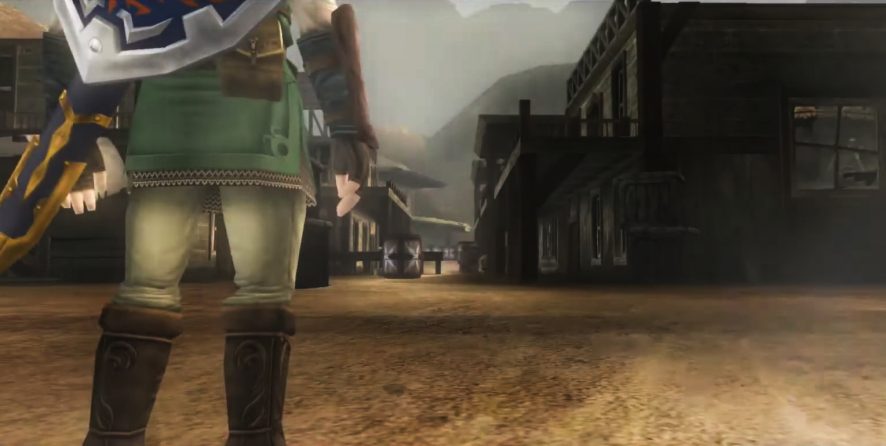
In a Zelda game solidly built around a dark fantasy setting, with the eerie, otherwordly Twilight Realm and the gothic kingdom of Hyrule, this village seemed totally out of place. While exploring worlds of magic and monsters, it’s easy to get caught up in the surrealism of the experience and willingly suspend your disbelief, so much so that you fail to appreciate the more familiar, down-to-earth elements of the world and story. This is especially true for the Hidden Village, which is firmly nestled between the mystical, nostalgic trip through the Temple of Time and the epic, high-fantasy battle against the Twilit Dragon Argorok in the City in the Sky. It is a relatively short, mundane blip compared to these two exceptionally magical moments in the story.
Throughout my second playthrough though, I couldn’t seem to shake the memory of the Hidden Village. I wanted to reach it quickly, and it reshaped how I saw the game. Chasing King Bulblin across Hyrule Field was no longer a medieval cavalry battle but a wild chase through the prairie on horseback. The Battle at Eldin Bridge was far more than a twist on a jousting tournament — it was a standoff where the hair-thin window of time in which to strike meant the difference between life and death. Escorting Telma’s wagon was a race through lawless territories where bandit Bulblins would stop at nothing to delay the transport of the sick Prince Ralis. Our Hero of Twilight became the hero of an American Western: a farmhand with nothing but the reputation he built from the ground up, winning back possessions stolen by the Bulblins along the way.
To this day, I keep a dedicated save file on my Wii that is saved just prior to entering the Hidden Village. That way, whenever I’m in the mood for some gunslinging, I can boot it up and instantly relive the experience of being a Hylian with No Name.