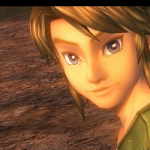
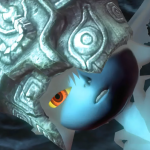
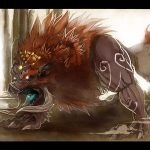
As a mournful howl echoed through the trees, Uli placed a hand on her swollen belly. She stood in the doorway as Rusl made his way slowly back up the meandering path to their home in the forest village of Ordon. Uli’s eyes drifted to the tree line as a shift in the wind rustled the leaves. A glimpse in the shadows made her breath catch in her throat.
A beast with blue, sorrowful eyes looked up at her.
So goes the introduction of Link’s wolf form to his fellow villagers in Ordon.

Twilight Princess ranks as one of the most eerie and atmospheric Legend of Zelda titles, rivaled only by Majora’s Mask. Take out the encroaching Twilight, Twili, Zant, boss designs, Poes, Falbi and Fyer (shudder), Death Sword, all of the Arbiter’s Grounds, the soundtrack, and more, and you’re still left with the fact that Link turns into a wolf.
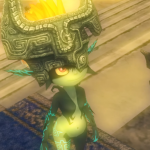
A Hylian werewolf. Well, a Hylian werewolf with an imp on his back.

So, before we tackle the question of why Nintendo chose to turn Link into a wolf, let’s take a look at his history of transformations.
Although transforming into a wolf was new to the Zelda series, the form change mechanic itself has been in use for a long time. In fact, Nintendo has been dabbling in metamorphosis for its green-clad hero since 1987, as seen below:
- 1987: The Adventure of Link, the fairy spell
- 1991: A Link to the Past, Bunny Link
- 1998: Ocarina of Time, child/adult Link
- 2000: Majora’s Mask, mask transformations
- 2001: Oracle of Ages/Seasons, magic rings
- 2004: Minish Cap, shrinking/growing
- 2006: Twilight Princess, Wolf Link
- 2013: A Link Between Worlds, painting transformation
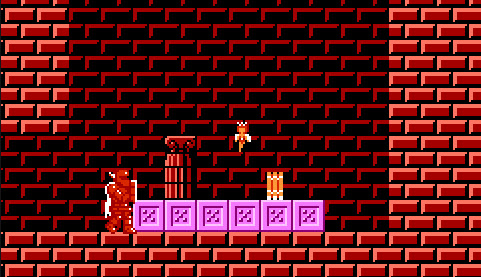
Now that is a long list.
Not to mention all of the items and costumes that Link can obtain in other titles that augment his abilities or modify his appearance, but that’s another story.
It’s not just the game series either; even in Zelda literature, you can find Link being transformed. In both incarnations of the manga version of A Link to the Past, Link deviates from the cute bunny form to a more brutish, animalistic beast.
Moving back to Twilight Princess, we see Link changed into his wolf form due to the encroachment of Twilight over the land of Hyrule. In classic werewolf fashion, we also see him suffer through his initial transformation in a very visceral cutscene complete with an amplified heartbeat and a pulsing camera effect. He even groans and cries out as the change consumes him.

From there, Link must learn to navigate through a seemingly new world, as he faces the challenge of adapting everything he has ever learned to the form of a beast. Luckily, he has Midna and just about every animal in the kingdom to give him tips on how to use his newfound abilities. After his first change and initial encounter in Ordon Village, though, the game shifts away from the horror theme of his lupine appearance to a more family-friendly animal fable.
Once that shift happens, Wolf Link’s avoidance of humans is primarily to find a way to teleport and his contact with them is to trigger a humorous cutscene. Outside of a few story beats, the need to be in wolf form becomes less and less, until the game hits the point where it is moderately irritating to have to shift back for a simple game mechanic. And this is coming from a vocal lover of all things lycanthropic, but I digress.
I promised to come back to why Nintendo chose to turn Link into a wolf, and I will deliver on that promise. It all comes back to director Eiji Aonuma.

It turns out that when Aonuma was on a business trip, he had a dream about being a wolf trapped in a cage. That’s it.
Dear reader, I can’t tell you how devastated I was when I finally discovered that. By the way, that little tidbit can be found in The Legend of Zelda: Encyclopedia, which references an interview with Aonuma through the Miiverse platform (may it rest in peace).
I went through so many other old gaming magazines, player’s guides, The Goddess Library, and even old DVDs that I had of Nintendo E3 conferences and interviews to try and find anything more substantial than that.

I will say this, though: Despite Wolf Link being built around an arbitrary mechanic, his staying power has been phenomenal. He’s been trophies, stickers, and spirits in the Super Smash Bros. series, a special power-up in Super Mario Maker, and can appear as a guest villager in Animal Crossing: New Leaf.
Outside of Twilight Princess, Wolf Link has even shown up in other titles from the Zelda series. Hyrule Warriors uses Link’s wolf form as a primary play mechanic for Midna along with references to it in certain levels and Twili Midna’s level animations.
Of course, his most famous inclusion is in Breath of the Wild, where you can literally summon Wolf Link into your game as a companion and fellow hunter.

But that ends the journey, my friends. That was everything that I could find on Wolf Link and the reasons for his inclusion into the Zelda pantheon. However, I implore you, if you ever find more detail or reasons for the creation of this iteration of my favorite incarnation of Link, please let me know.
Oh yes, there is one other theory I’d like to leave you with before we go.
I found an interesting anecdote in issue 192 of Electronic Gaming Monthly (may it also rest in peace) from an interview with Aonuma. In it, he was asked about joking about not working on Zelda games after he finished development on Wind Waker.
“I asked Mr. Miyamoto, ‘Please give me some other assignment.’ He said, ‘Let me think about it.’ [Finally] he told me, ‘OK, you’ll be the producer on the next Zelda.’ I said, ‘What? I wanted [something else].’”
There’s laughing and acceptance of the role after that. Yet, he goes on to say in the Miiverse interview that he was inspired by a dream he had of being a wolf in a cage. Interesting. Who’s the caged wolf, then? The created or the creator? Or is every artist held captive by their creation?
Hmm, food for thought!

Happy Halloween! We’re counting down to the 31st with horror-themed articles all week long, so be sure to shamble over to our Halloween Week 2020 page if you’re hungry for more!