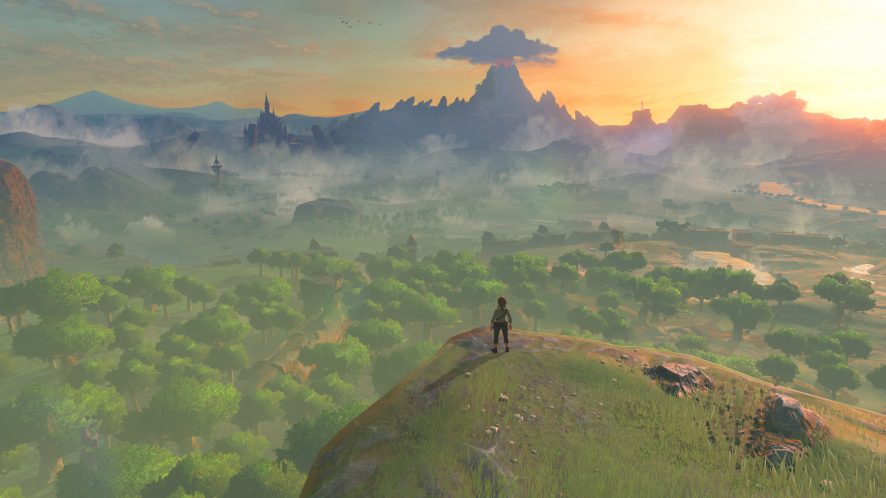
Growing up in front of an old cathode-ray TV, sitting a controller cord away from the warm glow of the monitor, I was rarely alone in my video game playing time.
As the oldest of three siblings, and in a house with a limited number of televisions to go around, I often had an audience as I jumped on Goombas, inhaled the fruit of Wispy Woods, or cast Ultima on a screen of hand-drawn beasties.
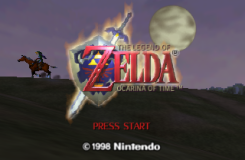
I played a great deal of Zelda with such an audience, too. A Link to the Past, Ocarina of Time, and Majora’s Mask all had those wide-eyed witnesses flanking me on most days. Link’s Awakening did not, due to the small screen of the Game Boy.
Even after I went to college, Zelda games remained a communal experience. I played through Wind Waker in a week, watched much of the time by roommates and buddies from down the dorm hallway. When I defeated Ganondorf yet again, the room was filled with friends cheering me on.
Yet despite these memories of camaraderie, my primary impression of playing these games, like so many Zelda titles, is one of loneliness.
The Zelda series has channeled a feeling of melancholy solitude since the very beginning, when Link wandered the ruined kingdom of Hyrule, only occasionally stumbling across some stranger hiding away in a cave.
The Adventure of Link introduced villages of bustling townspeople, yet the loneliness persisted. Every time Link departed from one of these safe havens, he entered a dangerous world of perils alone and unaided.
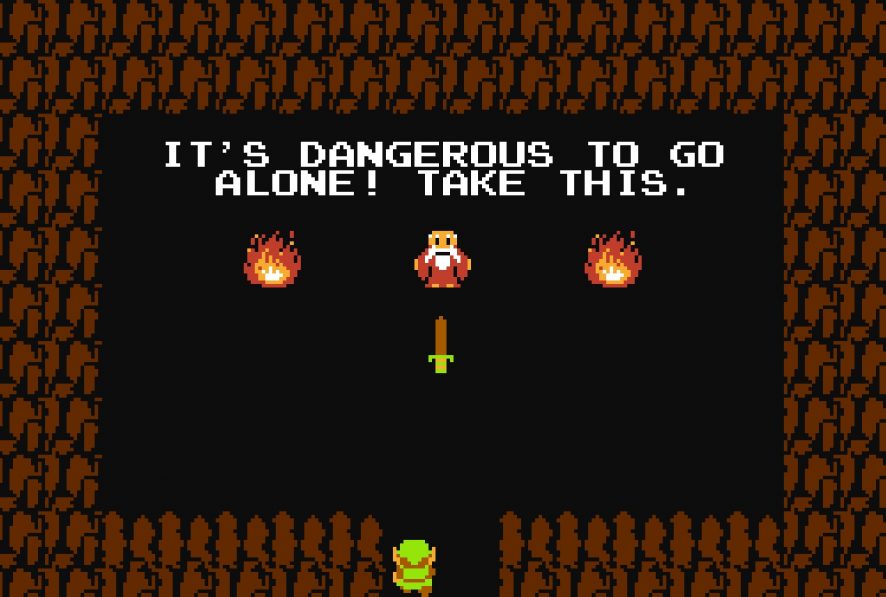
This feeling was a frequent constant for me in the old games: in A Link to the Past, where Link remains the solitary hero; in Link’s Awakening, where, despite an island filled with cheerful folks to meet, Link is the only person aware he is in a living dream; and in the Oracle games, where Link’s only companion is one of three talking animals and only in specific situations.
The transition to 3D brought some solace to this feeling, with the addition of companions like Navi and Tatl, but mostly they only spoke in cutscenes or when serving as a game mechanic. Wandering the halls of a forsaken temple, I still felt alone in Link’s role, much as I did when sailing the vast Great Sea in Wind Waker, despite sitting in the hull of a talking boat.
Of all the single-player games (the multiplayer titles like Four Swords or Tri-Force Heroes obviously would have a different feel, but I never had the equipment to play them as intended), only Twilight Princess and Spirit Tracks fought this feeling. Midna was too vibrant a figure to fade into the background, despite literally staying in the shadows, and the ghostly Zelda by my side ensured I never felt alone, despite no longer playing with an audience.
Breath of the Wild returned to this sense of loneliness in full force, however, with no companion in the vast expanse of Hyrule to end the solitude. Like so much else in the game, it was a return to the roots of the series.
Will the Breath of the Wild sequel continue this way, or will Zelda play a vital role this time around? I can’t say, but I’m willing to bet, no matter how many people might watch me play, I’m likely to feel a bit lonely.