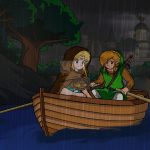
To be fair and honest, I do, in a sense, like A Link to the Past. It is a Zelda game, so therefore I love it. I have a love for every game in the series, even Tri Force Heroes (even if it’s similar to the compulsive love a parent has for a child that constantly disappoints them.) But every time I think about my absolute favorite Zelda games, A Link to the Past never reaches close to the top of my list.
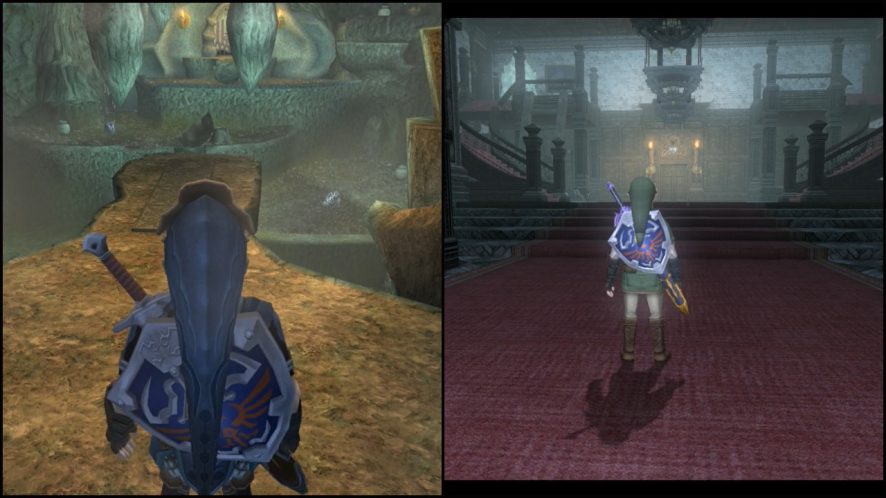
Why? I’m not a “3D games only” kind of guy. I adore Link’s Awakening, and I, even though it might not make sense to some, greatly enjoy A Link Between Worlds. I’ve also played A Link to the Past multiple times. In my youth, I played this game at least three times. But now, whenever I start to play A Link to the Past or think about playing it, my mind goes to the same thought: “That game kind of goes on for too long though.” My second and third favorite Zelda games are Twilight Princess and Breath of the Wild, which invalidates my own argument. What are the hidden details in A Link to the Past that turn me off from the game?
I definitely can’t say I adore this game, but I do respect what it’s done for the franchise.
Well, I needed to know the answer to my burning question, and I would like to stop being a social pariah within the Zelda community, so I made the “difficult” sacrifice, and I played a video game. That’s right, I played A Link to the Past again, and this time I kept watch and made sure to take note of any moments when the game started to lose me. Was this the magic playthrough that made me fall in love with this classic masterpiece? Or was my indifference only fortified? Time to find out.
The setup and the “payoff”
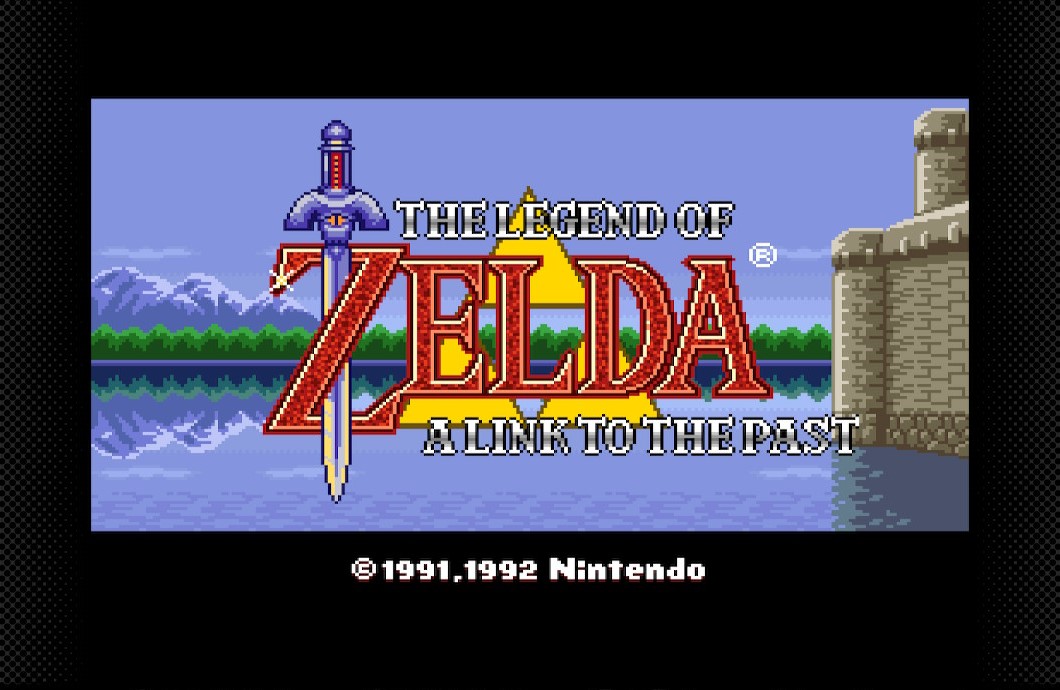
When I first booted the game up, I was treated to a beautiful scene of the three pieces of the Triforce coming together and filling the screen with their radiant, 16-bit glory. The game’s title card appeared soon after, along with the legendary Master Sword to complete the picture. I dug into the start button with my thumb once I was sure I had a good screenshot of the intro screen for this article. I’d seen it all before, I didn’t need to soak it in.
The title introduction was great — when I saw it the first time. The second, third, and fortieth time though, I’m in full acceptance that the allure is spent. I love cutscenes and title introductions, but I will never consider an unskippable scene anything other than a taboo. It’s a minor issue when weighed against the entire game, but the point is that it’s a rocky start for every subsequent time I turn the game on.
Next came the actual start of the game. It’s a good one, that much is undeniable even now. The stormy weather, the tense music, the uncle who might as well be wearing the red shirt of a Star Trek ensign, and the plea for help from a trapped Princess Zelda drew my attention. I made for the castle right away, because I knew I wouldn’t be allowed to do anything else.
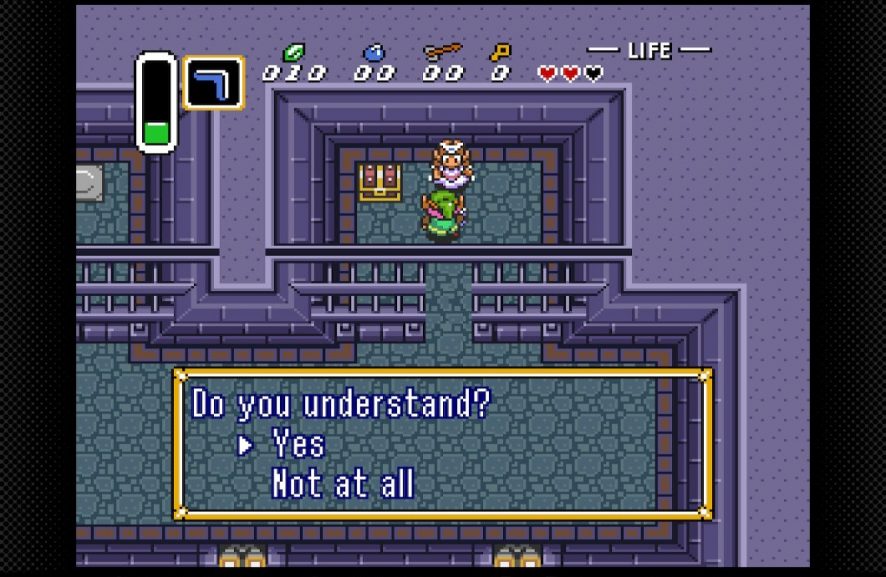
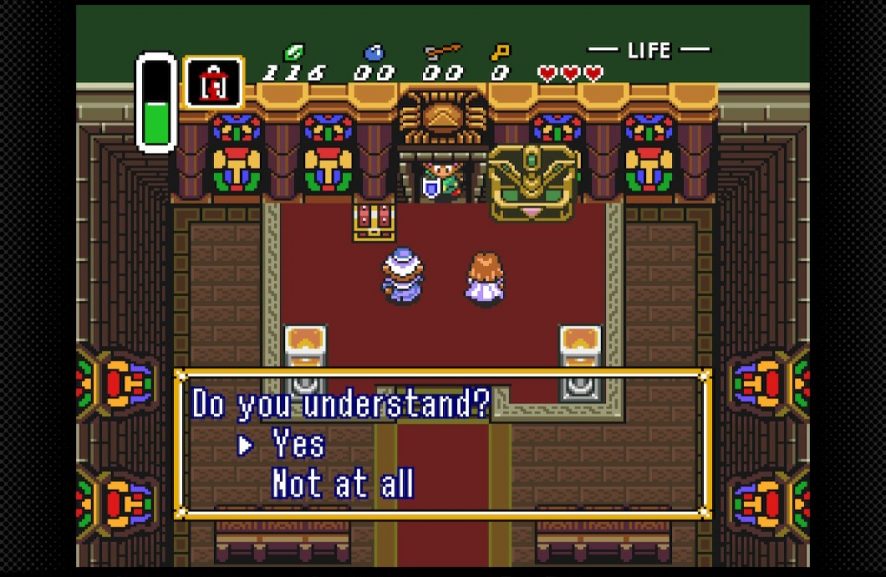
In the first few minutes, I had heard from Zelda, Link’s uncle, a castle guard, the uncle again, then Zelda again. I remember this sequence clearly because I distinctly remember feverously trying to skip the dialogue after making the decision to talk to each of them. This is when I began to understand what was one of my biggest issues with the game.
I hate to say, but I hated to read it.
Reading the dialogue in a Zelda game became fun in The Wind Waker. Before that, it was a game of “find the clever in the yammer.” I understand that game design was different back before The Wind Waker, that technical limitations and other valid factors played a part in the text boxes from hell, but there’s a reason that all of my favorite classic games are platformers. Sifting through dialogue that tries to tell so much with so little space tests my endurance. It’s like scrolling through a social feed without the added fun of knowing that the people whose posts you are reading are just as annoyed as you.
At least it wasn’t truly overbearing. The game could have dumped all of the exposition on me before I escaped Hyrule Castle. The story’s pacing was great, but the delivery made it hard to absorb. Plus, it actually irritated my eyes to read white text that was layered directly over the game’s visuals. That was not the best presentation style to go with.
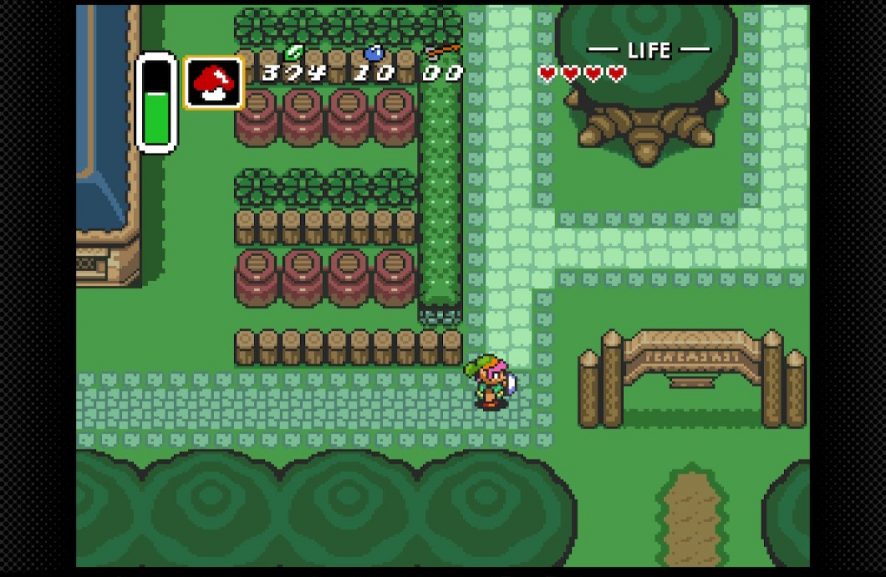
After those first moments in the castle, the game finally let me free into the world. It gave me my instructions and a truly invaluable map with convenient sparkly markers that let me know where old people were (or something like that). The start was drudgery. Not JRPG-levels of drudgery, but drudgery still.
And no one can say 2D games can’t develop these type of characters and attachments, because Link’s Awakening has Marin.
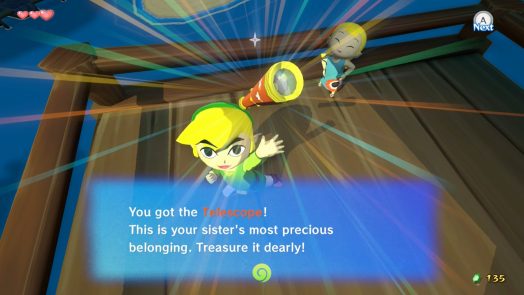
Compare this introduction sequence to a game like The Wind Waker. From starting the game with a sleepy and comical protagonist to ending with a bittersweet departure from a homeland in search of a beloved sister, the game’s beginning makes it almost impossible for the player to not feel invested. Aryll handed Link her cherished Telescope and then posed triumphantly alongside her brother when he lifted it up in celebration. Her smile revealed how happy she was that her brother was happy. Before I had made it ten minutes into The Wind Waker, I was ready to die for my new, beloved sister. In A Link to the Past, I acknowledged that Zelda had been kidnapped because the plot demanded a crisis to solve. The hook just wasn’t there.
A world filled with promises
With the introductions out of the way, it was time to explore. I knew where I needed to go next, but I knew I could take the long way. I could waste some time and wander the big, beautiful kingdom of Hyrule.
It was beautiful, but once I delved into exploration, I realized it wasn’t holding on to that first descriptor, “big,” very well.
From the Sanctuary, the place where the introduction concludes and the game spits you out into Hyrule for your grand adventure, I took a right turn. The map said to go left, but as the saying goes, all roads led to sparkly dots. I wanted to look around the place. Hyrule is always loaded with secrets to uncover. I couldn’t remember the game’s secrets too well, but I thought I might spot some along the way and get them earlier than the story intended.
♪I’ve been everywhere, man♪
I circled around the main portion of Hyrule. I did so in a matter of a few minutes. I knew Death Mountain was to the northeast of me, someplace with rocks was to the right of me, the Lost Woods was to the northwest of me, a mostly empty lake and swamp area were to the southeast of me, and an even more empty desert was further to the southeast of me. By the time I scurried into Kakariko Village from the south, I had seen a lot, and I was only excited to explore two of the aforementioned areas, those being Death Mountain and the Lost Woods. The rest would be mandatory visits, and, unfortunately, my memory for the game’s locations was great. I remembered how less intricate they were. Having mentally mapped it out, Hyrule was far from imposing.
We all know how Nintendo got around this. They did a copy and paste on a grand scale and created the Dark World. I admit that decision made the game’s surface area the perfect size, but it was still just a bizarro world of the already-seen Hyrule. Yes, all of the locations are given different geographic themes, but they are still relatively the same layout. Turning a desert into a swamp, but keeping the same borders and dimensions, makes it feel like a color swap with some extra flourish thrown in.
The Dark World is a cool twist for the story, but it doesn’t hold much depth once you explore enough of it.
I’d like to cite another Zelda game as a comparison of how alternate worlds should be done, but we are nearly 35 years into the franchise and Nintendo still sticks with the “let’s just do a palette swap” approach for creating alternate worlds when trying to increase a game’s size. It’s not my favorite method in general, but A Link to the Past was the least inspired iteration. (I call it “least inspired,” but I wanted to use “laziest.” You’re welcome for only using it in parentheses.)
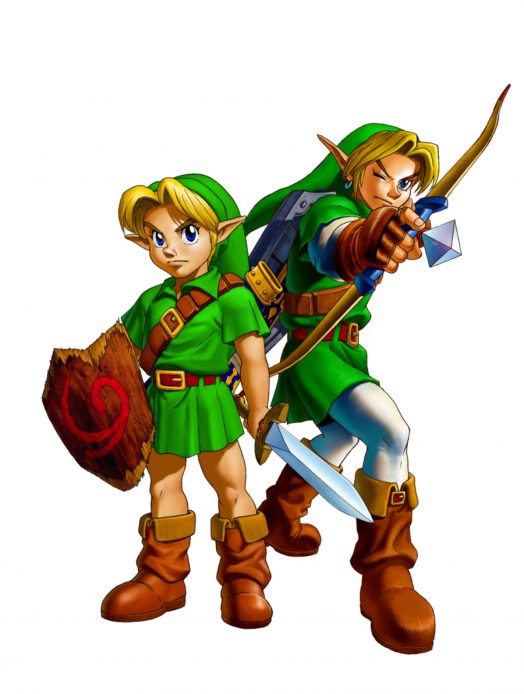
For a “more creative” example, look to Ocarina of Time. The alternate world is nothing but the same world in the future, but the shift from child to adult Link makes the changes in gameplay, setting, and difficulty more dynamic and intriguing. Adult Link can do things child Link can’t. They can both use items that the other version can’t. They can reach locations that the other version can’t. It’s two separate halves of the game that need to work in tandem and independently to create a whole. In A Link to the Past, the Dark World is just a subtle rearranging of Hyrule with a bit of added difficulty. The alternate world fails to offer a truly different experience, which makes the entire map feel like the game’s attempt to stall until it reaches some desired length.
The dungeons feel like prisons
If I were to lay the majority of my indifference to A Link to the Past at the feet of one element, it would be the game’s dungeons. Just now, as I was writing this, I could feel the anger of many A Link to the Past fans emanating from the future. I’ll accept that disapproval. I’m still going to bash the dungeons, but I’ll do so while knowing that I’m going to tick off a lot of people in the process.
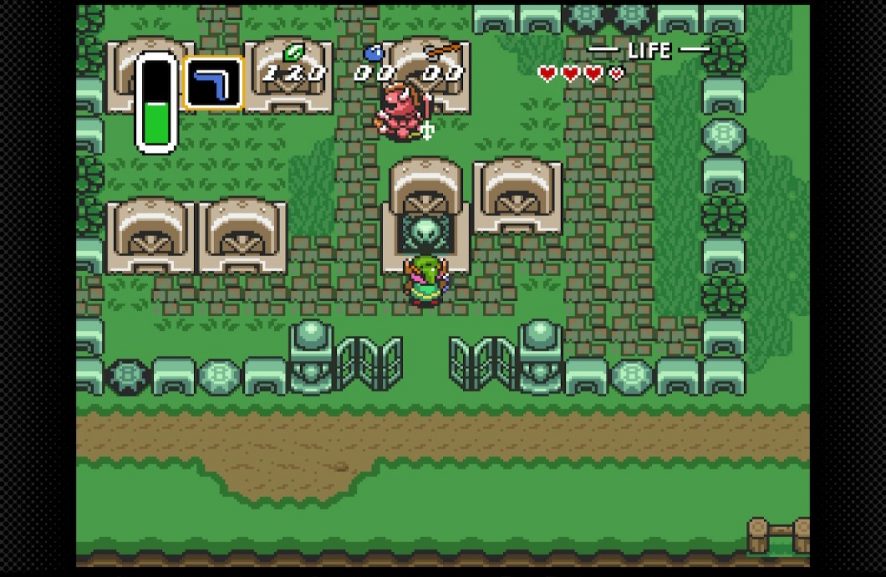
I just played A Link to the Past. There are 13 dungeons in the game. I can distinctly remember three of them. “Distinctly” is the operative word. Most of the dungeons in A Link to the Past blend together, especially once I make it to the Dark World where there’s dungeon after dungeon to explore. They repeat the same patterns, which, at their technical core are solid and are the basis for most of the dungeons in almost every subsequent game in the series, but for goodness’ sake, it can get old if it’s turned into a gauntlet. The game’s visuals make it even more difficult. They can change the tiles and sprites all they want, and they add the unique gimmicks to match whatever item is found in a particular dungeon, but each new dungeon behaved as if I found the next segment of one, large dungeon.
On top of those problems, I couldn’t even force myself to like the dungeon soundtracks. The reason for that is simple: The music options are either the first dungeon theme or the second one. I don’t think I need to add any more to this.
“Boing!” indeed.
The exceptions to my distaste were the Swamp Palace, the Thieves’ Town, and the Ice Palace. The Swamp Palace was interesting and my favorite dungeon in the game because of its design. Progression and pacing felt smoother and faster than the other dungeons. The Hookshot, which is the weapon found in the dungeon, seemed to help this apparent design philosophy. I kept moving and was forced to figure things out quickly, following an underlying tempo. I didn’t notice this in the other dungeons. Most others had the design flow of “check every square inch and bomb everything until something happens.” I could see where the dungeon designers clearly wanted me to go from A to B to C, and so on.
The Thieves’ Town was unique because of its boss and narrative elements. There was a “get in and get it done” approach to the game’s other dungeons. In the hideout, there was an actual plot twist. The maiden was no maiden at all, and the boss was an actual character who showed some intelligence. The dungeon was refreshing for those inclusions alone.
The Ice Palace was memorable because ice physics are always memorable because ice physics are always annoying. That is all.
In contrast to the shortcomings of the dungeons, look to Twilight Princess for good, unique, and memorable labyrinths. Each dungeon has a build-up to the moment when you first enter their deadly grounds. There’s also almost always some narrative element or characterization, whether that’s the Gorons’ lamented need to imprison their patriarch, a couple of yetis in love, or Zant popping in to ruin Link’s day.
OK, I admit comparing a SNES game to Twilight Princess is a bit unfair, but later 2D games managed to include the much-needed thematic diversity.
They all also have wildly different designs. You will never have trouble remembering if a section of a dungeon happened in the Lakebed Temple or in the Temple of Time. They are all too distinct for something like that to happen. Unless your memory is truly awful. Though, it’s not really fair to ask any game to help you with that. Take some B12 vitamins or something.
Those wildly different designs also bring about wildly different gameplay. The basic stuff — the finding of keys and the beating of bosses — keep to familiar beats, but your thought process must change with each dungeon. It’s refreshing, both in the sense of being novel and helping to avoid fatigue from exploring numerous dungeons. I’m sure that anger I mentioned has died down only for the people who have already have stopped reading, but I can’t exactly pander to anyone at this point. I’m in it this far, and as with the dungeons in A Link to the Past, I need to do my job, keep going, and get this over with.
A Link to the Nitpicks
There’s a chance I’ve made my way onto a few blacklists by now, so I need to wrap this up. I don’t have much else I need to discuss, but I can’t end this without granting some special attention to the smaller issues that bothered me, but weren’t significant enough to examine. So, because no one anywhere ever asked for them, these are the small nitpicks that added up during my time with A Link to the Past, presented to you via glorious bullet point.
The screen’s transitioning from one area to the next actually gave me motion sickness.
The first shield was hand-crafted disappointment.
Sahasrahla. What drunk or sleep-deprived designer came up with this name?
The game spoiled that I eventually get a Bow.
The dungeon music is lame. I pointed this out earlier. It needed to be mentioned again.
Often, I would think I was at the same height as an enemy, then I’d learn that wasn’t the case when the enemy could hit me while I couldn’t hit them.
Enemy density changes in random locations. Want to explore? Better deal with this random pack of foes that will keep pestering you until you deal with them.
The sword doesn’t reach as far as I thought it would. The number of enemies I missed was staggering.
The hit detection on the desert cacti was evil programming done by an evil programmer.
Swimming. It sucks.
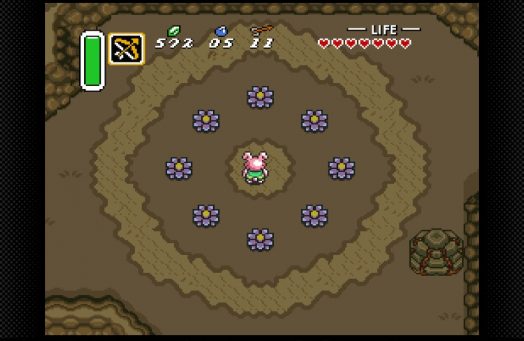
Link’s hair is pink.
Someone came up with the name when their cat ran across their keyboard. I cannot be convinced of any other reason.
Now, are any of these good enough reasons to hate the game? No, not remotely. But, can those of you who love the game see how these gripes could make someone put the game lower on their list of favorites? Maybe you can’t, but I can relate to and accept that. Even under pain of death, no one will ever get me to say anything bad about Phantom Hourglass or the Temple of the Ocean King.
The verdict
I think I’ve done enough to make myself an outcast in the Zelda community. I still appreciate A Link to the Past for what it is and what it did for the franchise, but, looking back at my recent experience with it, I simply can’t force myself to adore it to the level that many people do.
Some people can play this game multiple times in one year, but this was my first time with it in nearly ten years, and now I’m good to go for a while. You all can love the game to your heart’s content, that has nothing to do with me. To each their own, but the fact remains that no game is without flaw, and certain flaws bother people more than others.
Zac Pricener
Zac Pricener has been an avid Zelda fan for twenty years. The series has been a source of creative inspiration for him and fueled his desire to become a writer. That desire to write in turn led him to now serve as the Features Manager, Assistant Columns Manager, and Assistant News Manger for Zelda Universe.


 by Zac Pricener on December 14, 2020