Tales of Amnesia: Ilia and Ciela
 by Connor Schultz on August 24, 2020
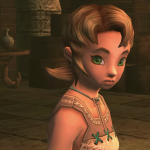
The Legend of Zelda: Twilight Princess is a fantastic game. The realistic design, its dark storytelling, and dramatic gameplay make for an exciting adventure. It also introduced a wide assortment of characters that make a unique impact on the series. An entire anthology could be made discussing what each character was meant to do and how their actual designs were either ruggedly accurate or simply terrifying. But one character, in particular, has been very divisive in the Zelda community: the mayor’s daughter, Ilia.

While there have always been hints, Twilight Princess was the first Zelda game where a romantic interest for our main character was directly implied. That alone was enough to draw the attention of the Zelda fandom, but more prominent was the game’s handling of Ilia’s arc: her lost memory and Link’s efforts to bring those memories back. The interactions at the end of this story are certainly sweet, but the arc as a whole always seemed lackluster; completely deadened by the fact that the “Ilia” that you were interacting with was very much a shell of what she could have been had her memories remained at least somewhat intact.

Coincidentally, while Twilight Princess was being developed and released, another game was in the works for the Zelda series; this one to be released on the Nintendo DS. Phantom Hourglass has often been viewed as a much lesser game when compared to the Zelda mythos, and at the time of this writing is among the least favorite among fans. But despite its criticized gameplay and level design, the character and story of the fairy companion, Ciela, is one of the things it gets right, coincidentally dealing with the same amnesia story as Ilia.
Meeting Ilia
Character bonding is dependent on the interactions we have with them. Whether we find them endearing, compelling, terrible, or just forgettable is all based on how our character interacts with them, and how the NPC reacts to us. The more we see of them, the more of an impact they tend to have, and the more we understand them.
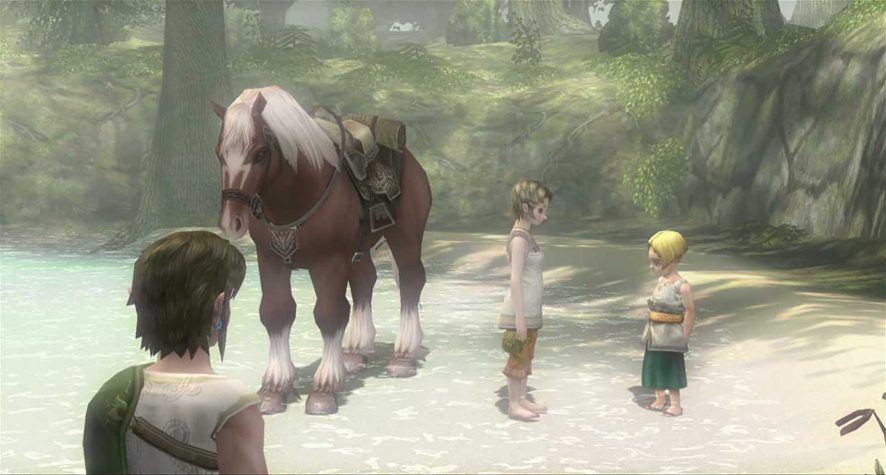
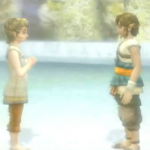
In the early goings of Twilight Princess, we meet Ilia and get a decent look into her personality. She’s caring, has affections for Link and Epona (you can argue which one she feels stronger about), and can be a bit bossy when her emotions overflow. That’s a decent enough base to start a character on, but really that’s all we know about her. Despite spending several days in Ordon, the extent to which we really get to interact with Ilia amounts to about a dozen or so lines.
And what do we get from those lines? She washes Epona, asks you to use grass to call Epona, is upset that Link pushed Epona too hard, and wants Link to come home safe. As you can see, the focus is almost solely on Epona. The story is never focused on Ilia, so we never get an accurate picture of who she is, which lessens her emotional impact on us as the player. We can see in later cutscenes that Link is very concerned for Ilia, but we as players don’t necessarily feel the same. To be fair, the series has done a lot more with a lot less, but it’s hard for the player to gain anywhere near the same level of affection for Ilia that Link has for her.
The story is never focused on Ilia, so we never get an accurate picture of who she is.
Ciela’s Personality
Compare Ilia’s introduction to Ciela’s. Shortly after the opening of Phantom Hourglass, we are awakened by the calls of this little Fairy who will become our main partner in this game. Although we spend the entire game with her, within the first few lines we have a clear idea of who Ciela is and what she is like. Her energy and near naive enthusiasm practically leaps off the screen as she talks with concern and earnestness as you unfold your story.
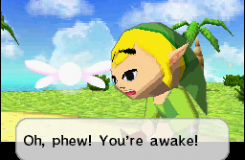
While she talks about the circumstances around her, her words and interactions aren’t dictated by them. Instead of just using Ciela as a mechanism for tutorials (Something that Navi, and to a smaller extent, Ilia are), you instead have a full character that has her own motivations and personality, something that is on full display with every character she interacts with, especially Link. And because we spend so much time with her, our attachment to her is exponentially higher than it is with Ilia.
Where’s the story?
Even more than the amount of interaction is the consistency within those interactions. Before Ilia is kidnapped she was (we believe) a caring, but mildly forceful person. When we first see her again, we think she is being her caring self as she looks after an injured Prince Ralis. But when we actually talk with her, she is, to be blunt, a blank slate. Her amnesia completely strips away not only her memories but her personality as well, leaving her a shell of her former self. A certain level of reservation and perhaps confusion at losing all your memories is understandable, but what little we had seen in the beginning has all but vanished, essentially leaving us with a brand new character to meet.
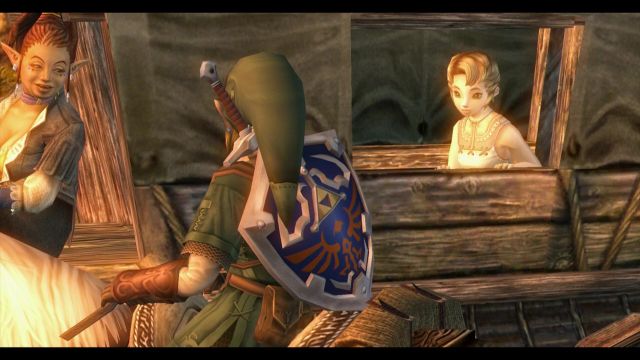
Even worse is now that we have a new character, we see even less of her. After escorting her wagon to Kakariko, we get next to zero dialogue from her until it is time to restore her memory. Even when we do, the emphasis isn’t so much on her as it is on the clues that will take you to the next temple. Instead of having a developing narrative like Midna or even Colin, Ilia becomes nothing more to a means to an end in her own story. It feels good to provide that relief for her, but since we had nothing to work with in the first place, the amount of emotional impact in her story is almost zero.
Ciela’s Adventure
Compare that with Ciela, who already lost her memory before we ever met her but is brimming with personality. From her first sentence, she is already bursting with energy, and the impending dangers do absolutely nothing to dampen her spirits. As we progress through the game, we see her develop and grow in two significant steps as she regains her memories and abilities as the Spirit of Courage. Two of the major points of the game — tracking the Ghost Ship and fighting Bellum — are only made possible because she is there. Since they are directly caused by Ciela, she becomes an active participant in events rather than being a coincidental spectator.
But despite receiving more of her former power, Ciela remains the same at her core. She is still brave, is eager to help, and loves teasing Linebeck for his cowardice. There’s a consistency that provides an anchor for the game. We don’t have to meet a “new” Ciela, because she’s always been there. Losing her memories obviously didn’t change who she was and regaining them doesn’t make any drastic changes either. She is the same character that has been with us the entire time, which makes regaining her memories more akin to personal growth, something we always appreciate in our companions.
No matter what, Ciela is always Ciela. It gives her a consistency that helps endear us to her and to her story.
In the end, the conclusions for both are almost inevitable. Both Ciela and Ilia regain their memories, as we were sure they would. The impact, however, is drastically different. Ilia, left without a story of her own, is all but forgotten as she stands at the edge of Ordon village, waiting for Link to return. Meanwhile, Ciela is vital to the defeat of a dark beast, fighting tooth and nail to aid the hero in his quest. All of this leading to a bittersweet conclusion. We remember Ilia for her lackluster showing, yet in our mockery of the girl who forgot, we forget that just next door, is a fairy who remembered, and should be remembered for telling the story right.