People are undeniably influenced by the past, whether it’s their society’s history or their personal experiences. It’s a vital aspect of anyone’s psychological development, and any good work of fiction will find a way to reflect this fact of life. We seek to see ourselves and each other in stories as a means of connection. For a good example of this reflection, look to The Legend of Zelda: The Wind Waker. Actually, it’s more than an example. The legends, lineages, and motivations weaved throughout the game’s narrative are amazing core elements of what makes The Wind Waker such a masterpiece.
Much of the narrative in The Wind Waker focused on the actions of characters and how they were influenced by history and tradition. The specific actions depended on if a character was fixated, reverent, or indifferent to the past.
Fixation, reverence, and indifference: These are the three views on history that shaped the majority of The Wind Waker’s narrative and helped establish most characters’ motivations. The primary motivations were love, fear, anger, and obsession, and these were generated by the importance that an individual character placed on history. These motivations also changed as characters developed and the past’s influence over them altered.
Link, Zelda, King Hyrule, and Ganondorf all served as prime examples of the common views on history, and all of them showed how great good or great evil can arise from the way the past, present, and future are perceived.
The first view I want to explore is the total fixation on the past. It’s a dark secret everyone can relate to, and in The Wind Waker it serves as the heartbeat of the villain’s desires.
The hatred that never perishes
Ganondorf. He was a man capable of committing heinous acts with unnerving cruelty. His power was almost absolute, and his cunning gave him every opportunity to obtain what he wanted. But his weakness and his ultimate downfall came from his inability to deal with loss and let go.
“I coveted that wind, I suppose.” When Ganondorf spoke to Link, his attitude — that of an arrogant visionary who felt he must educate the urchins who would not accept his right to rule — broke for a single moment, and his own, petty motivations were exposed. With those words, the King of Evil admitted his folly to Link, but his pride and ego would not allow him to move on. He would go to any extreme or make any sacrifice to regain what he had and what he believed he was owed, even if that meant destroying the world for the sake of ruling it.
Ganondorf had bound himself to his own hatred and anger. The sting of his jealousy and the bitterness of his failure to defeat the Hero of Time had taught him patience and humility, but they would also not allow him to forget. At the end of Ocarina of Time, Ganondorf’s thoughts dwelled on revenge, on returning to finish what he started. He knew he could do it — he had the Triforce of Power, after all, so it was only going to be a matter of time before he figured out how to escape his prison. And time was no threat to him. Ganondorf need not fear it as long as he had the Golden Power. All he had to do was accept that he was vulnerable and plan countermeasures. While he plotted, and as his strength grew and his return became imminent, Ganondorf never forgot his desire to have Hyrule, and its soothing winds, all to himself.
Ganondorf did eventually return, and he returned with a level of retribution no one could have prepared for. The King of Evil had no limits, and when the people of Hyrule expected the hero to return, they were met with the horrifying realization that he was not going to save them this time. One can only imagine the sense of validation Ganondorf must have felt when he realized he could storm through the kingdom unopposed.
His desires burned too hot though, and his fury led to drastic actions taken by the goddesses — actions he could have saved himself from had he relented even a little. With no hero to save the people, the goddesses offered only one means of salvation: They saved those who they chose to eventually rebuild the kingdom and then proceeded to sink Hyrule at the bottom of a newly created sea. Ganondorf was crushed beneath the waves along with his prize. He was defeated for the time being, but he was not destroyed, and there was never a chance of him accepting this latest prison as his final fate.
An evil tide rises
The flood was a setback, but that was the problem — it was only a setback. Ganondorf had defied death numerous times, he had taken the full fury of the Blade of Evil’s Bane, and he had survived his torment at the hands of the sages and the hero. What could a little water hope to do to keep him from Hyrule?
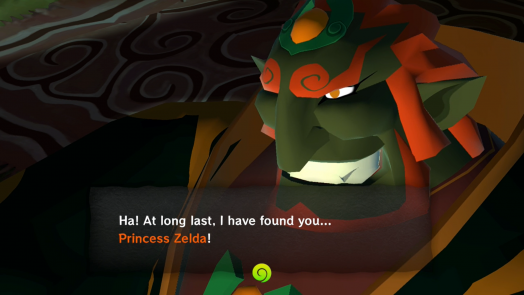
He had found Zelda. Victory was now in sight, and he would not be denied again.
The land had been sealed, but it was still there, waiting patiently beneath the waves. As long as it remained, it could be restored. Ganondorf needed only to find the two descendants of his mortal enemies and claim their pieces of the Triforce. The goddesses would never allow their people or the kingdom to be fully destroyed. Ganondorf knew this, and he also knew that the goddesses had left a way for the people to salvage the kingdom, a gift he thought they were unworthy to have, and he planned to use this gift to return to his former glory.
Once he found his way to the surface, Ganondorf immediately continued his quest to revive and then conquer Hyrule. All it took was some planning and a little patience. He needed to find the new wielders of the Triforce, those who carried the destinies of the hero and princess who had bested him before. And, eventually, he did. Whether it was the way he intended or not, Link and Zelda revealed themselves to him. Confronting both of them after searching for so long and having them at his mercy (at least for a time) was more than enough to fuel his obsession. To Ganondorf, the end was in sight, and the last step was simply to deal with a couple of bothersome children.
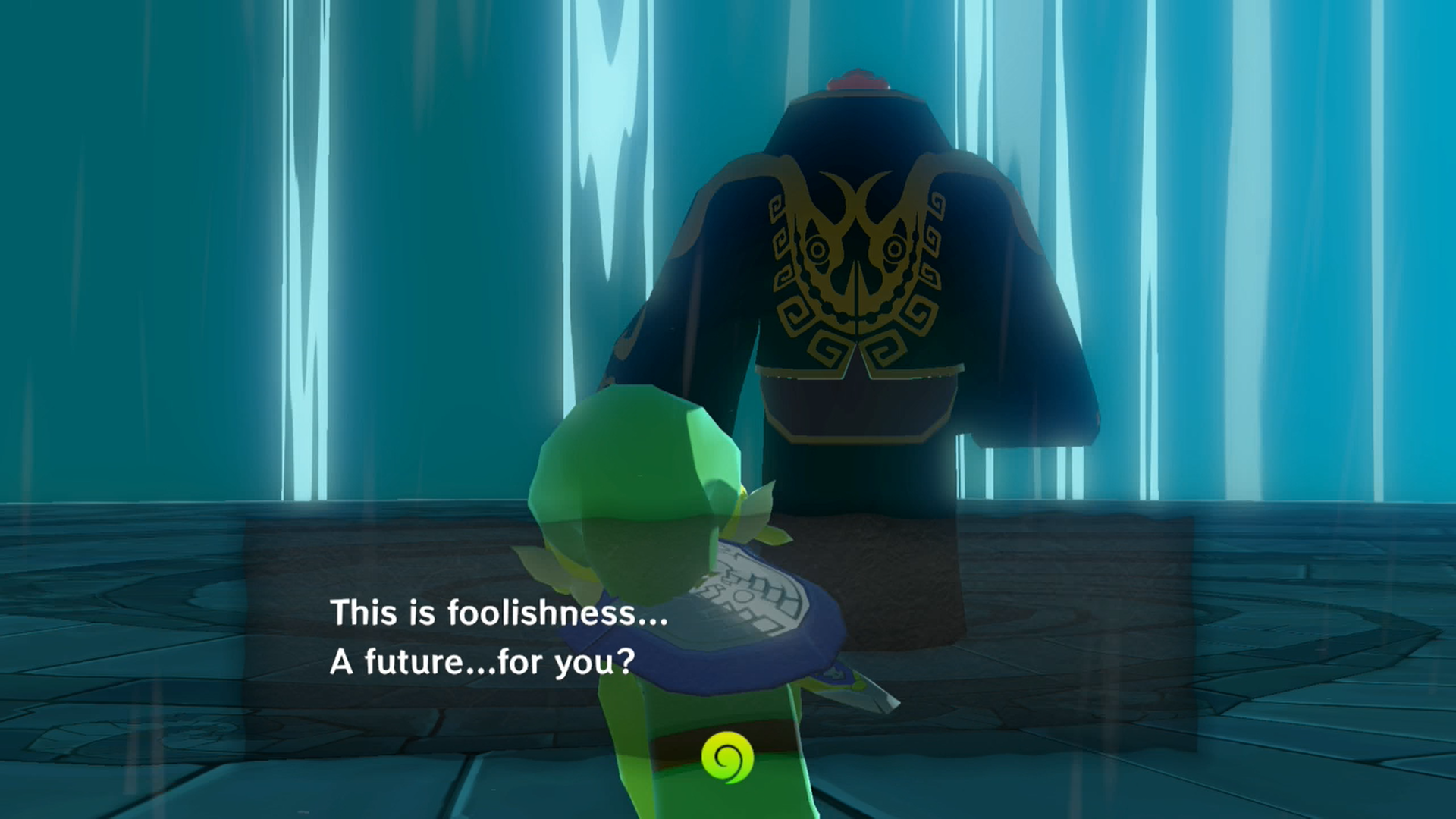
This unyielding obsession was why Ganondorf finally broke down after King Hyrule made his wish on the Triforce to wash away the old kingdom. All Ganondorf had was his goal to revive the past, and now that was impossible. He was broken, but not dead, and if he couldn’t return to the past he coveted, then he would rob Link and Zelda of their future. At least, he would try.
History (defeat) repeats itself
In the end, Ganondorf chose to embrace death rather than a future he could not control.
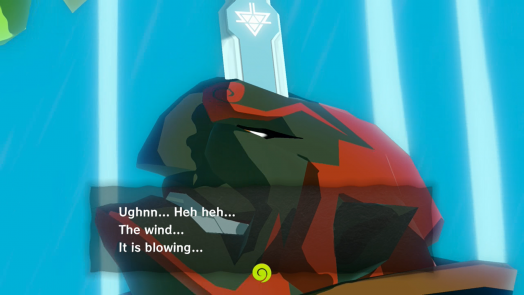
In his final moments, Ganondorf still fixed his thoughts on his memories: “The wind … It is blowing …” He was done. Death was taking hold, though he still attempted to rebuke the future. But now it didn’t matter how badly he wanted to avoid it. The future hope that King Hyrule had wished for had come, and it buried the past and the old kingdom in much the same way that Link buried the Master Sword into Ganondorf’s skull: grimly, suddenly, and permanently.
By his own choice, Ganondorf’s life and death were bound to what had been rather than could have been. Zelda said it best when the Hero of Time defeated him in Ocarina of Time: He was indeed a “pitiful man.”
Ganondorf was the extreme case of holding onto the past, but he served the point of showing what kind of damage that self-destructive desire can do. What’s truly concerning is that this stubbornness is present in everyone, and the next character I’m going to discuss showed exactly how difficult things can become for even the noblest people when their instinct is to cling to an old way of life.
Zac Pricener
Zac Pricener has been an avid Zelda fan for twenty years. The series has been a source of creative inspiration for him and fueled his desire to become a writer. That desire to write in turn led him to now serve as the Features Manager, Assistant Columns Manager, and Assistant News Manger for Zelda Universe.


 by Zac Pricener on February 4, 2020