The narrative elements that build every captivating story in the Zelda series are the finer details that help each game reach its full potential. Inner conflicts, personal growths, politics, and the reliable dichotomy between good and evil are used to full effect in most of the games. The same goes for other themes, of which there are simply too many to list.
But of all the common tropes that weave their ways into most stories, there’s one that has not always been as prominent in Zelda games. This is also odd, because it’s often portrayed as an essential driving force for the characters.
This theme is family.
An Accidental Trend That’s Yet to Fade
All of us are certainly familiar with the character relationships that spring up during Link’s quests, and we adore and attach ourselves to the ones that tug at our hearts. But as much as we appreciate them, it’s odd to see how they are rarely ever the focus, at least in the majority of the games. And they were without question unimportant at the start of the series. Luckily, that trend has changed in the more recent games. It’s finally reached the point where families and relationships are almost the most crucial and defining aspects of each major story.
This downplaying of family’s significance does, unfortunately, find its roots in the early games. The first two games for the NES, the one for the SNES, and the one for the Game Boy didn’t do much to grow narrative depth for, honestly, any aspect of the series. The games weren’t focused on it. What they were doing was laying the technical groundwork for all games that followed them. For that, we can partially excuse them. That said, those first four games accidentally set a tone for the series that has is only now beginning to fade away.
The Unassuming and Underwhelming Start
The first noticeable use of family in a Zelda game came in A Link to the Past. It did so at four different points, and, unfortunately and in regard to the entire scope of the game, they had no real impact.
The Tragedy of Death, But not Loss
One of the first characters we meet in the game is Link’s Uncle. He was never given an actual name. A knight once upon a time, Link’s Uncle hears Zelda’s call for help and dares to save her on his own. It’s clear from the start that Link has some attachment to his uncle. He follows the older hero to Hyrule Castle out of a desire to help him, but we don’t see much else of their relationship beyond that. That’s because the uncle’s life comes to a tragic end moments after he tries to enter the castle.
Link catches up to his uncle, who is lying half-dead in the castle’s sewer system. It is here that Link hears his uncle’s final words. It’s a sad scene — but then it’s over. The game doesn’t give us enough time to care about their relationship. It is a simple plot device to convey the danger you as the player are about to endure.
“Unnh… Link, I didn’t want you involved in this… I told you not to leave the house… Take my sword and shield and listen. You can focus power in the blade. …Then release it using the secret technique handed down by our people… Link, you can do it! Save the Princess…”
Link’s Uncle (A Link to the Past)
Three more similar tales come into play during the story.
The first one we witness is the death of the king of Hyrule, Zelda’s father. That one happens in the game’s introduction sequence.
The second is the death of the priest, who protected Zelda after Link rescued her. Again, his death only serves to generate drama.
The last is the Flute Boy. His death is sadder than the others, especially after talking to his father about it. But it still only orbits the central story. You also only meet the Flute Boy shortly before his death. His death is sad only because of the fact that death is sad. Had the game generated any kind of relationship between him and Link beforehand, it could be much more impactful.
All of these references to family only serve the purpose of creating tension. They do their job well, for a while. Then the game ruins it all with its epilogue. When Link defeats Ganon and makes a wish on the Triforce to restore Hyrule, the wish brings back everyone who died.
Yes, good for them and all that, but their revivals completely undo the impact of their losses. When creating a story, one of the most important aspects of families and loved ones is that the permanence of their deaths influences the characters. More importantly, it influences the audience. We can relate to the tension. You take that away, even at the end, and you remove the connection. There’s a reason no one ever cares when a character dies in Dragon Ball Z, for example.
The True but slow start
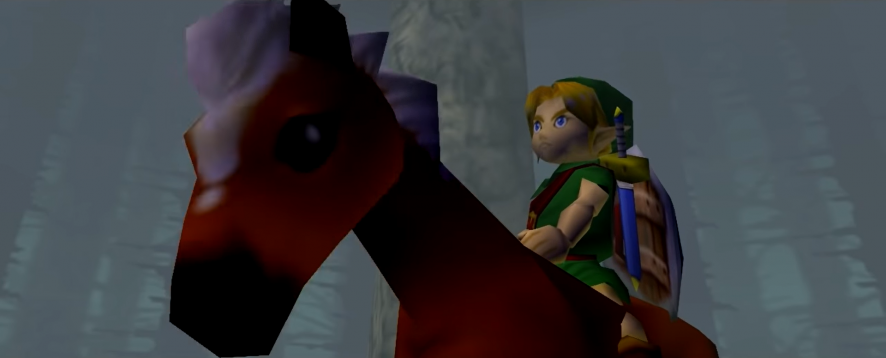
Seeing family as an important story element didn’t become relevant for Zelda until the late ‘90s. Ocarina of Time, with its heavy emphasis on story, made family more essential. Granted, it wasn’t a dramatic shift from the precedent, but it was enough to start the series down the right path.
The first showcase of family’s importance is the Great Deku Tree. He is like a father to all of the children of the Kokiri Forest. The same is true for Link. Link is secretly an outsider, but the Great Deku Tree still loves him the same as any of the Kokiri children. He can sense the child’s importance and the destiny he will fulfill.
That’s why, when the Great Deku Tree dies protecting the children and the rest of Hyrule, Link is more than willing to accept the daunting mission his father figure tasked him with. Link loved the Great Deku Tree, as did Navi, who is now to be Link’s companion during his adventure. She is also meant to be his companion for life, which is what led to the first true use of family as narrative motivation in a Zelda game.
“The future depends on thee, Link… Thou art courageous… Shouldst thou ever lose thy way, seek a vision of the path from the Sheikah Stone that stands beside thy home. Navi the fairy… Help Link to carry out my will… I entreat ye… Navi… Good…bye…”
The Great Deku Tree (Ocarina of Time)
The Grief Family Brings
Family is central to the plot in Majora’s Mask. From the game’s starting cinematic, we know that Link is traveling far and wide in search of Navi, who left him at the end of Ocarina of Time for unknown reasons. Link could not understand why she left, and he refuses to accept that his only true friend in the world is gone. She had been like a sister to him. He won’t accept this separation.
“Done with the battles he once waged across time, he embarked on a journey. A secret and personal journey… A journey in search of a beloved and invaluable friend… A friend with whom he parted ways when he finally fulfilled his heroic destiny and took his place among legends…”
Prologue (Majora’s Mask)
That obsession is ultimately what leads Link down into the insanity and intensity that is the parallel world of Termina. It is in that land, a land rife with other people dealing with losses, especially the losses of family members, that Link finds the courage to break free of his grief’s control over him.
Majora’s Mask’s story had a profound impact on the fanbase, with most players agreeing that the game’s narrative elements are some of the best ever seen in Zelda. Thanks to that reception from the fans, Nintendo now knew how beneficial it was to create relationships that people could relate to and connect with.
Having the Goal But still Forging the Trail
Family as a motivator became commonplace after Majora’s Mask, at least in the major releases. The Wind Waker and Twilight Princess both relied on the mechanic to jumpstart their stories. The issue was that the emotional connection was not always consistent. And the connection I’m referring to is the connection between the story and the player.
The crisis for both games is the same: Link’s family (literal for The Wind Waker, figurative for Twilight Princess) is abducted by the servants of the main antagonist. His peaceful life is shattered, and where most people would crumble because of such a situation, Link summons his resolve to head out on an amazing journey that will forever change him.
That’s how both games begin, and The Wind Waker got it right and Twilight Princess, to be honest, got it wrong.
Understanding Subtly and Heart
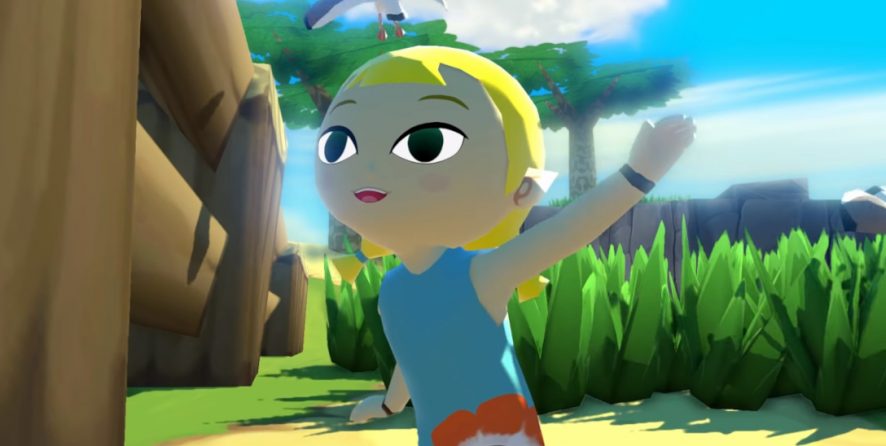
The Wind Wakergot it right because the characters involved and the structure of the story were expertly crafted. At the start of the game, we are introduced to Aryll, Link’s dear sister. She looks up to him, and he would do anything for her. Her personality and their relationship become clear to the player right away.
“I’m going to give you my most treasured belonging…but just for one day!”
Aryll (The Wind Waker)
Players also bond with Aryll right away too. The innocence of a child has a way of quickly gripping a person’s heart. That’s why, when she’s taken from Link, and we see the desperation and pain in their faces as Aryll shrinks into the distance as a monstrous bird carries her away, we feel the urge to help.
This crisis also happens at the perfect time. From first meeting Aryll to her being kidnapped, there are only about 10 or 15 minutes of gameplay. The only other major events that happen in that time are that we talk with Link’s Grandmother, Orca teaches us how to use the sword, and we meet Tetra. And none of these take much time. The game stays focused and doesn’t overload us. The important element in this moment is Aryll and Link’s relationship. Nintendo didn’t want to distract from that, and their tactic paid off.
“How have you been, Big Brother? I’m here on the pirate ship writing you this letter. Isn’t that neat?”
Aryll (The Wind Waker)
Losing Focus and Direction
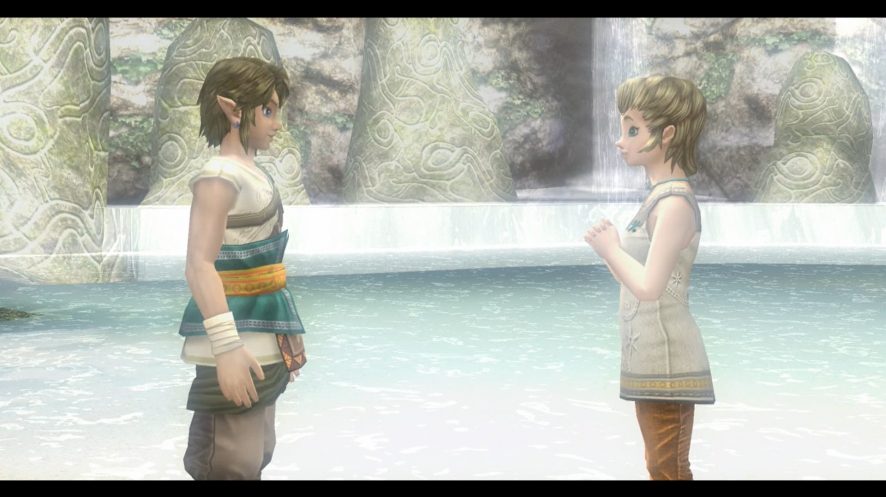
Twilight Princess, inversely, fails to create a true sense of attachment to Link and his family’s plight. This is disappointing, especially when you realize that even more characters were put in a dire situation this time. Link could barely react when monsters came and attacked him and abducted his young friends and his girlfriend, Ilia. (Yes, I said “girlfriend.” Deal with it, Ilia haters.) They mean everything to him. It is more than enough of a reason to make him summon his inner hero.
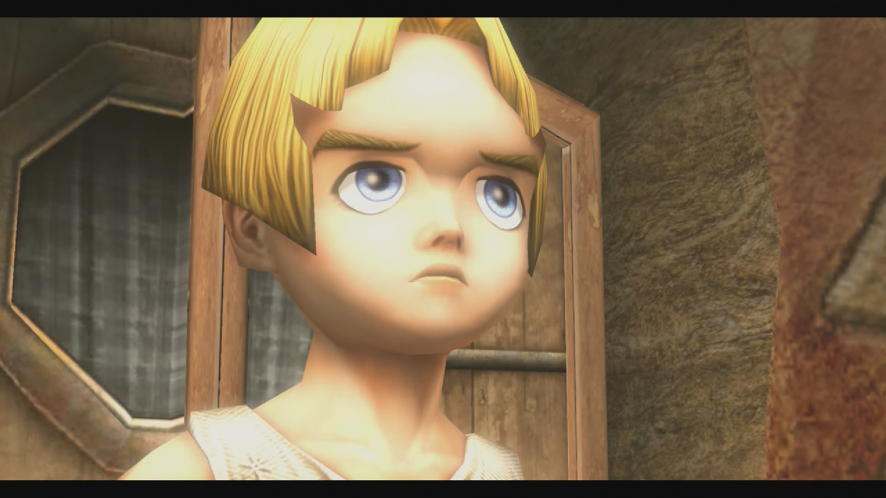
That motivation works, it gets the story started and keeps it going, but there is a problem with it. Who while playing, deep down and honestly, actually cared about the people that got kidnapped? Colin, one of the children, might be the exception, but his connection with Link, which is similar to Link and Aryll’s relationship in The Wind Waker, is unfortunately overshadowed by the inclusion of three other kids who, up to the point of the abduction, are little more than bullies and annoyances. And we do not get to see anywhere near enough of Link’s and Ilia’s relationship to feel invested in it.
“But when I grow up, I’m gonna be just like you, Link!”
Colin (Twilight Princess)
The pacing of the story was also an issue. Again, in The Wind Waker, it only takes a few minutes to get from introduction to abduction. We get hit hard and fast with the emotional attachments. And young, always-sweet kids are easier to bond with. In Twilight Princess, there are more intermediary events: goat herding, monkey harassing, Slingshot shooting, and child-and-monkey saving are some of the things you do before the game actually moves into a plot direction.
This additional content isn’t bad, so don’t confuse what I’m saying. The issue is that it clashed with the development of Link’s relationships. We get distracted, and the relationships have to share too much screen time with too many other moments. Plus, there being multiple relationships pulls our interest further away. The abduction of all four characters doesn’t transfer well from Link to the player.
“Fortunately, it looks like the injury isn’t too serious. You two can go on together. But, Link… Can you at least promise me this? No matter what happens on your journey, don’t try to do anything… out of your league. Please.”
Illia (Twilight Princess)
We could sympathize with Link, but we couldn’t empathize with him.
Quickly Finding the Right Path Again
Luckily, Nintendo was quick to correct their course with Skyward Sword. Skyward Sword, though another game with a slow start, stays focused on imprinting Link’s emotions onto the player. Before the story’s crisis, when Zelda and Link are accosted by a tornado and Zelda is lost beneath the clouds under Skyloft, one thing was clear: Link and Zelda are close. It is a type of closeness that anyone can recognize as being the start of something special.
There are other plot details we learn about the overarching story during the prologue, but what we care about is Link’s and Zelda’s relationship. They have always been tied together by destiny in every game. But now, they are coming together by choice. Everyone always loves to witness the potential creation of a new family. That’s why, when Link is faced with the horror of potentially losing that potential family, we share in his desire. We empathize with him.
Finding New Ways to Use Familial Tension
We haven’t seen family as a leading source of motivation since that game. I don’t mean to say Nintendo already ran out of ideas though. The opposite is true. They refined their storytelling skills by implementing relationships in a different yet equally compelling way in Breath of the Wild.
Breath of the Wild brings two themes to the family dynamic that no previous game had explored in depth: conflict and pressure.
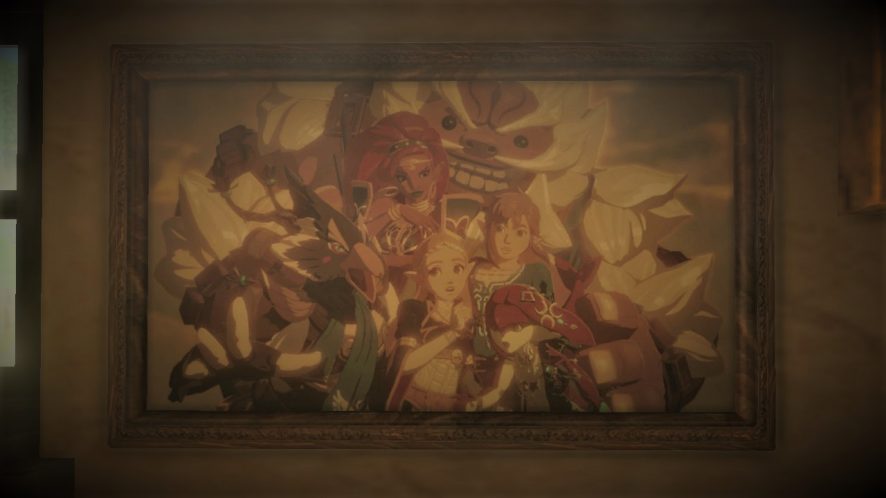
Nearly half of the key characters feel the weight of destiny on their shoulders in this game. These characters are Princess Zelda and the descendants of and successors to the four Champions. All of them spent their whole lives knowing that there were other people they need to live up to:
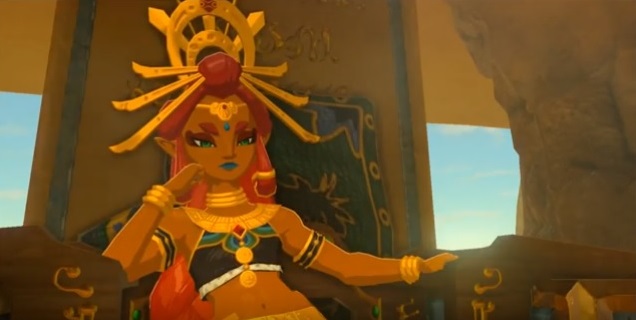
Gerudo Chief Makeela Riju
Sidon needs to carry on without his beloved sister, Mipha, and be the Zora’s iconic royalty in her place.
Yunobo must overcome his timidity to make the most of Daruk’s Protection, the power he inherited from his ancestor Daruk.
Riju, though young and inexperienced, understands that it’s her duty to inspire her people in the same way the legendary Urbosa had in the past.
Teba, despite no direct relation to great Rito champion Revali, is obsessed with being an even greater defender of his village than his predecessor.
Last, there is Princess Zelda. Despite being a modest bookworm at heart, Zelda is tireless in her mission to serve her role as the Princess of Hyrule and use the Sacred Power, which was passed from princess to princess in the royal bloodline. She also must bear the pain of measuring up to her late mother, a woman whom Zelda relied on and the people of Hyrule adored.
The Damage done by conflicts unresolved
Unfortunately for Zelda, she carries not only the theme of pressure but the theme of conflict as well. The chief supplier of drama is her constant battling with her father. The princess and the king are at odds with what Zelda should focus on. Calamity Ganon is soon to resurrect, and will stop at nothing to destroy the kingdom, their home.
Time is short, and all of Hyrule must be ready to defend against the monster and defeat it. Zelda wants to dedicate more of her time to understanding the Guardians and other ancient technology she had uncovered. She believes they would be crucial in Hyrule’s fight against the imminent return of Calamity Ganon.
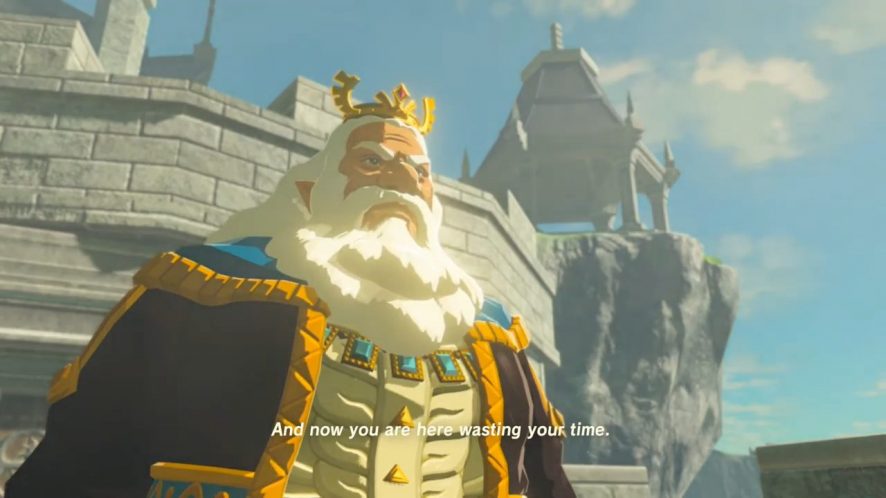
King Rhoam did not agree. He is adamant that her only priority be to unlock her powers to seal away the darkness. In fact, he is so adamant that he forbids her from continuing with her research, insisting that she spend all of her time trying to access her powers.
“Father scolded me again today. He told me I am to have nothing more to do with researching ancient technology. He insisted that I focus instead on training that will help me awaken my sealing magic. I was so frustrated and ashamed I could not even speak. I’ve been training since I was a child, and yet…
Princess Zelda (Breath of the Wild)
Though she is resentful, Zelda still complies. She knows he is right. That’s where the impact of family comes into play the most in Breath of the Wild. She doubts herself, and her family cannot, or as she might see it, won’t, help her. Her family, the people that meant the most to her, are separated from her. Her mother is separated by death, and her father is separated by their disagreement and what seems like a desire to keep her at a distance.
“Mother passed the year before my training was to begin. In losing her, I lost not just a mother, but a teacher. Mother used to smile and tell me, “Zelda, my love, all will be well in the end. You can do anything.” But she was wrong. No matter how I try or how much time passes…the sealing power that is my birthright evades me.
“Tomorrow I journey with Link to the Spring of Power to train. But this, too, will end in failure. Such is my curse.”
Princess Zelda (Breath of the Wild)
That is the saddest thing about it. The king knows how hard he is being on her, but he believes there’s nothing he can do to help. This isn’t about the both of them. This is about the entire kingdom. Despite Zelda’s clear disparity, the king needs to keep pushing her. The kingdom will fall if he doesn’t. That’s what he believes.
“My heart breaks for Zelda, but I must act as a king, not a father. I must order her to train relentlessly at the fountain.”
King Rhoam (Breath of the Wild)
The tragedy is that both parties are blind to what the truth is for how to unlock her powers. The lack of understanding leads to more tragedy, and it also leads to death. Death for her father, death for the Champions, death for countless citizens of Hyrule, and the near death of Link. And we the players can only watch as these poor people go down the wrong path the entire time.
A Crisis with Proper Consequences
What truly made this family drama powerful and impact us was that there were no magic fixes. Unlike in A Link to the Past, the king stayed dead. The Champions did too. The damage had been done, and there was no undoing it. All Zelda, Link, and everyone else could do was move forward and try to rebuild their lives while resting on their hopes for the future. It was an ending that stung slightly by reminding us of our own harsh reality.
What will the future Bring
With the importance of family constantly growing and changing in Zelda, the biggest question is what the future will bring. What can we expect to see in the next games? Nintendo appears to be interested in exploring more narrative themes and giving them more significance in the games. At least, that seems to be the direction the developers of Breath of the Wild want to continue going in the future.
Currently, we know little about the Breath of the Wild sequel. We can’t know if the game will go further into familial relationships or if the game’s premise will limit any attempts to do so. When a game goes in a new direction and doesn’t try to appeal to familiarity or nostalgia, there’s no safe way to guess what will happen.
Our only certainty is that Nintendo developers will continue following the path they’ve created for themselves. The designers and story writers will again create characters with relatable emotional situations for the sake of providing us with a point of emotional contact. They will also do so while still keeping a balance between every other story theme and essential game mechanic that gives Zelda games their unique chemistry. Each game is like a complex food recipe. It’s crucial that they get the amounts for each ingredient exactly right.
Family Will Remain a Way to Bond
Whether any of us have good experiences or bad experiences with our families and family members, their influences are undeniable. And we have the choice to make those experiences work for us or against us. People are complex, and any good story will reflect this element of humanity in its characters.
The added tension of family crises elevates Link’s role and effectiveness as an admirable hero. Inversely, the villains become more threatening, and our drive to bring them down burns hotter as the story goes on. Imprinting the emotions onto us makes it easier and more enjoyable to essentially become one with Link. That’s been his purpose since the beginning, after all. He’s the link between us and this fantastical world and its inhabitants. Any story element that supports that purpose is a worthwhile inclusion.
The Zelda series’ record for developing strong character relationships is not as good as it should be. But the status quo since the turn of the century has climbed to a more admirable peak of quality, albeit inconsistently. Nintendo has a passion for delivering the best gaming experiences. If they stick to that passion, the future will be promising for the series’ characters and stories.
Zac Pricener
Zac Pricener has been an avid Zelda fan for twenty years. The series has been a source of creative inspiration for him and fueled his desire to become a writer. That desire to write in turn led him to now serve as the Features Manager, Assistant Columns Manager, and Assistant News Manger for Zelda Universe.


 by Zac Pricener on November 25, 2021