Oh, The Legend of Zelda, how do I love thee? Let me count the ways.
Well, I could count all the ways that I love the Zelda games, but that would make for a really long listicle. And I’m not sure anyone would want that.
It’s mind-boggling to realize that Zelda is marking 35 years — a veritable eternity in video game years — in 2021. It is also mind-boggling for me to contemplate that the series entered the world only a few months after I did.
It’s a bit of a paradox. On one hand, it doesn’t feel like any time has passed at all since Zelda debuted; I think for a lot of gamers, it feels like only yesterday that we were standing in front of the Nintendo displays at the mall or the video store, trying to decide which game we wanted to bring home. But on the other hand, it feels as if there has never been a world without Link, Zelda, Ganon, Hyrule, and the Triforce in it.
We could probably debate for hours about what makes Zelda so special.
The appeal of Zelda is that at its core, it is a solid, well-crafted adventure series with gripping storylines, engaging characters, lots of places to explore, and some of the best music ever composed for video games.
Who among us hasn’t felt a thrill from starting a new save file and setting out on a new adventure: Seeing Link run to Hyrule Castle in the rain to help Zelda, get shipwrecked anew on Koholint Island, or be shouted awake by Navi? Who hasn’t had the overworld theme or “Zelda’s Lullaby” stuck in their heads for hours on end? And who hasn’t felt an overwhelming sense of triumph at finally taking out a really frustrating dungeon boss?
Zelda is also the series that finally turned me into a halfway decent console gamer. I’ve had a lifelong interest in all kinds of games, and I was a pretty avid PC gamer in middle and high school. But I’m a late bloomer when it comes to console gaming. Sure, we had an NES in the house when I was a little girl, but for many years, my involvement in console gaming involved watching other people play.
I think it was mostly due to a deep-rooted lack of confidence in my thumbs and reflexes. And we never got around to replacing the NES when it broke down. But when I finally sat down with controller in hand, Zelda quickly became my go-to series.
The Call to Adventure
When I was about eight or nine or so, a group of friends came over to my house one summer morning for some video gaming. They’d brought some of their own cartridges, and one of them was The Adventure of Link.
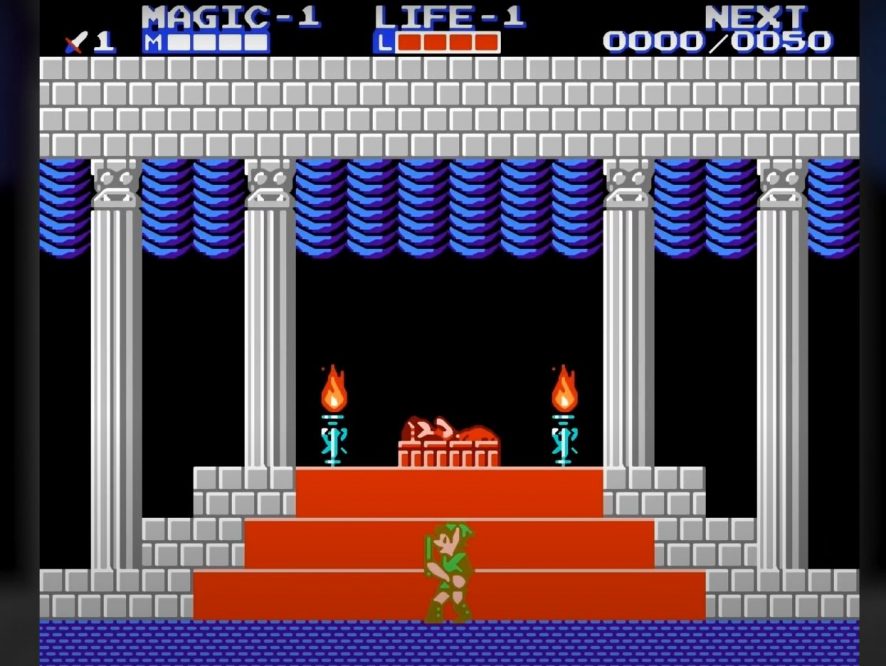
I’d certainly heard of Zelda before this moment, and the game story’s sounded kind of interesting. But from the moment the start screen came up, with the sword stuck into the cliff and the haunting intro music, I was fascinated. What was this strange world called Hyrule? What was inside that dark, scary palace? Why were there all these monsters? Why was Zelda asleep, and would she wake up?
A few months after this, however, our well-used NES finally gave up the ghost after too many playthroughs of Mario, Zelda, and California Games. As previously stated, we never got around to getting a replacement console for some reason or other.
I think, though, that the Zelda games were biding their time, waiting for me to jump in when I was ready. I remember seeing the ads for Ocarina of Time when I was about 13 years old, and thinking, “Hey, that looks cool.”
Fast forward a few years. Not too long ago, I decided that I should do something about my lingering urge to finally jump into console gaming. I’d been wondering if I should go ahead and get a Switch, but I figured I’d better start with something a little simpler, to make sure getting a Switch would be worth it. So I treated myself to an SNES Classic, which of course has A Link to the Past on it.
I must have game-overed at least a dozen times just trying to make it through the Hyrule Castle dungeon. But I remember feeling a tremendous sense of joy and satisfaction when I got Link and Zelda safely to the Sanctuary. And it was the same with each dungeon and each dungeon boss: I’m getting somewhere, I’m figuring things out, I’m getting better as a player. And it was a great cause for celebration when — again, after numerous game overs — I finally beat Ganon.
After I received a Switch as a gift from my family, Breath of the Wild was one of the first games I bought for it. When I got Breath of the Wild, I was expecting a fiendishly difficult game, but I was surprised at how quickly I got hooked on it. “What’s over there?” “What’s that object?” “How do I solve this puzzle?”
Breath of the Wild was soon followed by Cadence of Hyrule, the Link’s Awakening remake, and, most recently, Age of Calamity.
What makes a game?
In my opinion, there are five elements that are crucial for a good adventure game: a good story; engaging characters; lots of room to explore; puzzles and other lateral thinking moments; and a really good soundtrack. The Zelda games have all of these, and they come together in a way that is truly special: lightning in a bottle, as the saying goes.
The first Zelda, admittedly, is a bit bare-bones compared to all of the later entries in the series. But the seeds for what would make the series what it was were all there. It was a big open world to explore, complete with dungeons, caves, treasures to find, and monsters to fight.
Everyone loves a good adventure. Well, most people, anyway; I certainly do. I’ve always loved fantasy, science fiction, legends, mythology, and fairy tales, so it makes sense that Zelda would appeal to me. To be honest, I’ve noticed that most of the games I’ve been drawn to over the years have been adventure and RPG-type games rather than platformers.
With a beloved video game, the characters almost become like best friends to you. It’s enjoyable to start a new game and see familiar faces from elsewhere in the series, such as the Shiekah, the Gorons, the Gerudos, and the Zoras.
Link is very much the daring young hero who can survive just about anything. But I think, little by little, the games have shown that he has a vulnerable side. We saw a few hints of this with him losing his uncle in A Link to the Past, and then it became all too clear in Ocarina of Time and Majora’s Mask.
Zelda seemed to start out as your standard-issue damsel in distress in the first two games, but she’s gradually acquired more agency, starting with A Link to the Past, and has proven herself to be a very capable adventurer. Indeed, in Age of Calamity, she shows that she can do dangerous things with a Sheikah slate. But she also has her doubts and insecurities; Breath of the Wild gives us a princess who is struggling under the weight of all that her father and her kingdom expect of her.
The Zelda games aren’t strictly linear. There are certain things you must accomplish before moving on to a particular dungeon or location, but the world of the Zelda games is largely open to explore as you desire. If you’re having trouble with a particular dungeon, in most cases, you can go off and do something else while you puzzle things over for a bit.
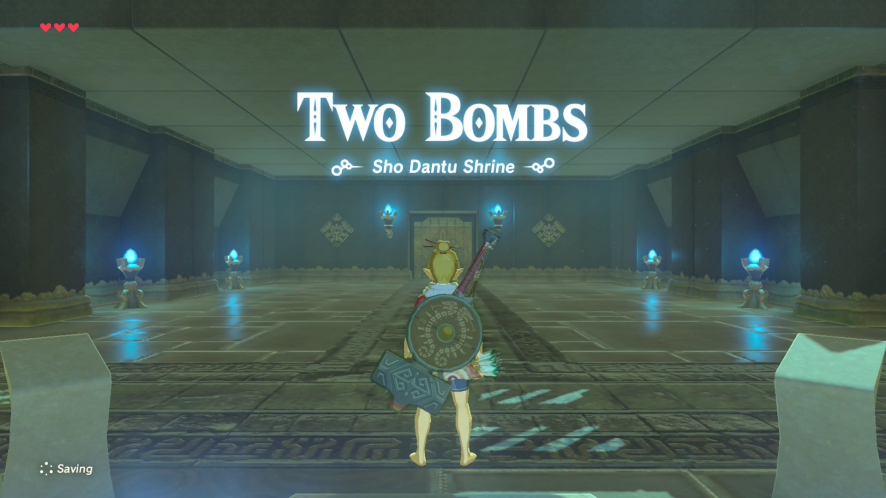
And speaking of puzzling, the games require lots of brainpower as well as good reflexes. In the earlier games, it could mean figuring out which blocks to move around to reach a treasure chest, or which floor switches would get a door to open. Breath of the Wild took this to another level with the shrines, which in my view are a puzzle lover’s dream. (All right, some of those shrines can be nightmares too. And in that case, there is no shame in consulting a YouTube walkthrough.)
What’s next?
It’s anyone’s guess what the next three decades will bring for The Legend of Zelda. Maybe we will see the much-anticipated Breath of the Wild sequel this year. Maybe Ocarina of Time will be re-released for the Switch. Or maybe Nintendo will come up with something completely unexpected; I wouldn’t mind a Mario Kart DLC that added Zelda, Ganondorf, and Impa as drivers.
I think, however, that the search for adventure and the zest for exploration will keep leading gamers to Hyrule for many years to come, whether they’re seasoned players or newbies — or even a late-to-the-party console gamer.