Twilight Princess’ Kakariko Village is the best Kakariko Village
 by Jeffrey Pawlak on June 1, 2020
No matter what game it appears in, Kakariko Village always feels like home to The Legend of Zelda fans. The humble hamlet has been a staple location for Hyrule over the years, warmly welcoming players to its peaceful reaches in multiple adventures. Fans who have been around since the early days of The Legend of Zelda fondly remember it as the central hub of life in 1991’s A Link to the Past, as well as the upstart settlement that was hiding some dark secrets in Ocarina of Time. Breath of the Wild’s take on Kakariko is beloved for its Eastern Asian influences, with gassho-style houses, plum blossom trees, wooden plaque wind chimes, and other appropriate trappings for the shinobi-inspired Sheikah.
When fans think of Kakariko, they think of a quiet, idyllic village that is laden with myth, and whose residents prefer the simple pleasures in life over the hustle and bustle of larger towns. No incarnation of Kakariko better embodies that spirit than the one seen in Twilight Princess.

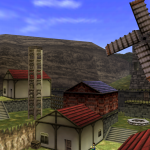
Set within a cut at the base of Death Mountain, Twilight Princess’ Kakariko Village is far from remarkable at first glance. Its weather-beaten houses are cobbled together by mismatched stonework and a hodgepodge of other materials; their priority is to stand securely on rocky, rugged terrain, not to impress visitors with stunning architecture. The houses don’t have much room to spread out inside that craggy defile, forcing them to huddle together and build up along the steep slopes. The mountain takes as much as it gives from the village, offering protection from invaders, but providing little in the way of fertile soil for agriculture.
It is in no better shape after being swallowed up by the Twilight. Even Death Mountain’s natural barriers fail to keep Shadow Beasts from infiltrating the tiny village and delivering a grisly fate onto most of its residents. The Ordon children outnumber the surviving villagers by the time that Link and Midna first arrive. Once the curtains of Twilight are dispelled from the Eldin Province, Kakariko’s devastated population is left on its own to pick up the pieces as the Gorons isolate themselves further up Death Mountain.
Kakariko Village is in no condition to make a great first impression in Twilight Princess, but you cannot truly appreciate it after just a single visit, and you need to look deeper than its ramshackle exterior. Thankfully, Twilight Princess’ story provides many opportunities for players to eventually discover what makes its version of Kakariko Village so special.
You need to look deeper than Kakariko Village’s ramshackle exterior in Twilight Princess to truly appreciate it.
Every The Legend of Zelda game has many different stops on the journey, taking players to an array of fantastical environments throughout the adventure. The games have so much to show that it is very rare for a single location to remain integral to the plot from start to finish, but Kakariko Village in Twilight Princess is one of the exceptions. It’s right there with the likes of Clock Town and Skyloft as a settlement with a lasting narrative purpose. No matter how far Link and Midna travel in their search for the Fused Shadow and pieces of the Mirror of Twilight, their quest always seems to circle back to Kakariko.
From the reunion with the Ordon children, to the escort of Prince Ralis to a safe haven, and to the joint effort made to restore Ilia’s memory, many of Twilight Princess’ most important developments occur at the rundown village beneath Death Mountain.
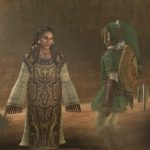
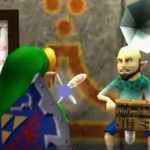
Kakariko Village becomes the de facto base of operations for Link and most of his allies, with characters from all across Hyrule converging there in the mission to save the kingdom. The Ordon children quickly adopt it as their temporary home, with Malo, Talo, Beth, and Colin all taking new roles to help spur the village back to prosperity. Beth and Luda nurse both Ralis and Colin back to health, Talo assumes a lookout position to watch for enemies, and Malo reopens the village’s item shop and later topples the price-gouging Chudley’s Fine Goods and Fancy Trinkets Emporium in Castle Town.
To atone for abandoning their neighbors while the Fused Shadow stirred up trouble inside their mines, the Gorons descend onto Kakariko en masse to help in any and all ways. They stand guard over the village, provide a quick means of transportation to the loftier portions of the slopes, support Malo’s commercial ambitions, open up shops of their own, escort Telma back to Castle Town, and sometimes just offer their company and take a long soak in the hot springs above the Elde Inn.

Even the Goron leaders Gor Coron and Darbus eventually come to Kakariko. Both Gorons lend a hand in helping Ilia regain her memory and in guiding Link to Impaz in the Hidden Village. All the while, Shad toils away in the Sanctuary’s basement to uncover the truth behind the Owl Statue down there, later using his knowledge of the Sky Writing to restore the Dominion Rod’s true power.
As Link and Midna make strides to rid Hyrule and the Twilight Realm of the terrible evil that threatens both worlds, so too does Kakariko regain some of its former glory. Years before fans helped Bolson Construction build Tarrey Town in Breath of the Wild, Twilight Princess gave them the satisfaction of watching their hard work slowly help a struggling village get back on its feet.
Of all the locations in Hyrule during the Era of Twilight, Kakariko Village was the ideal meeting ground for the land’s bravest inhabitants. That only seems right for a location where one can lay eyes on such a range of incredible sights, like a Spirit of Light’s spring, sweeping views of Hyrule Field, and the molten Death Mountain rising overheard. As more characters set foot there, players learn more of Kakariko’s cultural and historical significance to Hyrule. The aforementioned relationship with the Gorons is established early on in Twilight Princess, but, in time, we see that Kakariko has connections to nearly every corner of Hyrule.
It was fated that Ralis be brought to Kakariko when he was ailing, as the village is sacred ground to his people. Nestled behind its cluttered graveyard is a serene spring where the Zora are laid to rest. The most prominent marker is the grave for Ralis’s father, the late King Zora. Queen Rutela inevitably takes her eternal slumber at that same tomb alongside her husband. She explains that the spring is not simply for Zora royalty, however. According to Rutela’s spirit, all deceased Zora are entombed within those pristine waters.

The Zora would likely have visited Kakariko in the years leading to the events of Twilight Princess, as Telma notes that Renado is experienced in tending to Gorons and Zora. The shaman clearly believes it is vital to maintain ties well beyond his little village, including as far as to the Ordona Province. Renado mentions more than once that he and Mayor Bo are old friends, which leaves him particularly relieved when Bo’s daughter, Ilia, finally recovers her memories and regains inner peace. Gor Coron also reveals that he has a longstanding friendship with Ilia’s family, having known them when her mother was still alive.
The village was an important location in ancient ages, as proven by the Spirit of Light, Eldin, who resides there, and both the Owl Statue and the Sky Cannon that the Oocca left beneath Renado’s home. This means that throughout history, Kakariko Village has served a purpose to all races known in the Era of Twilight at some point or another — Hylians, Humans, Gorons, Zora, Oocca, and even a Twili in Midna.
Not even Hyrule’s largest and most magnificent settlement, Castle Town, can boast such a guest list, but that is to be expected when so much of its grandeur is superficial. From afar, Castle Town is the thriving commercial and political hub of Hyrule, its lavish streets alluring to any living being. Up close, however, the charm quickly fades away. Very few of its residents possess the same humility, sincerity, and selflessness that the people of Kakariko do, their virtues dulled by lives of extravagance. The price-gouging item shop will refuse you entry if it deems your footwear anything but immaculate. The town soldiers are cowards who readily abandon their duty to protect others if it entails being exposed to the slightest shred of danger. One man, Jovani, literally sold his soul for riches.
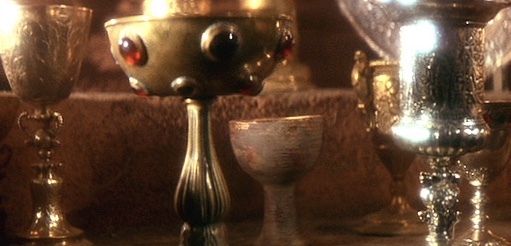
Fittingly, Castle Town and most of its people play a scant role in the mission to defeat Zant and Ganondorf, while its foil is at the center of the conflict. Together, they are The Legend of Zelda’s take on the Holy Grail in Indiana Jones and the Last Crusade. Much like the golden, gem-studded chalice which the duplicitous Walter Donovan drinks from in the Indiana Jones film, the grandiose Castle Town is hollow of meaning. It is the drab wooden cup and Kakariko Village that are key to the heroes’ triumphs.
Twilight Princess is a tale where the higher powers of the world are unable to defend Hyrule on their own. Ganondorf’s and Zant’s campaign of terror originates from the Sages’ failed execution of Ganondorf, and their rash decision to cast him into the Twilight Realm. Princess Zelda, the Hyrulean military, and the Spirits of Light are powerless to prevent Hyrule from being blanketed by darkness.
In a game where the higher powers failed, it is several modest and ordinary beings without supernal qualities who lend their efforts to protect the land. Kakariko Village — a place that is emblematic of Hyrule’s diversity and the unity that emboldens its many creatures in Twilight Princess — is where so much of that effort emanates from. There, we see the Ordon children, members of the Resistance, Gorons, Zora, and more come together to ensure Hyrule’s future.
You just need to pry open that dilapidated chest to find the treasure inside.