Few video games have made such bold strides for their series as Majora’s Mask did for The Legend of Zelda. The direct follow-up to 1998’s Ocarina of Time guided the franchise into uncharted narrative territory, taking players on a sobering journey through a doomed realm where most of its inhabitants have endured great suffering. Majora’s Mask bravely explored a grim world, rightly becoming renowned as one of the most provocative entries in The Legend of Zelda mythos.
Its ambitions went beyond tackling bleak themes of loss and regret, however. Majora’s Mask quietly found new ways to crack the shell of Link being an emotionless avatar, recognizable only for his unique attire. In measured doses, the offbeat Nintendo 64 classic provided the green-clad hero chances to express his youthful bliss without the need for speech.
Link displays unprecedented volition in Majora’s Mask before he is even transported to Termina. After being summoned by cosmic forces to fulfill his destiny as the Hero of Time and save Hyrule from Ganondorf’s darkness, the story in Majora’s Mask originates from a personal choice by Link — to search for someone he once shared a deep bond with. His adventure begins not from a fated duty to defend all life from catastrophic evil but from a desire to reunite with a dear friend. What more appropriate motivation is there for a child than the want for his closest companion in his life back?
Moments of Link’s innocence are reprieves from the crippling dread that pervades every corner of Termina. These moments are fleeting, but they are meaningful in revealing a young hero who manages to keep his spirits aloft even under the weight of his mission to save Termina and to do so in the face of all the tragedy that has befallen the land’s inhabitants.
It’s only fitting that a young boy like Link would be so friendly to a gentle giant.
Link cheerfully waving goodbye to the Giant Turtle who escorted him to the Great Bay Temple is the kind of fondness that you would expect a little boy to have for an enormous, magnificent animal. He appears unsure at first of how to respond to Captain Keeta’s request to tell the Stalchildren of Ikana that the war is over. But when Keeta addresses him as a superior, referring to him as “sir,” Link decides that he has no choice but to humor the towering Staldchild. The boy immerses himself in the comical circumstance by standing at attention and returning Keeta’s salute, granting the captain eternal rest.
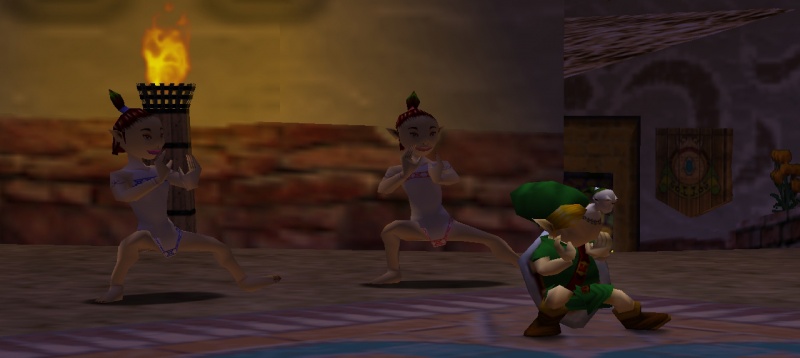
Other moments come outside of the central story, seen in some of the game’s numerous sidequests. To help Termina’s troubled residents, Link must often engage in unusual tasks, some of which can be assumed to be well outside his comfort zone. Nonetheless, he dives in with boyish zest when his efforts are needed, whether he’s enthusiastically leading a march of Cucco chicks while wearing the Bremen Mask or performing Kamaro’s elaborate dance alongside the Rosa Sisters in Clock Town.
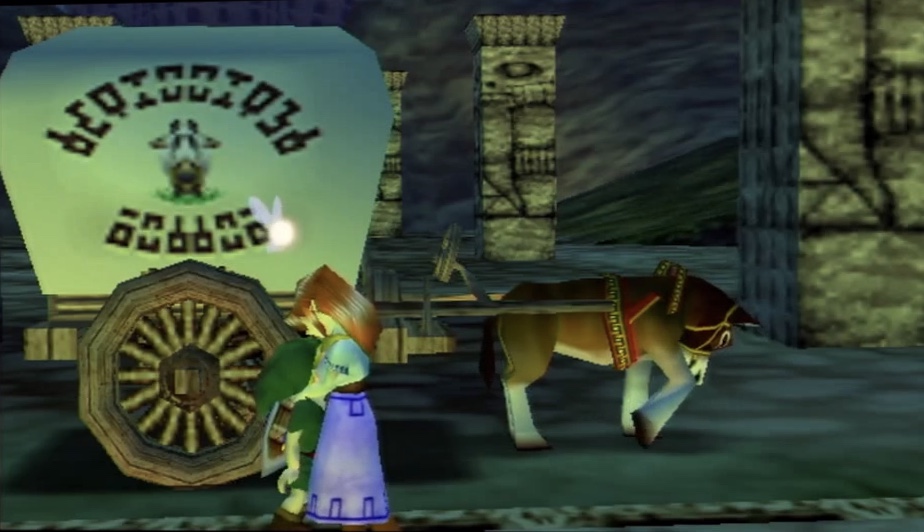
One particular instance that fans have found absolutely adorable for all these years can occur when replaying the mission to defend Cremia’s carriage on her way to Clock Town. If the player has already completed the quest once before (thus receiving the Romani Mask), Cremia might thank Link by giving him a huge hug. Her show of appreciation elicits this amusing narration:
“You did it! You helped Cremia! You feel all warm and fuzzy inside! Sigh… You could get used to this!”
This text appears in a white font rather than the blue font that is used for Tatl’s dialogue, suggesting that it’s closer to Link’s actual thoughts rather than hers. Even if he fearlessly battles all manner of monstrosities, he’s still a young boy who is delighted to get a hug from a beautiful woman.
These glimpses into Link’s personality were perfect steps taken to make the hero feel like a living, breathing child, all without breaking the tradition of him as a silent protagonist. To this day, you’ll likely find that most The Legend of Zelda fans affirm that actions speak louder than words when it comes to Link’s character; Majora’s Mask proved that such a balance could exist.
Not only did Link’s reactions brighten the mood in Majora’s Mask, but they also served as a refreshing change of pace for the series as a whole in the year 2000. During The Legend of Zelda’s first 14 years, fans mostly had to look to official art or alternative media like comics, manga, and the animated series to see an expressive Link. As it was, the Link who appeared in the Valiant comics and the cartoon was usually more buffoonish than endearing. Link had a few smiles (some quite awkward) in The Travels of Link photo gallery from Link’s Awakening DX, but nothing had been as distinct as the gestures seen in Majora’s Mask.
Majora’s Mask showed how Link could be expressive even while never uttering a word.
Being 2D, sprite-based works, the first four video games were very limited with what they could reveal about Link outside of dialogue. Ocarina of Time didn’t have those same restrictions, being the entry that introduced 3D graphics to The Legend of Zelda. Yet, although it enthralled players with a stunning in-game world unlike anything they had seen before, that iconic adventure strangely kept Link a blank slate bereft of mirth, even when he was a child.
Outside of when his eyes perk up a bit upon learning a new song for his ocarina or when he cracks a faint smile as he pulls an item free of its chest, Link rarely feels like a young boy in Ocarina of Time. The rest of his emotional range consists of infrequent moments such as appearing wary or surprised, or apparently terrified of being hugged by the Gorons. Clearly, he much prefers being hugged by Cremia.
While one of the major themes behind Ocarina of Time is that of a hero missing out on his childhood because of his fated duty, the game still presents a plethora of opportunities for Link to enjoy the simple pleasures in life. He interacts with plenty of affable individuals who go on to become friends of his (or those he was already friends with, such as Saria), he encounters all kinds of quirky characters who rope him into outrageous situations, he can play music for a choir of frogs, he can be flown across Hyrule by a talking owl, he can don an array of colorful masks, he can play all sorts of entertaining mini-games — yet these hardly draw a smirk out of him. Majora’s Mask would eventually demonstrate how, despite the enormous responsibility to save an entire world, there was still room in the quest for moments of boyhood frivolity.
Link readily helps the people of Termina with boyish enthusiasm, no matter the task it demands of him.
Perhaps it was fitting that Link finally got to have a little fun as a child in Majora’s Mask, of all games. No other adventure in The Legend of Zelda needed that levity more than the story that unfolded in Termina. Where previous titles like A Link to the Past or Ocarina of Time were sweeping, thrilling adventures to thwart Ganon’s conquest of Hyrule, Majora’s Mask was a far less rousing and riotous affair. It’s a solemn quest to save Termina from the coming annihilation, one where Link finds that someone’s personal tragedy can be just as terrifying to them as a falling moon.
Other The Legend of Zelda tales needed unflagging courage and heroic deeds from Link for the day to be saved. More than anything else, Majora’s Mask needed youthful exuberance to dispel its gloom, and Link proved just as capable of doing that as he was of defeating the terrible evil that threatened Termina.
Jeffrey Pawlak
Jeffrey Pawlak is the Features Director for Zelda Universe, and has been a member of the website's community for more than 20 years. He is also a high fantasy author and an aspiring comic book artist.


 by Jeffrey Pawlak on April 26, 2020